Dogok-dong Dentist: Why Do Teeth Chip and Why Does It Happen?
Hello.
This is Oks Dental Clinic.
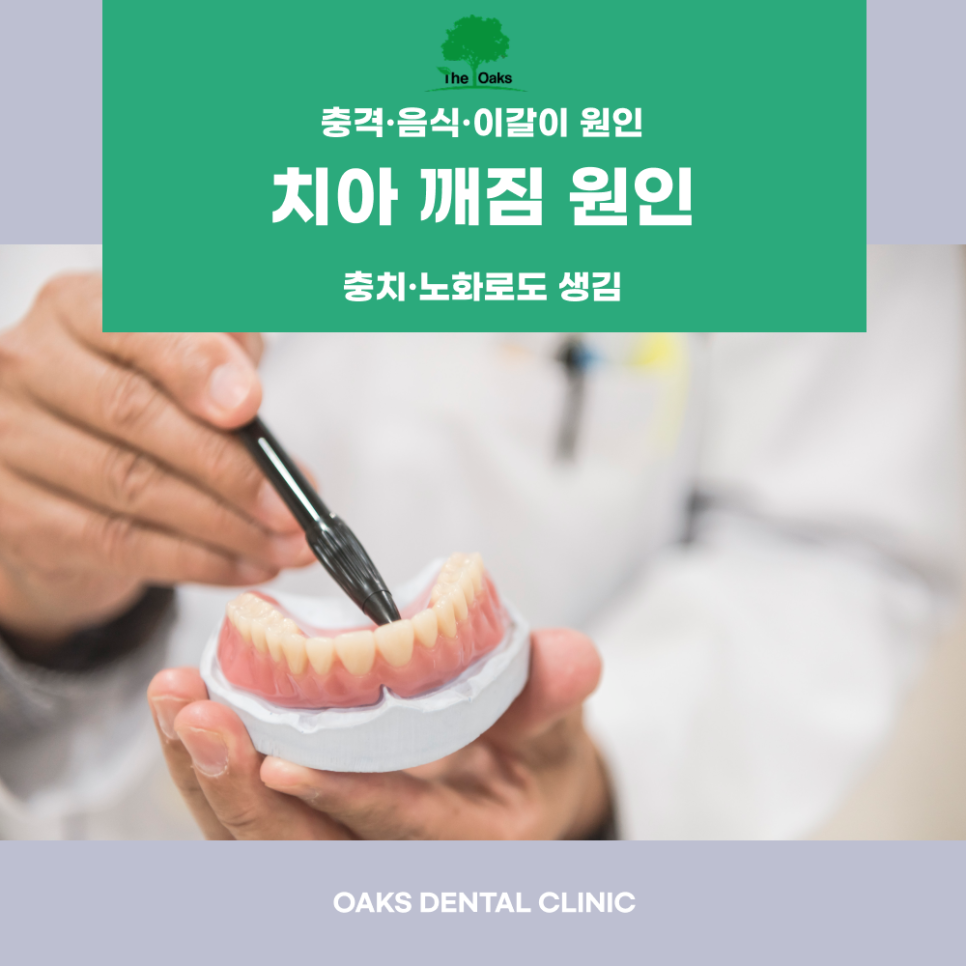
Tooth chipping is something anyone can
experience at least once in daily life.
Even a small impact can cause a tooth to crack or
chip, and at first it may seem fine, but over time
it can lead to pain or discomfort.
Today, we will explain why tooth chipping happens,
what symptoms and risks it can cause,
and what treatment and prevention methods are
available at Dogok-dong Dentist.
Causes of Tooth Chipping
Teeth are one of the hardest
structures in the body, but repeated force or an
unexpected impact can make them
vulnerable.
There are many causes of
tooth chipping.
Strong external impact
A fall or hitting the mouth during sports can
cause a tooth to chip.
Hard foods
Biting into ice, bone-in foods, or hard candy can
cause cracks in teeth.
Teeth grinding (bruxism)
Grinding your teeth strongly while sleeping or
clenching them unconsciously can repeatedly
create tiny cracks.
Tooth decay progression
When the inside of a tooth is weakened by decay,
it can chip easily even with a small amount of force.
Aging and wear
Teeth can also chip when the surface has worn down
after long-term use and become weakened.

Symptoms and Risks of Chipped Teeth
When a tooth chips, it is not just
a matter of appearance; it also affects function and
health.
Sensitivity
Cold or hot food,
or even cold air,
can make the tooth feel sensitive.
Pain
If the chipped area is close to the nerve,
it can lead to severe pain.
Risk of bacterial infection
Bacteria can enter through the crack and cause
inflammation or decay.
Reduced tooth function
Biting strength weakens, and eating can become
uncomfortable.
Aesthetic problems
If a front tooth chips, it can greatly affect your
appearance and lower confidence.
How Is a Chipped Tooth Treated?
Treatment for a chipped tooth varies depending on the condition, location, and extent of damage.
Minor chipping
If only the tooth surface is slightly chipped,
it can be simply restored with resin.
Moderate fracture
If part of the tooth has broken off but there is no
erve damage, a crown (prosthetic restoration) is
placed to restore the tooth’s shape and function.
When the nerve is damaged
After root canal treatment, the tooth must be
protected with a prosthetic restoration, and in some
cases the nerve cannot be saved and extraction
is necessary.
When a crack reaches the tooth root
Unfortunately, if the root is also damaged, it is
difficult to save the tooth, so extraction and
replacement treatment such as an implant or bridge
may be needed.
The longer a chipped tooth is left untreated, the more
the damaged area can spread, and treatment can become
more complicated and costly.
Therefore, early and accurate diagnosis and
treatment are important.
How to Prevent Tooth Chipping
Tooth chipping can be reduced significantly with proper prevention.
Avoid hard foods
Biting ice or chewing bone-in foods can
damage teeth.
Use a bruxism prevention device
If teeth grinding is severe during sleep,
wearing a mouthpiece can help.
Regular dental checkups
Tiny cracks and decay are difficult to
detect on your own, so regular checkups are needed.
Proper brushing habits
Keeping your teeth and gums strong is the most basic
preventive measure.
Wear protective gear during sports
When doing intense exercise or activities with a
risk of impact, it is best to wear a mouthguard.
In Closing...
Because teeth are difficult to restore to their original
state once damaged, prevention and early
treatment are especially important.
Tooth chipping is not simply a cosmetic issue;
it can also lead to pain, inflammation, and
reduced function, making it a serious
problem.
If you think a tooth may have chipped or cracked,
even if there is no pain, we recommend that you do not
delay and visit Dogok-dong Dentist for an examination.