Seogok-dong Dental Clinic gum bone grafting: building a solid foundation for implants!
Hello.
This is Oks Dental Clinic.
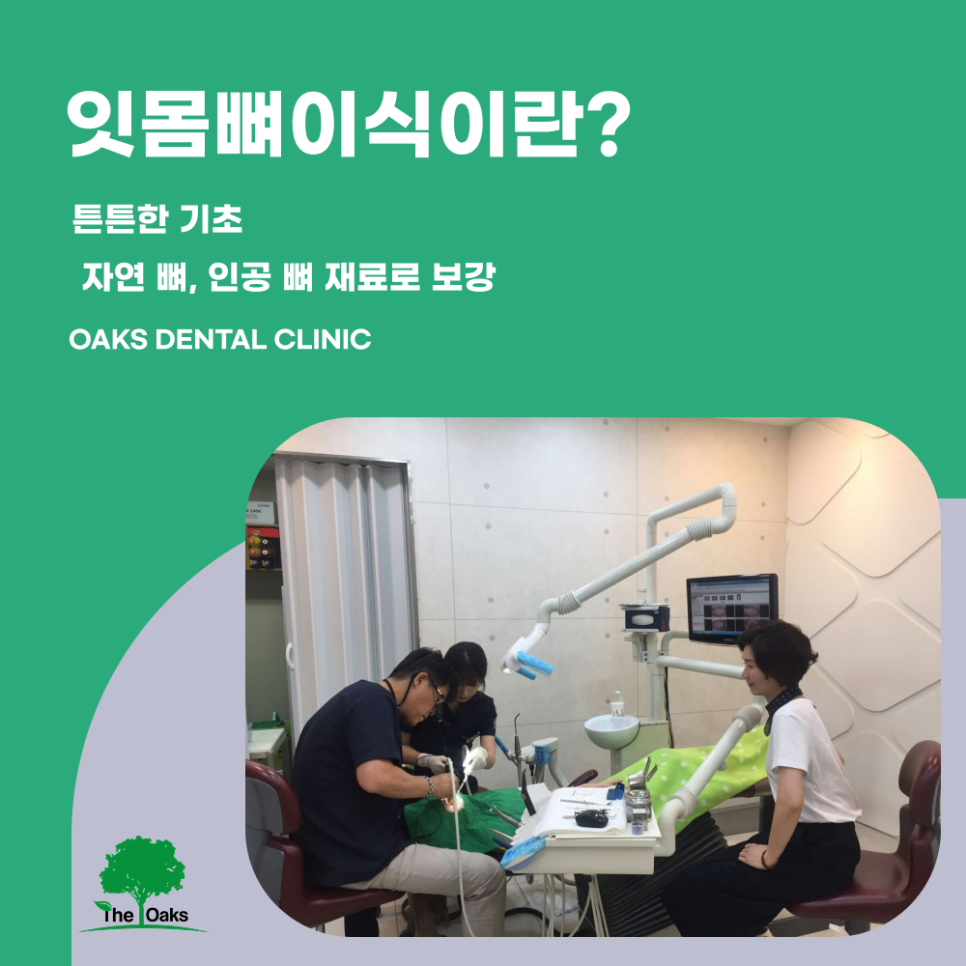
One of the things people often hear when considering implants is
“Implant placement is difficult because there is not enough bone.”
In such cases, one option is
gum bone grafting.
It is not simply a procedure that fills in bone,
but an important process that creates the foundation
for implant success and long-term stability.
Today, Seogok-dong Dental Clinic will explain
what gum bone grafting is,
when it is needed, the procedure, materials,
and aftercare.
What is gum bone grafting?
Gum bone grafting (alveolar bone grafting)
is a treatment that strengthens the deficient area
with natural bone or artificial bone material
when the height or width of the gum bone (alveolar bone)
at the planned implant site is insufficient,
in order to create a strong foundation.
There are two main reasons bone grafting is needed.
▶ When the amount of gum bone (height, width)
is not sufficient
After a tooth is extracted and a long time passes,
or due to periodontal disease, trauma, etc.,
the bone is resorbed and there is not enough basic foundation
for implant placement.
▶ Influence of the maxillary sinus above the upper molars
in the upper jaw
As the maxillary sinus space becomes larger,
the bone height in the upper molar area may be insufficient,
and sinus lift surgery may be needed.
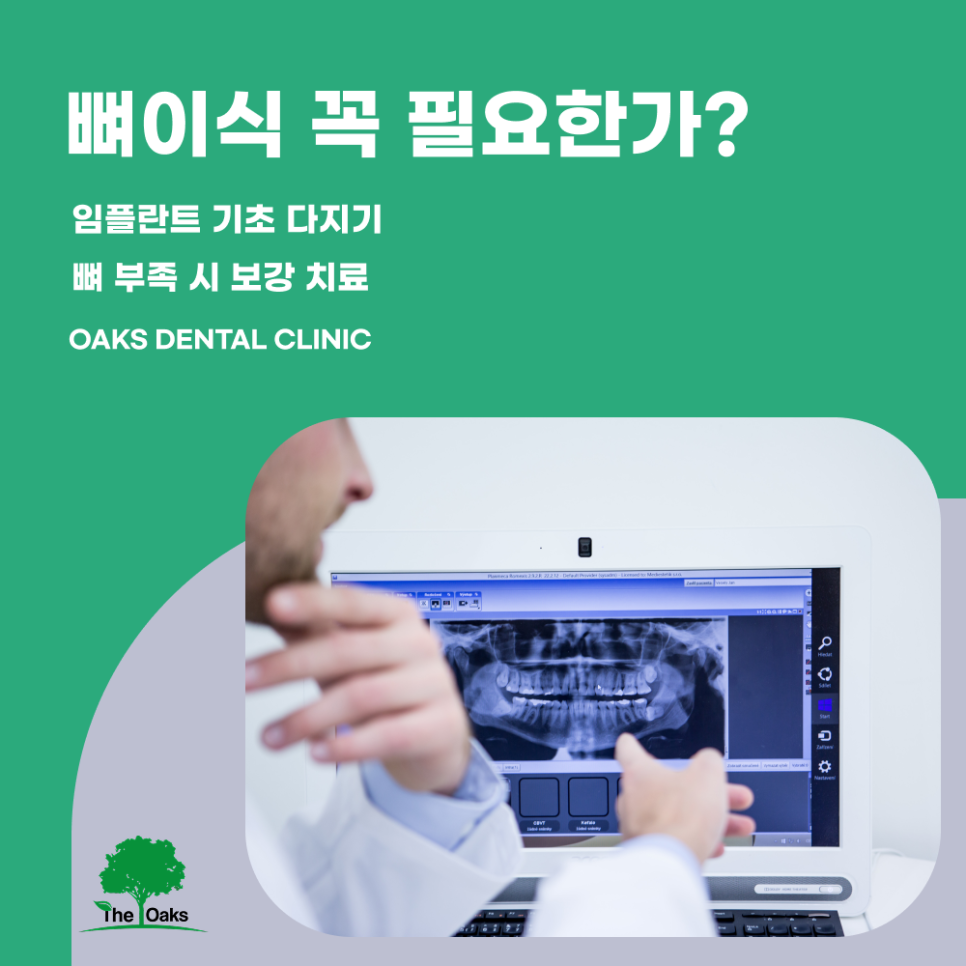
In what cases is gum bone grafting needed?
Bone grafting is considered in the following situations.
▶ When bone has been resorbed after a long time
has passed since tooth loss
▶ When the bone supporting the teeth has been severely damaged
due to periodontitis
▶ When the jawbone has been damaged by an accident or trauma
▶ When the implant placement site is narrow,
or the height is low and stability is expected to be poor
▶ When sinus lift surgery is required
(upper molar area)
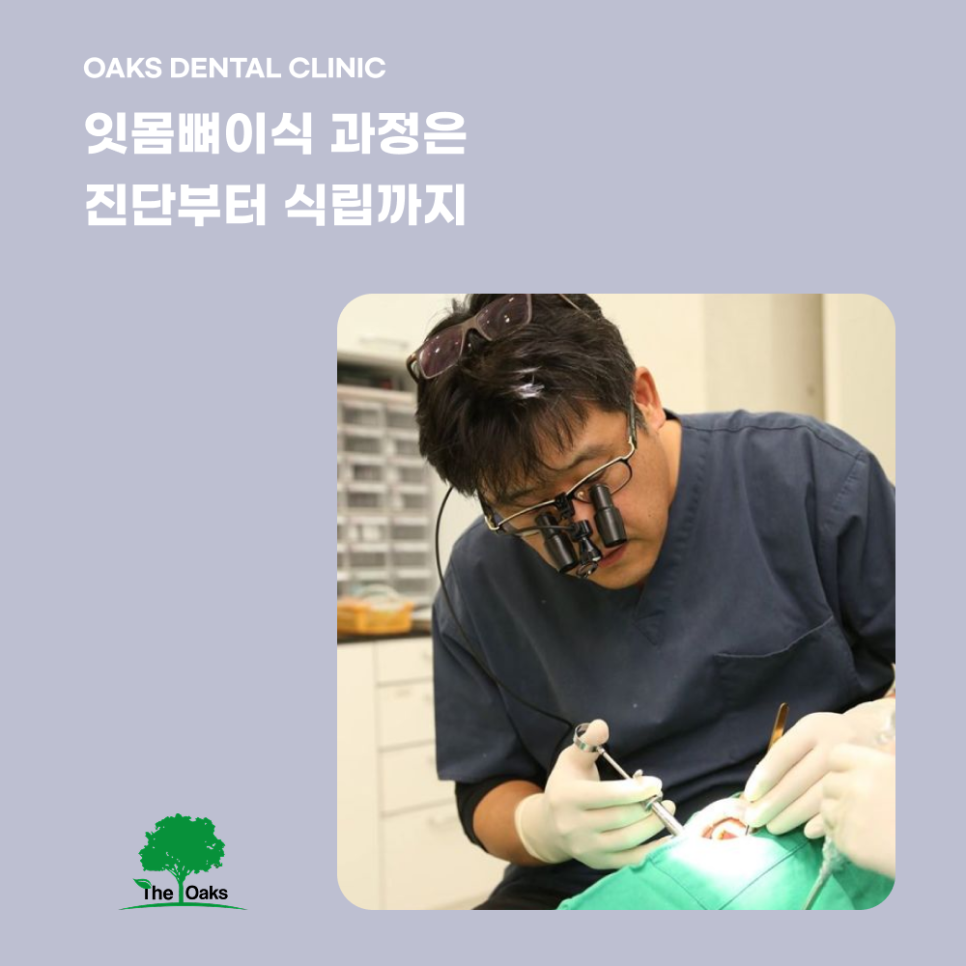
What is the gum bone grafting process like?
Gum bone grafting generally proceeds through
the following steps.
▶ Diagnosis & treatment planning
Through 3D CT imaging, etc.,
the height and width of the gum bone, bone density,
and the location of adjacent structures (nerves, maxillary sinus, etc.)
are accurately evaluated.
▶ Selection of bone graft material
Depending on the patient’s condition, autogenous bone (the patient’s own bone),
allogeneic bone (bone from another person),
xenogeneic bone (derived from animal bone),
or synthetic/artificial bone may be used.
Because each material differs in healing speed, stability, cost,
and possible side effects, choosing the right one is important.
▶ Surgical procedure
An incision is made in the gum to expose the deficient bone area,
the bone graft material is placed,
and it is stabilized with a membrane (barrier) or other fixation method
before the gum is sutured.
In some cases, sinus lift surgery may be performed at the same time.
▶ Healing and waiting for bone regeneration
After bone grafting, several months are needed
for the graft to be replaced with new bone (natural bone)
and become stable.
In general, it often takes about 2 to 3 months,
and if a large amount is grafted or sinus lift surgery is performed,
the period may be longer.
▶ Implant placement
After the bone has regenerated stably,
the artificial root is placed through implant surgery,
followed by the stage of attaching the prosthetic restoration.
Types and characteristics of bone graft materials
The material used for bone grafting is also very important.
▶ Autogenous bone
A method that uses the patient’s own bone,
with fast healing and little risk of rejection.
However, because a donor site is needed,
there may be additional burden beyond the surgical site.
▶ Allograft
A material made by processing and using bone from another person.
There is no harvesting burden like with autogenous bone,
but there may be differences in healing speed and stability.
▶ Xenograft
A method using bone derived from animals.
It is available in large quantities and easy to secure,
but regeneration may be slower than with autogenous bone.
▶ Synthetic bone / artificial bone
An artificial material used frequently in recent years,
with advantages in cost and side effects,
and it maintains volume well.
However, the speed at which it is completely replaced by natural bone
may be slower than with autogenous bone, etc.

Advantages and precautions of bone grafting
▶ Advantages
The implant is securely fixed,
so there is less movement and a lower chance of failure.
The shape (volume) of the gums can also be restored,
making the result much more natural and aesthetically pleasing.
By securing space in the upper molar area, such as with sinus lift surgery,
the success rate of molar implants can be increased.
▶ Precautions
A recovery period is needed after surgery,
so patience is important.
If you want a quick procedure, you should check whether it is a case
with favorable conditions.
After surgery, swelling, discomfort, and pain may occur,
and there is also a possibility of infection or rejection,
so hygiene management is essential.
If you have systemic conditions such as smoking or diabetes,
healing may be slower or the chance of failure may increase.
▶ Additional cost
Because the surgical difficulty, materials used,
and treatment period are greater than with a standard implant,
the cost may be higher.
In closing…
Gum bone grafting is not simply about placing an implant,
but about preparing a strong foundation.
When the basics are solid, the entire treatment can be more stable
and last longer.
If you were told that your gum bone is thin,
or you are considering implants but were told there is not enough bone,
please do not worry too much
and come for a consultation at Seogok-dong Dental Clinic.