Yeoksam-dong Dental Clinic: Peri-implantitis, dangerous gum inflammation if left untreated!!!
Hello.
This is Oaks Dental Clinic.
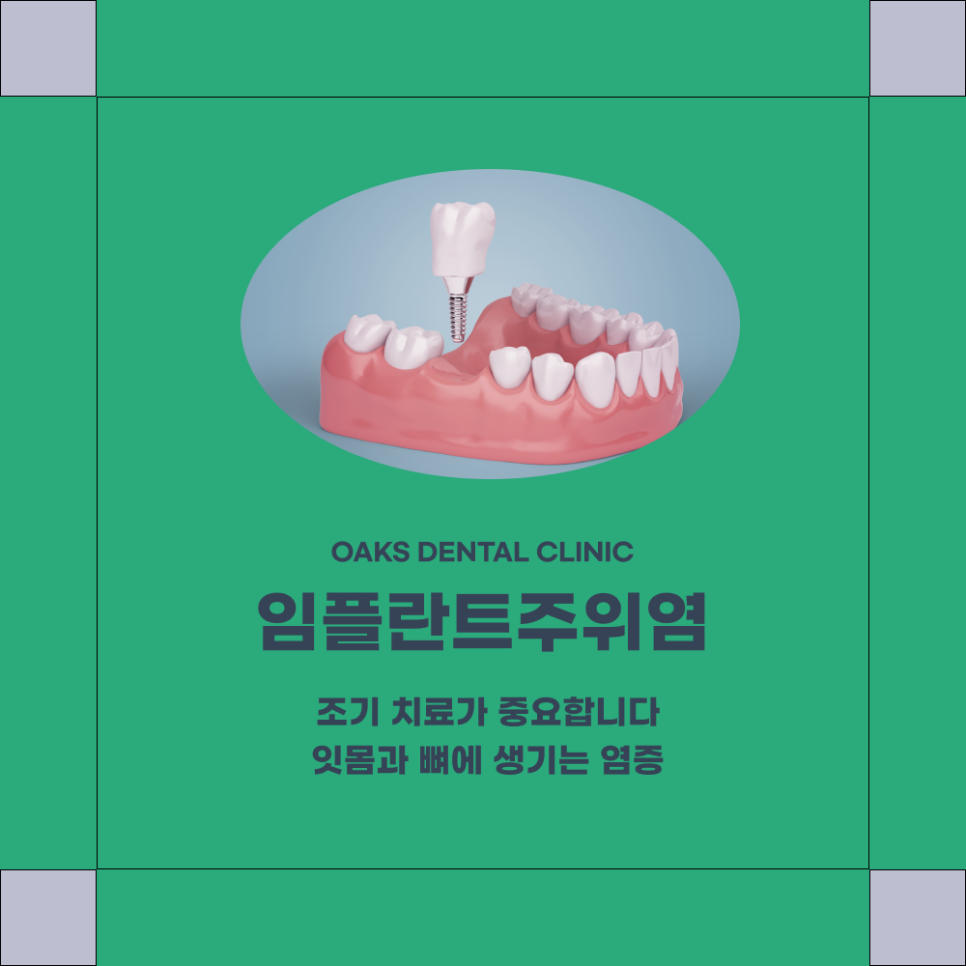
Dental implants are an excellent treatment method that can replace missing teeth, but continued care is still necessary after placement.
One of those conditions is peri-implantitis.
Today, Yeoksam-dong Dental Clinic will explain what peri-implantitis is, why it occurs, its symptoms and treatment, and how to prevent it.
What is peri-implantitis?
Peri-implantitis is a condition in which inflammation develops in the gums and bone around a dental implant.
In the early stage, it may begin with only swelling and bleeding in the gums, but if it progresses, it can damage the bone supporting the implant, threatening the stability of the implant itself.
The biggest cause is plaque and poor oral hygiene.
Just like natural teeth, implants can also develop inflammation when exposed to bacteria.
Why does peri-implantitis occur?
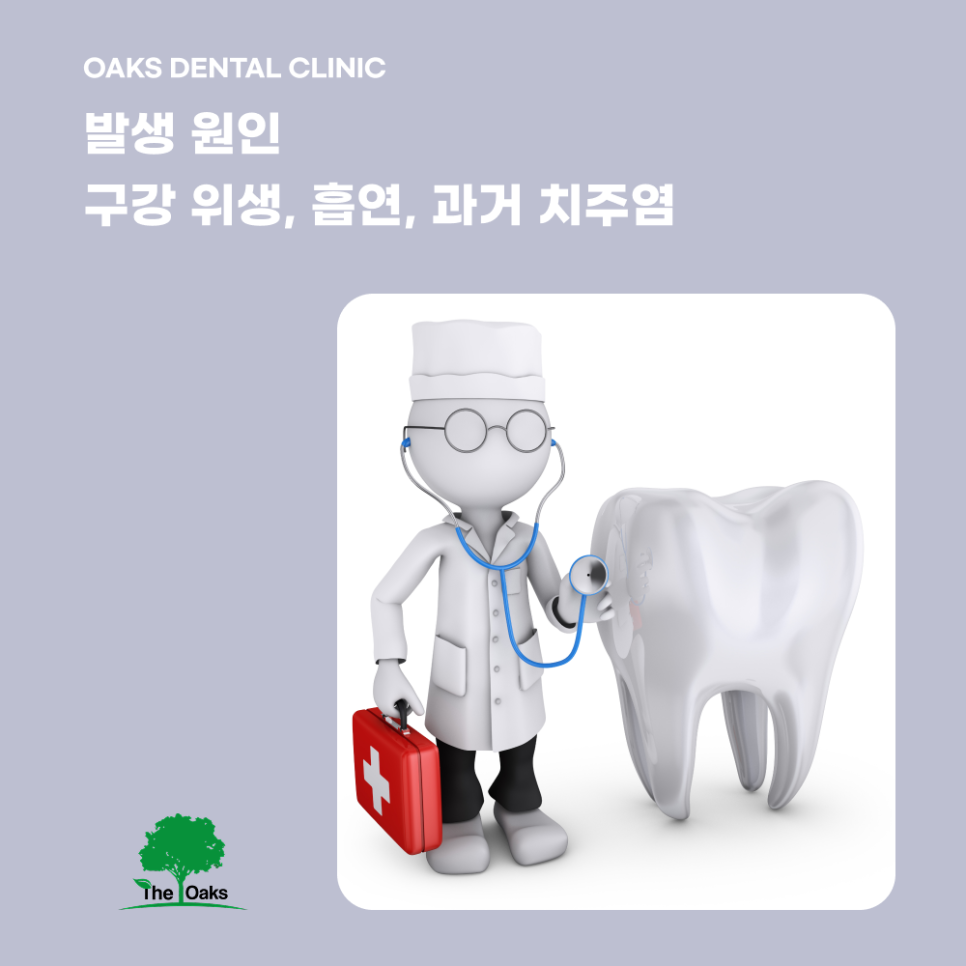
The main causes of peri-implantitis are as follows.
Poor oral hygiene
If plaque accumulates around the implant, gum inflammation begins.
It may not be fully removed by brushing alone, so using dental floss or interdental brushes is essential.
Smoking
Smoking reduces blood flow to the gums and weakens immunity, making it harder for inflammation to heal.
Previous experience with periodontitis
Patients who have previously had gum disease are at a higher risk of developing peri-implantitis.
Improper implant placement
If the implant angle, depth, or the condition of the surrounding gums and bone is not appropriate, inflammation can occur more easily.
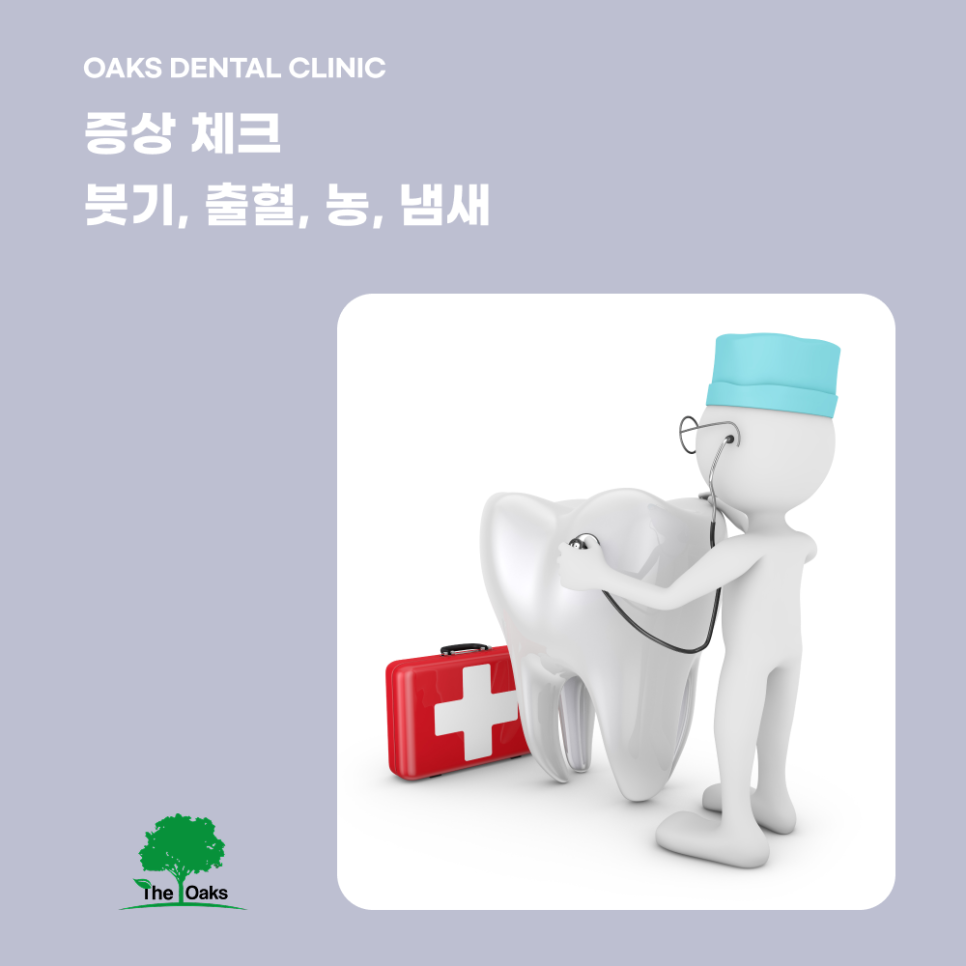
How do the symptoms appear?
Early peri-implantitis may not cause clear pain, so it is easy to leave untreated.
The main symptoms are as follows.
The gum around the implant becomes red and swollen
Bleeding when brushing or eating
Pus or a strong odor from the gums
The implant becomes loose or the surrounding alveolar bone is resorbed
In advanced cases, the structure supporting the implant can be damaged, reducing fixation, and in severe cases, removal may be necessary.
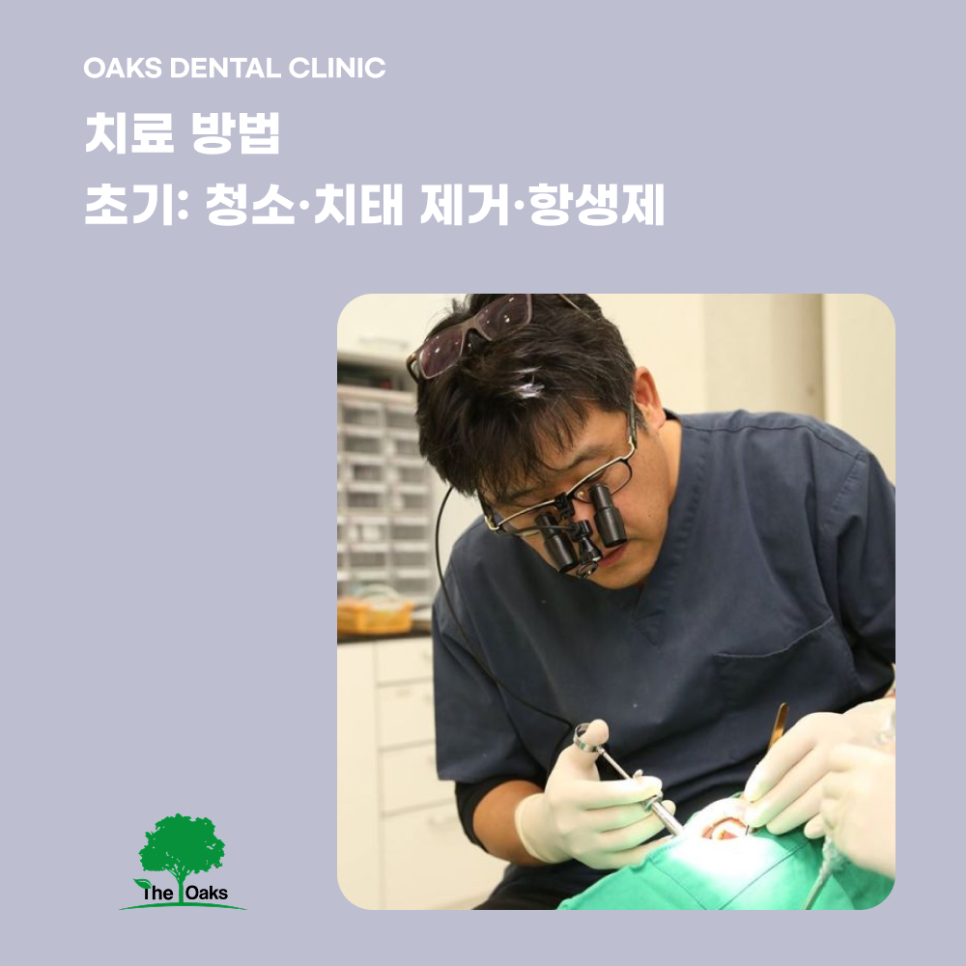
Treatment methods for peri-implantitis
Early detection of peri-implantitis is the most important factor.
In the early stage, when symptoms are not severe, recovery may be possible with scaling and professional gum care alone.
Early inflammation
Professional cleaning around the implant at a dental clinic, plaque removal, antibiotic treatment
Moderate to advanced progression
Gum removal and cleaning, regenerative procedures using artificial materials
Severe cases
Removal of the implant followed by re-implantation may be necessary
Because treatment varies depending on diagnosis and stage, it is safest to check your condition through regular examinations.
Prevention is the top priority
Prevention of peri-implantitis is more important than anything else.
Thorough oral hygiene
Use a toothbrush, dental floss, and interdental brushes to remove plaque around the implant
Regular checkups
Check the implant condition and surrounding gums once every 6 months to 1 year
No smoking
Smoking interferes with the healing of inflammation, so quitting is necessary
Balanced eating habits
Sugary and sticky foods increase the risk of plaque buildup
With regular care and proper oral habits, the risk of peri-implantitis can be greatly reduced.
In closing…
Dental implants are an excellent treatment that can replace natural teeth, but if you let your guard down, the enemy of dental health called peri-implantitis can appear.
If your gums become swollen, or you experience bleeding, pain, or odor, early examination and treatment are necessary.
If you want to use your implants safely and for a long time, regular dental checkups and thorough oral care are essential.