Gangnam Station Dental Clinic gum surgery, a wise choice to protect gum health!!!
Hello.
This is Ox Dental Clinic.
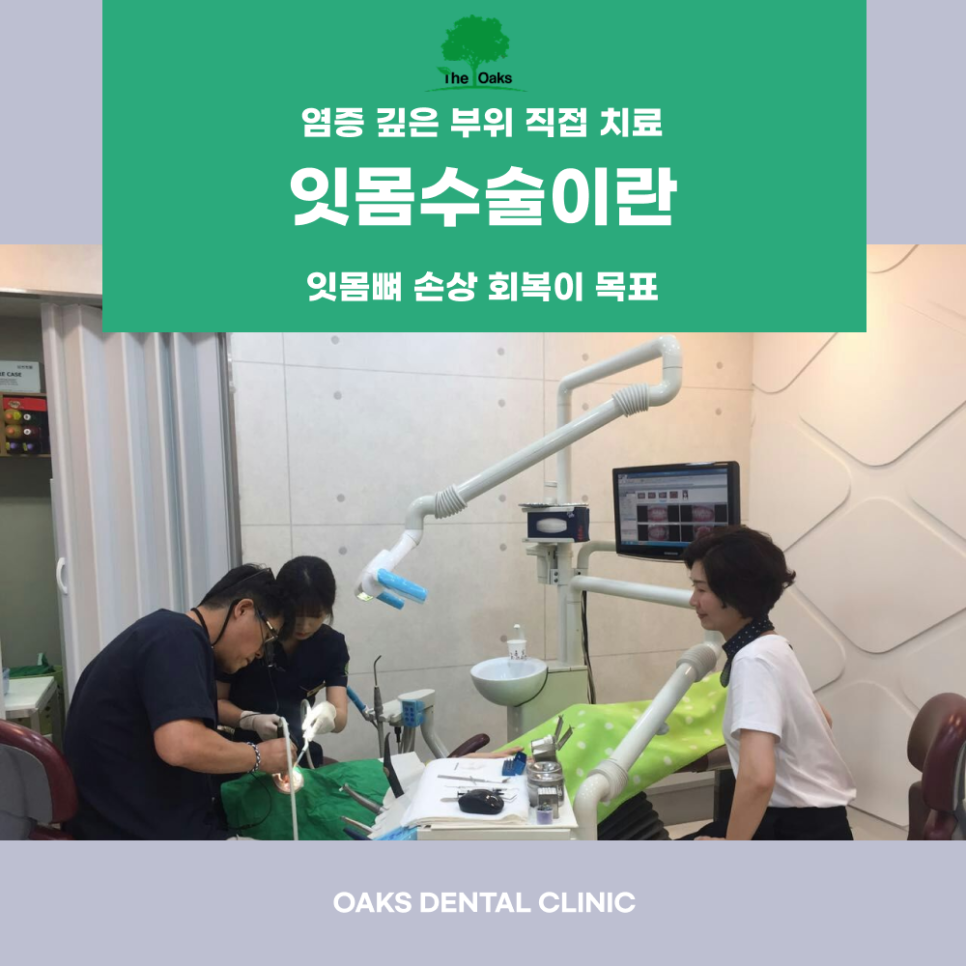
Among the people who visit the dental clinic,
there are many who complain that
“my gums swell and bleed often,”
or “it hurts a lot when I brush my teeth.”
These symptoms may be more than a simple inflammation;
the problem may already have progressed deep
into the gums.
Today, Gangnam Station Dental Clinic will explain
the treatment needed when gum disease has become severe:
‘gum surgery.’
What is gum surgery?
Gum surgery is performed when the inflammation is too deep
to be resolved with simple scaling or gum treatment,
or when damage to the gum bone has progressed.
Its goal is to remove inflamed gum tissue and tartar
that bacteria have attached to, and to restore the damaged
gums and alveolar bone (gum bone).
Put simply, it can be seen as a process that directly treats
the deeper parts of the gums.
Although it is a surgical procedure, it is performed under
local anesthesia rather than general anesthesia, and the pain
and recovery burden are not as great as you might think.
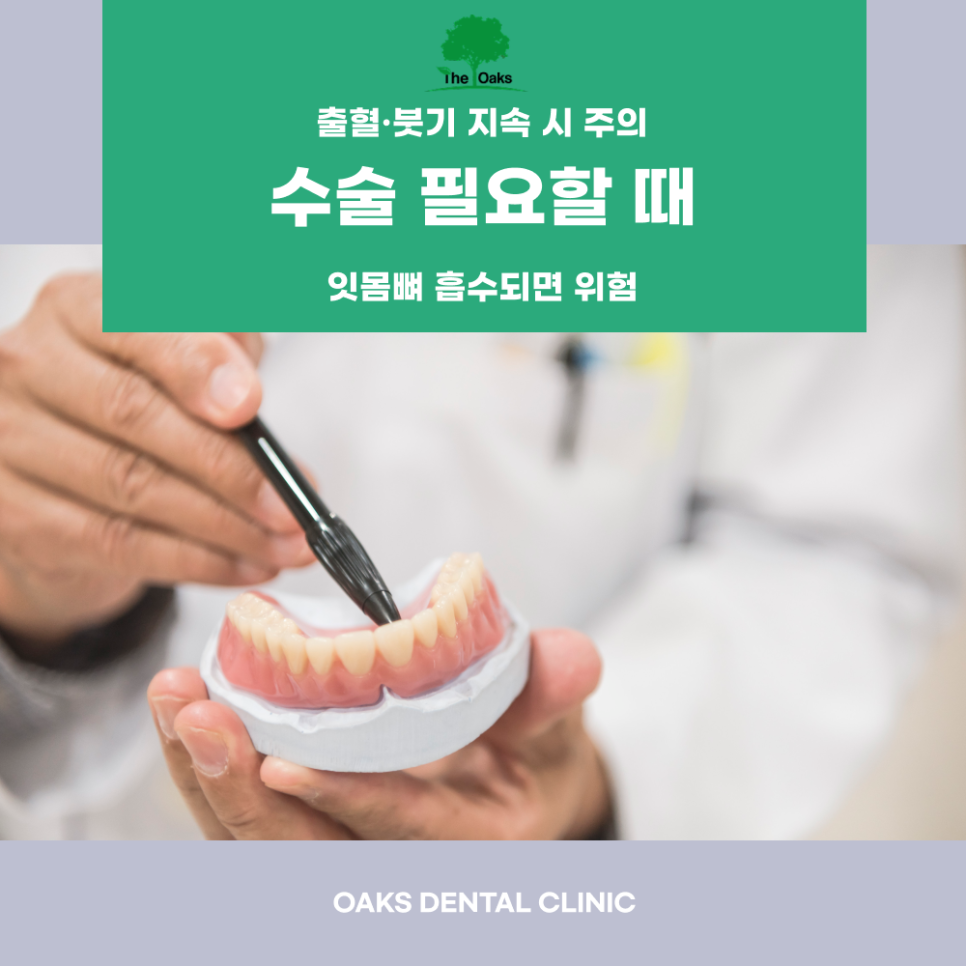
When gum surgery is needed
Gum surgery is not a treatment needed for all patients.
However, if you have the following symptoms,
gum surgery may be recommended after evaluation by a specialist.
Bleeding and swelling that continue even after scaling or gum treatment
When the gums recede and the roots of the teeth are exposed
When the teeth feel loose or pain is felt while chewing
When tartar has built up deeply inside the gums
When gum bone has been absorbed due to inflammation
If such conditions are left untreated, the inflammation can spread
deeper, damaging the alveolar bone and ultimately leading to tooth loss.
Types of gum surgery
Not all gum surgeries are performed the same way.
Depending on the patient’s condition, the most suitable treatment
is selected from several methods.
Flap surgery
This is a procedure in which the gums are gently lifted, the inflamed tissue
and tartar accumulated inside are removed, and the area is thoroughly cleaned.
The gums are then sutured again to help prevent the inflammation
from recurring.
Gum bone regeneration
This treatment restores gum bone damaged by inflammation using artificial bone
or regenerative materials.
When the gum bone recovers, the stability of the teeth is also strengthened.
Gingival grafting
When the gums have receded significantly and the tooth roots are exposed,
gums from another area are grafted to reinforce the gums.
Both aesthetic improvement and tooth protection can be expected.
Laser gum surgery
Recently, gum surgery using lasers to minimize incision and bleeding has also been performed.
It has the advantage of faster recovery and less pain.
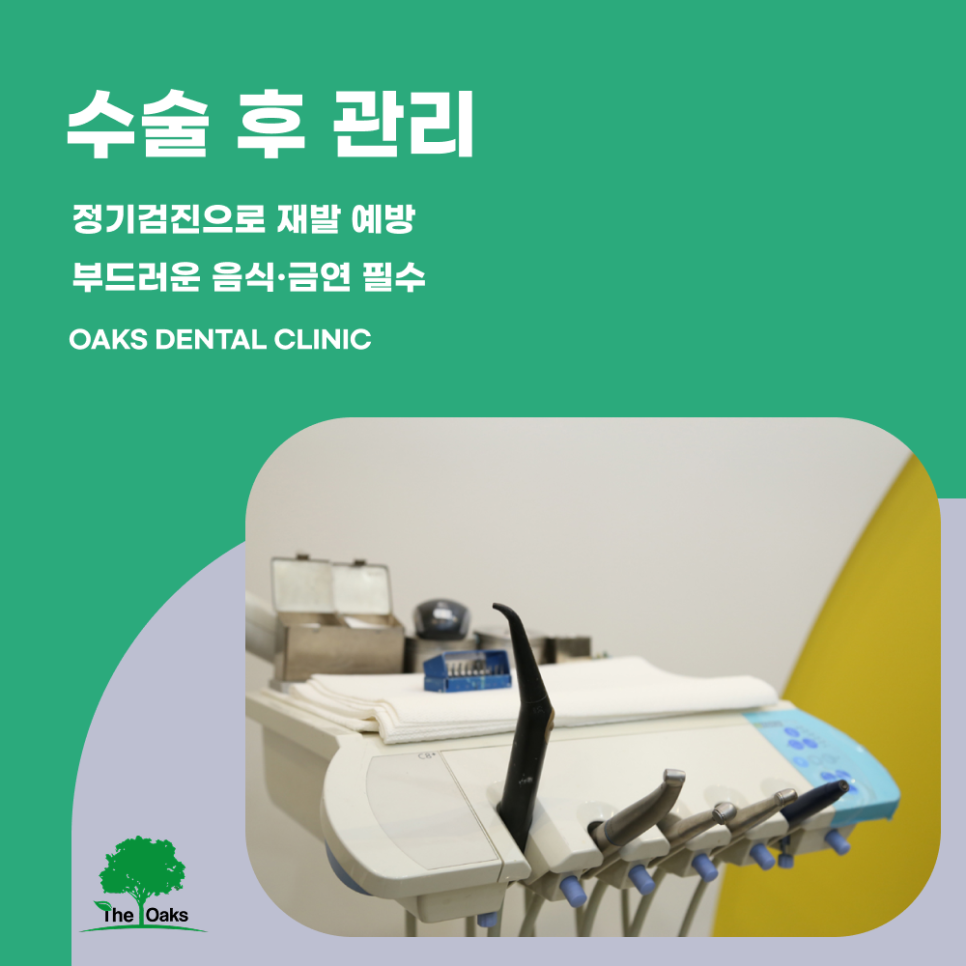
Precautions after gum surgery
After gum surgery, management is very important for normal recovery.
If you follow the points below, recovery after surgery will be much faster.
Do not touch the surgical area or rinse forcefully
If the surgical area is irritated, the risk of bleeding or infection may increase.
Eat soft foods
Hard or chewy foods can irritate the surgical area, so soft foods such as porridge or rice gruel are recommended.
Maintain proper brushing and oral hygiene
Brush gently except around the surgical area, and using the prescribed mouthwash can help prevent bacterial infection.
No smoking, no alcohol
Smoking and drinking interfere with gum healing and may worsen inflammation, so they must be avoided.
Regular dental visits
After surgery, the progress should be checked, and if necessary, scaling or additional treatment should be performed to prevent the inflammation from recurring.
Benefits you can get from gum surgery
Improved bad breath by removing inflammation
Reduced gum bleeding and swelling
Less sensitivity by preventing root exposure
Stronger tooth stability through gum bone recovery
Overall restoration of oral health
Above all, gum surgery is meaningful because it is a treatment that can revive the gums and help preserve the teeth for a long time.
Even if teeth look strong, if the gums are weak,
the foundation can collapse.
To conclude...
Gum surgery is not simply a procedure that “cuts away or covers” the gums.
It is a key oral health treatment that restores the gums and bone and strengthens the foundation that supports the teeth.
In the early stages, the discomfort may not be severe, so it is easy to think,
“It will probably get better with time,” and let it pass.
However, gum disease never heals on its own.
The earlier it is treated, the smaller the surgical area and the faster the recovery.
If your gums bleed when brushing, or if your gums have receded and your teeth look longer,
visit Gangnam Station Dental Clinic now and get a dental examination.