Hello.
This is Ox Dental Clinic.
If you are considering implant treatment,
you may often worry, “Will the surgery be safe?”
or “Can it be placed accurately?”
Recently, a method called navigation implants,
which helps reduce these concerns and
improves treatment predictability,
has been attracting attention.
Today, Gangnam Dental Clinic will explain
what navigation implants are,
what advantages they have,
and the procedure and precautions as well.
What Is a Navigation Implant?
A navigation implant is a method in which,
just like “guidance using navigation,”
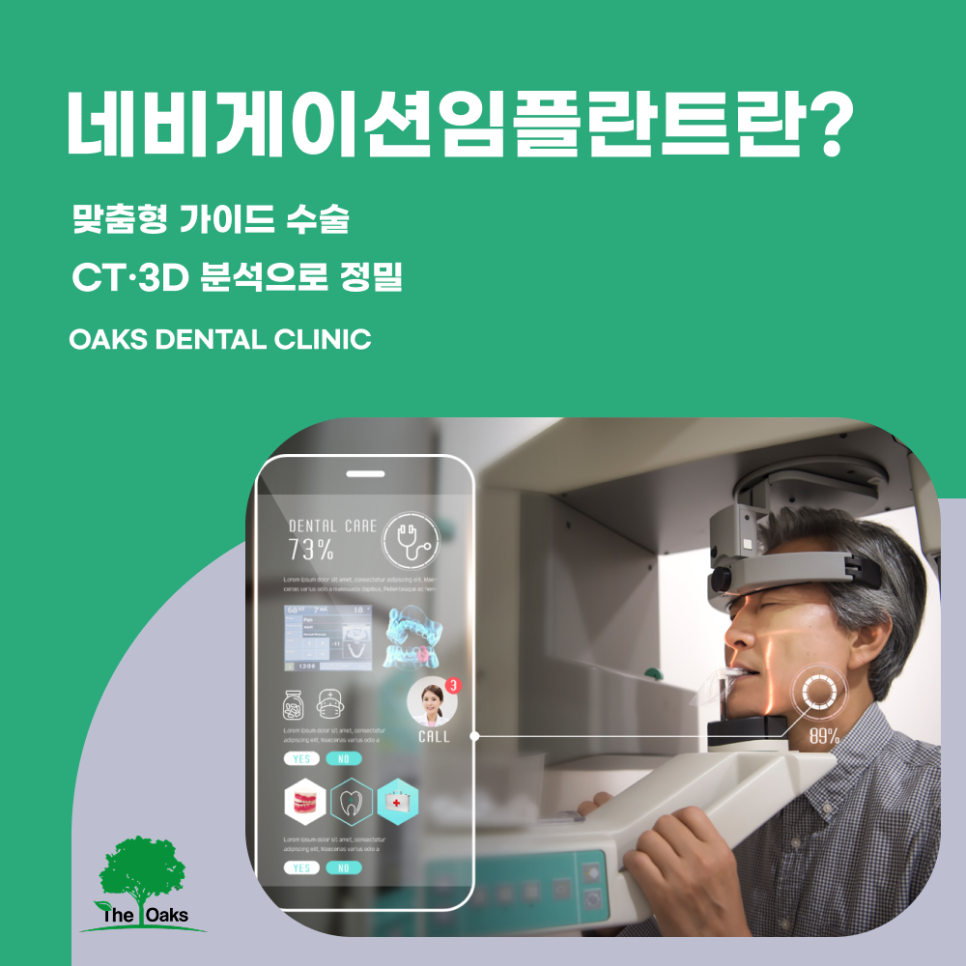
the patient’s oral structure is analyzed
three-dimensionally and a customized guide is
created based on the results before the surgery is performed.
In a typical implant surgery,
the dentist directly incises the gum and then
determines the placement position while
checking the condition of the bone.
However, in navigation implants,
after precisely identifying the patient’s
alveolar bone, nerve position, and gum condition
through CT imaging and a 3D scanner,
a plan is made in advance using computer simulation
before proceeding with the surgery.
In other words, because the implant angle,
depth, and position are determined in advance
and the surgery proceeds accordingly,
unnecessary incisions and trial and error can be minimized.
Advantages of Navigation Implants
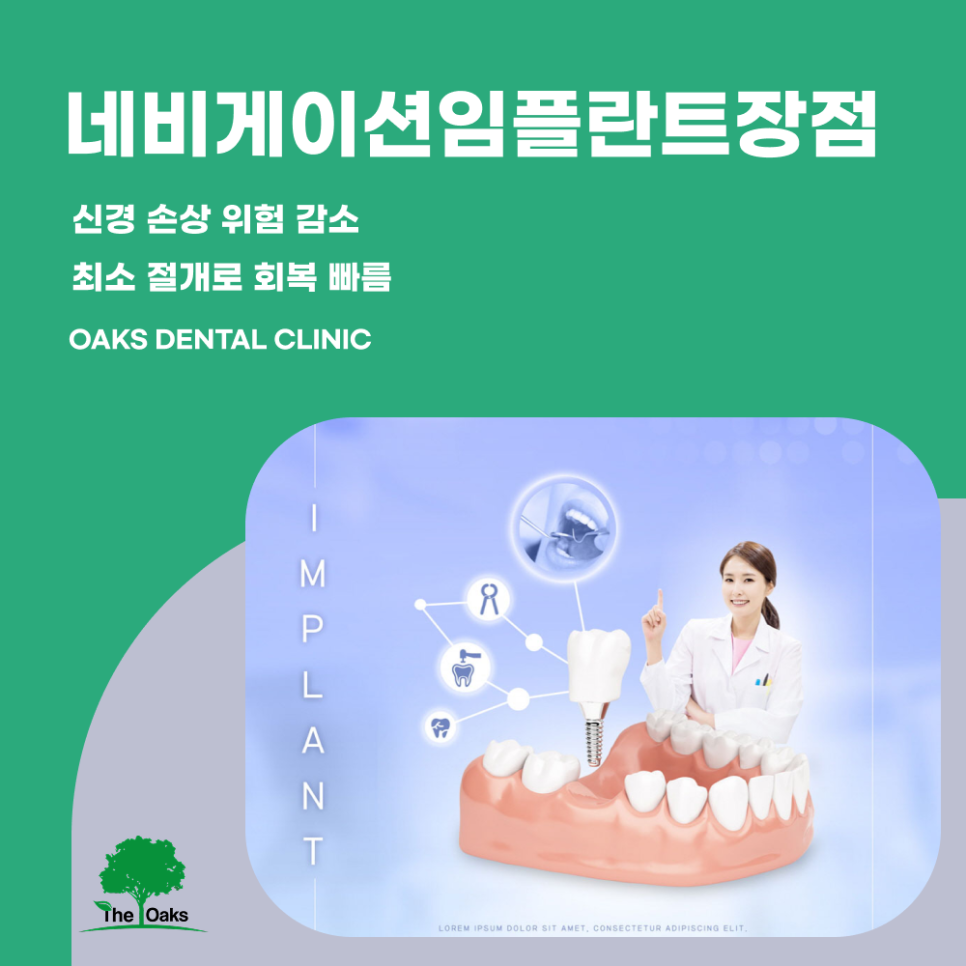
High accuracy
Because the surgery is performed based on digital data,
the implant is placed exactly where planned.
This reduces the risk of nerve or blood vessel damage
and improves both the function and aesthetics
of the prosthetic restoration.
Minimal incision and faster recovery
Because there is no need to make a large, unnecessary
gum incision, there is less bleeding, swelling,
and pain.
As a result, the recovery period is generally faster
than with conventional implants.
Shorter surgery time
Because the procedure is carried out according to
a preplanned approach, uncertainties are reduced,
and the surgery time becomes shorter, lowering the burden on the patient.
Predictable results
Since the outcome can be predicted in advance through CT and 3D simulation,
it is easier for patients to understand “what kind of treatment they are receiving,”
and it also increases peace of mind.
Advantageous for difficult cases
Even in cases where conventional implants are challenging,
such as when there is insufficient bone or when the area is close to a nerve,
navigation implants improve safety.

Navigation Implant Procedure
Precise diagnosis
CT imaging and oral scanning are used to check
the height and thickness of the jawbone and the position of the nerves.
Digital simulation
A computer program is used to plan the optimal
implant position and angle.
Surgical guide fabrication
A 3D-printed guide tailored to the patient’s oral structure is produced.
This guide serves to direct exactly where
the implant should be placed during surgery.
Implant placement
Because the implant is placed according to the guide,
unnecessary incisions are reduced, and the surgery proceeds safely.
Prosthesis placement
After healing is complete, the prosthesis is placed
with consideration for the patient’s bite and aesthetics.

When Navigation Implants May Be Needed
If you feel a strong sense of anxiety about conventional implant surgery
If there is insufficient jawbone, making placement difficult
If the area is close to nerves or blood vessels and a more difficult procedure is needed
If multiple implants need to be placed at the same time
If you want faster recovery and minimal pain

Precautions for Navigation Implants
Navigation implants clearly have many advantages,
but there are also a few points to keep in mind.
Choose an experienced medical team
No matter how good the equipment and system are,
it is difficult to achieve good results if the practitioner lacks experience and expertise.
Sufficient preoperative testing is necessary
Because the procedure is based on CT images and scan data,
a detailed examination is essential.
Thorough aftercare
Post-surgical care is even more important for implants.
You must maintain regular checkups and proper oral hygiene habits.
In Closing...
Navigation implants are a method that uses the latest digital technology to place implants more safely and accurately.
In particular, one major advantage is that stable results can be expected even in difficult cases, such as when there is insufficient jawbone or the area is close to a nerve.
However, because suitability varies depending on each patient’s condition,
sufficient consultation and diagnosis are always necessary.
If you are considering implants, how about consulting with Gangnam Dental Clinic about navigation implants?