Gangnam-gu Dental Clinic: If gum recession is left untreated, it can undermine your dental health.
Hello.
This is Oks Dental Clinic.
Among those who visit Gangnam-gu Dental Clinic,
some complain of discomfort such as,
“My teeth look longer,”
or “My teeth feel sensitive and bleed when I brush.”
These symptoms may not be a simple temporary issue,
but a problem called gum recession.
Today, Gangnam-gu Dental Clinic will explain what gum recession is,
why it happens, what symptoms and risks it has,
and how it can be treated and prevented.
What is gum recession?
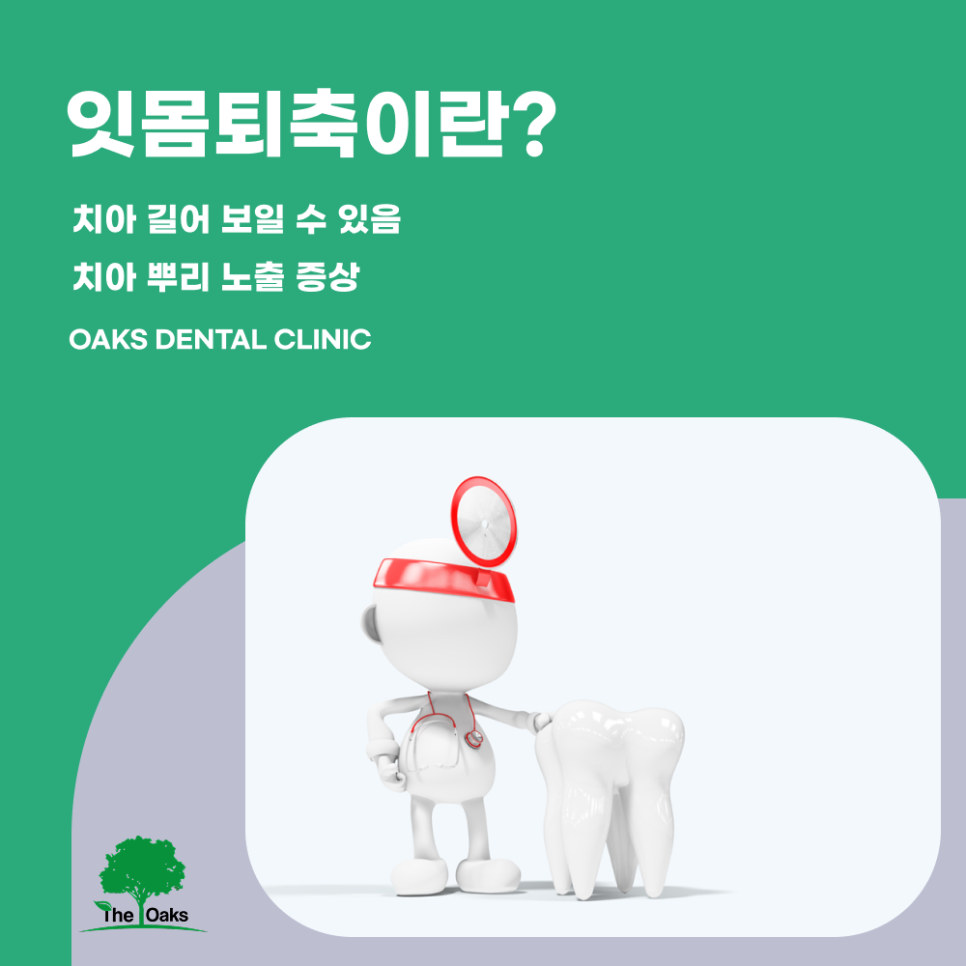
Gum recession refers to the phenomenon in which the gums that were covering the teeth gradually move downward,
exposing the root portion of the tooth.
Healthy gums firmly surround and protect the teeth,
but when recession occurs, the tooth roots become exposed and more vulnerable to external irritation.
From the outside, the teeth may look longer,
but in fact the gums have receded,
and this may be a sign that the health of the teeth and gums has weakened.
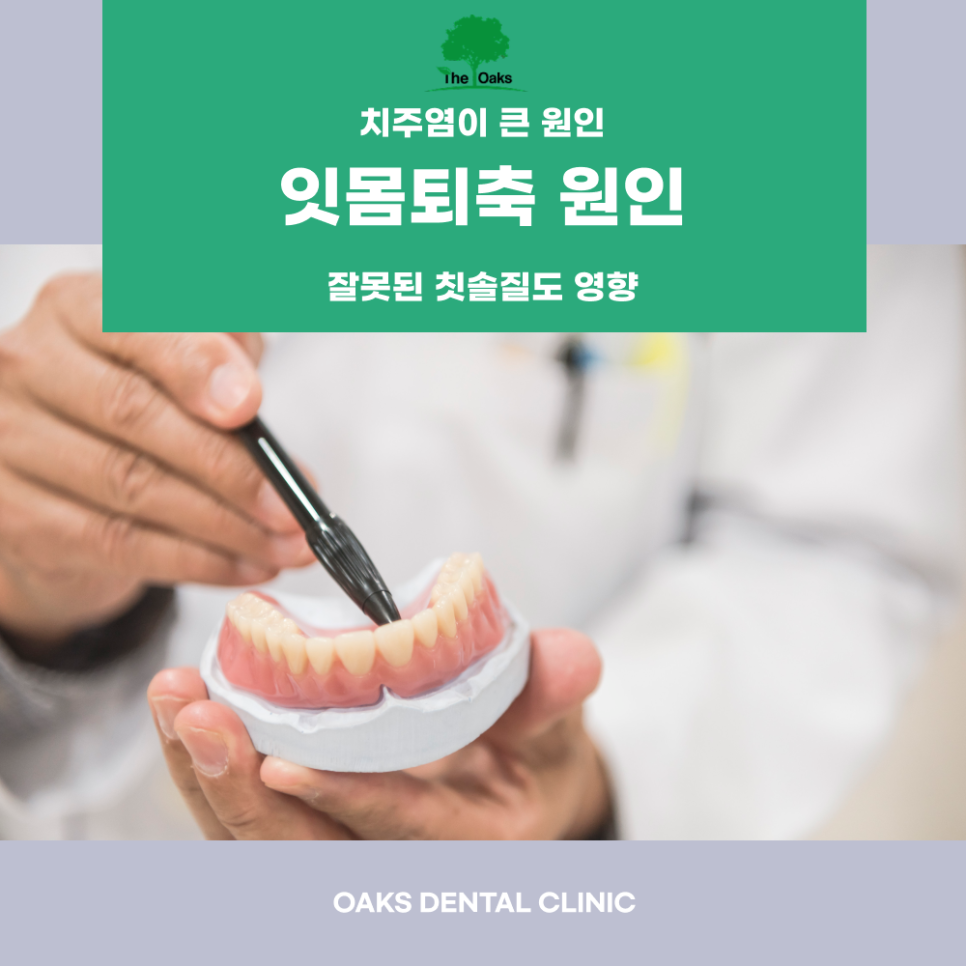
Causes of gum recession
Gum recession can occur for various reasons.
Periodontal disease
When gum diseases such as periodontitis progress, the gum tissue and alveolar bone are damaged, causing the gums to recede.
Incorrect brushing habits
Using too much force or a hard-bristled toothbrush can gradually wear down the gums and lead to recession.
Problems with tooth alignment
If excessive force is placed on certain teeth due to crowded teeth or protruding teeth, the gums can recede more easily.
Aging
As we age, the gums can naturally recede as well.
Other factors
Teeth grinding, smoking, and poorly fitting prosthetics can also be causes.
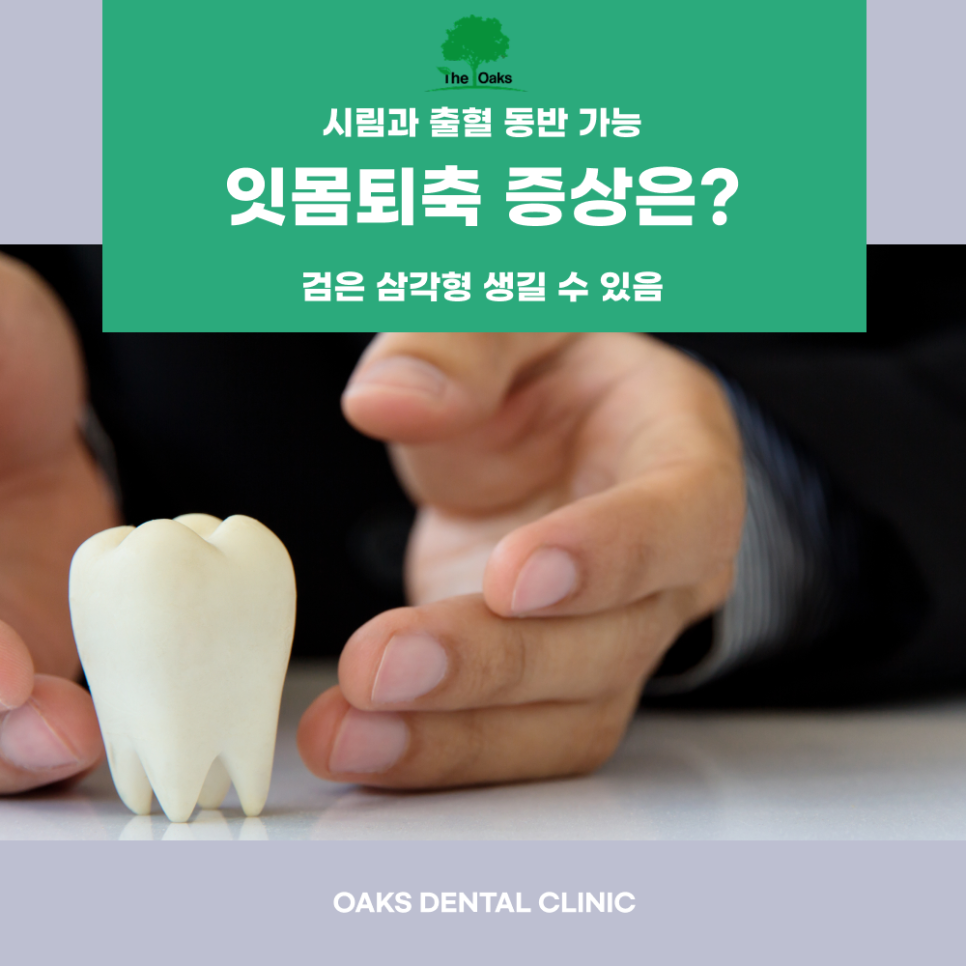
Typical symptoms of gum recession
In the early stages, gum recession often has no clear pain,
so many people do not think much of it.
However, as time passes,
the following symptoms may appear.
Teeth feeling longer
Tooth sensitivity when brushing or eating cold foods
Bleeding and swelling of the gums
Black triangles between the teeth
(exposure of the interdental spaces)
In severe cases, loose teeth
These symptoms go beyond simple discomfort,
and can even lead to tooth loss,
so they should not be ignored.
Why gum recession is dangerous
The gums are an important foundation
that supports the teeth.
As recession worsens, the tooth roots become exposed,
making cavities more likely and sensitivity worse.
Also, when the gums recede,
it may mean that the supporting bone is also weakening,
which reduces the stability of the teeth.
In the end, if treatment is delayed,
you may lose teeth,
so early diagnosis and management are especially important.
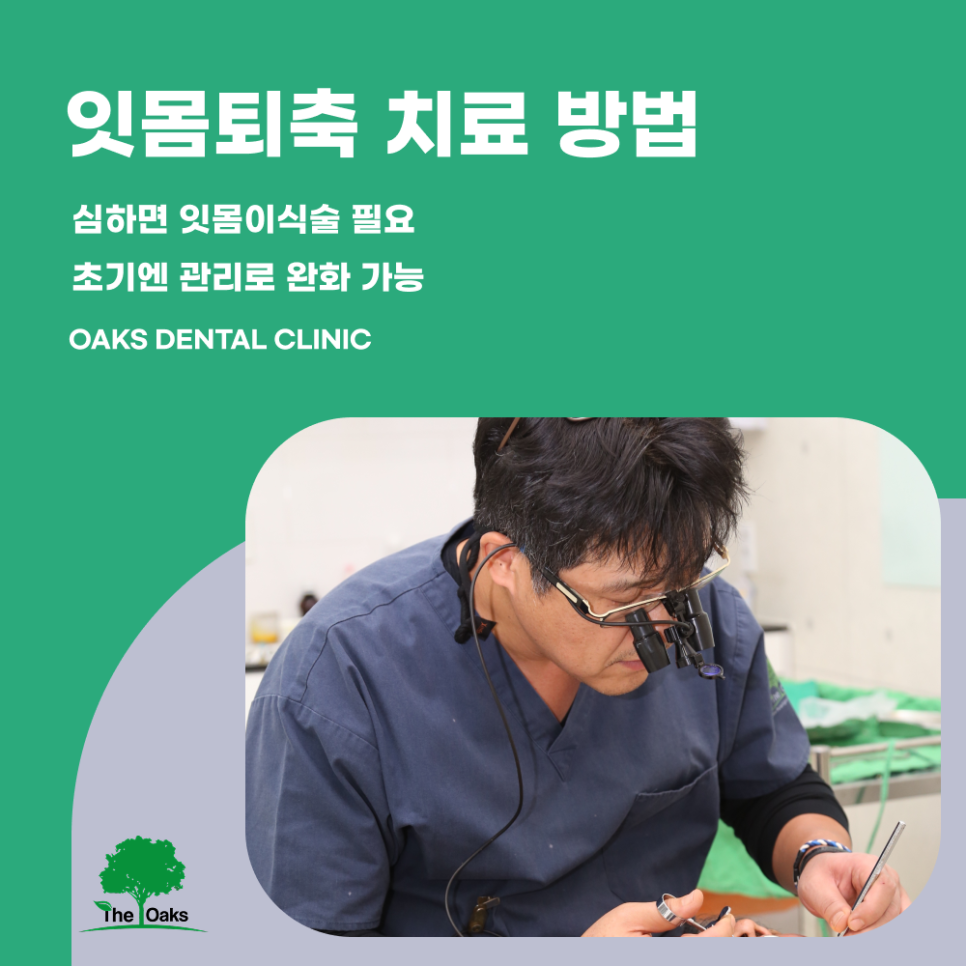
How gum recession is treated
Treatment methods vary depending on the cause and severity of gum recession.
Early management
Progress can be slowed through proper brushing correction, scaling, and gum treatment.
Moderate to severe cases
A gum graft procedure (gingival graft) may be performed on the recessed gum area.
This is a method of reinforcing the gums using the patient’s own gum tissue or artificial materials.
Correction of malocclusion-related causes
Orthodontic treatment can correct tooth alignment and reduce the force placed on the gums.
Prosthetic approach
If the aesthetic concern is significant, prosthetic restorations may be used to cover the exposed roots.
How to prevent gum recession
Above all, prevention is important.
Maintain proper brushing habits
(brush gently without applying too much force)
Use dental floss and interdental brushes
to manage plaque
Get regular dental checkups for early diagnosis
Improve habits such as smoking and teeth grinding
Manage your teeth so that they are not subjected
to excessive force
In particular, regular dental checkups are very helpful
in identifying gum condition in advance
and preventing recession through necessary treatment.
In closing…
Gum recession is not a symptom that should be viewed only as a cosmetic issue.
It is a sign that the foundation supporting the teeth is weakening,
so it should never be taken lightly.
If your teeth look longer, or if you experience sensitivity,
gum bleeding, or similar symptoms,
we recommend visiting Gangnam-gu Dental Clinic early
for an accurate diagnosis and treatment.