Minimize Tooth Damage and Restore a Natural Appearance with Inlay Treatment at a Samsung-dong Dental Clinic!
Hello.
This is 옥스치과.
When a cavity develops, most people think,
“Just fill it!”
However, the treatment method varies
depending on the size and depth of the cavity.
In particular, if it is a cavity in an intermediate stage that is difficult to treat with a simple composite resin filling or a crown, ‘inlay’ treatment may be the most appropriate option.
Today, the Samsung-dong dental clinic will explain what an inlay is, when it is needed, as well as its advantages and care methods.
What Is an Inlay?
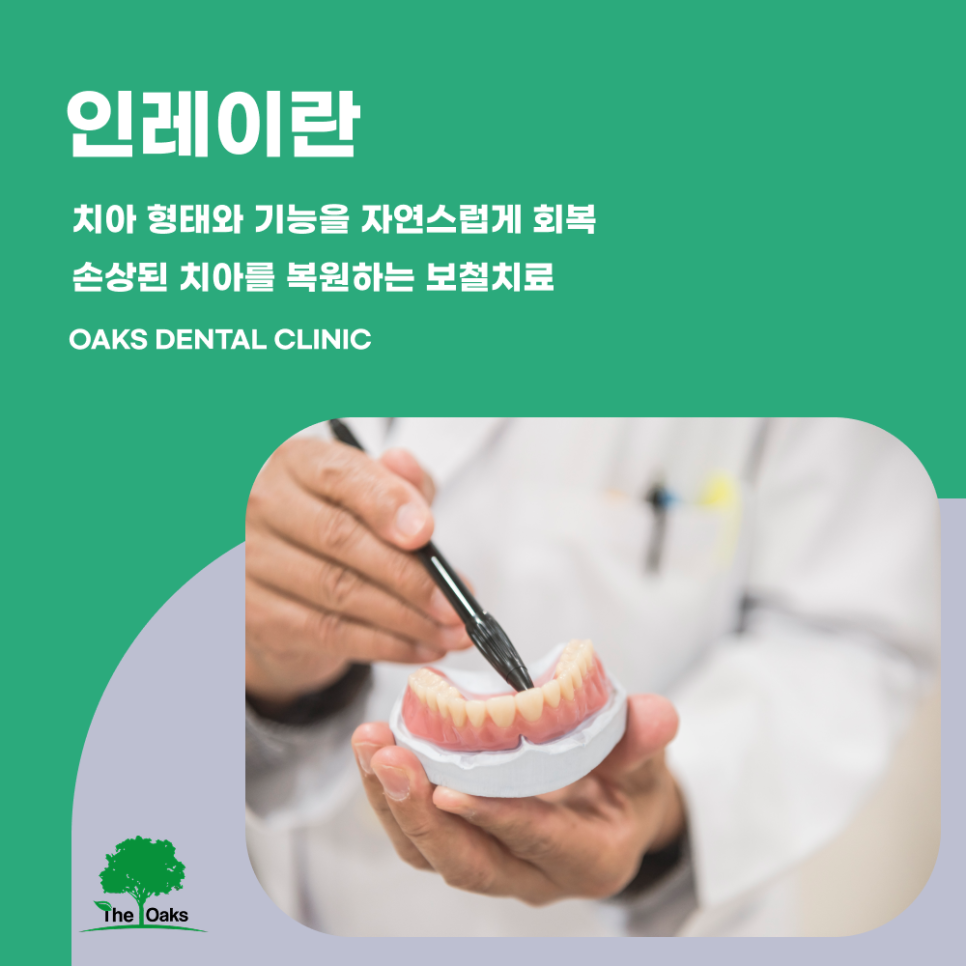
An inlay is a prosthetic treatment used to restore a tooth that has been partially damaged by decay or other damage.
The decayed area is removed, and a custom-made prosthetic restoration (the inlay) is bonded to the missing area to restore the tooth’s shape and function.
Simply put, you can think of it as a treatment that “accurately fills the decayed area like a piece of a puzzle.”
Inlays are most effective when a cavity is neither too large nor too small.
They are stronger than composite resin and do not require covering the entire tooth like a crown, so they can minimize tooth damage while also providing long-lasting results.
When Is an Inlay Needed?
Inlays are not necessary for every cavity.
Inlay treatment is recommended in the following cases:
When a cavity has not reached great depth but has spread across a wide area
When an existing composite resin filling is cracked or has fallen out
When the chewing surface is worn and food becomes easily trapped
When the amount of tooth reduction required for a crown would be excessive
When both aesthetics and durability are desired
In these situations, an inlay can precisely restore the tooth’s shape.
Types of Inlays
There are several types of inlays depending on the material used.
Because each material has different advantages and disadvantages, the choice should be made according to the purpose of the treatment.
Gold Inlays
A traditional material with the longest history
Excellent strength and durability, making it suitable for molars that bear strong chewing forces
Does not discolor, and its wear rate is similar to that of natural teeth
However, its gold color makes it less aesthetically pleasing
Ceramic (Porcelain) Inlays
Highly aesthetic because they resemble the color of natural teeth
Almost no staining or discoloration
Although hard, they may fracture under excessive force
Suitable for front teeth or other visible areas
Zirconia Inlays
The most popular material in recent years
Offers both strength and aesthetics
Stronger than ceramic and nearly indistinguishable from natural teeth
Although the cost is somewhat higher, it offers excellent durability
Resin Inlays
The most affordable option and allows for a relatively simple procedure
However, they may wear down or discolor over time
Suitable for temporary restorations or simple cavity treatment
Advantages of Inlays
The greatest appeal of inlay treatment is that it can restore function and aesthetics close to those of natural teeth without unnecessarily removing a large amount of tooth structure.
✅ Minimized Tooth Damage
Only the necessary area is removed, helping preserve the tooth structure.
✅ Strong Durability
Much harder and longer-lasting than composite resin
✅ Natural Color
Ceramic and zirconia inlays are difficult to distinguish from natural teeth.
✅ Prevention of Recurrent Cavities
Their precise fit helps prevent bacterial infiltration.
✅ Comfortable Feel
There is very little foreign-body sensation, and chewing feels natural.
How to Care for an Inlay
An inlay is a semi-permanent prosthetic restoration, but its lifespan may be shortened if it is not properly maintained.
Brush your teeth with a soft toothbrush after meals.
Use dental floss or an interdental brush to remove bacteria.
Avoid hard foods such as bones and ice.
Have regular checkups and professional cleanings every six months.
If pain or sensitivity persists, visit the dental clinic immediately.
Inlays generally last for at least five years, and with proper care, they can last for more than ten years.
Regular dental visits are necessary to maintain them in their original condition for as long as possible.
In Closing...
An inlay is not simply a treatment for filling a cavity; it is a precise prosthetic treatment that restores both the function and aesthetics of the tooth.
A major advantage is that the tooth can be restored with a natural color without removing an unnecessary amount of tooth structure.
If you develop a cavity, do not leave it untreated. Visit a Samsung-dong dental clinic for an accurate diagnosis.