Sinsa-dong Dental Clinic: From the Causes of Tooth Discoloration to Ways to Restore a Clean Appearance!!!
Hello.
This is Ox Dental Clinic.
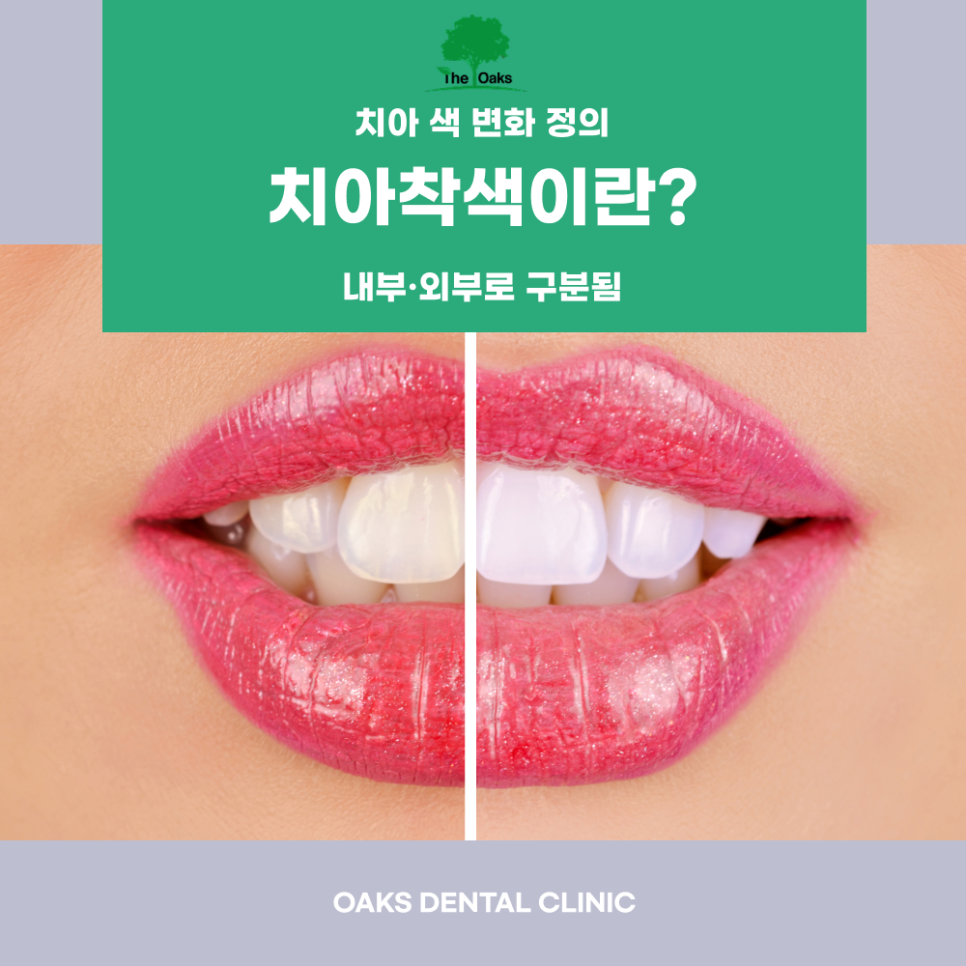
When speaking with someone,
the first thing that catches their eye
is your “smile.”
But when looking in the mirror,
you may be surprised and wonder,
“Why have my teeth become so yellow?”
This may not simply be due to insufficient brushing,
but could be tooth discoloration caused by
various lifestyle habits and
structural factors related to the teeth.
Today, we will explain at the Sinsa-dong dental clinic
why tooth discoloration occurs,
what types there are, and
how to restore a clean appearance.
What Is Tooth Discoloration?
Tooth discoloration refers to a change in color
on the surface or inside of the teeth.
Teeth are naturally translucent white,
but when pigments accumulate due to factors such as
food, beverages, smoking, medication, and aging,
they may become yellow, brown, or grayish.
Tooth discoloration is broadly divided into
extrinsic and intrinsic discoloration.
Extrinsic discoloration occurs when pigments build up
on the outer surface of the teeth due to frequent consumption
of pigmented foods and beverages such as coffee, black tea, and wine,
or due to smoking.
Intrinsic discoloration refers to a change in color
inside the tooth caused by medication—especially tetracycline antibiotics—,
tooth decay, trauma, or changes after root canal treatment.
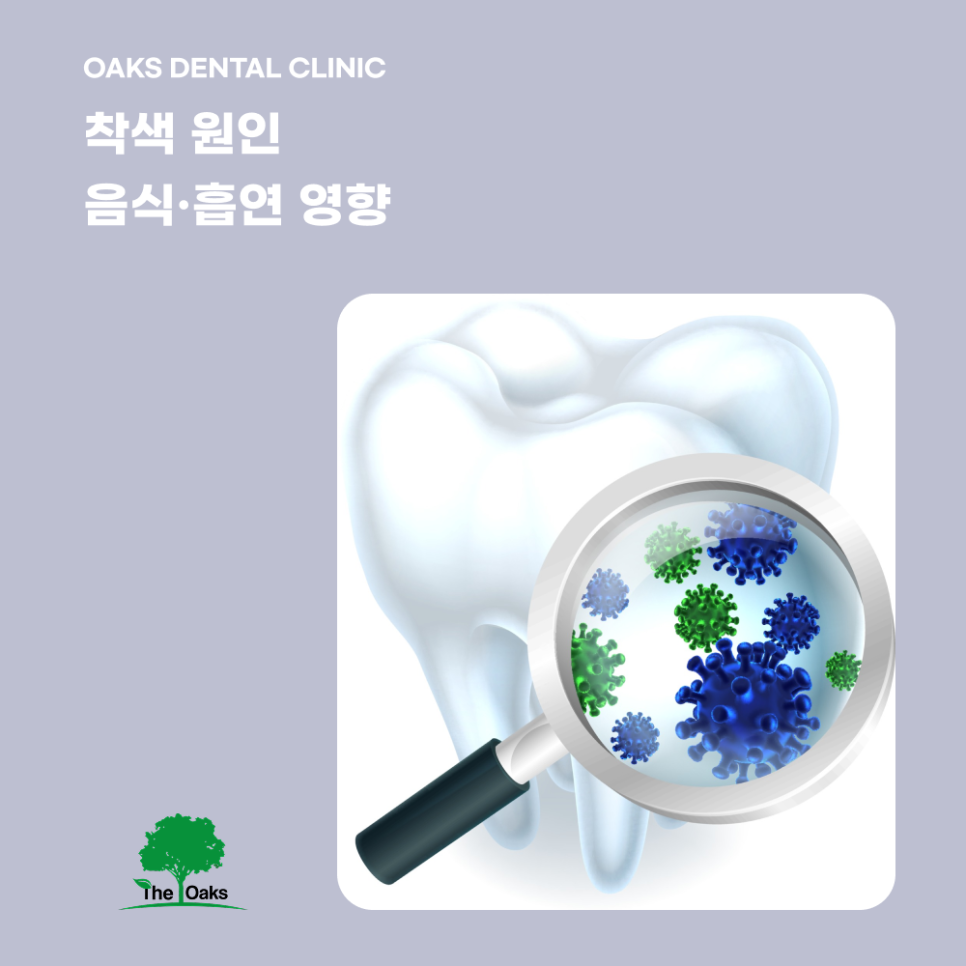
Main Causes of Tooth Discoloration
There are many reasons why teeth become discolored.
Lifestyle habits, age, genetic factors, and other causes
may work together.
Foods and beverages high in pigments, such as coffee,
black tea, and wine, as well as caffeinated drinks,
cola, and curry, contain strong pigments
that can easily accumulate on the enamel layer
on the surface of the teeth.
Smoking
Nicotine and tar in cigarettes are
major causes of teeth becoming yellow or brown.
Smokers also have an increased risk of gum disease,
in addition to tooth discoloration.
Insufficient Oral Care
If you do not brush properly
or use an interdental brush or dental floss,
plaque, or a bacterial film, remains,
and pigments can attach to it.
Effects of Medication
If certain antibiotics were taken for a long period
during childhood, color may penetrate the inside of the teeth,
causing them to become grayish or brown.
Aging
As you age, the outer layer of the teeth, enamel,
becomes gradually thinner, while the inner layer, dentin,
becomes more yellow, causing the entire tooth
to take on a darker tone.
Changes After Trauma or Root Canal Treatment
If the nerve inside a tooth is damaged by an impact,
or if time passes after root canal treatment,
internal changes may occur and alter the tooth’s color.
Types of Tooth Discoloration
Tooth discoloration can be classified as follows
according to its cause and location.
Extrinsic Stain
This discoloration forms on the surface of the teeth
due to external factors such as coffee, tea, wine, and tobacco.
In this case, it can often be improved relatively easily
with scaling or polishing alone.
Intrinsic Stain
This occurs when the color inside the tooth changes
and is difficult to resolve with simple cleaning.
Tooth whitening treatment,
laminates, or crown restorations
may be needed in such cases.
Age-Related Discoloration
This is discoloration that naturally occurs
as the enamel becomes thinner and the color of the dentin
becomes more visible.
It can also be improved with whitening or laminates.
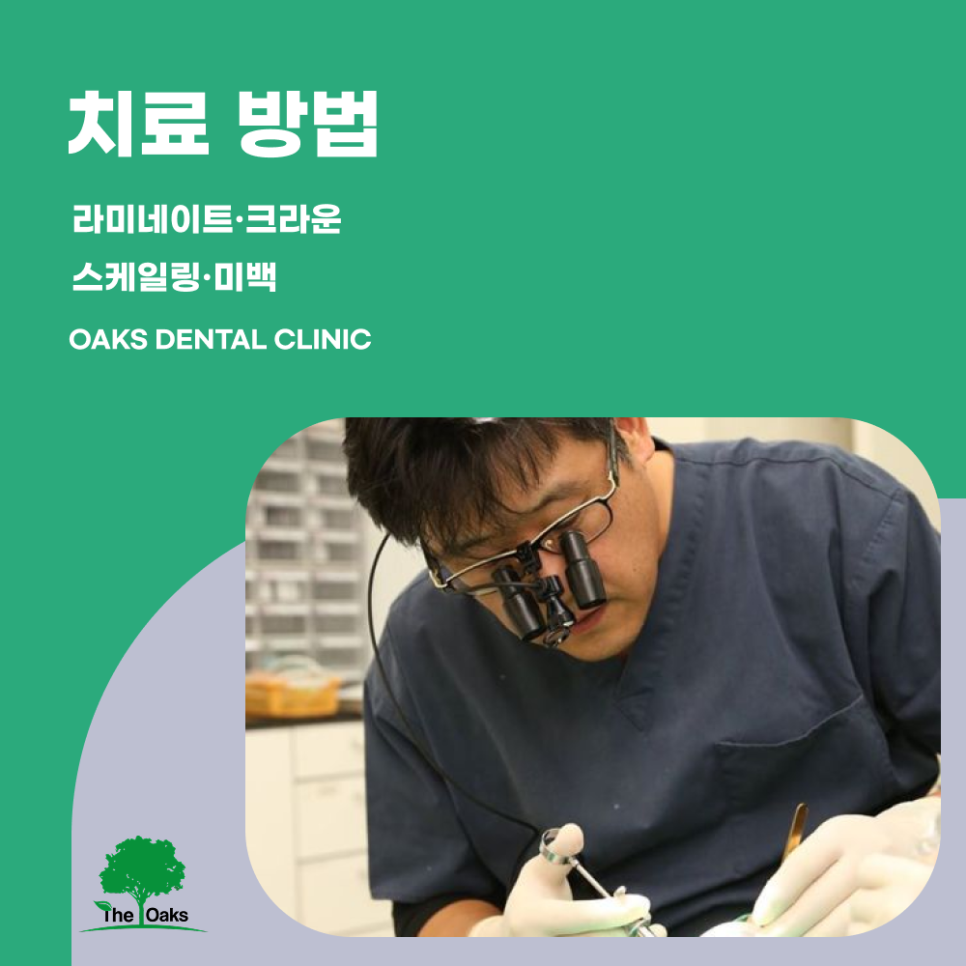
Treatments for Tooth Discoloration
Scaling and Polishing
For extrinsic discoloration, scaling removes
tartar and plaque, and polishing smooths the surface,
helping remove a significant amount of pigment.
Regular scaling alone can help restore
some of the teeth’s original color.
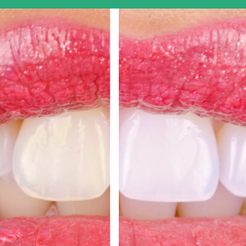
Professional Tooth Whitening
For intrinsic discoloration or discoloration caused by aging,
tooth whitening is the most effective option.
Depending on the condition of each person’s teeth,
office whitening or home whitening
can be selected.
Laminates
Laminates may be used when discoloration
on the tooth surface is severe or when changes to the tooth’s shape
are also needed.
The tooth surface is lightly prepared,
and a custom-made ceramic shell is bonded to it,
improving both the color and shape at the same time.
Crown Treatment
When the internal discoloration is severe
and the tooth is damaged, a crown
is placed to restore its appearance and color.
In particular, zirconia crowns can provide
a natural-looking color for teeth that have darkened
after root canal treatment.
How to Prevent Tooth Discoloration
Prevention is much more important
than treatment when it comes to discoloration.
You can maintain clean teeth for a long time
with the following simple habits.
Brush immediately after consuming highly pigmented foods or beverages
Brush at least twice a day for a minimum of three minutes each time
Remove bacterial film with dental floss or an interdental brush
Reduce smoking or quit smoking
Have regular scaling every six months
Follow thorough maintenance care after tooth whitening
In particular, pigments may penetrate the teeth more easily after whitening,
so it is best to avoid coffee, wine, and similar beverages
for at least two to three days.
In Closing...
Teeth are an important part of your appearance
and can influence the impression your face makes.
Even slight discoloration can reduce your confidence
when you smile.
Tooth discoloration is not simply a cosmetic issue;
it may also be a sign of oral health concerns.
If your teeth have changed color and lost their shine,
do not focus only on whitening.
Have the exact cause evaluated
at a Sinsa-dong dental clinic.