Apgujeong-dong dental clinic: knowing impacted wisdom teeth properly is the key to safe care.
Hello.
This is OX Dental.

Wisdom teeth are the teeth that usually emerge
from the late teens to the early twenties,
growing behind the last molars.
However, if there is not enough space in the jawbone
or they develop in the wrong direction, they may not
erupt into the proper position and often grow
at an angle or in a lying position.
These wisdom teeth are called
impacted wisdom teeth.
Impacted wisdom teeth are not simply
a problem involving one tooth. They can cause
significant damage to the health of the surrounding
teeth and gums, making proper examination
and treatment important.
Today, Apgujeong Dental Clinic will explain
why impacted wisdom teeth can be a problem,
what symptoms may occur,
and how treatment is carried out.
Why do impacted wisdom teeth develop?
As humans evolved, food became
softer, and the size of the jaw needed
for chewing gradually became smaller.
However, the number of teeth did not decrease,
so there is often not enough room for
the wisdom teeth at the back to erupt.
As a result, wisdom teeth may grow
in the following incorrect directions:
They may grow lying on their side, grow at an angle
while pushing against the front teeth, or remain
completely trapped inside the jawbone.
When teeth cannot settle into their normal position
in this way, they are likely to cause various problems.
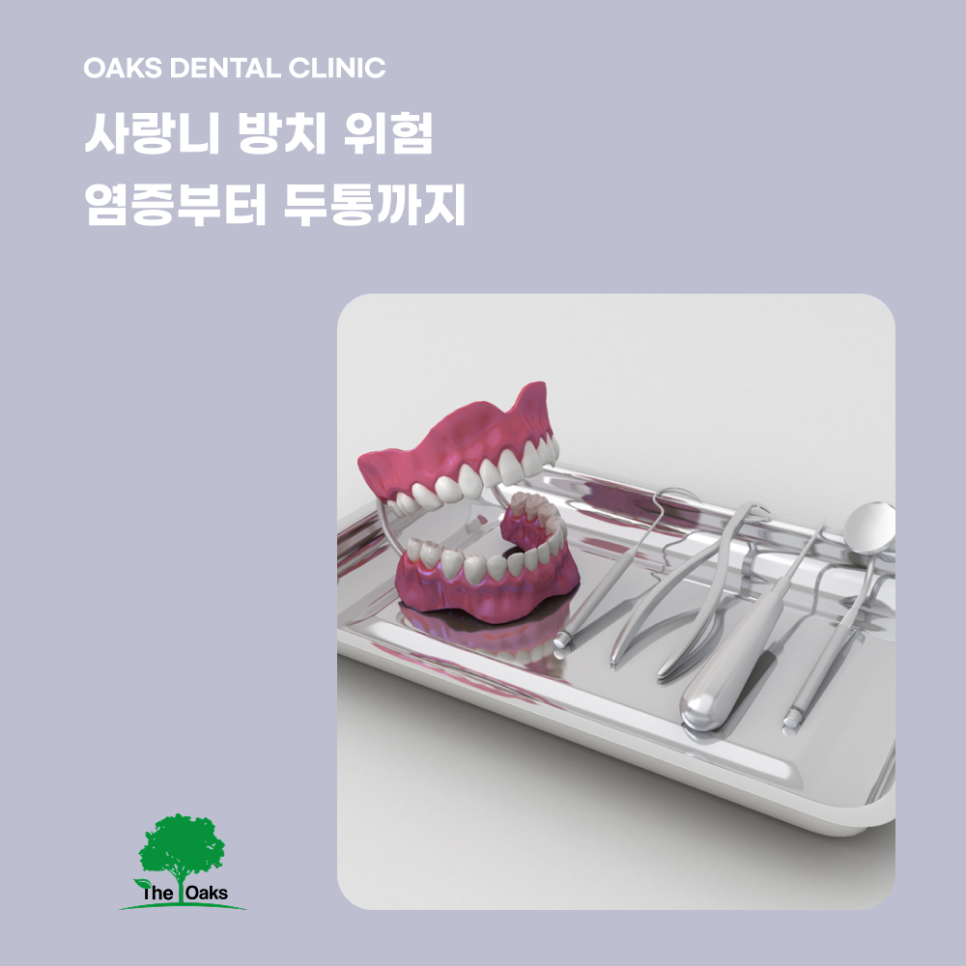
Problems caused by impacted wisdom teeth
If impacted wisdom teeth are left untreated,
the following discomfort and risks may occur.
Gum inflammation (periodontitis)
Food particles and bacteria can easily accumulate
around the wisdom tooth, causing the gums to swell
and hurt and potentially leading to recurring
inflammation.
Cavities
Especially when the wisdom tooth comes into contact
with the molar in front of it—the second molar—
cavities may develop simultaneously in areas that
cannot be seen, making treatment more complicated.
Pain and headaches
If the tooth puts pressure inside the jawbone
or irritates a nerve, the pain may spread
to the jaw, ear, and head.
Formation of a gum abscess
If the inflammation becomes severe, a periodontal
abscess may develop, and in serious cases,
facial swelling may occur.
Tooth displacement and malocclusion
Pushing against the front teeth can cause
the alignment of the teeth to shift,
which may also negatively affect orthodontic treatment.
Cyst formation
A space may form inside the jawbone,
resulting in a cyst and potentially damaging the bone.
Even when they cannot be seen, impacted wisdom teeth
may be silently damaging the surrounding structures.
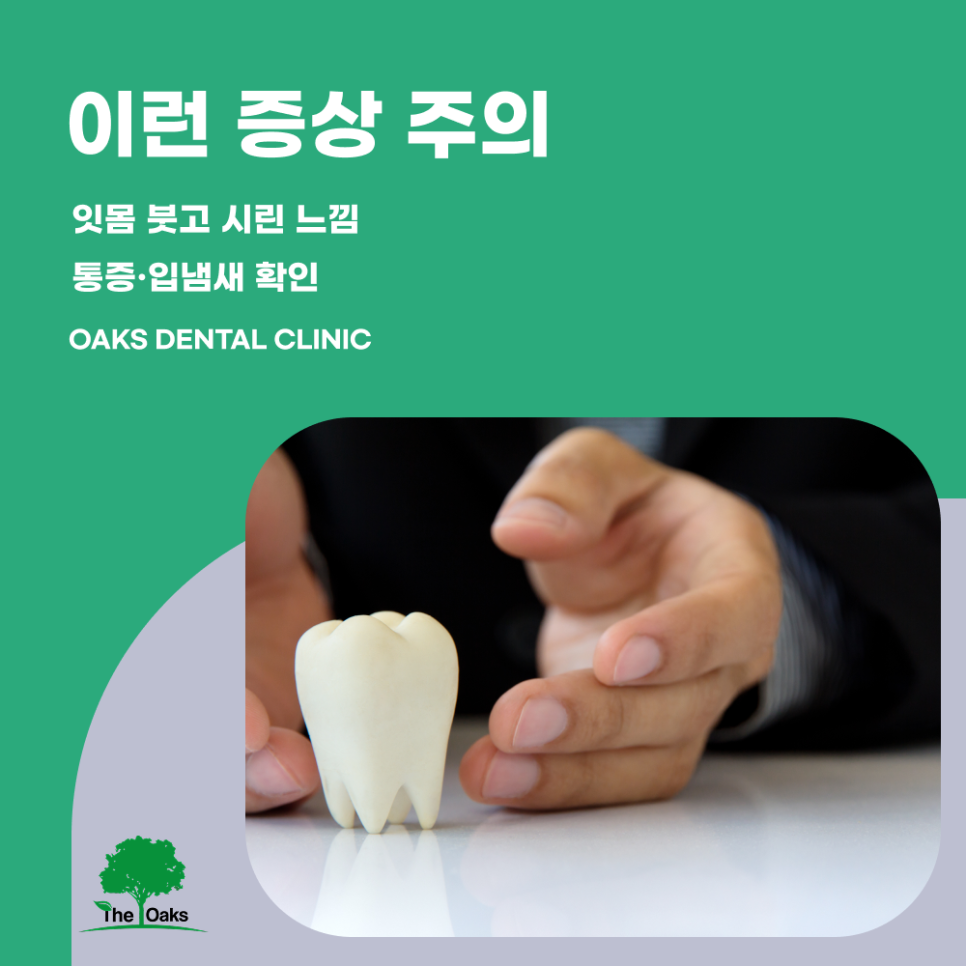
If you have these symptoms, a wisdom tooth examination is needed.
Because it is difficult to check wisdom teeth
on your own, seek an examination promptly
if you have any of the following symptoms.
You feel pain when opening your mouth.
The back of your mouth hurts when chewing food.
Your gums are swollen, and your teeth feel sensitive
when they come into contact with something hot.
Your bad breath has worsened.
You have recurring headaches.
Blood or pus comes from the area
around the wisdom tooth.
In particular, recurring pain is a sign
that the scope of the problem may be expanding.
Do impacted wisdom teeth always need to be removed?
Not all wisdom teeth need to be removed.
However, extraction should be actively considered
if even one of the following applies:
An angled or horizontally positioned wisdom tooth,
one that pushes against the front molar or
causes cavities,
one that frequently causes inflammation,
one that does not participate in chewing,
planning to undergo orthodontic treatment,
or a cyst identified on a radiographic examination.
In other words, if a problem exists or one is expected
to develop in the future, early extraction may be beneficial.
Because recovery is generally faster at a younger age,
extraction is commonly recommended
in the early twenties.
How is impacted wisdom tooth extraction performed?
Detailed examination and treatment planning
Extraction under local anesthesia
Dividing and removing the tooth when necessary
Cleaning and suturing after extraction
Post-extraction care and recovery monitoring
The procedure does not take long,
although the duration varies depending on
the symptoms and the shape of the roots.
Post-extraction care is important.
To help ensure a speedy recovery,
be sure to follow these instructions.
Do not rinse your mouth on the day of extraction
(as this can interfere with blood clot formation).
Avoid using straws and spitting.
Do not smoke or drink alcohol.
Take your prescribed medication as directed.
Apply a cold compress for swelling,
and a warm compress after two days.
Proper care can help minimize infection
and pain.
In closing…
Impacted wisdom teeth will not resolve
simply with the passage of time.
By the time a problem becomes apparent,
the inflammation is often already deep
and the surrounding teeth may have been damaged.
“I'm not in pain right now.
Do I really need to have it removed?”
However, damage that progresses silently
can be even more concerning.
If you currently have discomfort related
to your wisdom teeth or are concerned about them,
please consult an Apgujeong-dong dental clinic.