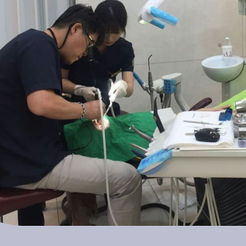
A chipped tooth, if left untreated, can lead to bigger problems.
Hello.
This is Ox Dental.
Some people have experienced a tooth breaking while eating hard foods in everyday life,
falling unexpectedly,
or unconsciously clenching their teeth.
However, many people simply let it go, thinking, “It’s only a small chip, so it should be fine.”
However, a chipped tooth is not merely a cosmetic issue. It is a warning sign that can lead to damage or infection of the nerve inside the tooth, as well as further fracturing.
Today, Seogok-dong Dental Clinic will explain why teeth chip, what symptoms may accompany the condition, and how it can be treated and prevented.
Why Do Teeth Chip?
A chipped or fractured tooth occurs when strong force or impact is applied to the tooth.
There are various causes, but most cases occur in the following situations.
Eating hard foods
Walnuts, bones, ice, hard candy, and similar foods can place significant pressure on the teeth.
Teeth that have undergone root canal treatment are structurally weaker and are especially prone to breaking.
Trauma and impact
A tooth may chip or crack when you fall or hit your face while exercising.
Even if the tooth looks normal to the naked eye, an internal crack may continue to progress, so a dental examination is essential.
Teeth grinding and clenching habits
The habit of unconsciously grinding your teeth while sleeping, or tightly clenching them when concentrating, is also a major cause of fractures.
Continuous pressure can cause the teeth to wear down or develop tiny cracks.
Tooth decay or weakened tooth structure
When decay is deep or has been present for a long time, the inside of the tooth deteriorates and the tooth becomes weaker.
In this condition, even a minor impact can cause the tooth to break easily.
Types and Symptoms of Chipped Teeth
Not all chipped teeth are in the same condition.
Because the treatment method varies depending on the extent of the damage, an accurate diagnosis is important.
Damage limited to the enamel (outer layer)
The surface of the tooth may become slightly chipped and rough, and sensitivity may occur.
If the damage is not severe, it can be easily restored with resin.
Damage extending to the dentin (inner layer)
Sensitivity to cold or sweet foods may become more severe, and pain may occur.
Reinforcement treatment with resin, an inlay, or a crown may be necessary.
Fracture accompanied by nerve damage
Pain may persist, and the chipped area may become dark or discolored.
The tooth must be restored with a crown after root canal treatment.
Root fracture
A root fracture may not be easily visible, but pain or looseness may occur when chewing.
In severe cases, extraction may be necessary.
Leaving a chipped tooth untreated can lead to bacterial infection, nerve death, and damage to the jawbone supporting the gums.
Early treatment is especially important.
Treatment Methods for Chipped Teeth
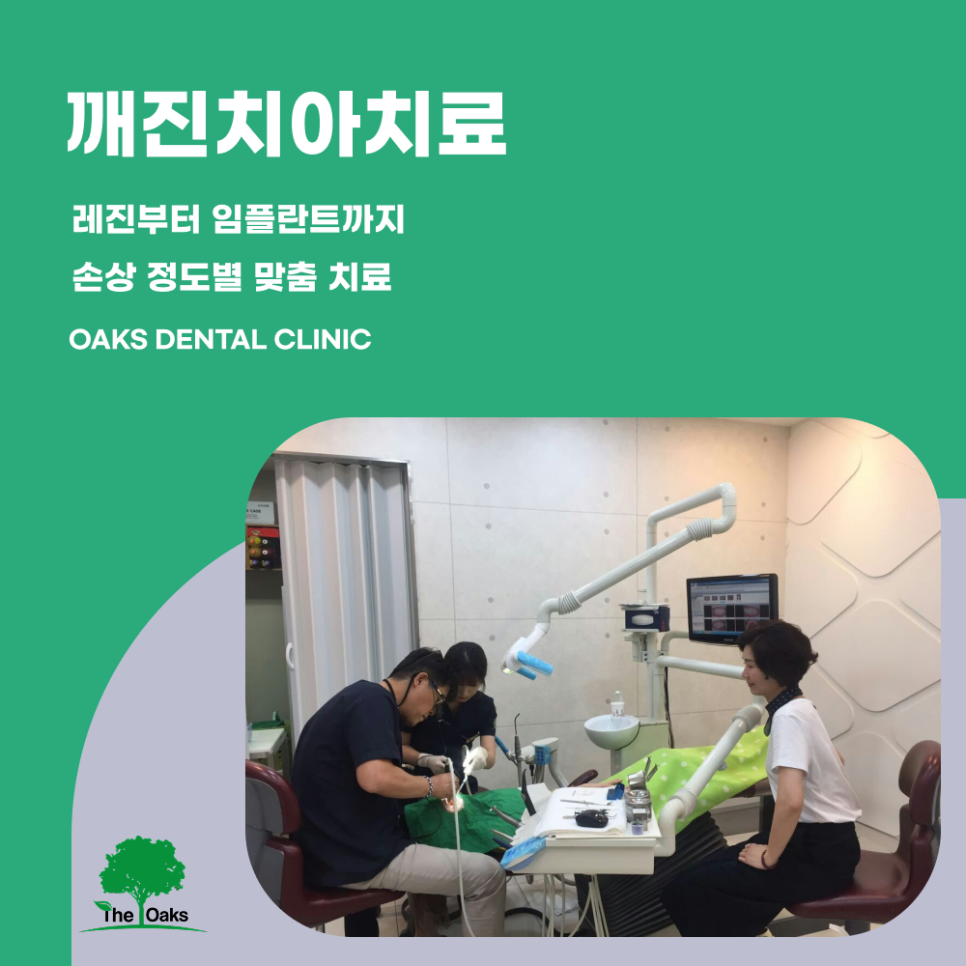
Mild fracture – resin restoration
When only the outer part of the tooth is slightly chipped, tooth-colored resin is used to restore its original shape.
The procedure is simple and provides a natural appearance.
Moderate fracture – inlay or onlay treatment
If the damaged area is extensive or located where significant chewing force is applied, it can be reinforced with an inlay or onlay.
This can provide both durability and an improved appearance.
Severe fracture – crown restoration
If the entire tooth has become weakened or the tooth has undergone root canal treatment, it is covered and protected with a crown.
A strength and color similar to those of a natural tooth can be achieved.
When nerve damage is present – restoration after root canal treatment
If the nerve is damaged, root canal treatment is performed to remove the inflammation, followed by restoration with a dental prosthesis.
When the fracture extends to the root – extraction and implant
When the root is fractured, regeneration is not possible, so implant treatment may be considered after extraction.
How to Care for a Chipped Tooth
If your tooth has chipped, follow these steps, even as temporary measures.
If you have the broken piece, place it in wet gauze or milk and bring it to the dental clinic.
Chew on the opposite side of your mouth.
Avoid hot or cold foods.
Visit a dental clinic immediately and have an X-ray examination.
Because the damaged area of a tooth can expand over time, leaving it untreated because “it feels fine for now” may result in the need for more extensive treatment.
Prevention Is the Best Treatment
Chipped teeth can often be prevented.
Try to consistently practice the following habits.
Avoid hard foods, ice, bones, and similar items.
If you grind your teeth, wear a mouthguard.
Prevent weakening of the tooth structure through early treatment of cavities.
Have regular checkups to identify tiny cracks early.
Regular dental checkups can help detect tiny cracks or fractures early, allowing them to be restored simply.
In Closing...
A chipped tooth can be unsightly, but more importantly, it may indicate damage to the internal structure of the tooth.
If bacteria enter through the chipped area, the nerve may become damaged, and the tooth could eventually be lost.
Do not let your guard down simply because you have no pain. If you notice even a small crack, visit Seogok-dong Dental Clinic for an accurate examination right away.