Dental Clinic in Jagok-dong: Periodontitis Treatment Must Address Inflammation Beneath the Gums to Restore Oral Health.
Hello.
This is OX Dental.
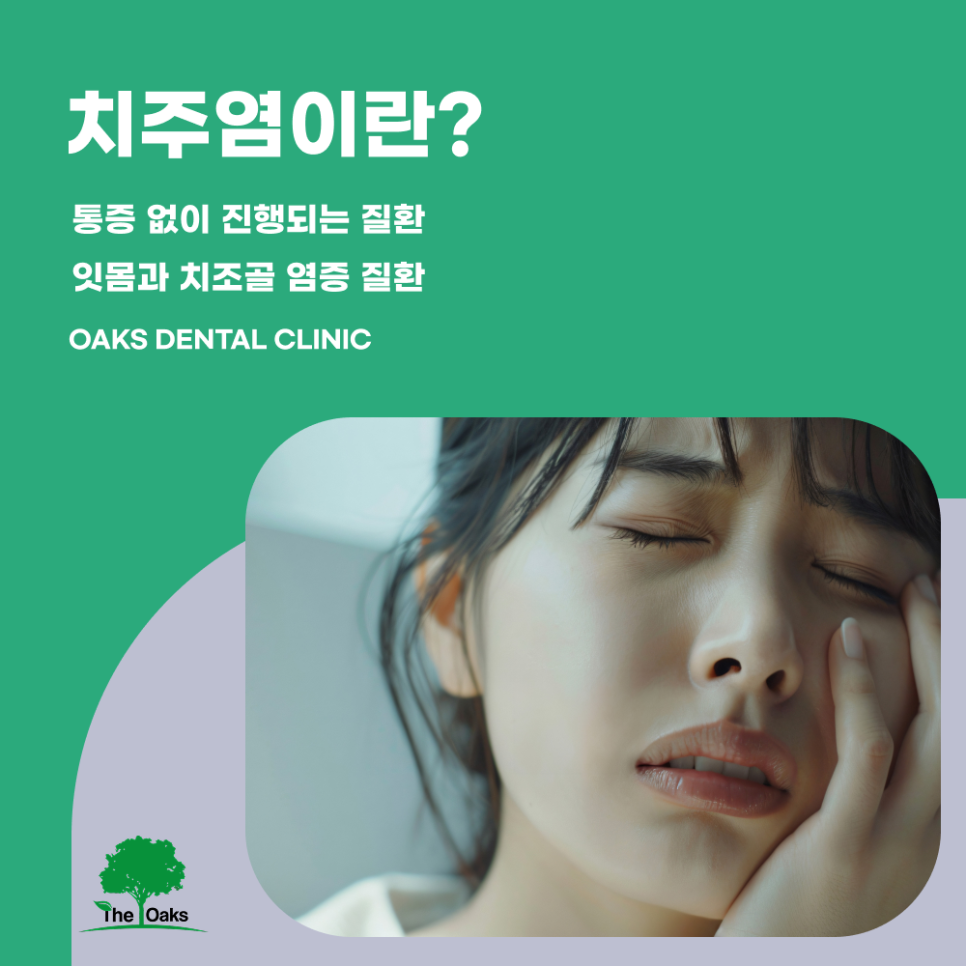
Many people tend to dismiss a small amount of bleeding when brushing their teeth, thinking, “It’s probably fine.”
However, that single drop of blood may be a warning sign of gum health problems.
The most common condition causing this is periodontitis.
Today, the dental clinic in Jagok-dong will explain in detail why periodontitis develops, how it should be treated, and how to care for your gums after treatment.
What Is Periodontitis?
Periodontitis refers to inflammation in the gums and the alveolar bone surrounding the teeth.
It begins as simple gum inflammation, or gingivitis. If left untreated, the inflammation can spread to the alveolar bone, progressing to the point where the bone supporting the teeth becomes damaged.
At this stage, the gums may swell and bleed, bad breath may worsen, and in severe cases, the teeth may even become loose.
Because periodontitis progresses gradually over time, treatment is necessary even when severe pain is not present.
In the early stages, improvement may be possible with simple scaling. However, once the condition reaches a moderate or more advanced stage, bacteria can spread deep beneath the gums, making periodontal treatment—such as root planing and gingival curettage—necessary.
Why Does Periodontitis Develop?
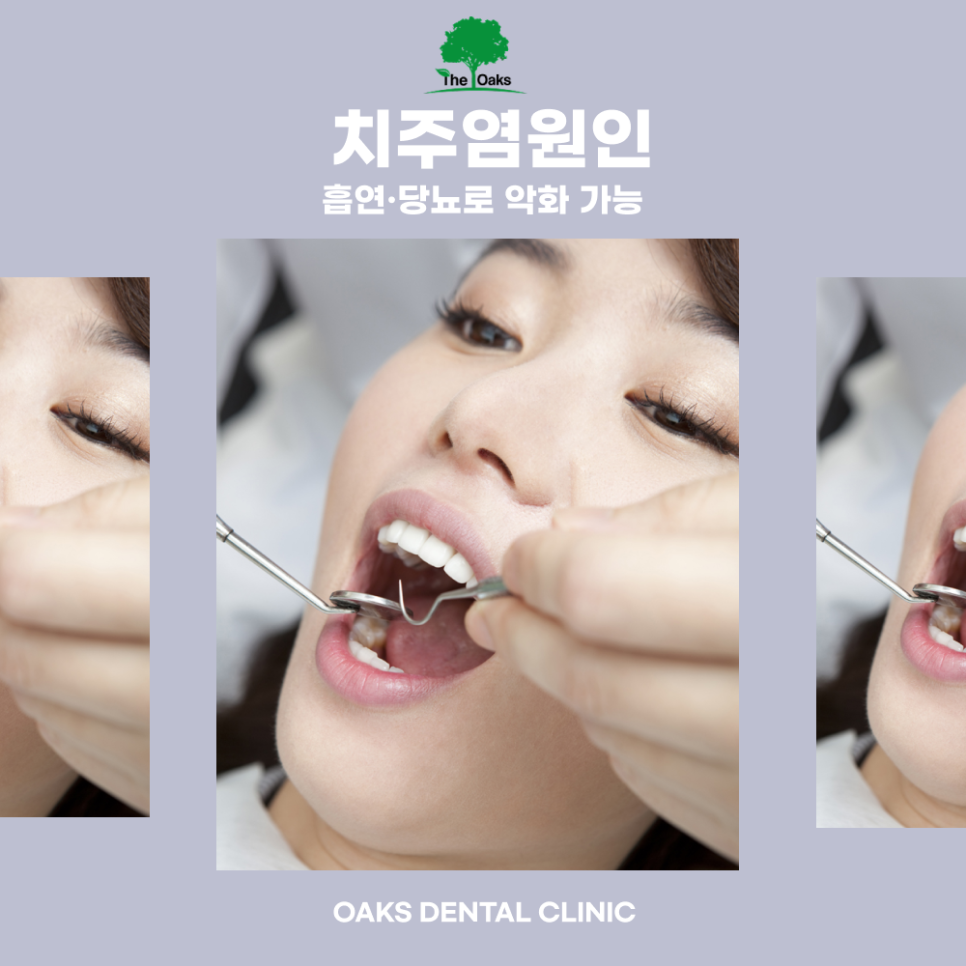
The main causes of periodontitis are dental plaque and tartar.
When brushing is inadequate, accumulations of bacteria form between the teeth and gums. These deposits gradually harden into tartar.
Tartar becomes a breeding ground for bacteria, causing inflammation and gradually destroying gum tissue.
The following factors can also worsen periodontitis.
Smoking
Interferes with blood flow and makes gum recovery more difficult
Stress
Increases inflammation by lowering immune function
Diabetes
Makes the body more vulnerable to bacterial infections
Poorly fitting dental prostheses or misaligned teeth
Because lifestyle habits and overall health can work together to affect the condition, periodontitis is not simply an oral problem. It may also be viewed as one sign associated with overall health conditions.
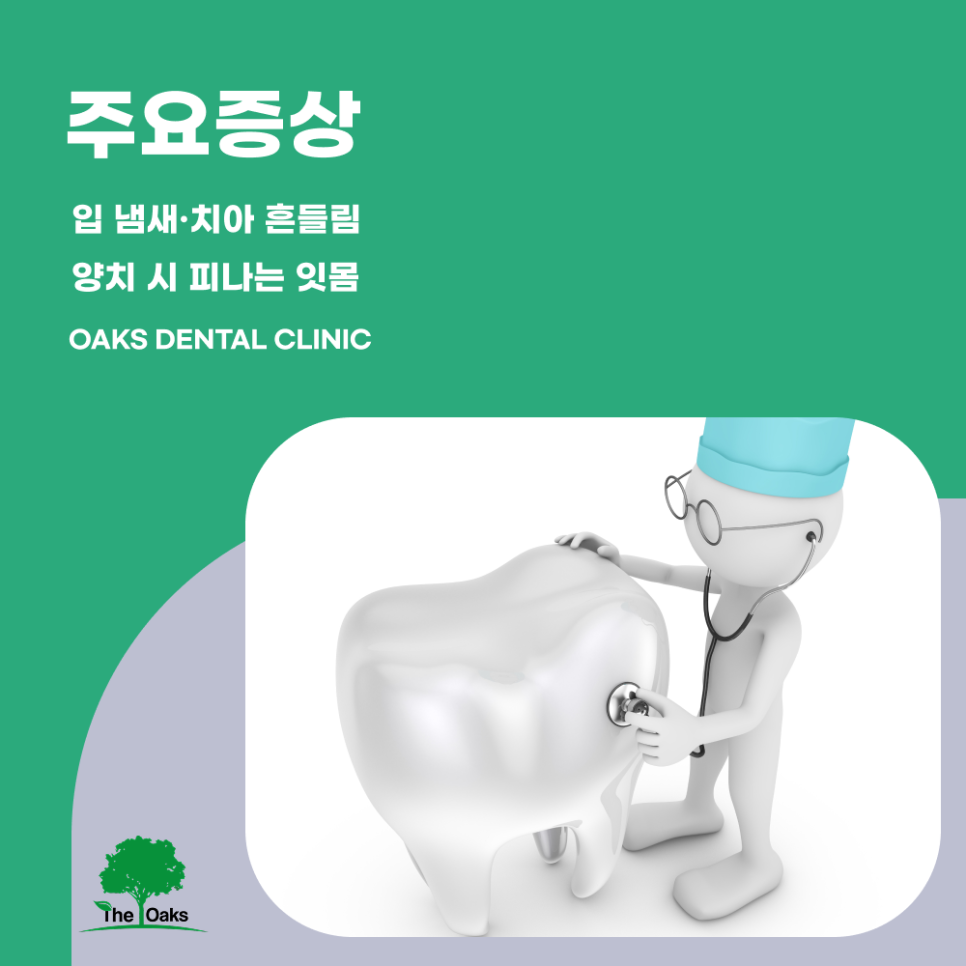
Main Symptoms of Periodontitis
There may be no noticeable pain in the early stages, but the following symptoms may gradually appear.
Bleeding when brushing your teeth
Swollen gums or gums becoming darker in color
Pain when chewing food
Widening spaces between the teeth
Worsening bad breath
Loose teeth
If two or three of these symptoms apply to you, there is a significant possibility that you already have moderate or more advanced periodontitis.
Your exact condition should be assessed through dental X-rays and an examination of gum depth, or periodontal pockets.
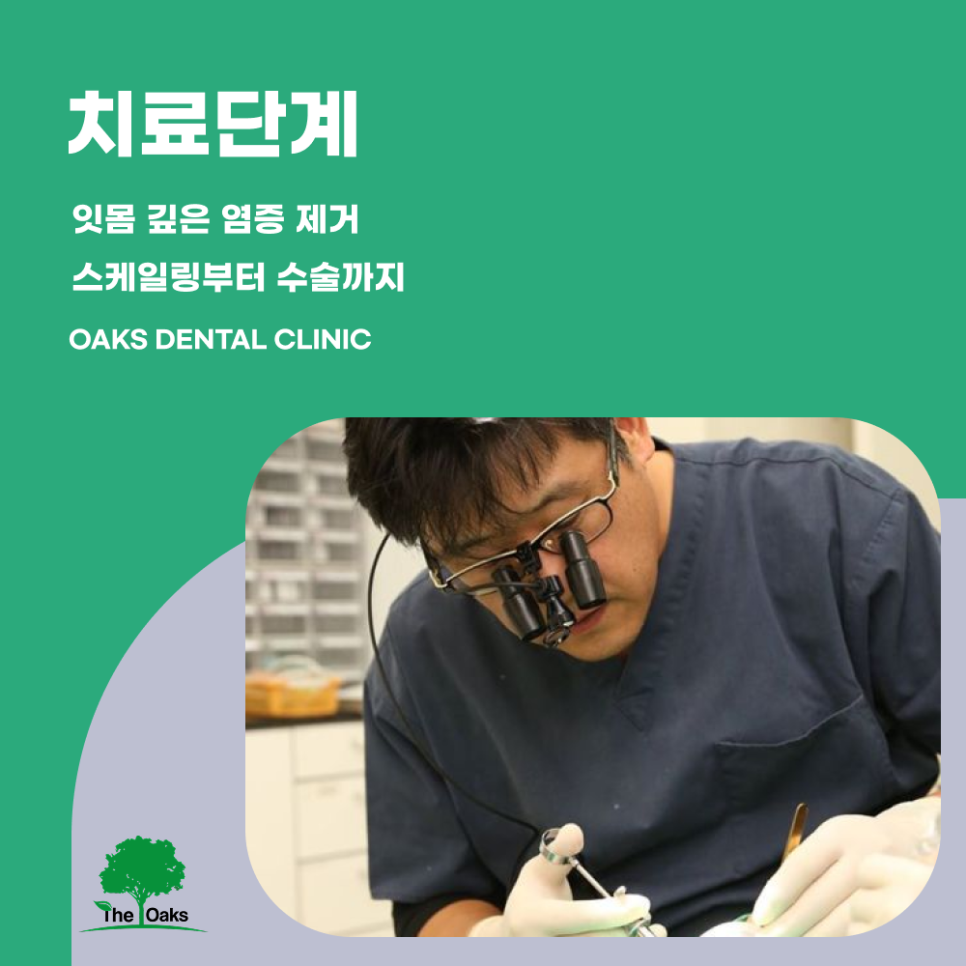
How Is Periodontitis Treated?
Periodontitis treatment is performed in stages according to the depth and progression of the inflammation.
Scaling (Early Stage)
Visible tartar and bacterial plaque are removed.
When gum inflammation is mild, this step alone may lead to improvement.
Root Planing (Moderate Stage)
Bacteria and tartar located deep beneath the gums are removed, and rough tooth roots are smoothed.
This helps prevent bacteria from attaching again and helps the gums reattach to the teeth.
Gingival Curettage and Gum Surgery (Severe Stage)
When inflammation has spread deep beneath the gums and bone damage has progressed, the gums may be opened so that bacteria and inflamed tissue can be removed directly.
When necessary, bone grafting or gum regeneration treatment may be performed at the same time to restore the gum structure.
Prosthetic Treatment and Occlusal Adjustment
When teeth are severely loose, a temporary stabilization device may be used, or prosthetic treatment may be provided to restore function when there is extensive damage.
Post-Treatment Care Is Key to Recovery
Because periodontitis can easily recur even after treatment, consistent care is essential.
Please practice the following measures in your daily life.
Brush your teeth properly at least twice a day
Remove food particles with dental floss and interdental brushes
Improve gum blood flow by quitting smoking
Have regular checkups and scaling every 3–6 months
Manage stress and get sufficient sleep
Periodontitis is not a disease that is “over after one treatment.”
Without consistent care, it can recur at any time.
In Closing…
Periodontitis is not simply a gum disease; it is one of the leading causes of tooth loss.
If left untreated, the alveolar bone can be destroyed, eventually making it difficult to preserve the natural teeth.
Do not assume, “It’s probably fine because my gums only bleed a little when I brush.”
Listen to the small signals your gums are sending.
Visit the dental clinic in Jagok-dong for a checkup and begin managing the inflammation beneath your gums today.