How to Protect Your Gums with Periodontitis Treatment at Gangnam Station Dental Clinic!!!
Hello.
This is Oks Dental Clinic.
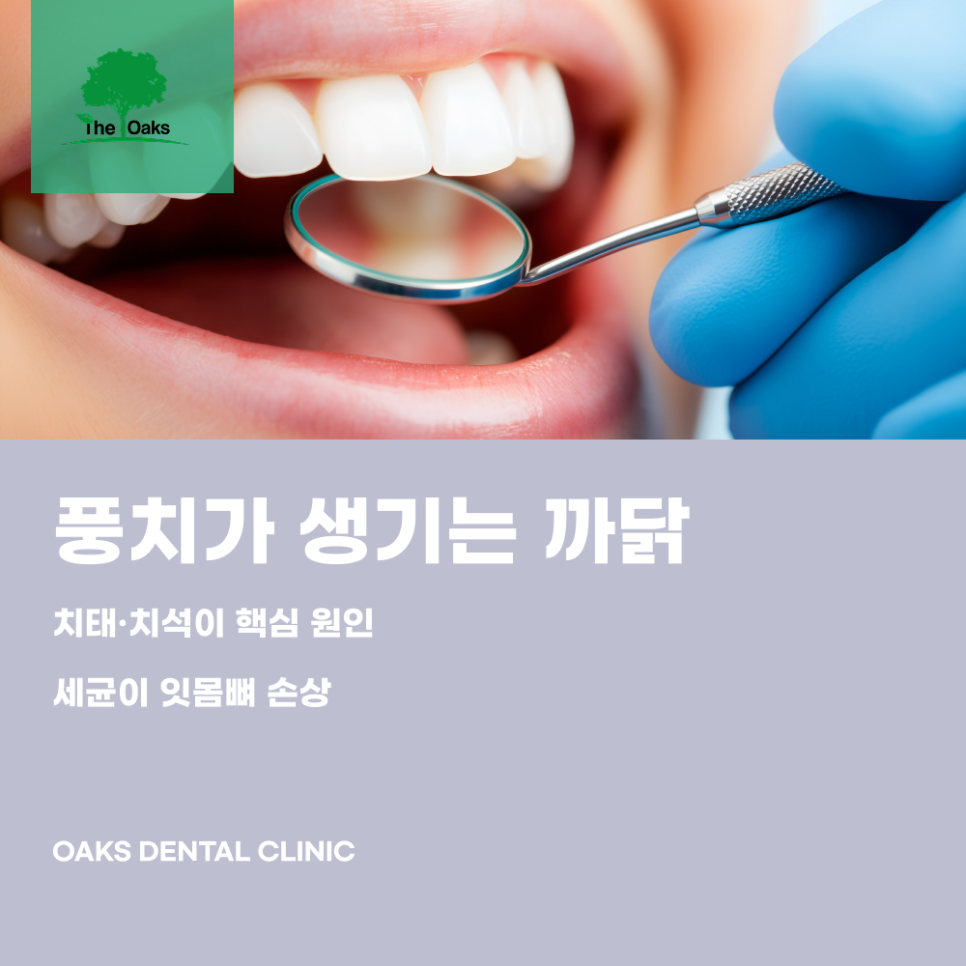
Periodontitis goes beyond simple gum inflammation
and is a stage of periodontal disease
that damages even the gum bone
that supports the teeth.
If treated appropriately in the early stages,
it can be recovered, but if left untreated,
it can lead to loose teeth, gum recession, and even tooth loss,
so early treatment is
most important.
Today, from the progression of periodontitis
to treatment methods and management points,
we will explain everything at Gangnam Station Dental Clinic.
Why periodontitis develops
Periodontitis usually starts with the buildup of plaque (bacterial film)
and tartar.
These bacteria cause gum inflammation,
and over time they damage even the gum bone,
weakening the structure
that supports the teeth.
Many people leave it untreated because
there is no pain, but periodontitis is a
slowly progressing chronic disease, so regular
checkups are important.
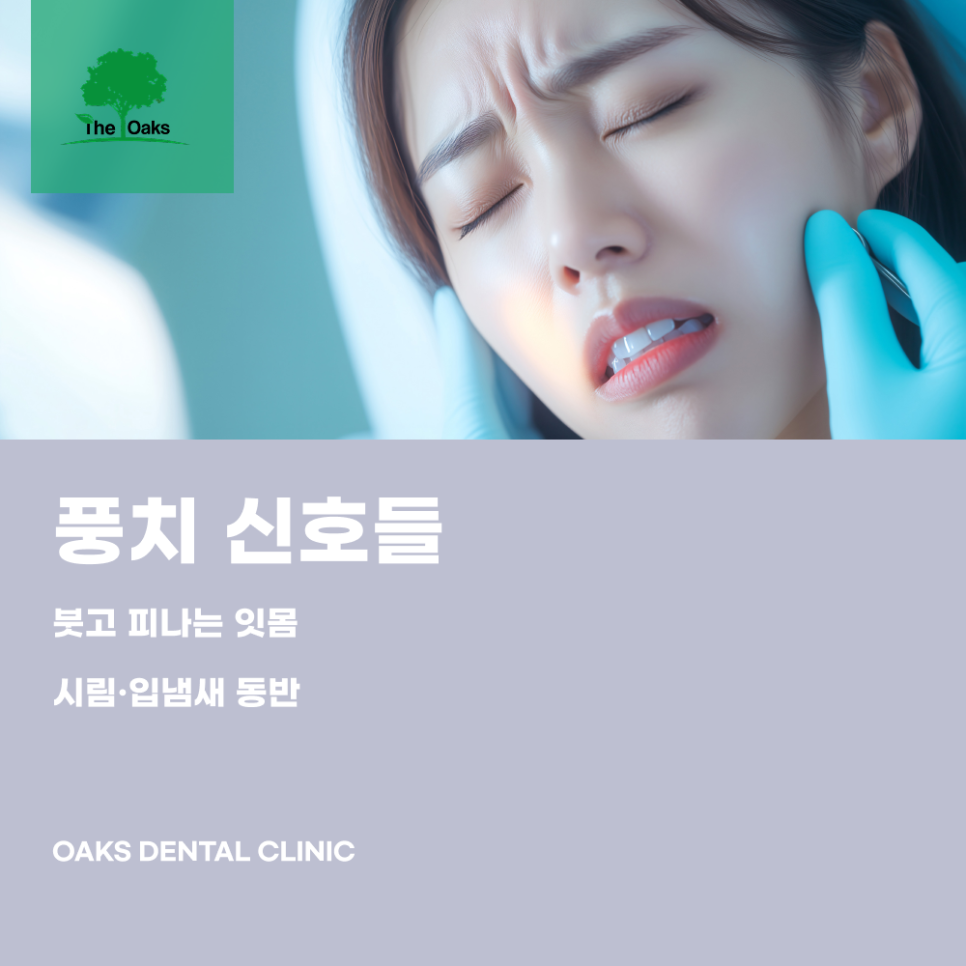
Common symptoms of periodontitis
In the early stages of periodontitis, there is no clear pain,
so it is easy to miss. However, if you notice
the following changes, it is considered a stage
that requires treatment.
✔ Your gums bleed when brushing.
✔ Your gums are swollen and hurt
when pressed.
✔ Your gums recede, making your teeth
look longer.
✔ You feel sensitivity to cold food or wind.
✔ You have persistent bad breath.
✔ Your teeth feel loose.
If even one of these applies,
there is a possibility that gum tissue has already been damaged,
so a thorough examination is
necessary.
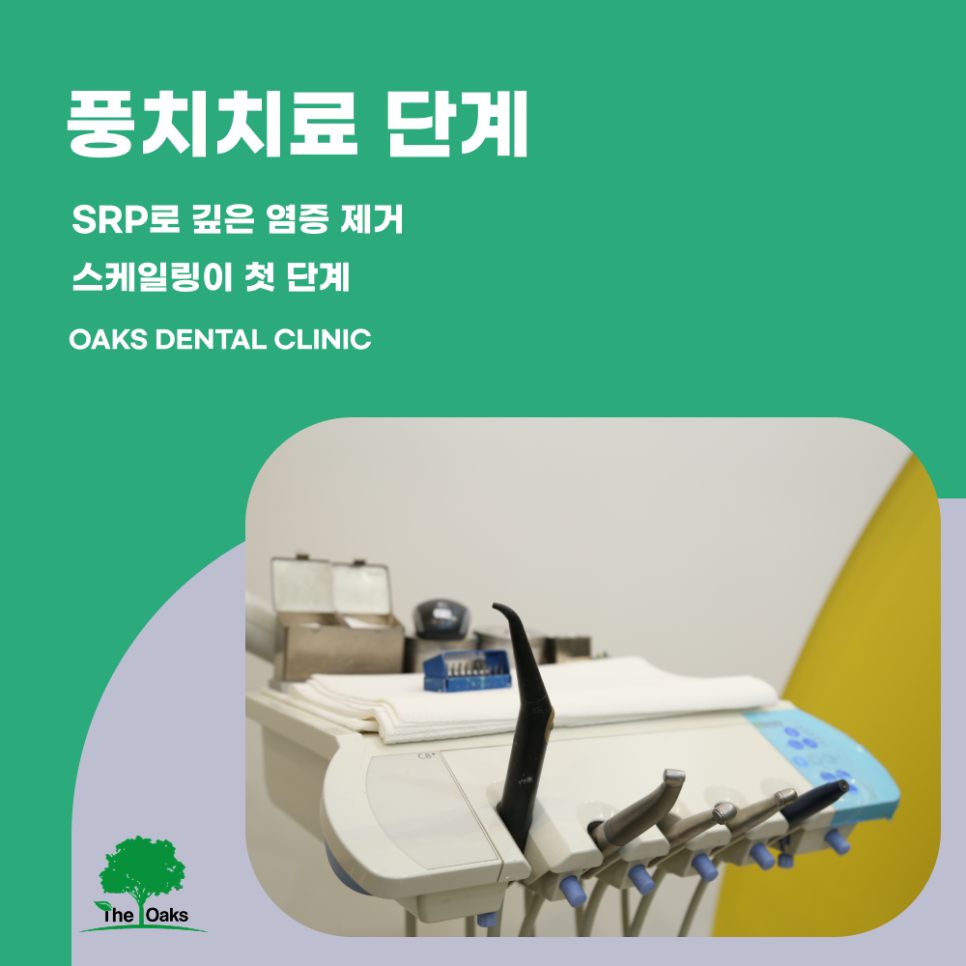
Periodontitis treatment is carried out in stages
The treatment approach for periodontitis changes
depending on the degree of progression.
Scaling (removal of early inflammation)
Tartar and plaque accumulated above and below the gumline are
removed to ease inflammation.
If it is early periodontitis, scaling alone can
significantly improve symptoms.
Root planing
(SRP, treatment of deep gum areas)
If bone damage has already begun,
non-surgical periodontal treatment is needed to remove hardened tartar
deep inside the gums.
SRP reduces bacterial infection inside the gums,
calms inflammation, and helps the gums
adhere back closely to the teeth.
Periodontal surgery (treatment for advanced periodontitis)
If alveolar bone damage is severe or deep
periodontal pockets have formed, periodontal surgery is performed to remove infected tissue and
reshape the bone to create an environment where the gums can recover.
If necessary, regenerative treatment (bone grafting and regenerative membranes)
is combined to help regenerate lost gum bone.
Maintenance (prevention of recurrence)
Periodontitis is a disease with a high
chance of recurrence.
Even after treatment is completed,
regular checkups every 3–6 months, plaque management,
and proper brushing are needed to
maintain healthy gums.
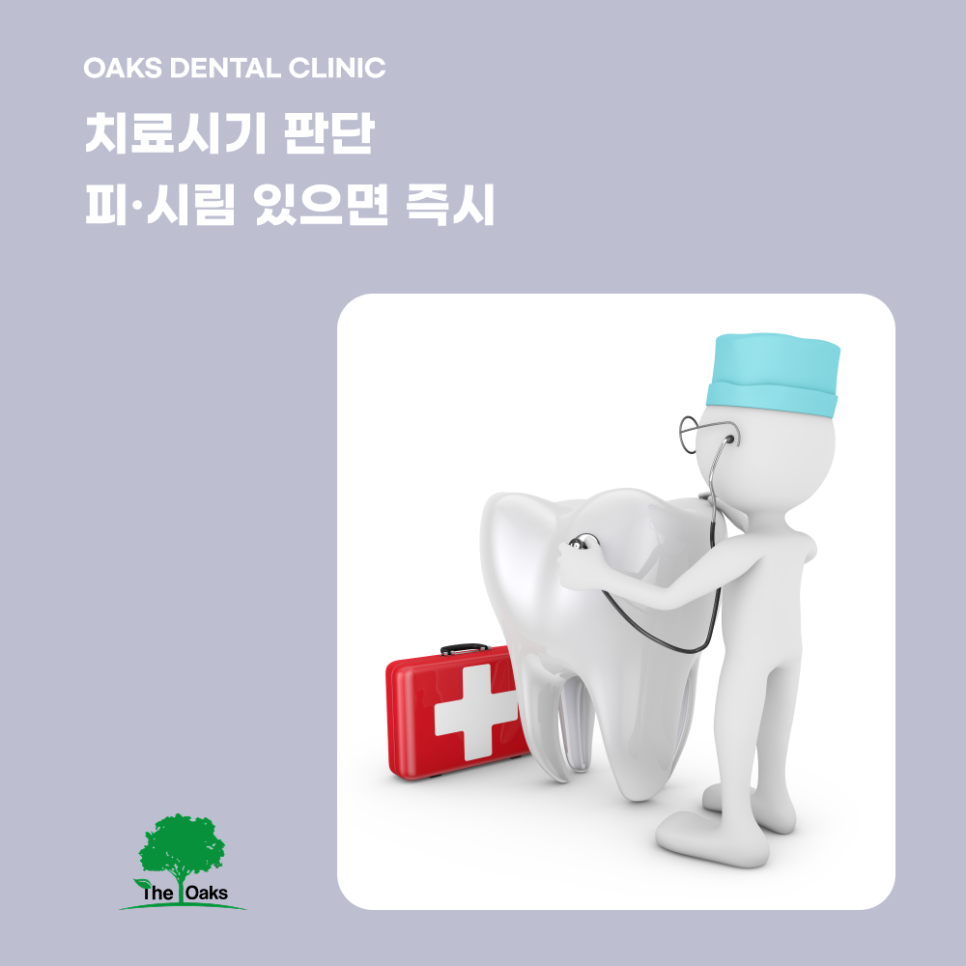
When should periodontitis treatment begin?
Periodontitis is absolutely not a disease that
heals naturally if you just wait.
By the time symptoms appear, part of the gum
structure may already have been damaged, so the earlier
treatment begins, the more original tissue can be preserved.
In particular, we recommend immediate examination
in the following cases.
✔ Your gums keep bleeding when brushing.
✔ Your teeth are sensitive to cold.
✔ You feel your gums are gradually receding.
✔ Loose teeth
✔ You recently have risk factors such as stress, smoking, or diabetes.
In closing...
Periodontitis can be sufficiently managed
if you take good care of it.
With proper management, periodontitis is a condition that can help you keep your teeth
for a long time.
On the other hand, if left untreated, it can lead to tooth loss,
so early treatment and maintenance are
the most powerful prevention methods.
If you are worried because of periodontitis,
please consult at Gangnam Station Dental Clinic.