Hello.
This is Oks Dental Clinic.
When a tooth is damaged or lost,
there are many times when people
wonder which treatment to choose.
�
It is easy to think only of implants,
but in reality, there are many cases
where a “dental bridge” is more
appropriate.
�
Today, Daechi-dong Dental Clinic will
tell you what a dental bridge is,
in what situations it can help,
and what the treatment process is like.
What Is a Dental Bridge?
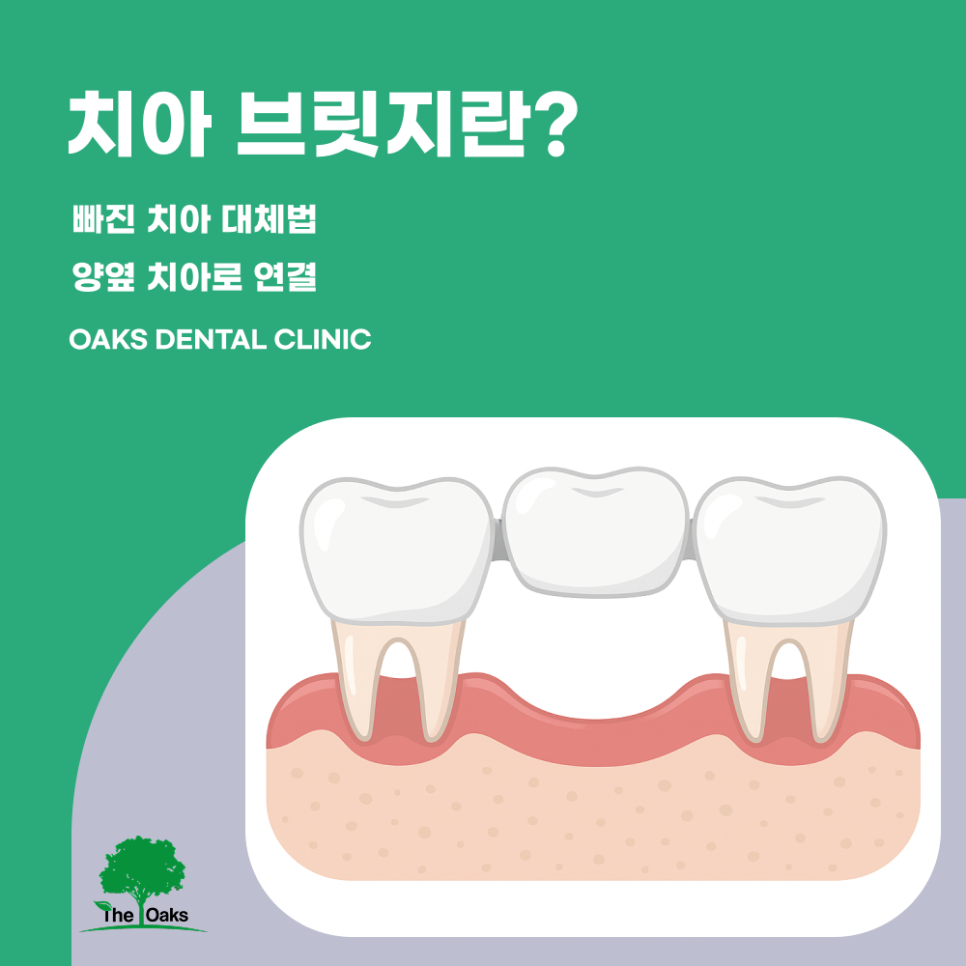
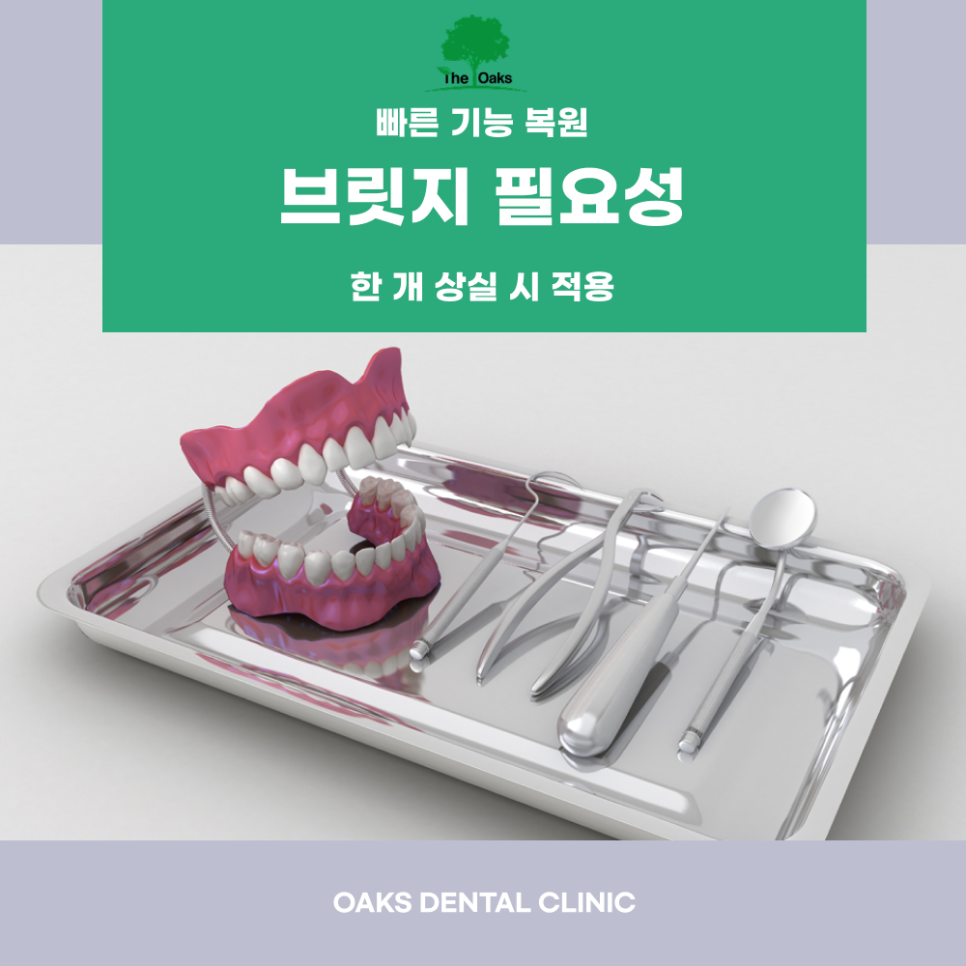
A dental bridge is a type of prosthetic treatment
that fills a gap by connecting the teeth on
both sides with a restoration, like a “bridge.”
�
You can think of it as a structure in which
an artificial tooth fills the missing area,
and crowns are placed on the adjacent teeth
on both sides to support and fix the artificial tooth.
�
Simply put,
it is a method in which healthy teeth on both
sides of a gap act as pillars to support an
artificial tooth.
Situations in Which a Dental Bridge Is Needed
A dental bridge is especially useful in certain situations.
�
It cannot be applied to all tooth loss cases,
but it can be considered in the following situations.
�
When one tooth is already missing
In the case of a single missing tooth,
there is an option called a bridge in addition to an implant.
�
If the surrounding teeth are strong and can support
a bridge, lost function can be restored quickly
without the 부담 of surgery.
�
When implants feel burdensome
If implant treatment is difficult or burdensome due
to health conditions, insufficient bone volume, or cost,
a bridge becomes an alternative.
�
In particular, older patients often say they are
“afraid of surgery,” so they may prefer a bridge.
�
When the surrounding teeth already need crown treatment
If the teeth on both sides have severe cavities or already
need prosthetic treatment, a bridge can improve function
and also address the aesthetic aspect at the same time.
How Is Dental Bridge Treatment Performed?
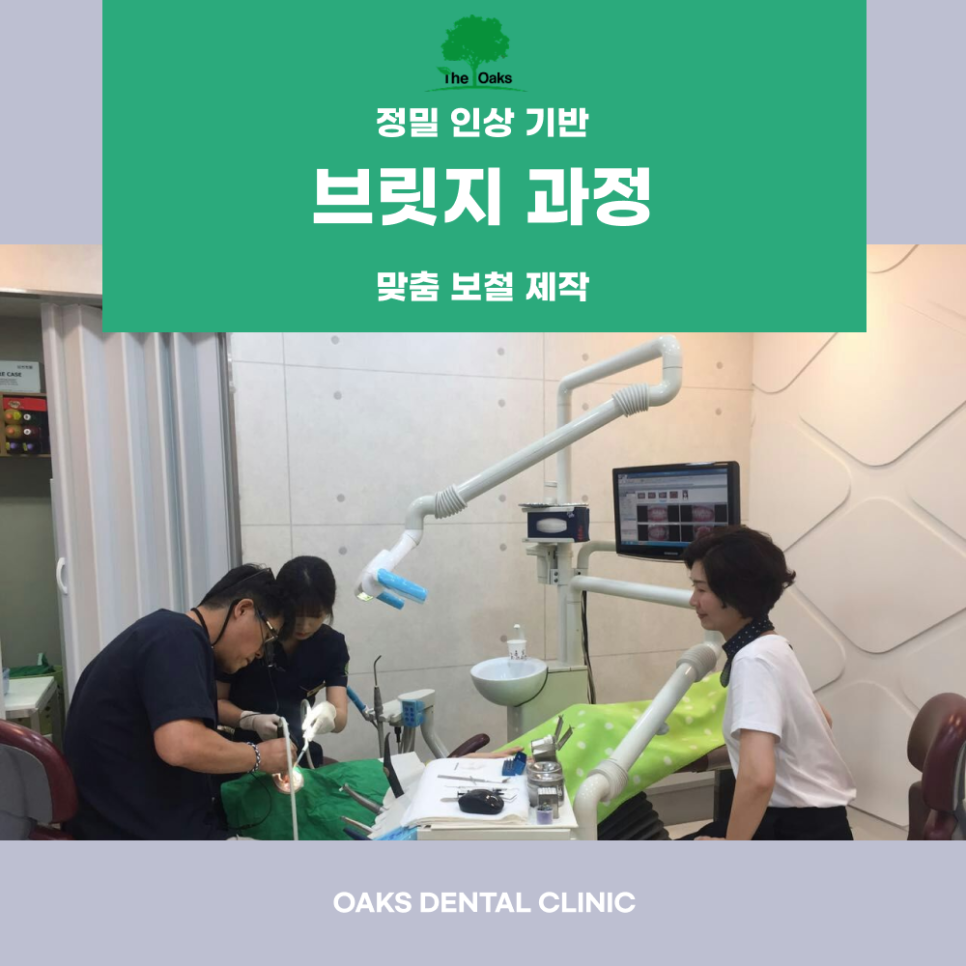
A bridge must fit the patient’s mouth precisely,
so the process is delicate.
�
Evaluation of the surrounding teeth
X-rays are taken to check the roots, nerve condition,
and bone height of the adjacent teeth.
�
A bridge can remain stable for a long time only when
there are healthy supporting teeth.
�
Tooth reduction of the supporting teeth
A defining feature of a bridge is that the teeth on both
sides act as supports.
�
Therefore, a certain amount of reduction of the surrounding
teeth is necessary so that crowns can be placed.
�
Because of this, many people compare it with implants and
hesitate, but if the tooth is already broken or has a large cavity,
it can actually be an advantage.
�
Precise impression taking
The fit of the prosthesis is everything.
�
After making an accurate model based on the teeth,
the shape is designed so it can fit naturally in the mouth.
�
Custom prosthesis fabrication
Bridges are made from a variety of materials,
such as porcelain, zirconia, and PFM.
�
These days, many people prefer zirconia bridges because they
consider both aesthetics and strength.
�
Placement in the mouth and bite adjustment
The final prosthesis is placed and adjusted so that the
chewing force is distributed naturally.
�
This process must be done well for the bridge to be
comfortable for a long time.

Advantages and Limitations of Dental Bridges
A bridge is certainly a good treatment option,
but understanding exactly what advantages it has
and what points require caution will help you make a better choice.
�
Advantages
The treatment period is short.
(most are completed within 2 to 3 weeks)
�
There is no surgical burden.
�
It can match the color of the existing teeth,
so it looks natural.
�
It can solve multiple dental problems at once.
�
Limitations
The healthy teeth on both sides must be reduced.
�
Over time, there can be a burden on the supporting teeth.
�
If bacteria build up below the gumline, management can become difficult.
�
Ultimately, a bridge is “a very good option for the right patient,”
and its drawbacks can also be sufficiently addressed through
maintenance and regular checkups.
How to Care for a Dental Bridge So It Lasts Longer
The space underneath a bridge can easily trap food,
so care is very important.
�
The best method is to use bridge-specific floss or a Waterpik.
�
Brushing alone is not enough to fully maintain it.
�
It is also a good idea to have regular checkups at least every
6 months to check the periodontal condition around the bridge.
�
This is because prosthetic restorations can last a long time if
well cared for, but their lifespan can become shorter if maintenance is neglected.
Conclusion...
A dental bridge is one of the prosthetic treatments that is
simple and allows for relatively quick recovery.
�
Compared with implants, there is no single answer to which one
is the better treatment.
�
The more suitable treatment differs depending on each patient’s
oral condition, tooth condition, and lifestyle, so it is safest
to decide after an accurate examination.
�
If you have questions about bridges, please visit Daechi-dong Dental Clinic for a consultation.