How Gyeodae Station Dental Clinic Can Improve Implant Success Rates with Sinus Lifting When the Upper Jawbone Is Insufficient!
Hello.
This is Oaks Dental Clinic.
Among those considering implants,
you may have heard that there is
“not enough bone.”
In particular, the upper molar area often
has insufficient alveolar bone height due
to its anatomical structure, so placing
implants may not be easy.
In such cases, the treatment needed is
sinus lifting.
Today, we will explain what sinus lifting is,
why it is necessary, the treatment process,
and precautions, here at Gyeodae Station
Dental Clinic.
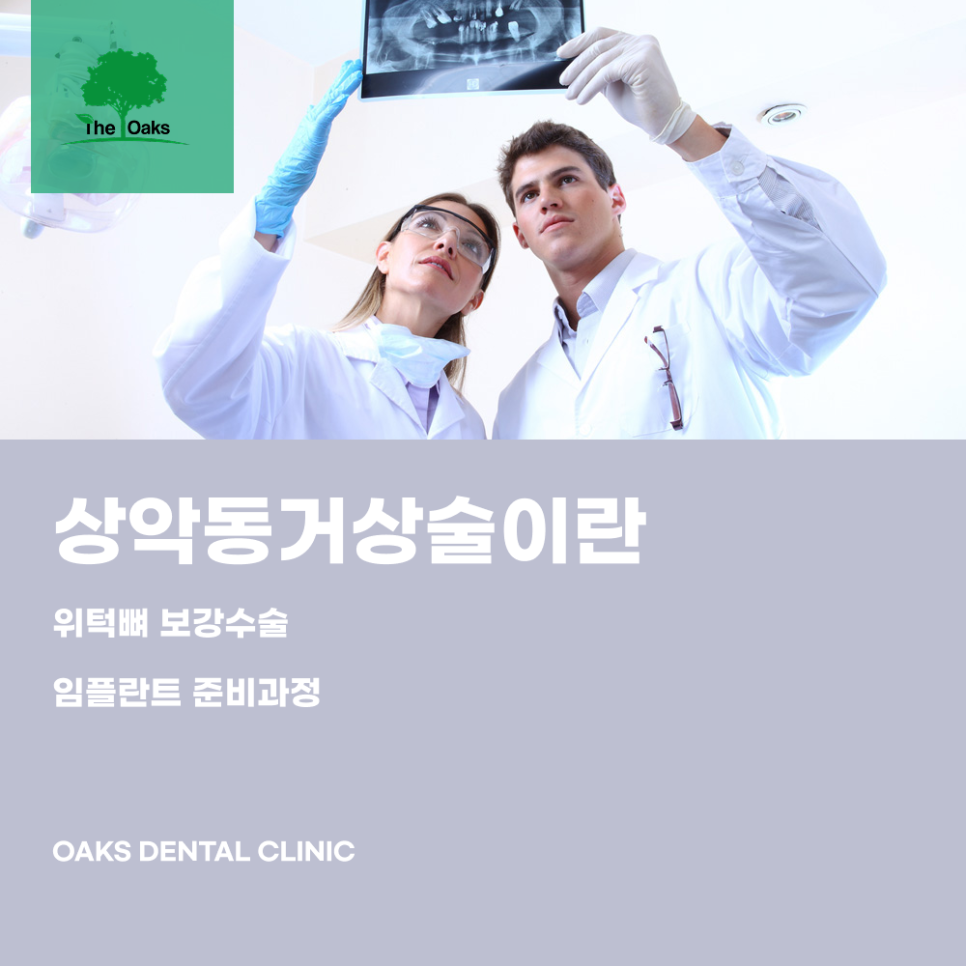
What Is Sinus Lifting?
Sinus lifting is a surgery that reinforces
insufficient alveolar bone in the upper molar
area so that implants can be placed.
In the upper jaw, there is an air-filled space
called the “maxillary sinus.” After teeth are
lost, as time passes and the alveolar bone
is resorbed, this space descends.
As a result, there are many cases where
there is not enough bone height to place
an implant.
Sinus lifting is a treatment in which the
maxillary sinus membrane is carefully lifted,
and bone graft material is placed in the
space below it to secure bone height.
This creates a stable environment for
implant placement.
Why Does the Upper Jaw Lose Bone?
Compared with other areas, the upper molar
region tends to have lower bone density, and
after tooth loss, bone resorption tends to
progress quickly.
In particular, if a tooth is left untreated for a
long time after extraction, the alveolar bone
gradually becomes thinner and lower.
In addition, because there is an anatomical
space called the maxillary sinus, it can extend
downward, making implant placement more
difficult.
Therefore, when planning upper jaw implants,
a precise 3D diagnostic examination must be
performed first to accurately identify the bone
volume and the location of the maxillary sinus.
Treatment Methods for Sinus Lifting
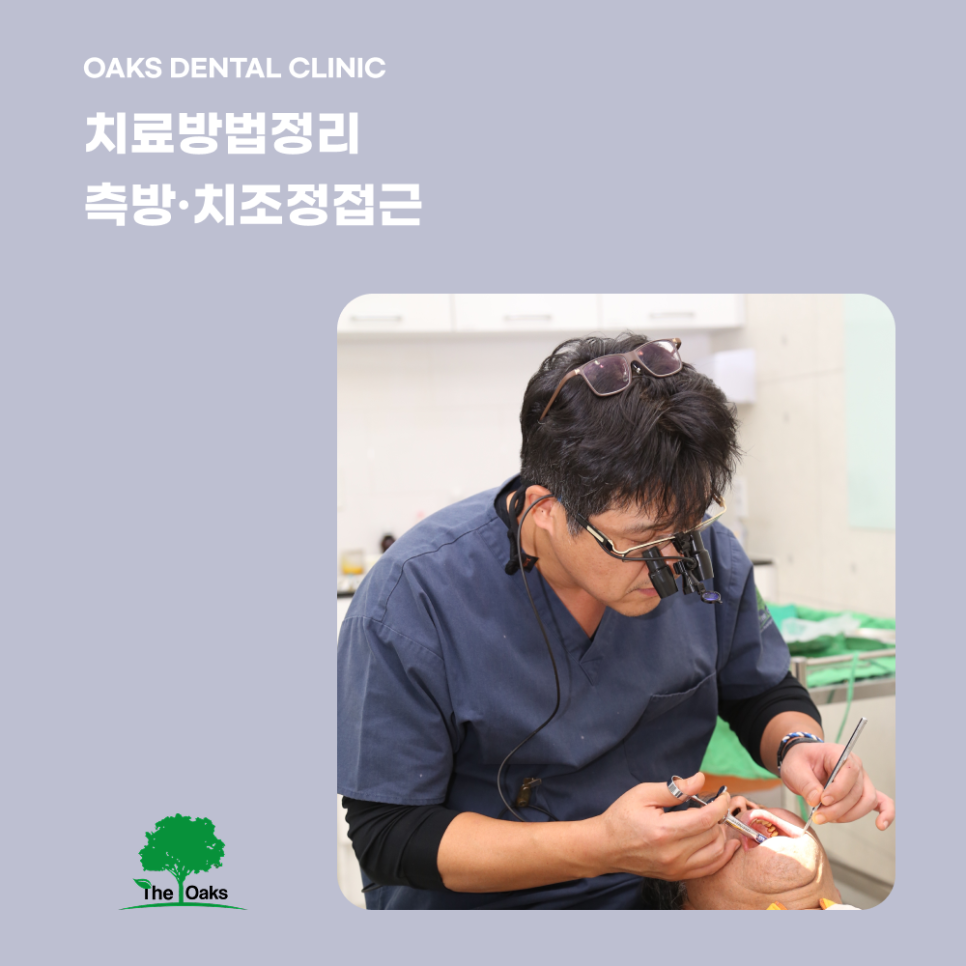
The method of sinus lifting may vary depending
on the degree of bone deficiency.
Lateral Approach
This method involves approaching from the side
of the gums, lifting the maxillary sinus membrane,
and then filling the area with a sufficient amount
of bone graft material.
It is used when there is a significant lack of bone.
Crestal Approach
When a relatively adequate amount of bone remains,
this method slightly lifts the maxillary sinus membrane
through the implant placement site.
It is a relatively less burdensome approach.
The appropriate method is selected based on the
patient’s alveolar bone condition, overall health,
and treatment plan.

Recovery Process After Sinus Lifting
After surgery, some swelling or discomfort may
occur, but in most cases, it naturally subsides after
a certain period.
Because the maxillary sinus is connected to the nose,
it is important to avoid blowing your nose forcefully
or sneezing aggressively for a period of time after
surgery.
It takes time for the grafted bone to settle firmly, and
depending on the case, the implant may be placed at
the same time or after a certain period.
This is determined by the remaining bone height and
stability.
The Importance of Sinus Lifting
Sinus lifting is not simply a process of filling bone; it is
an important step directly linked to the long-term
success rate of implants.
If an implant is placed forcefully when the bone height
is insufficient, initial stability may be poor and the risk
of failure may increase.
Therefore, a safe and precise surgical plan, along with
careful technique by an experienced medical team, is
extremely important.
Through precise diagnosis and a systematic treatment
plan, stable results can be expected.
This May Be Needed for the Following People
✔ If you are planning implants in the upper molar area
✔ If a long time has passed since tooth loss
✔ If you were told through examination that your bone
height is insufficient
✔ If you were told during a previous implant consultation
that bone grafting is needed
The need varies depending on each person’s oral condition,
so it must be determined through an accurate examination.
In Closing...
Sinus lifting is an important treatment that makes
implants possible even when the upper jawbone is
insufficient.
Just because a tooth has been lost does not mean that
treatment is necessarily impossible.
If an appropriate plan is made based on the current oral
condition, both function and aesthetics can be restored.