Things to Check Before Gum Surgery at Gaepo-dong Dental Clinic.
Hello.
This is OX Dental Clinic.
When talking about dental health, many people
focus only on the tooth itself.
However, the important structure that actually
supports the teeth is the gums.
If your gums are not healthy, even the
strongest teeth are hard to keep for a long time.
In particular, when gum disease has progressed,
treatment may be difficult with simple scaling
or medication alone, and the treatment needed
at that point is gum surgery.
Today, Gaepo-dong Dental Clinic will explain
what gum surgery is, when it is needed, and
the treatment process and management methods.
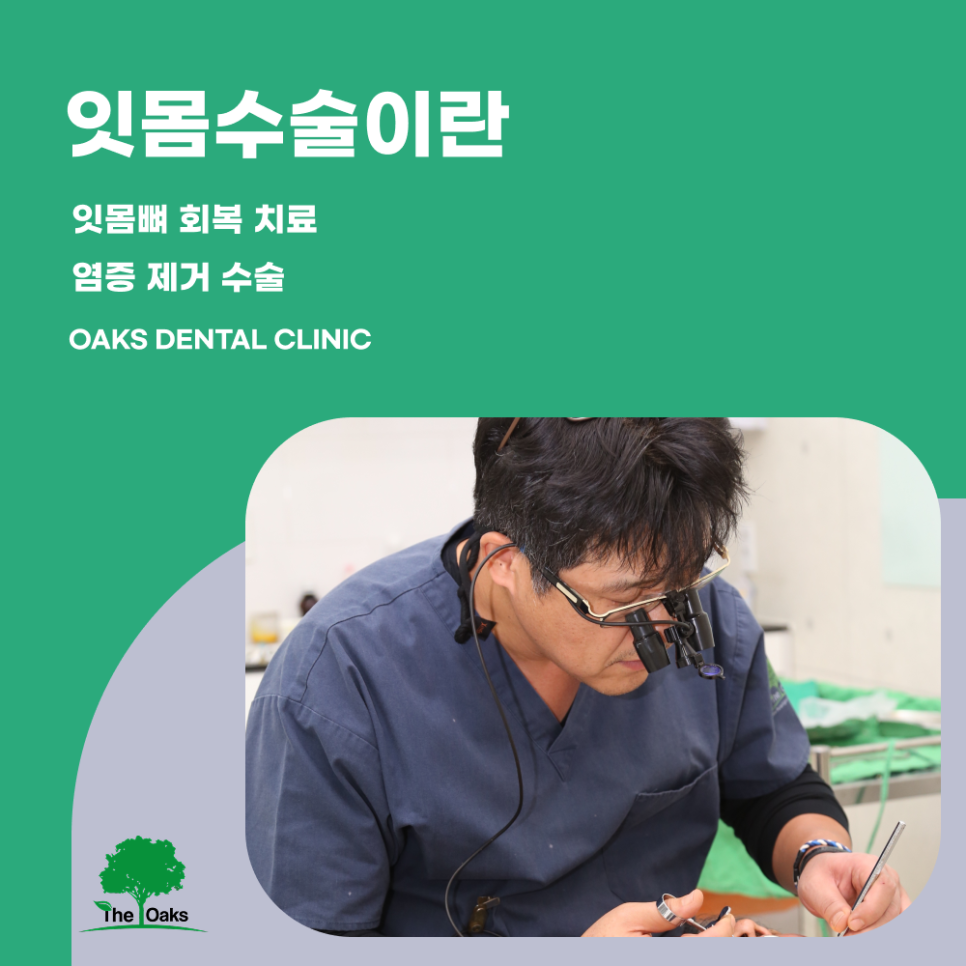
What Is Gum Surgery?
Gum surgery is a treatment performed to restore
the gums and jawbone damaged by periodontal
disease, or to remove inflammation.
Early gum disease can be managed with relatively
simple treatment, but if the inflammation has
deepened and progressed into the gums, direct
access to areas that cannot be seen is needed
to treat the condition.
At this point, surgery is needed in which the gums
are incised and the inside is thoroughly cleaned.
Beyond simply treating the gums, the main goal is
to restore the structures that support the teeth.

When Gum Surgery Is Needed
Not all gum disease leads to surgery.
However, gum surgery may be necessary in the
following cases.
When the gums frequently swell and bleeding
keeps recurring
When tartar has built up deep under the gums
When the jawbone has been damaged and the
teeth become loose
When there is no improvement with scaling or
gum treatment
In particular, when periodontal disease progresses,
a deep space called a “periodontal pocket” forms
between the gums and the teeth, and bacteria
are difficult to remove from this space with
ordinary methods.
In such cases, it is necessary to directly remove
the inflammation through surgery.
Types of Gum Surgery
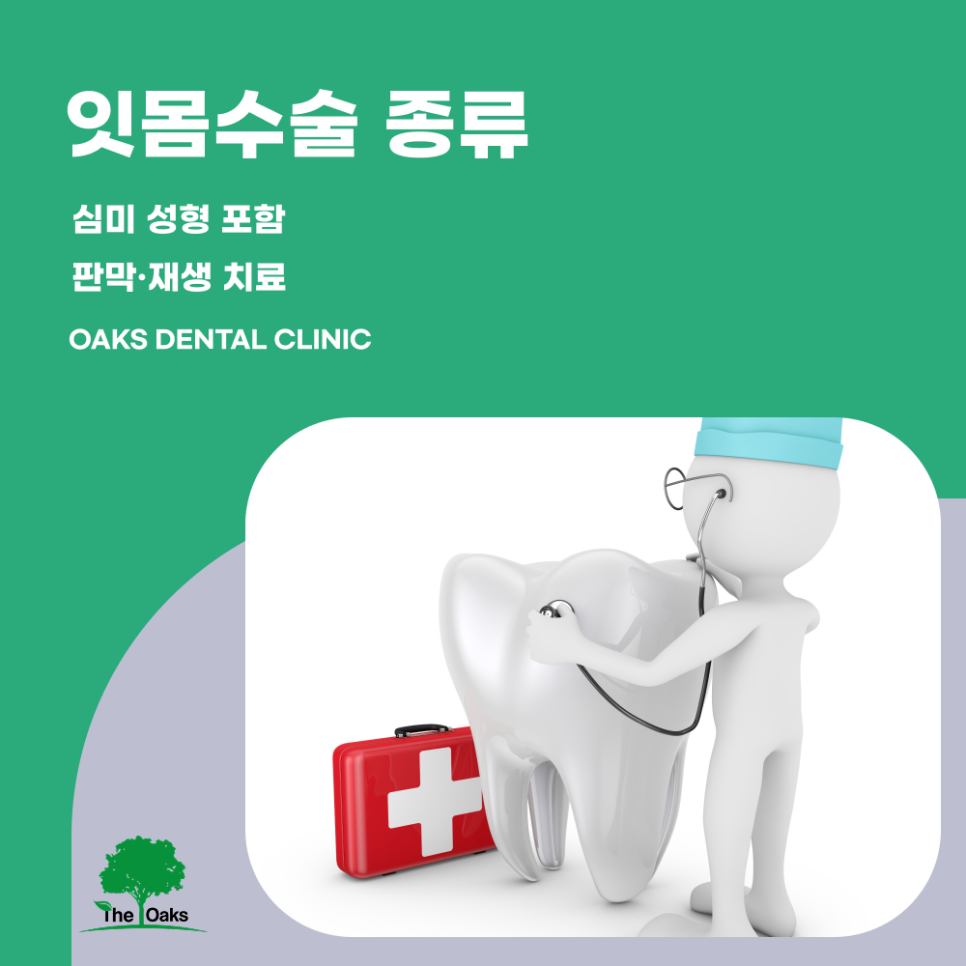
Gum surgery is performed in various ways,
depending on the patient’s condition.
Periodontal flap surgery
This is the most basic surgery, in which the gums
are incised to remove tartar and inflamed tissue
from inside.
Periodontal tissue regeneration
This method uses regenerative materials to restore
damaged jawbone.
Gingival contouring
This is performed when the gum line is adjusted
to provide aesthetic improvement as well.
In this way, treatment is provided not only to
remove inflammation, but also with both function
and aesthetics in mind.
How Is Gum Surgery Performed?
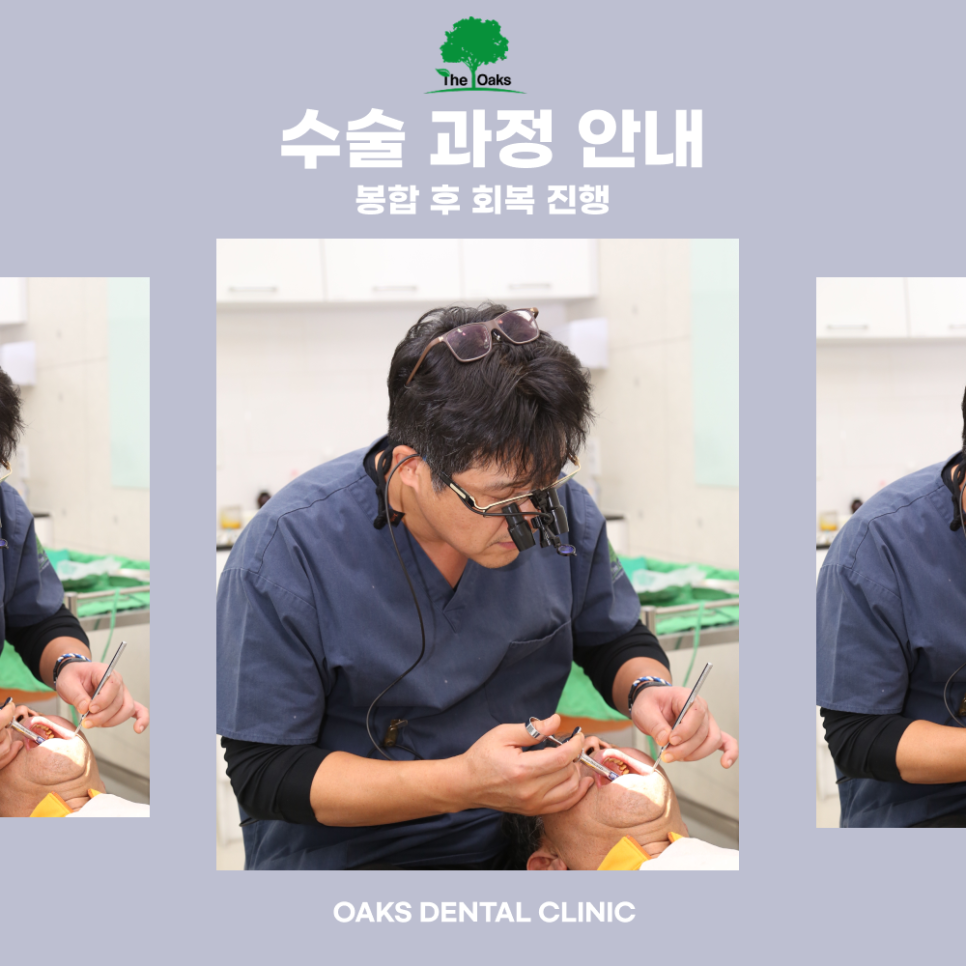
Gum surgery is carried out through a systematic
process.
Precise diagnosis
X-rays and oral examinations are used to check
the condition of the gums and the extent of bone
damage.
Surgery under local anesthesia
The gums are incised and treated internally while
minimizing pain.
Removal of inflammation and cleansing
Tartar and infected tissue are removed and the
area is cleaned thoroughly.
Suturing and recovery
After the gums are sutured again, a recovery
period follows.
The surgery time varies depending on the extent,
but in most cases it is carried out relatively
stably.
Recovery After Gum Surgery
After surgery, there may be some swelling or
discomfort.
This is a natural reaction and usually subsides
within a few days.
In the early stage, it is important to pay attention
to the following points.
Avoid irritating foods
Do not excessively stimulate the surgical area
Take the prescribed medication
Refrain from smoking and drinking alcohol
In particular, the surgical area is very sensitive
during the recovery process, so it is important to
follow the medical staff’s instructions carefully.

The Importance of Care After Gum Surgery
Gum surgery can be seen as the beginning, not
the end, of treatment.
This is because the results can vary greatly
depending on post-surgery care.
Maintain proper brushing habits
Use dental floss and interdental brushes
Have regular dental checkups
Continue care through scaling
In particular, because gum disease can recur,
consistent care is essential.
In Closing...
Gum surgery is an important treatment method
for preserving teeth when periodontal disease has
progressed.
When the gums and bone are affected beyond
simple inflammation, more active treatment is
needed, and through this, the function and health
of the teeth can be maintained.
If bleeding or pain in the gums keeps recurring,
it is important not to brush it off lightly, but to
receive an accurate diagnosis.
The earlier treatment begins, the more simply it
can be resolved, and it also greatly helps long-
term oral health.