Cheongdam-dong Dental Clinic Gum Bone Graft: Essential Check Before Implants!!!
Hello.
This is Oks Dental Clinic.
Among those considering implants,
many are surprised to hear that
"there isn’t enough bone, so immediate placement is difficult."
Even when there seems to be no major problem
on the surface, hearing that additional treatment is needed
naturally raises questions.
At this time, the treatment that plays an important role is
bone grafting for the gums.
Because it directly affects implant stability and long-term
maintenance, an accurate understanding is necessary.
Today, we will explain what gum bone grafting is,
when it is needed, and the treatment process and
management methods at the Cheongdam-dong dental clinic.
What is gum bone grafting?
Gum bone grafting is a treatment that replenishes
insufficient jawbone so that implants can be placed
stably.
The area where a tooth has been lost naturally
experiences bone resorption over time.
Especially if it has been left untreated for a long time,
the amount and density of bone may be insufficient,
making it difficult to place an implant immediately.
In such cases, the bone is reinforced using materials such as
artificial bone or autologous bone, and the key goal is to
create a foundation that can support the implant.
When gum bone grafting is needed
Not every implant treatment requires bone grafting, but
gum bone grafting is considered in the following cases.
When a long time has passed after tooth loss
When the jawbone is thin or lacks height
When the bone has been damaged by periodontal disease
When bone resorption has progressed after extraction
In particular, the front tooth area requires attention to
aesthetic factors as well, so securing enough bone is even
more important.
Materials used for gum bone grafting
Gum bone grafting is performed using a variety of materials.
Autograft
A method that uses the patient’s own bone and is known for
its high integration rate.
Allograft
A material made by processing human bone.
Xenograft
A processed material derived from animal bone,
with high stability.
Alloplast
An artificially made material that can maintain consistent
quality.
The appropriate material is selected and used according to
the patient’s condition and treatment plan.
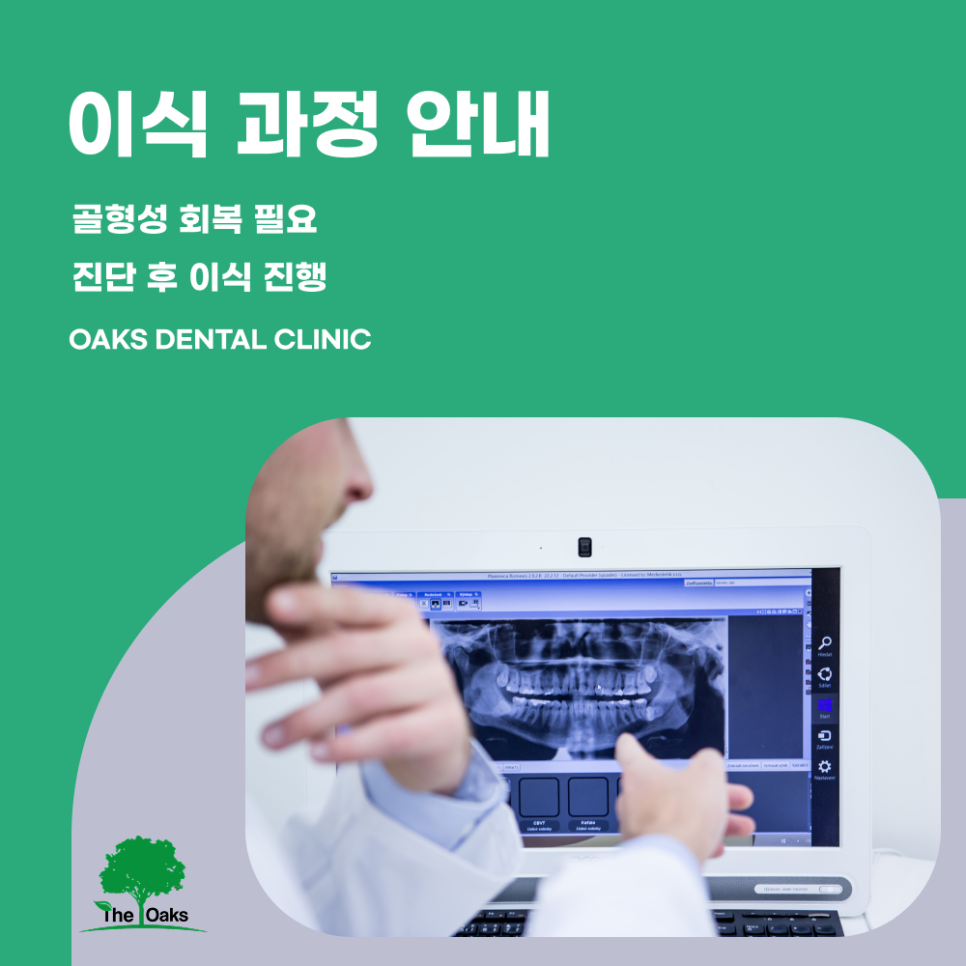
How does the gum bone grafting process proceed?
Gum bone grafting is carried out step by step based on a
precise diagnosis.
Detailed examination and treatment planning
X-rays and 3D CT scans are used to accurately check the
condition of the bone and the areas where bone is lacking.
Grafting after local anesthesia
Bone graft material is placed into the necessary area and
shaped appropriately.
Barrier application and suturing
A barrier is used to keep the graft area stable, and the site
is sutured.
Recovery and bone formation period
The grafted bone combines with surrounding tissues and
has time to form new bone.
This is not a simple procedure; the recovery period during
which the bone settles in is a very important part of the
treatment.

Recovery period after gum bone grafting
After gum bone grafting, a certain period of time is needed
for the bone to settle.
In general, about 3 to 6 months of recovery time is needed,
and during this period the grafted bone becomes firmly
formed.
Depending on the patient’s condition, implant placement
may sometimes be performed at the same time, but in most
cases it is more stable to proceed after sufficient recovery.
Precautions after gum bone grafting
Care during the recovery process has a major impact on
the treatment outcome.
Minimize irritation to the surgical site
Avoid hard foods
Do not smoke or drink alcohol
Take prescribed medication and follow scheduled visits
In particular, smoking can interfere with bone formation and
recovery, so caution is absolutely necessary.
In conclusion...
Gum bone grafting is one of the key factors that determine
the success of implant treatment.
Rather than forcing an implant procedure when there is not
enough bone, first establishing a sufficient foundation can
lead to better long-term results.
If the current condition is accurately assessed through a
precise diagnosis and appropriate bone grafting treatment is
performed when needed, more stable implant treatment is
possible.
To keep teeth healthy for a long time, it is important to
carefully manage even the parts that cannot be seen.