Sinsa-dong Dental Clinic: Don’t Miss the Warning Signs Your Gums Are Sending About Periodontal Disease.
Hello.
This is Oaks Dental Clinic.
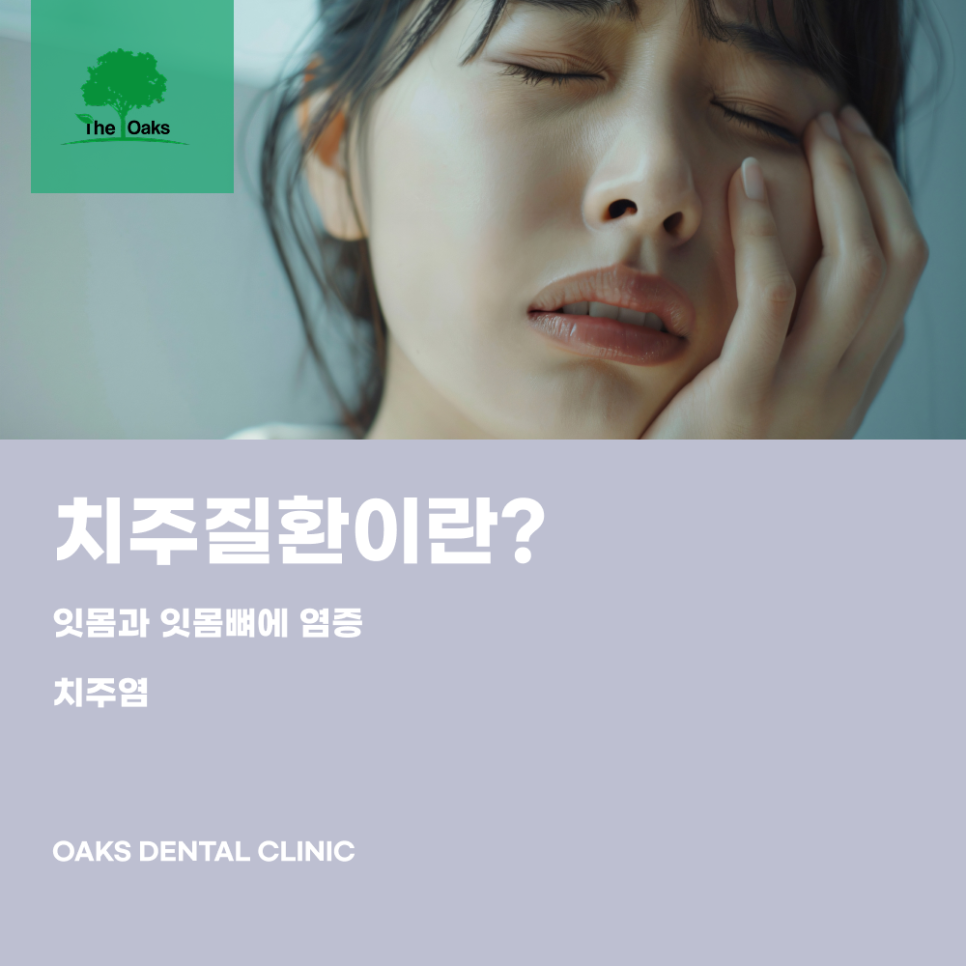
Many people pay attention to the health of their teeth,
but tend to think relatively little about the health of the gums
that support them.
However, no matter how healthy your teeth are,
it is difficult to keep them for a long time if the gums become weak.
In particular, one of the main causes of tooth loss in adults
is periodontal disease.
It often starts with something as simple as swollen gums or bleeding,
but if left untreated, it can damage even the bone that supports the teeth,
so early management is very important.
Today, Sinsa-dong Dental Clinic will explain what periodontal disease is,
what causes it, and how it is treated and managed.
What is periodontal disease?
Periodontal disease refers to a condition in which inflammation develops
in the tissues around the teeth, including the gums and the bone supporting the gums.
It first begins as gingivitis, where inflammation occurs only on the surface of the gums,
but if proper care is not provided,
the inflammation deepens and affects even the alveolar bone that supports the teeth.
This condition is called periodontitis, and in severe cases
it can cause teeth to become loose or even lead to extraction.
Many people get dental treatment right away for cavities because they are painful,
but periodontal disease often causes pain relatively late,
so it is not uncommon for it to be left untreated.
That is why extra caution is needed.
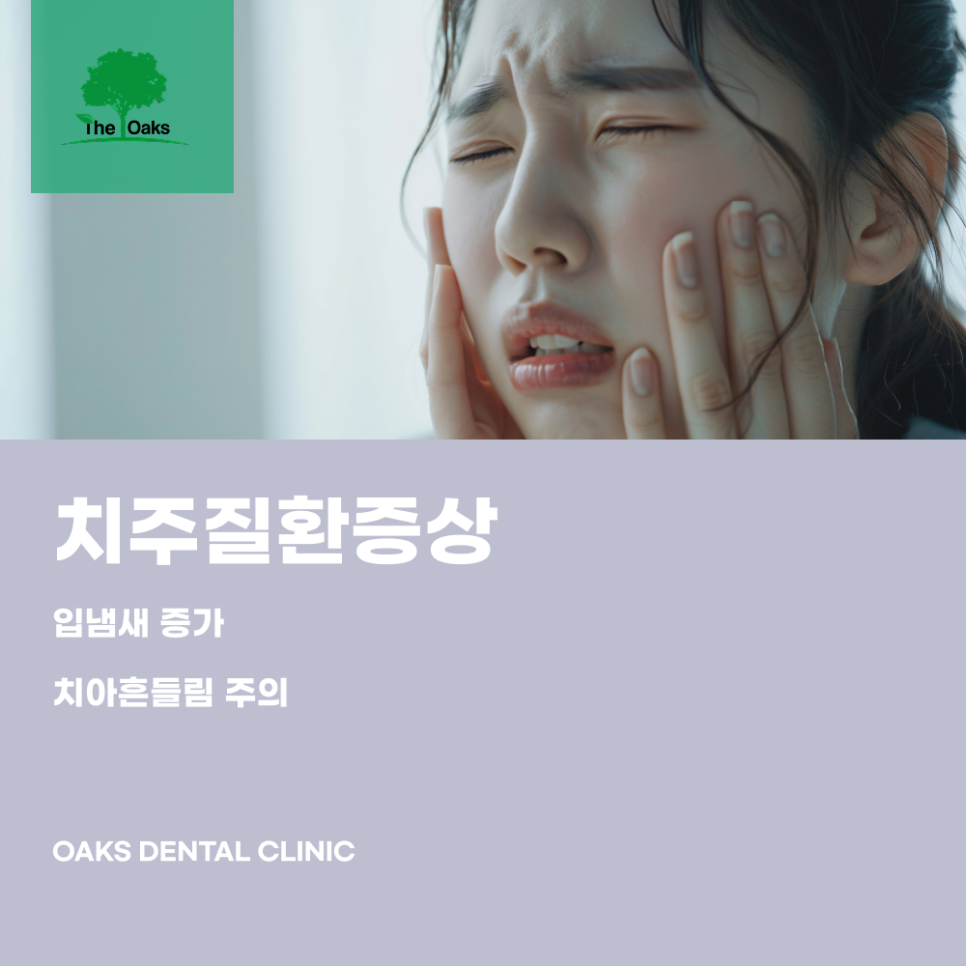
Typical symptoms of periodontal disease
Periodontal disease is easy to miss because the early symptoms are not very noticeable,
but if the following changes keep recurring,
it is a good idea to check your gum health.
Bleeding when brushing.
One of the most common early symptoms,
it is easy to think of as temporary irritation,
but it may be a sign of gum inflammation.
Swollen, red gums.
Healthy gums are a light pink color,
but when inflammation occurs, they turn red and become swollen.
Bad breath gets worse.
If bacteria and inflammation continue,
oral odor can become more severe.
It feels like the teeth have gotten longer.
This happens when the gums recede and the roots of the teeth are exposed.
Teeth feel loose.
There may already be damage to the bone supporting the gums.
If these symptoms appear repeatedly,
they may not be just temporary symptoms but a sign that periodontal disease is progressing.
Problems that can occur if periodontal disease is left untreated
Periodontal disease does not end as a simple gum inflammation.
As the inflammation gradually deepens,
the gum bone that supports the teeth begins to deteriorate,
and eventually the teeth can no longer be properly supported.
As a result, the teeth may become loose
or chewing food may become difficult.
In addition, when deep spaces called periodontal pockets form between the gums,
bacteria can multiply more easily,
and the inflammation can repeat in a vicious cycle.
In severe cases, it can even lead to pus formation,
facial swelling, or severe pain.
How is periodontal disease treated?
The treatment method for periodontal disease varies depending on how far it has progressed.
Scaling
This is the most basic treatment.
It removes tartar and bacteria from the tooth surfaces and around the gums,
helping to reduce inflammation.
Root planing
This is performed when tartar has built up deep inside the gums.
It cleans the root surface of the tooth thoroughly
and helps prevent bacteria from sticking to it again.
Gum surgery
If the inflammation has progressed deeply,
surgery may be needed to incise the gums and directly remove the inflamed tissue inside.
Maintenance care treatment
Because periodontal disease has a high chance of recurring,
regular follow-up care after treatment is very important.
It is often said that prevention is more important than treatment for periodontal disease.
That is how important everyday care is for this condition.
Proper toothbrushing habits
More important than brushing three times a day is carefully managing the gum line area.
Use dental floss and interdental brushes
A toothbrush alone has limits when it comes to removing bacteria between teeth.
Regular scaling
Because tartar cannot be removed on your own,
regular dental care is necessary.
Reduce smoking
Smoking reduces blood flow to the gums,
which can interfere with recovery and worsen inflammation.
In closing...
Periodontal disease is a common condition that can happen to anyone,
but the outcome can vary greatly depending on how well it is managed.
If your gums bleed when brushing or your gums often swell,
it is better to get an accurate examination rather than brushing it off as simple fatigue.
To keep your teeth healthy for a long time,
healthy gums are the foundation above all else.