Why You Shouldn’t Delay Gum Inflammation Treatment at an Apgujeong-dong Dental Clinic and How to Maintain Healthy Gums!
Hello.
This is Oks Dental Clinic.

You may have experienced bleeding when brushing your teeth or swollen gums at least once.
Many people think, “I must be tired,” or “It’s probably just a temporary symptom,” and do not take it seriously.
However, if these symptoms continue to recur, they may be a sign of gum inflammation rather than a minor, temporary issue.
Today, Apgujeong-dong Dental Clinic will explain why gum inflammation treatment is necessary, what symptoms may occur, and how treatment and ongoing care are carried out.
What Is Gum Inflammation?
Gum inflammation refers to a condition in which bacteria multiply in the gum tissue surrounding the teeth, causing an inflammatory response.
In the early stages, it often begins with symptoms such as red or bleeding gums.
This stage is commonly called gingivitis. Because it is relatively early, the gums can often recover sufficiently with appropriate treatment and care.
However, if the inflammation continues to progress, it can affect the deeper gum tissue and the jawbone, eventually developing into periodontitis.
At this stage, the bone supporting the teeth may become damaged, which can lead to loose teeth and even the possibility of extraction. Therefore, greater caution is needed.
Causes of Gum Inflammation
The biggest causes of gum inflammation are plaque and tartar.
When brushing is inadequate, food particles and bacteria accumulate along the border between the teeth and gums.
Over time, the bacterial film hardens into tartar. The tartar continuously irritates the gums, causing inflammation.
The following habits, in particular, may increase the risk of gum inflammation.
Incorrect toothbrushing habits
Insufficient flossing
Smoking
Stress
Lack of sleep
Systemic conditions such as diabetes
Reduced immunity
As this shows, gum inflammation is not simply a brushing issue. It can also be affected by lifestyle habits and overall health.
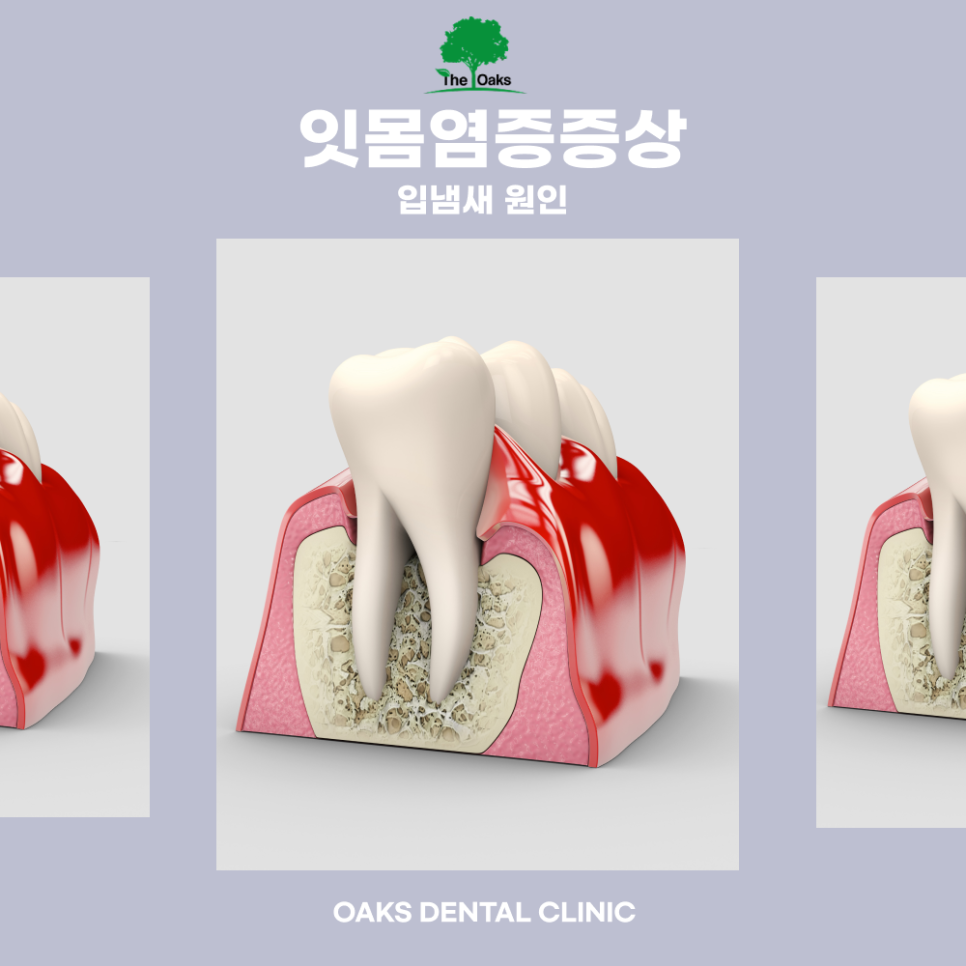
Common Symptoms of Gum Inflammation
Gum inflammation is easy to overlook because it often does not cause severe pain in the early stages.
However, if any of the following symptoms recur, it is a good idea to pay close attention to them.
Bleeding when brushing your teeth.
This is the most common early symptom.
If bleeding repeatedly occurs when brushing or flossing, gum inflammation may be suspected.
Swollen and reddened gums.
Healthy gums are light pink, but inflammation can cause them to become red and swollen.
Worsening bad breath.
Persistent bacteria and inflammation can cause bad breath to worsen.
In particular, if bad breath continues even after brushing, your gum condition should be checked.
Throbbing or discomfort in the gums.
Even without significant pain in the early stages, some people may experience itchy gums or discomfort when pressure is applied.
Teeth that appear longer.
As the gums recede, the roots of the teeth may become exposed.
How Is Gum Inflammation Treated?
The treatment method for gum inflammation may vary depending on how far it has progressed.
Scaling
This is the most basic treatment method.
It removes tartar and bacteria accumulated on the tooth surfaces and around the gums, helping reduce the causes of inflammation.
In many cases, early gum inflammation improves with scaling alone.
Gum Treatment (Root Planing)
This is performed when the inflammation has progressed into the deeper areas beneath the gums.
Bacteria and tartar attached to the surfaces of the tooth roots are removed, and the surfaces are smoothed to help the gums recover their health.
Gum Surgery
If the inflammation has progressed deeply and periodontal pockets have formed, gum surgery may be necessary.
The procedure involves making an incision in the gums to directly remove internal inflamed tissue and tartar. It is an important treatment intended to preserve the teeth as much as possible.
How to Care for Your Gums After Treatment
Care is just as important as treatment.
Even after receiving effective treatment, insufficient daily care may increase the likelihood that inflammation will recur.
Proper toothbrushing habits
It is important to brush carefully along the border between the gums and teeth.
Use dental floss and interdental brushes
A toothbrush alone has limitations when it comes to removing bacteria between the teeth, so supplementary oral care products should also be used.
Regular scaling
Because tartar is difficult to remove on your own, regular dental care is important.
Reduce smoking
Smoking reduces blood flow to the gums and may interfere with recovery, which can negatively affect gum health.
Get regular checkups
Even when there are no symptoms, regular checkups can help detect small problems at an early stage.
In Closing...
Gum inflammation is a common condition that can affect anyone, but the outcome can vary greatly depending on whether it is properly managed.
If your gums often bleed when brushing or become swollen, it is important to have your current condition accurately checked rather than dismissing it as simple fatigue.
Because gum health is directly connected to the longevity of your teeth, early treatment and consistent care are especially important.