Hello.
This is Ox Dental Clinic.
Have you ever looked in the mirror and felt that your teeth
look longer than they used to?
Or have you experienced tooth sensitivity when drinking cold water,
or felt that a particular area was especially
sensitive when brushing your teeth?
If these symptoms appear, they may not simply be
a temporary phenomenon, but could indicate gum recession.
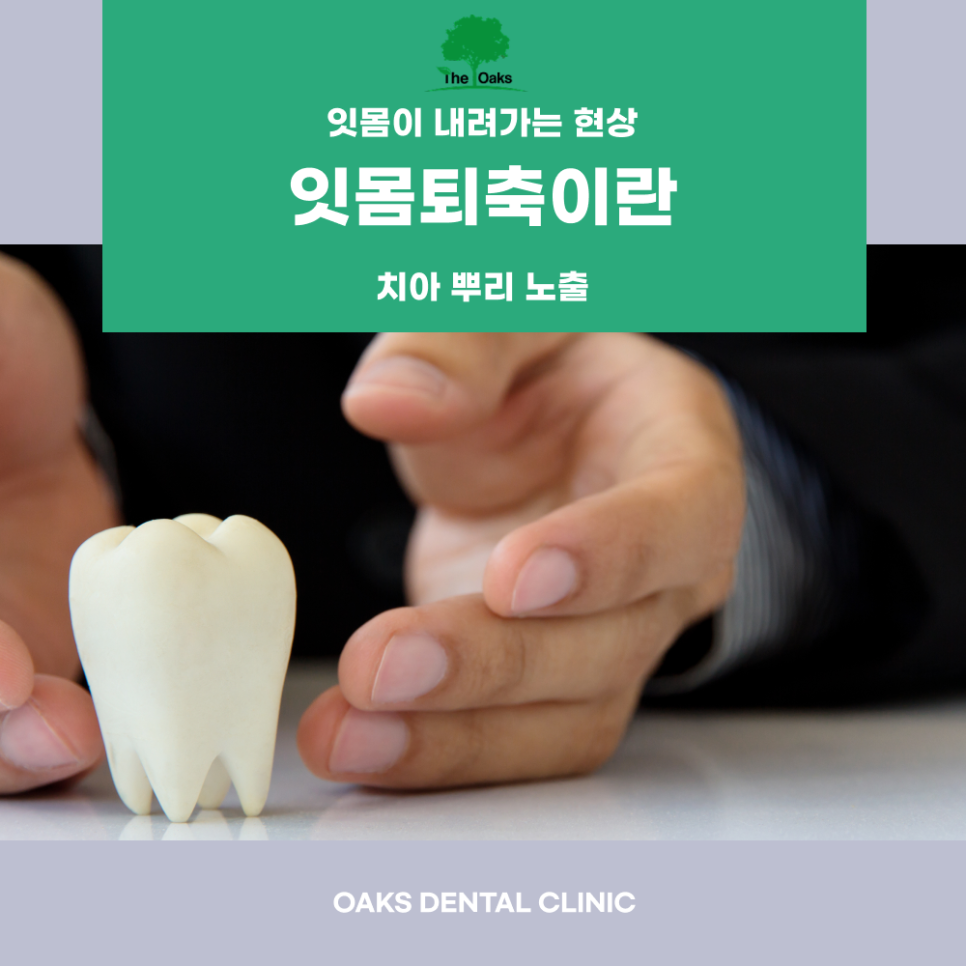
Today, your Gangnam dentist will explain
what gum recession is,
why it occurs, and how it should be
managed.
What Is Gum Recession?
Gum recession refers to a condition in which
the gum tissue that should surround and protect the teeth
gradually moves downward,
exposing the roots of the teeth.
Under normal conditions, the gums protect
the teeth and their roots.
However, when the gums recede due to various causes,
the tooth roots that were not previously visible
become exposed.
As a result, the teeth may look longer than they actually are.
In addition to changes in appearance,
this can increase tooth sensitivity and
the risk of tooth decay.
Why Does Gum Recession Occur?
Excessive Brushing
One of the most common causes
is improper brushing technique.
If you press the toothbrush too hard
or habitually scrub forcefully from side to side,
the gums may be subjected to continuous irritation.
Gum Disease
Gum diseases such as periodontitis
and gingivitis are also
major causes of gum recession.
When inflammation develops in the gums,
the gum tissue and the bone that supports the teeth
may become damaged.
If this condition persists, the gums may
gradually recede, increasing the likelihood
that the tooth roots will become exposed.
Clenching Your Teeth
Unconsciously clenching your teeth or
grinning during sleep can also transmit excessive force
to the gums and tissues surrounding the teeth.
When continuous pressure is applied,
the tissues around the teeth may become damaged,
causing gum recession to progress.
Misaligned Teeth
If the teeth protrude outward
or the alignment is irregular,
the gums in certain areas may become relatively thin.
In such cases, they become more vulnerable
to external irritation, increasing the likelihood
of gum recession.
What Problems Can Gum Recession Cause?
In the early stages, it may simply
make the teeth look longer.
However, various problems may
develop over time.
One common symptom is
tooth sensitivity.
This is because the tooth roots are not
protected by enamel and are therefore
sensitive to external stimuli.
The teeth may react sensitively to cold or hot foods
and sweet foods,
and in severe cases, even brushing
may cause discomfort.
In addition, exposed tooth roots
create an environment where tooth decay
can develop more easily.
Root decay often progresses faster
than ordinary tooth decay,
so caution is necessary.
Can Gum Recession Be Reversed?
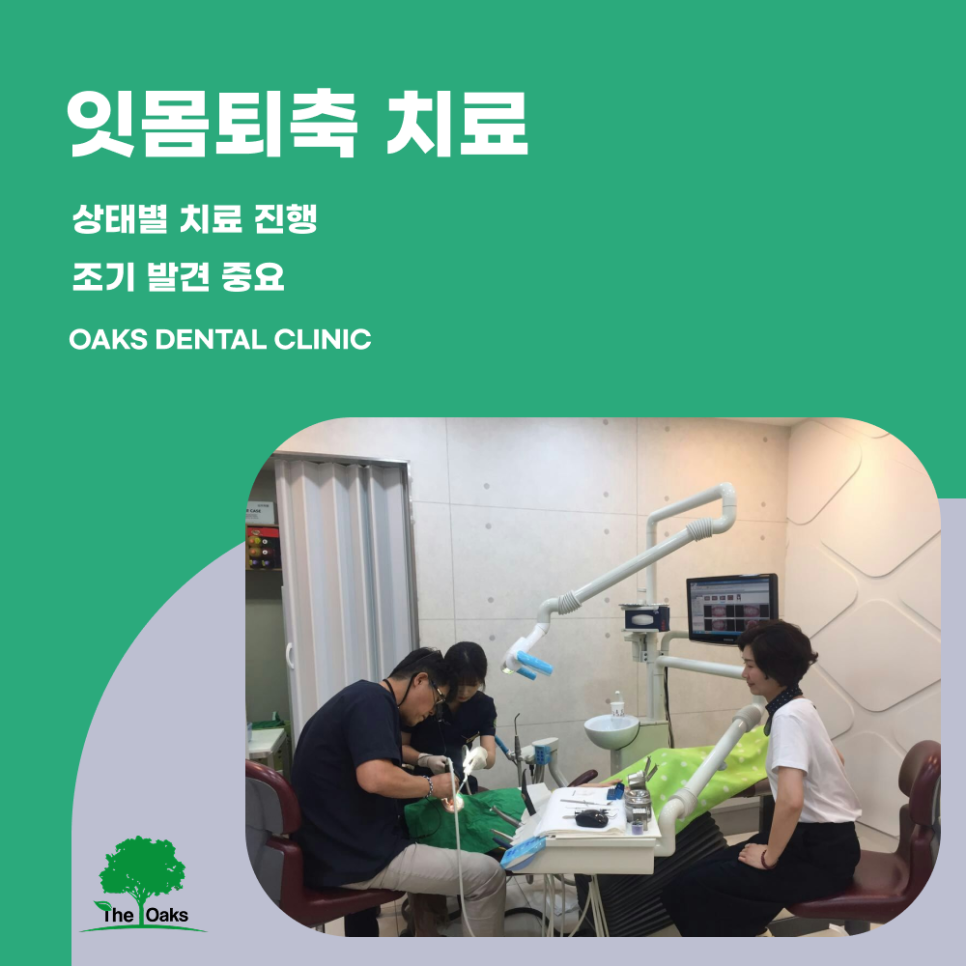
Unfortunately, once the gums have receded,
they often do not completely return
naturally to their original state.
Therefore, early detection and slowing
its progression are very important.
Depending on the cause, treatment may include
instruction on proper brushing habits,
scaling, periodontal treatment, or bite adjustment.
When the recession is severe,
periodontal surgical treatments such as
gum grafting may also be considered.
However, surgery is not necessary for every patient.
It is important to accurately assess the current condition
and establish an appropriate treatment plan.
Lifestyle Habits to Prevent Gum Recession
Regular care is especially important
for maintaining healthy gums.
It is recommended to use a soft toothbrush
and maintain proper brushing habits
without applying excessive force.
It is also important to make a habit
of using dental floss or interdental brushes
to remove plaque between the teeth.
Regular scaling and dental checkups
can also be very helpful in preventing gum disease.
In Closing...
Gum recession is not simply
a cosmetic issue.
It is an important sign that can lead to
various oral health problems, including
tooth sensitivity, tooth decay, and worsening gum disease.
Especially in the early stages, it is easy to
leave it untreated because there may be little pain,
but management can become more difficult over time.
Healthy teeth
begin with healthy gums.
We hope that regular checkups and proper care
will help you maintain a healthy oral condition
for many years.