Learn About the Causes of Tooth Discoloration and Ways to Improve It at a Jageok-dong Dental Clinic.
Hello.
This is Ox Dental.
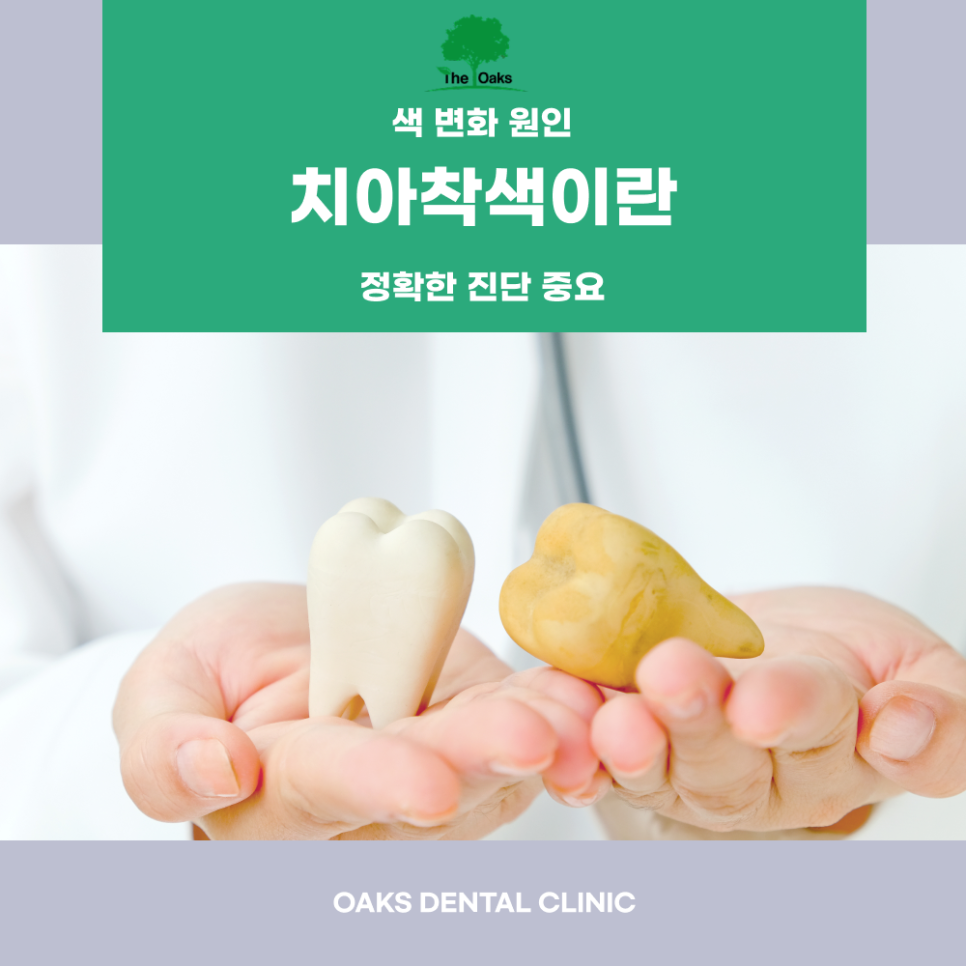
Have you ever looked in the mirror and noticed that your teeth seem more yellow or stained dark than before, and felt concerned?
Even among people who brush their teeth regularly, many worry that their teeth seem to be gradually becoming darker.
Changes in tooth color are not simply a cosmetic issue.
This is because lifestyle habits, food, and aging—as well as changes inside the teeth or oral diseases—can also be causes.
Today, we will learn about the reasons tooth discoloration occurs, ways to improve it, and management methods for prevention at a Jageok-dong dental clinic.
What Is Tooth Discoloration?
Tooth discoloration refers to a change in the original color of the teeth, causing them to appear yellow, brown, or black.
Teeth are not naturally completely white; they have a slightly ivory color.
However, as pigments accumulate on or inside the teeth over time, they may appear darker or more yellow than their original color.
Discoloration can be broadly divided into extrinsic discoloration, which develops on the tooth surface, and intrinsic discoloration, which occurs inside the tooth.
Because treatment methods may vary depending on the cause, it is important to accurately examine the current condition of the teeth.

Why Does Tooth Discoloration Occur?
The most common causes of tooth discoloration are food and beverages.
Foods and drinks high in pigments, such as coffee, green tea, black tea, wine, and curry, can leave pigments on the tooth surface.
Smoking is also a major cause.
Tar and nicotine in cigarettes can adhere strongly to the tooth surface and cause yellow or brown discoloration.
In addition, teeth may naturally become darker over time.
As we age, the enamel—the outermost layer of the teeth—gradually wears down, allowing the color of the underlying dentin to show through more strongly.
Other factors, such as taking antibiotics, damage to the dental nerve caused by trauma, and old dental restorations, can also change the color of the teeth.
Simple Discoloration and Cavities May Be Different
Not every tooth that appears black is simply stained.
In some cases, the color changes as a cavity progresses.
In particular, if the areas between the teeth turn brown or black, or if a specific area appears indented, it may be a cavity rather than simple discoloration.
In other cases, old composite resin or dental restorations may become discolored, making the entire tooth appear darker.
Although it may look like simple staining from the outside, some cases may actually require treatment, so it is advisable to receive an accurate examination.
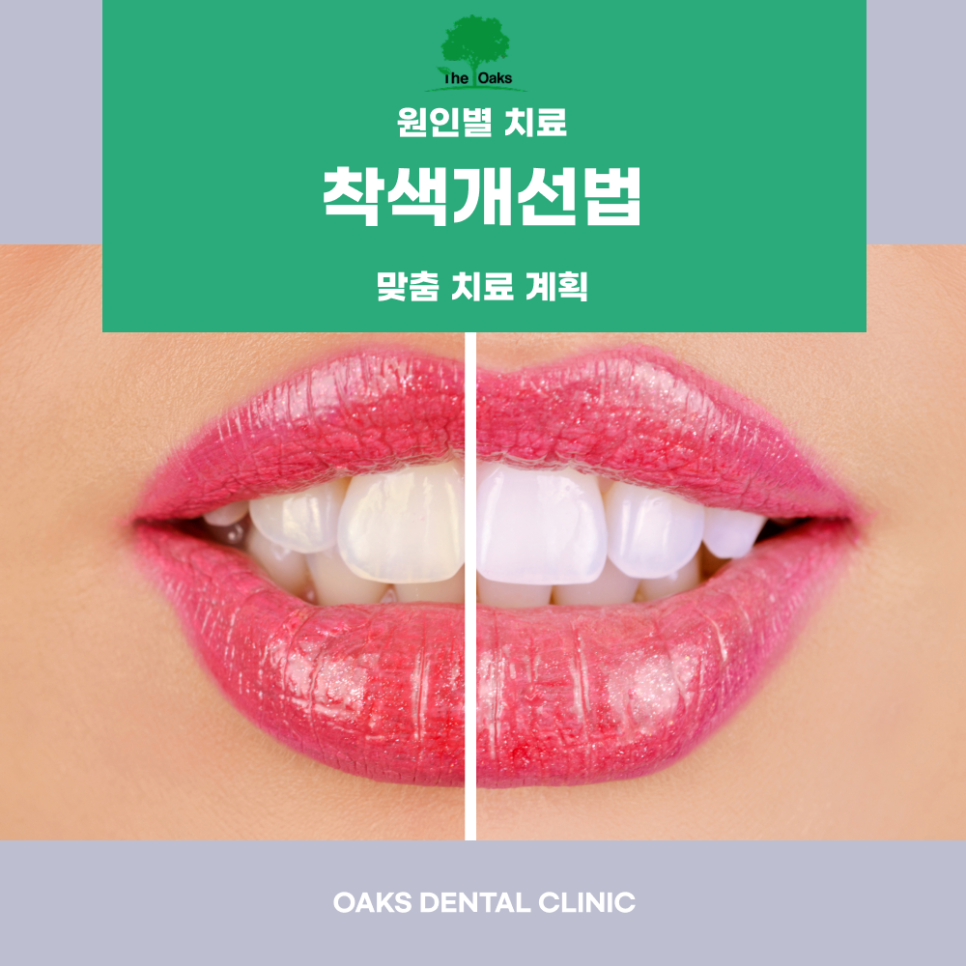
How Can Tooth Discoloration Be Improved?
Treatment methods may vary depending on the cause of the discoloration.
If the discoloration is mild and limited to the tooth surface, it may improve with scaling or tooth polishing alone.
Removing tartar and staining substances can restore the teeth’s natural color to some extent.
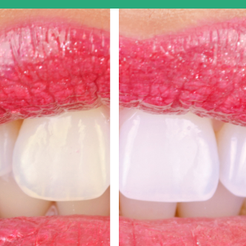
If the discoloration is severe or the color of the teeth themselves has changed, teeth whitening may be considered.
Teeth whitening is a treatment that breaks down pigments inside the teeth, with the goal of achieving a brighter tooth color.
However, not all discoloration can be improved through whitening.
Whitening alone may not be sufficient for teeth that have undergone root canal treatment or for severe discoloration. In such cases, aesthetic restorative treatments such as veneers or crowns may also be considered.
The important thing is not simply to make the teeth whiter, but to accurately identify the cause of the discoloration and choose an appropriate treatment.
Lifestyle Habits for Preventing Tooth Discoloration
Daily lifestyle habits are also very important for preventing tooth discoloration.
After drinking coffee or tea, developing the habit of rinsing your mouth with water can help reduce the amount of time pigments remain on the teeth.
After eating foods high in pigments, it is advisable to brush your teeth as soon as possible.
However, after drinking highly acidic beverages, it may be helpful to wait for a short time before brushing to protect the enamel.
Smoking can negatively affect not only tooth discoloration but also gum health, so it is advisable to practice smoking cessation.
In addition to brushing properly, using dental floss or an interdental brush can help reduce plaque and pigments remaining between the teeth.
Above all, regular scaling and oral examinations can help prevent not only discoloration but also cavities and gum disease.
In Closing...
Tooth discoloration can occur for various reasons, ranging from lifestyle habits such as coffee consumption and smoking to aging, cavities, and nerve damage.
Because suitable treatment methods, such as scaling, teeth whitening, or aesthetic restorative treatment, may differ depending on the cause, it is important to receive an accurate diagnosis first.
If you are concerned that your teeth are gradually becoming darker or that only a specific tooth has become discolored, rather than making a judgment on your own, visit a dental clinic to have your current condition examined.