Hello.
This is OX Dental Clinic.
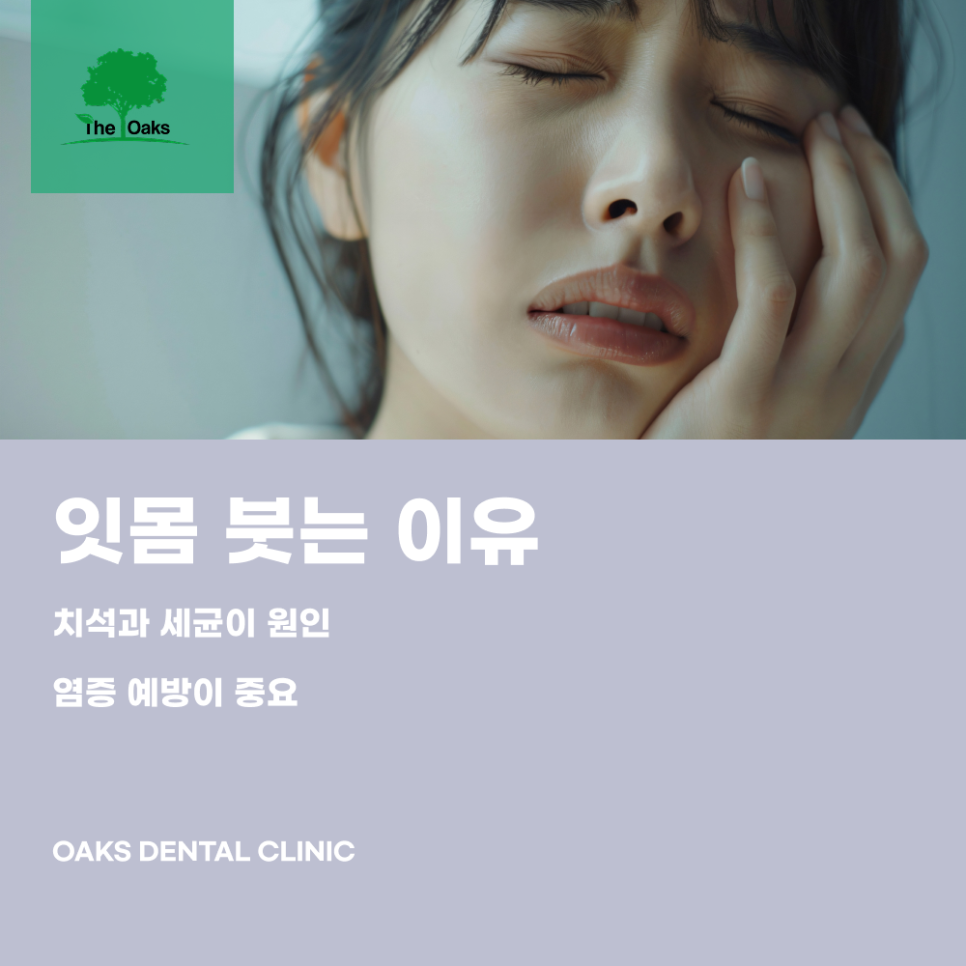
Have you ever looked in the mirror while brushing your teeth and noticed that your gums were more swollen and red than usual?
At first, many people assume it is due to fatigue and put it off, thinking that it will get better after a few days.
However, if swollen gums recur or are accompanied by pain, this may not be a simple temporary symptom but rather a sign that something is wrong with your oral health.
Today, Dogok-dong Dental Clinic will explain the possible causes of swollen gums, treatment methods, and ways to care for them in everyday life.
Why Do Gums Swell?
The most common causes of swollen gums are bacteria and tartar.
If food debris is not properly removed after eating, plaque forms on the surface of the teeth.
If this plaque remains for a long time, it gradually hardens into tartar. As bacteria multiply around the tartar, inflammation may develop in the gums.
In the early stages, the gums often become slightly red or begin to bleed when brushing.
However, if this condition is left untreated, the inflammation may gradually spread deeper, causing swollen gums and pain or potentially progressing to periodontitis.
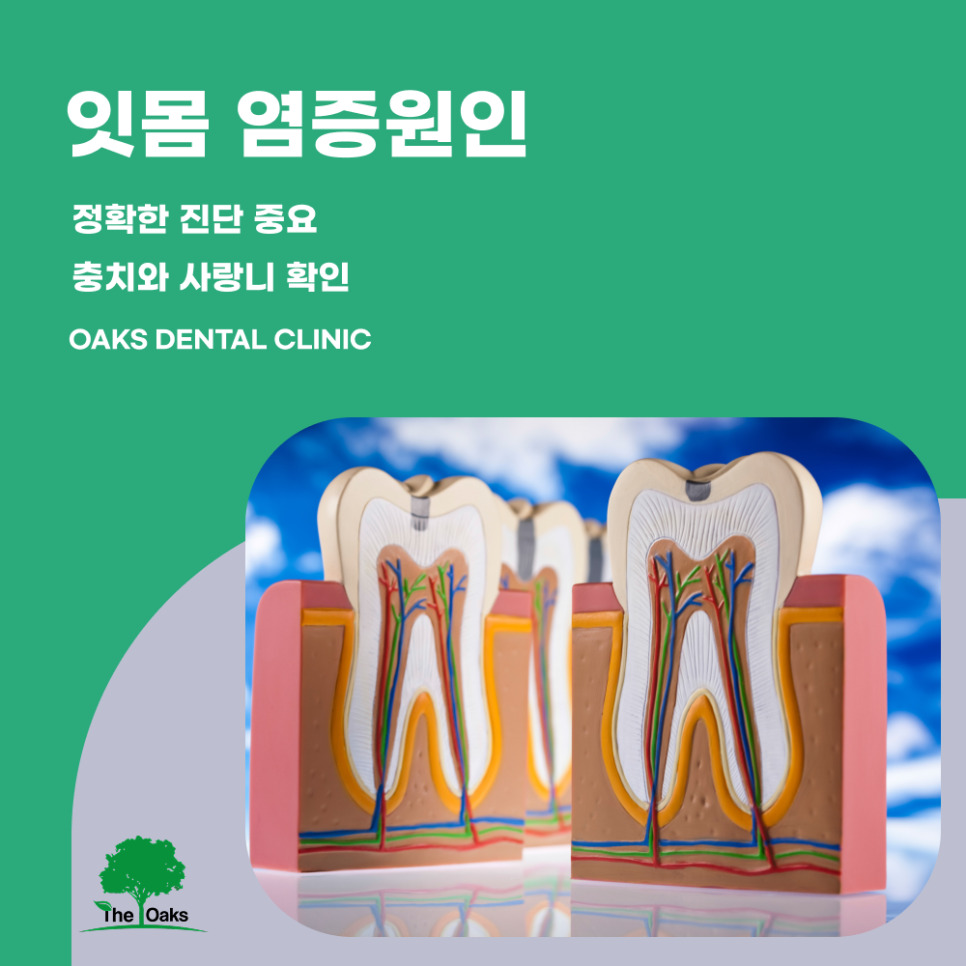
There Are Various Causes Besides Gum Disease
Swollen gums are not always caused by gum disease.
Gum swelling can also occur when tooth decay has progressed deeply and inflammation has spread to the dental nerve.
Pericoronitis, an inflammation that occurs around a wisdom tooth, is another common cause.
Food and bacteria can easily accumulate around a partially erupted wisdom tooth, causing the gums to swell, making it difficult to open the mouth, or resulting in pain.
Gum swelling may also occur when gaps develop in old dental restorations or when food repeatedly becomes trapped between the teeth, irritating the gums.
In rare cases, swelling may be influenced by trauma, ill-fitting dental restorations, or systemic diseases, so identifying the exact cause is important.
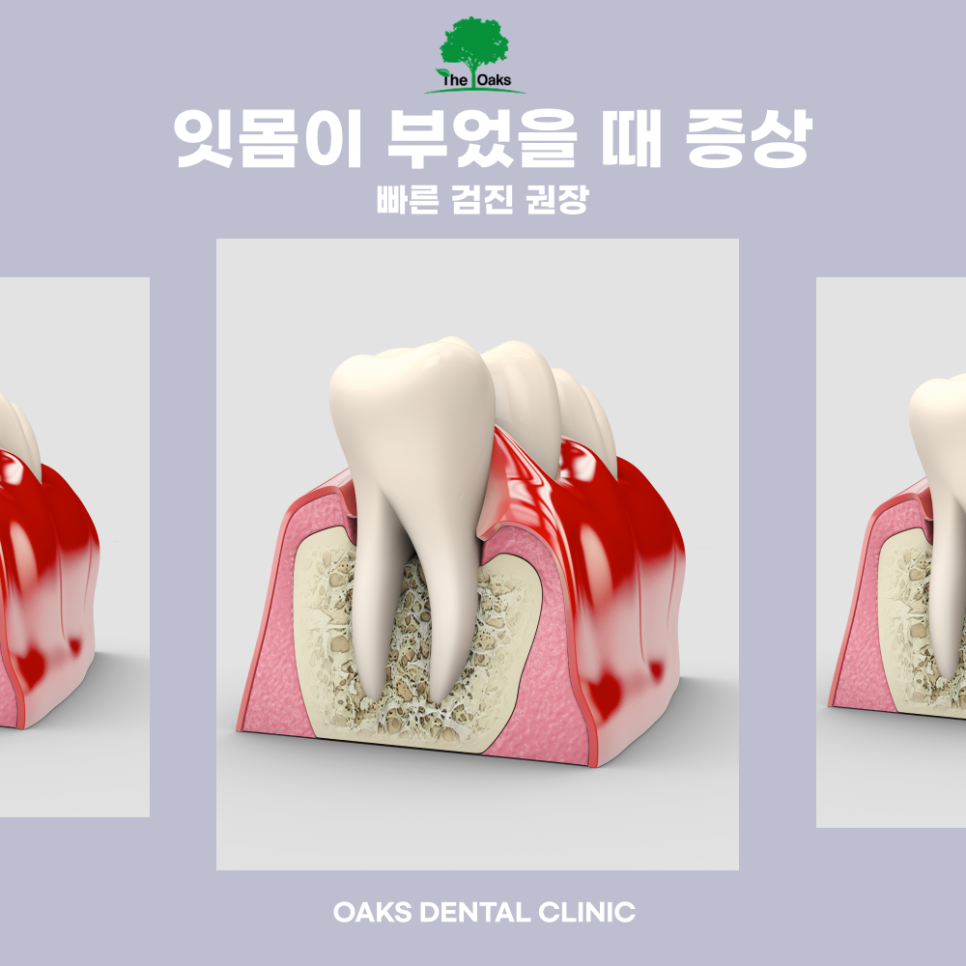
Symptoms That May Occur When the Gums Are Swollen
Not everyone experiences the same symptoms when their gums swell.
The most common symptoms are redness and swelling of the gums.
Many people also experience bleeding when brushing or discomfort while chewing food.
As the inflammation worsens, throbbing pain may occur, and pus may be discharged when the gums are pressed.
Some people also develop severe bad breath or feel that their teeth are loose. These symptoms may be signs that periodontitis is progressing.
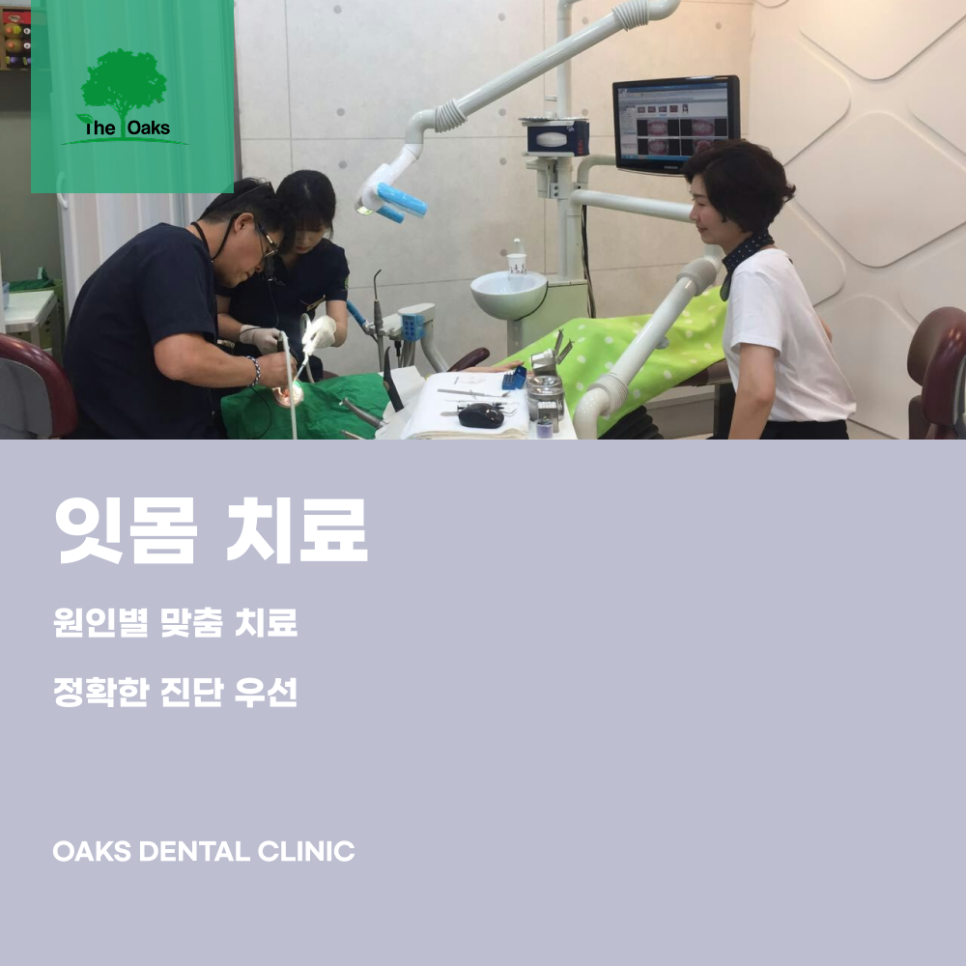
How Are Swollen Gums Treated?
Treatment methods vary depending on the cause.
If tartar and plaque are the cause, tartar is removed through scaling and treatment is provided to reduce gum inflammation.
If periodontitis has progressed, periodontal treatment to remove tartar and inflamed tissue deep below the gums may be necessary.
If tooth decay is the cause, treatment for the decay or root canal treatment may be performed. If the inflammation is around a wisdom tooth, the inflammation may first be controlled, followed by consideration of wisdom tooth extraction.
Most importantly, the current condition of the gums should be accurately diagnosed before appropriate treatment begins.
The Best Way to Protect Your Gum Health
Prevention is especially important for gum disease.
Brushing properly after meals and developing the habit of using dental floss and interdental brushes can help reduce plaque buildup.
Removing tartar through regular scaling may help prevent gum disease.
In addition, regular oral examinations can help detect tooth decay or gum disease early and reduce the burden of treatment.
In Closing...
Swollen gums may simply be caused by fatigue or temporary irritation, but they may also be a sign of various oral conditions, including gingivitis, periodontitis, tooth decay, and inflammation around a wisdom tooth.
Accurately identifying the cause at an early stage and receiving appropriate treatment may help maintain not only gum health but also your natural teeth for a longer time.
If your gums have recently been swelling frequently, bleeding when you brush, or accompanied by bad breath, do not try to judge the condition on your own. Visit a dental clinic to have your current oral health checked.