Hello.
This is Ox Dental.

Teeth do more than simply
chew food.
They also play an important role
in clear pronunciation, natural facial expressions,
and maintaining facial balance.
However, when teeth are lost due to
cavities, gum disease, accidents, or other causes,
you may experience various inconveniences
in daily life.
You may have difficulty chewing food properly
when eating, experience unclear pronunciation,
or feel less confident when smiling.
When teeth are lost in this way,
dentures are one of the treatments
used to restore function and appearance.
Today, Gangnam Dental Clinic will explain
what dentures are,
when they may be considered,
as well as the treatment process and
how to care for them.
What kind of treatment are dentures?
Dentures are prosthetic devices
made to replace areas where teeth have been lost
and restore chewing function, pronunciation,
and appearance.
Many people think dentures and removable false teeth
are different treatments,
but generally, the term dentures
includes removable false teeth.
When all teeth have been lost,
complete dentures may be used,
while partial dentures may be considered
when some natural teeth remain.
The fabrication method may vary depending on
the number of teeth and gum condition,
as well as the bite,
and it is especially important to make them
to fit the individual's oral structure.
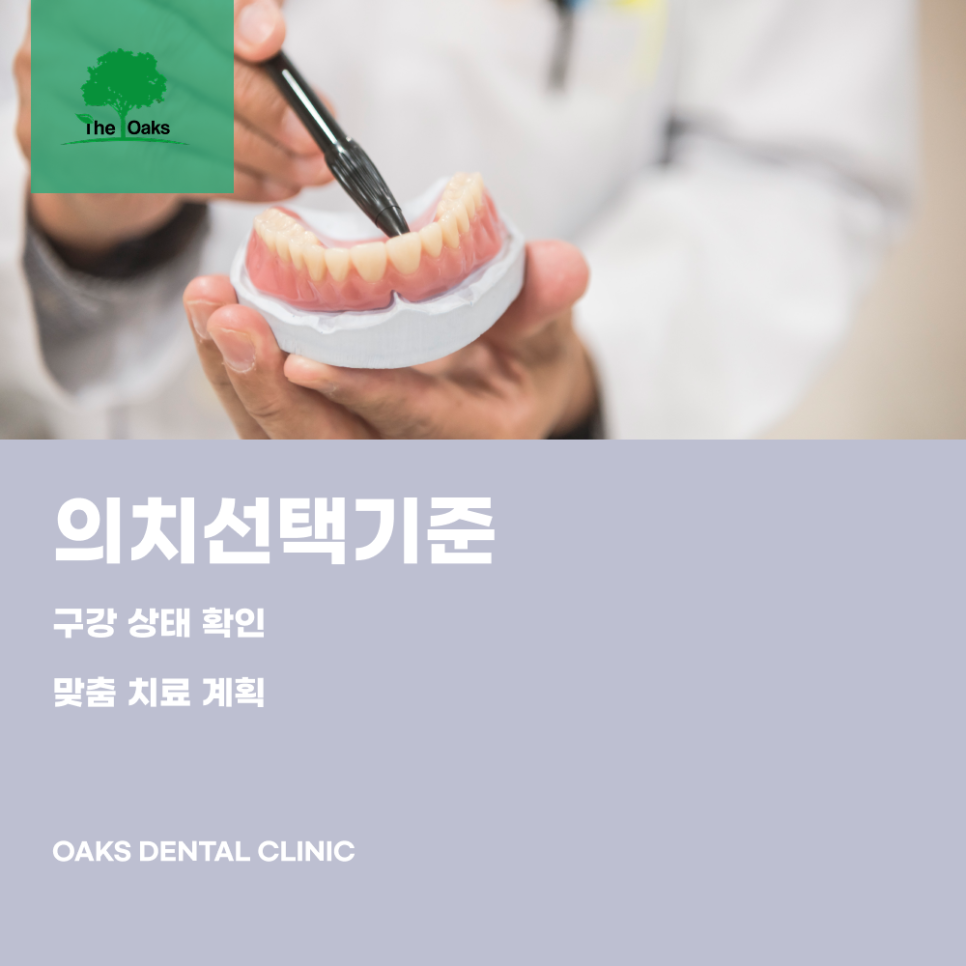
When should dentures be considered?
Dentures may be selected as a treatment
option in a variety of situations.
A common example is when several teeth
have been lost, making it difficult
to chew food.
Dentures may also be considered
when lengthy surgery would be burdensome
due to a systemic condition,
or when other treatments are difficult
because of the condition of the jawbone.
If an old denture currently in use
has become loose and makes eating
or speaking uncomfortable,
a new denture or an adjustment
may be necessary.
However, the same treatment method
is not appropriate for every patient.
It is important to comprehensively assess
the condition of the remaining teeth,
gum health, the amount of alveolar bone,
and the bite before selecting
the most appropriate treatment method.

How are dentures made?
Dentures are not made simply
by taking an impression.
First, the remaining teeth and gum condition
are examined through an oral checkup
and X-rays.
Next, the shape of the gums is captured precisely,
and the bite, or how the upper and lower teeth meet,
is analyzed to design a shape
that is suitable for the patient.
The fabricated dentures are not completed immediately.
They are worn and adjusted several times
to fine-tune their height, bite,
and stability.
This process is an important step
that helps you chew food more comfortably
and speak more naturally.
Because each person has a different gum shape
and jaw movement,
undergoing sufficient adjustments
is necessary to improve satisfaction.
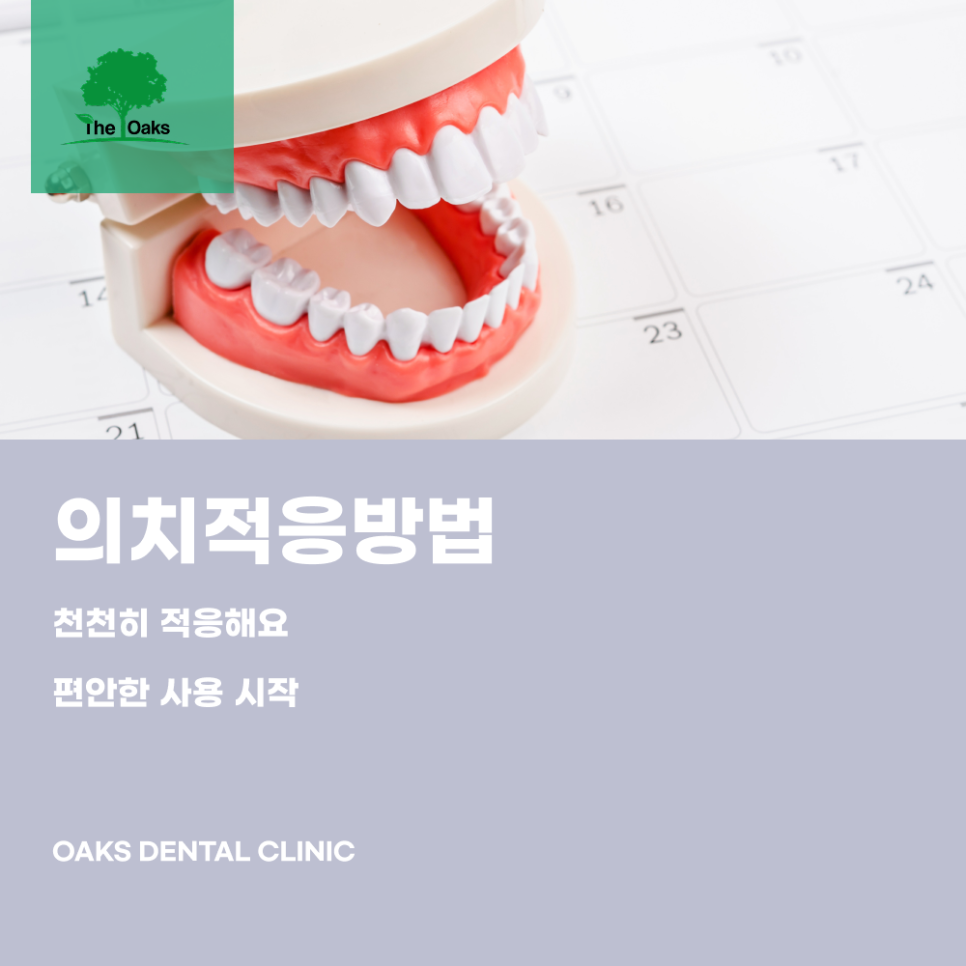
What changes can occur when you first wear dentures?
When you first wear dentures,
your mouth may feel unfamiliar.
You may feel a foreign sensation
or find that your pronunciation sounds awkward,
and you may experience sensations different
from before when chewing food.
However, most people can gradually
use them more naturally
after an adjustment period.
At first, it is best to start with soft foods
and practice chewing slowly.
Also, rather than chewing only on one side,
developing the habit of using both sides evenly
can help the dentures settle
more stably.
If a specific area continues to hurt
or your gums feel severely compressed,
rather than stopping use on your own,
it is advisable to visit a dental clinic
for an adjustment.
Consistent denture care is also important
Dentures also require consistent care,
just like natural teeth.
After meals, it is best to remove the dentures
and cleanly remove any food particles.
Using a dedicated cleanser
may help reduce bacteria and odors.
Hot water can deform the dentures,
so it is best to use lukewarm water.
In addition to caring for the dentures,
you should also care for the gums, tongue,
and remaining natural teeth
to help maintain oral health.
Through regular dental checkups,
you can have the fit of the dentures
and the condition of your gums checked,
allowing even minor discomfort
to be addressed early.
In closing...
Dentures are a representative prosthetic treatment
for restoring chewing function,
pronunciation, and appearance
after tooth loss.
Recently, as customized fabrication
that takes an individual's oral structure
into account has become possible,
dentures with improved comfort and function
compared with those in the past
can be expected.
However, achieving satisfactory results requires
an accurate diagnosis, a precise fabrication process,
and consistent care after treatment
to be carried out together.
If eating has become uncomfortable
due to tooth loss or you are considering dentures,
rather than simply comparing cost
or fabrication time,
have your current oral condition accurately assessed
and then choose the treatment method
that is appropriate for you.