
Implants are a representative treatment for replacing missing teeth. However, implants can only be placed stably when there is enough bone.
In cases where a tooth has been left missing for a long time, or when periodontal disease has been severe, the alveolar bone (jawbone) is often insufficient.
What is needed in such cases is a bone graft implant. Bone grafting is a treatment that supplements insufficient alveolar bone and helps the implant settle safely in place.
In this article, we will take a detailed look at when bone graft implants are needed, the treatment process, the types of materials used, and how to care for them.

- What Is a Bone Graft Implant?
A bone graft implant is a treatment that supplements patients with insufficient jawbone by grafting artificial bone or autogenous bone so that an implant can be placed.
An implant must bond firmly with bone, and if the alveolar bone is insufficient, placement becomes difficult and the risk of failure increases.
Therefore, when there is not enough bone, bone grafting is performed first, followed by implant placement.
✅ Why bone grafting is needed
• When bone has been resorbed over time after tooth loss
• When the jawbone has been damaged due to periodontitis (gum disease)
• When the alveolar bone is congenitally thin or insufficient
• When the jawbone has developed abnormally due to malocclusion
After some time following bone grafting, the grafted bone fuses with the patient’s existing bone and forms a solid support structure.
Once this process is complete, placing the implant allows for more stable and longer-lasting use.

- When Bone Grafting Is Needed – What Does Insufficient Alveolar Bone Mean?
Bone graft implants are an essential treatment when there is not enough bone.
If a missing tooth is left untreated for a long time, the jawbone is not used and therefore naturally resorbs (atrophies).
In that case, even if an implant is placed, fixation becomes unstable and the likelihood of failure increases.
📌 Main causes of insufficient alveolar bone
1️⃣ Leaving a missing tooth untreated for a long time
• If prosthetic treatment is not done after losing a tooth, the alveolar bone gradually decreases
• The longer the period of tooth loss, the greater the bone loss
2️⃣ Jawbone damage due to severe periodontal disease (periodontitis)
• As periodontitis worsens, even the bone supporting the teeth may dissolve away
• As a result, not only natural teeth but also implants become difficult
3️⃣ Congenitally insufficient alveolar bone
• When the alveolar bone is thin or low in density due to genetic factors
• This occurs more often in the mandible (lower jaw) than in the maxilla (upper jaw)
4️⃣ Alveolar bone damage due to severe cavities or trauma
• When the jawbone is fractured or damaged by an accident or impact
• When part of the alveolar bone is lost during tooth extraction


- Bone Graft Implant Treatment Process
Depending on the patient’s condition, a bone graft implant may involve immediate implant placement, or it may be performed after waiting for a certain period.
In general, after bone grafting, it is common to place the implant after about 3 to 6 months of healing.
📌 Steps in bone graft implant treatment
1️⃣ Detailed diagnosis and treatment planning
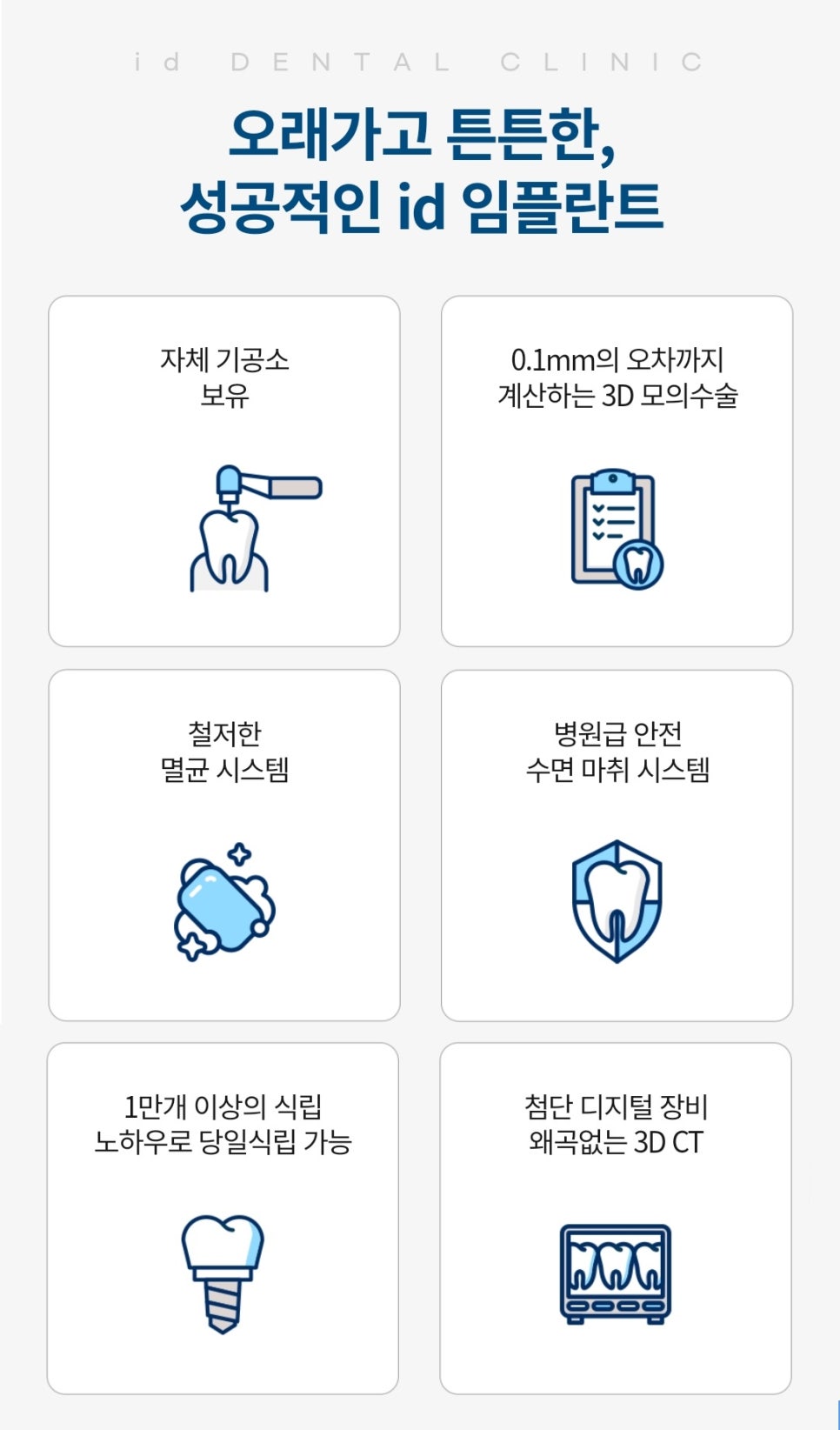
• Accurately assess the condition of the alveolar bone through 3D CT imaging
• Determine the appropriate bone grafting method based on the patient’s bone condition
2️⃣ Bone graft surgery
• Graft artificial bone or autogenous bone into the deficient area
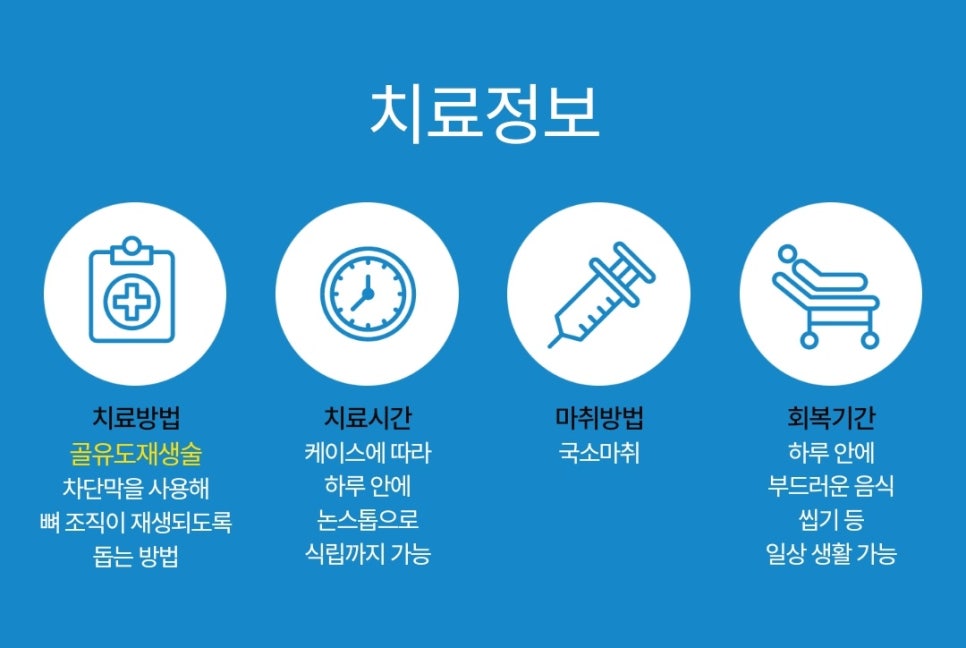
• If necessary, cover it with a collagen membrane (GTR membrane) to encourage stable regeneration
3️⃣ Osseointegration period (the time when the bone hardens) – about 3 to 6 months
• The stage during which the grafted bone is allowed to fuse well with the existing bone
4️⃣ Implant placement
• Once the bone grafting is complete, the implant fixture (the part that serves as the root) is placed
5️⃣ Prosthetic (crown) placement and final completion
• After the implant and bone have bonded sufficiently, the artificial tooth (crown) is fabricated and attached
- Types of Bone Grafting Materials
The materials used for bone grafting are broadly divided into autogenous bone, allogeneic bone, xenogeneic bone, and synthetic bone.
📌 Comparison of bone graft materials
| Type | Features | Advantages | Disadvantages |
|---|
| Autogenous bone | The patient’s own bone (jawbone, pelvic bone) | No rejection reaction | Additional surgery required |
| Allogeneic bone | Bone from another person (human-derived) | Relatively stable | Possible risk of infection |
| Xenogeneic bone | Animal-derived (cow, pig) | Relatively low cost | May be absorbed slowly |
| Synthetic bone | Artificial material (hydroxyapatite) | No infection risk | Osseointegration may be somewhat slower |
It is important to choose the appropriate material according to the patient’s bone condition and needs.
- Care After Bone Graft Implant Treatment
After bone grafting, thorough care is essential, and maintaining proper habits is necessary to achieve successful treatment results.
✅ Precautions after bone grafting
• Avoid excessive exercise or strenuous activity immediately after treatment
• Be careful not to stimulate the surgical site (do not use a straw, do not touch it with your tongue)
• Absolutely no alcohol or smoking (they interfere with bone integration)
• Take prescribed medication and follow dental visit schedules
✅ How to maintain dental health after bone grafting
• Eat soft foods and control chewing pressure
• Brush carefully with a soft toothbrush
• Check your condition through regular dental examinations
Bone Graft Implants: A Choice for Healthy Teeth
A bone graft implant is an essential treatment that supplements insufficient alveolar bone and increases the success rate of implants.
With the proper material selection and a systematic treatment process, a strong and long-lasting implant can be placed.
Above all, it is important not to leave a missing tooth untreated and to receive appropriate treatment as soon as possible.