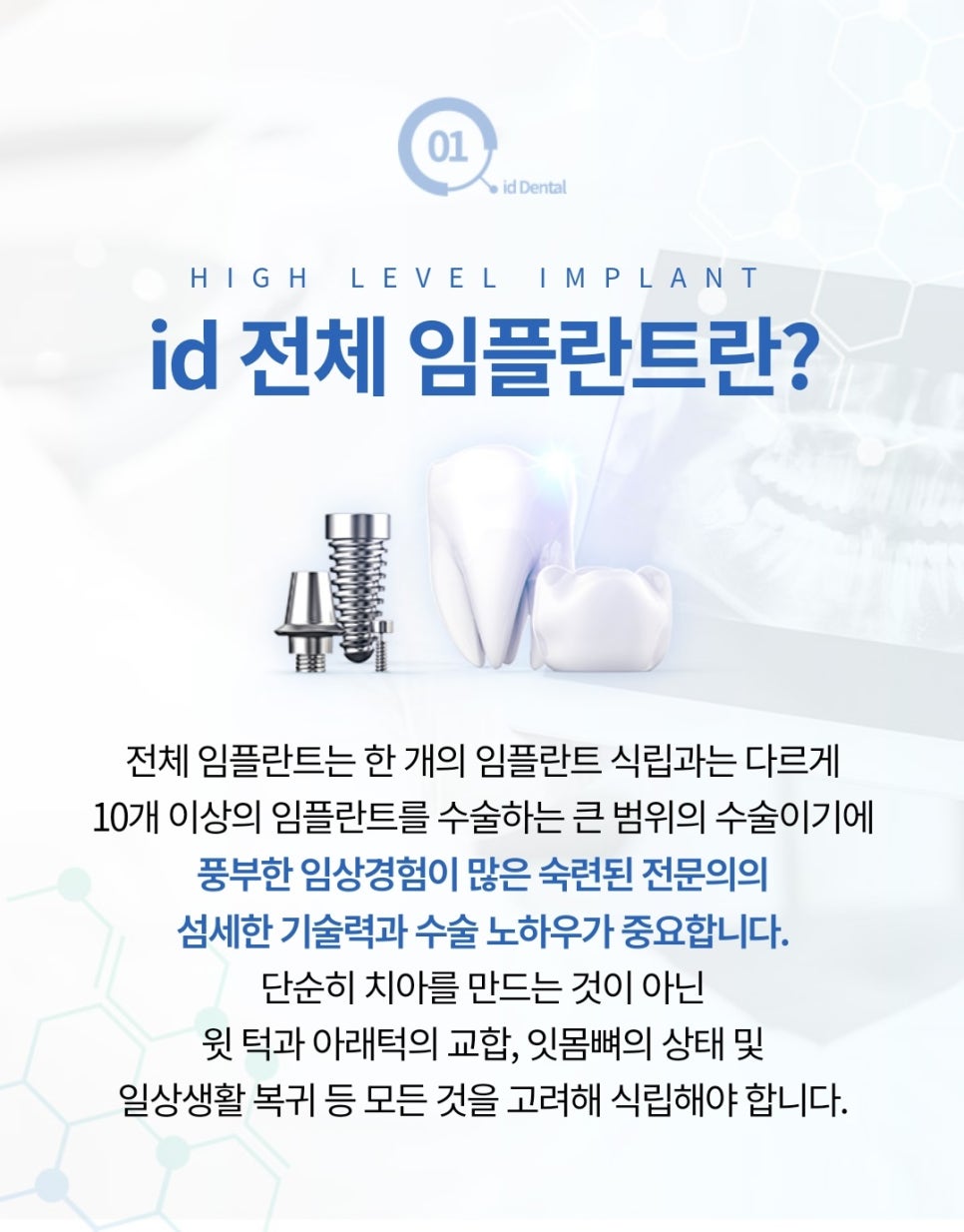
- What Is Full Mouth Implant Treatment?
Teeth play an essential role in chewing food and speaking. However, for a variety of reasons, there are cases where all teeth are lost. In the past, dentures were the main solution in such cases, but these days, more people are restoring more comfortable and natural function through full mouth implants.
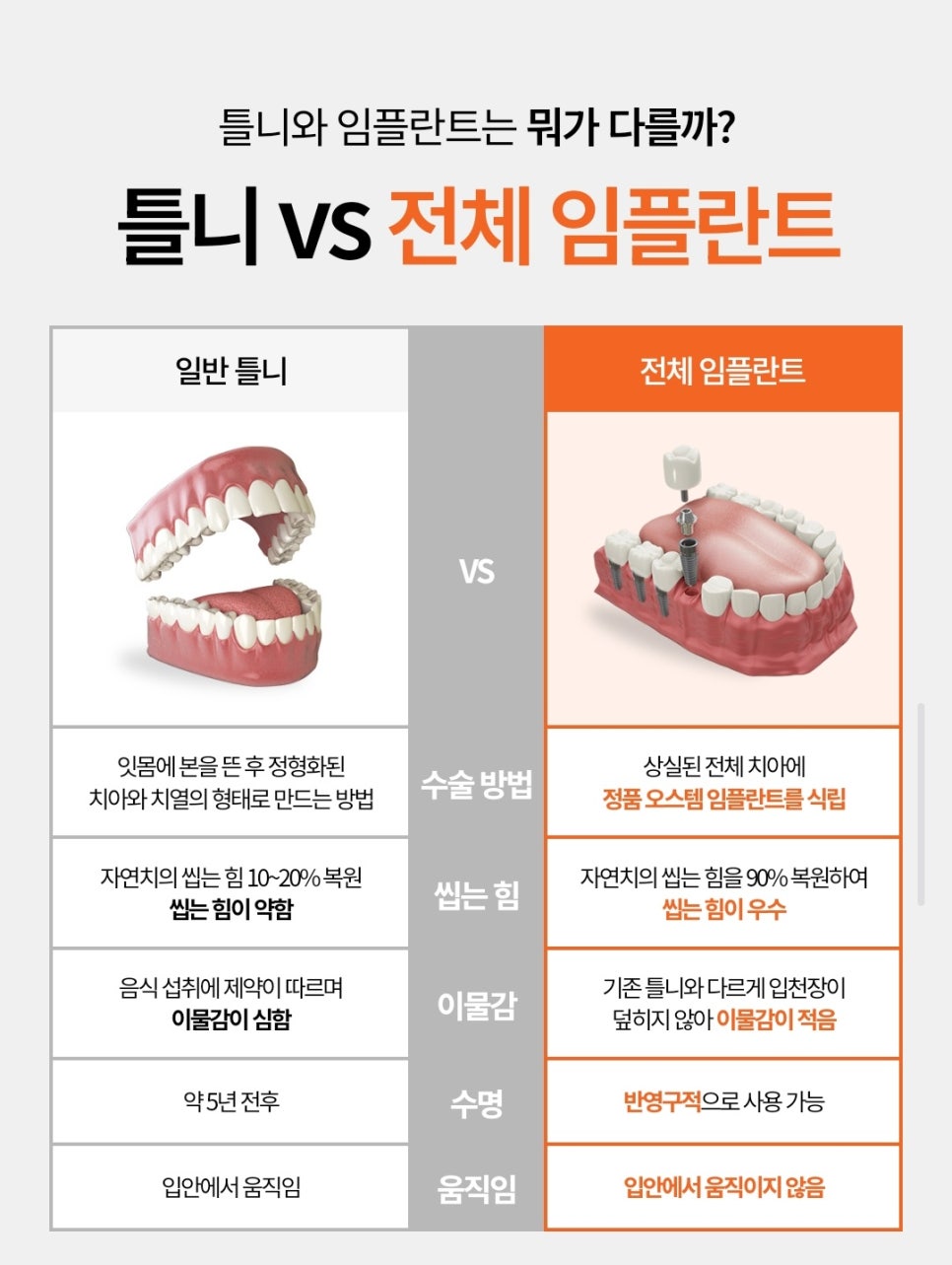
Full mouth implants are a treatment method that replaces all upper and lower teeth with implants. Unlike conventional partial implants, this treatment is customized with the overall oral structure in mind. It provides much stronger chewing force than dentures and offers aesthetics similar to natural teeth, making it a treatment with high patient satisfaction.

- When Full Mouth Implant Treatment Is Needed
Full mouth implant treatment may be considered in the following cases.
✅ When all upper and lower teeth are severely damaged or lost
✅ When wearing existing dentures is uncomfortable and makes eating difficult
✅ When the alveolar bone is strong enough to place implants
✅ When functional and aesthetic recovery is needed
Even if no teeth remain at all, healthy teeth can be restored through full mouth implant treatment.

- Full Mouth Implant Treatment Methods
① All-on-4 / All-on-6 Implants
The most widely used methods in full mouth implant treatment are All-on-4 and All-on-6.
• All-on-4: A method that fixes the full prosthesis by placing 4 implants
• All-on-6: A method that provides more stable support by placing 6 implants
These methods can replace all teeth with fewer implants than conventional individual implants, which can shorten treatment time and reduce cost burden.
② Individual Implant Placement Method
This method places implants individually for each tooth. While it can recreate a form closest to natural teeth, it has the drawbacks of higher cost and a longer treatment period.
③ Denture-Retained Implant Method
This method involves placing several implants to secure dentures so that they do not move. It offers better retention and stability than conventional dentures, but chewing force may be somewhat lower than with general full mouth implants.
- Full Mouth Implant Treatment Process
1️⃣ Detailed examination and consultation
CT scans and an oral examination are used to check whether implant treatment is possible.
2️⃣ Check the alveolar bone condition and decide whether bone grafting is needed
If the alveolar bone is insufficient, bone graft surgery may need to be performed in combination.
3️⃣ Implant placement surgery
The implants are placed, and time is allowed for them to integrate with the bone. In the case of All-on-4, the prosthesis is fitted relatively quickly.
4️⃣ Prosthesis fabrication and placement
A custom prosthesis is made and finally fitted.
5️⃣ Regular maintenance
Implants also require consistent care, just like natural teeth.

- Precautions After Full Mouth Implant Treatment
✅ Eat soft foods at first
✅ Regular dental checkups are essential
✅ Thorough oral hygiene management with brushing and flossing
✅ Avoid foods that are too hard or chewy

- Advantages and Disadvantages of Full Mouth Implant Treatment
🔹 Advantages
✔️ Function and aesthetics similar to natural teeth
✔️ Provides stronger chewing force than dentures
✔️ Minimizes gum damage and helps maintain long-term oral health
🔹 Disadvantages
❌ Treatment cost is high
❌ Treatment time may be somewhat long
❌ Additional bone grafting may be needed depending on the condition of the alveolar bone
- Is Full Mouth Implant Treatment Really Necessary?
Full mouth implants are not simply for cosmetic purposes; they are an important treatment for restoring healthy oral function. Considering full mouth implants can be a good choice for a natural smile and a healthy life.