Orthodontic treatment is not something done solely for cosmetic reasons. It also plays an important role in improving oral function and maintaining oral health.
Irregular tooth alignment can cause discomfort while eating and place strain on the teeth and gums. An improper bite can also make it difficult to properly cut or chew food, which may lead to digestive problems.
The health of the teeth is closely related to the health of the whole body. If you undergo orthodontic treatment to achieve straight teeth and a proper bite, your quality of life can improve, and you may regain the pleasure of enjoying delicious food with a healthy mouth.
- The Basic Principles of Orthodontic Treatment
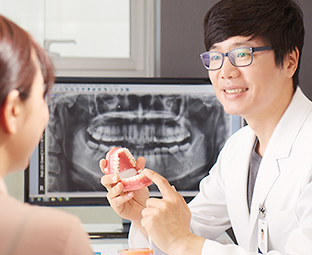
Orthodontic treatment refers to a method of moving teeth using fixed or removable appliances to straighten crooked or spaced teeth and correct malocclusion such as protruding teeth or underbite.
The most common method is to attach brackets to the teeth and connect them with wires to apply constant force and move them in the desired direction.
Depending on each person’s oral structure, teeth may sometimes be extracted and moved into the resulting space. In some cases, treatment is carried out without extracting natural teeth by using space from wisdom tooth extraction or by performing interproximal reduction.
If malocclusion is present, the level of difficulty may increase.
Therefore, orthodontic treatment should begin with accurately understanding the patient’s current oral condition and making a thorough diagnosis. There are limits to what can be determined from X-ray images alone, so various types of information should be obtained through CT scans, oral photographs, and other examinations, and the treatment direction should be established based on that data.
- Types of Orthodontic Appliances
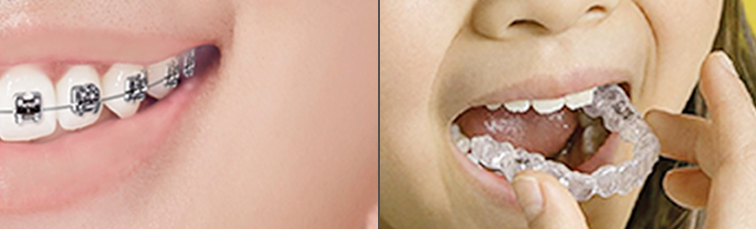
Orthodontic appliances can be broadly divided into fixed and removable types.
Fixed appliances
-
Brackets are attached to the teeth and connected with wires to move the teeth.
-
Because the appliance must stay on throughout the orthodontic treatment period, it may be inconvenient in daily life.
-
In the past, both the brackets and wires were metal and stood out clearly, making them less aesthetically pleasing. However, the options have expanded with the introduction of various types, such as ceramic appliances that are similar in color to teeth.
-
The sliding-door type bracket, Clippy C, has more flexible and smoother wires, improving comfort.
Removable appliances
-
These are appliances that can be taken out and put back in; a representative example is clear aligners.
-
Because they can be removed freely, they do not cause inconvenience during meals or brushing, and there are no restrictions on eating.
-
Oral hygiene management is easier.
-
If the appliance is not worn for a certain amount of time and is kept out, the orthodontic effect may decrease.
- Advantages and Features of Clear Aligners
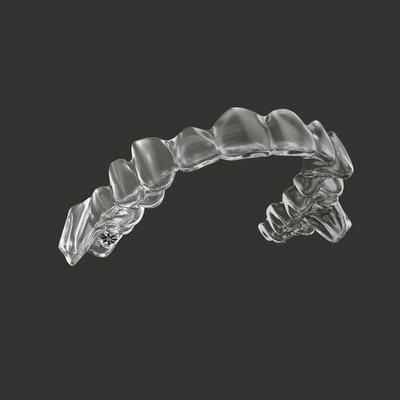
In particular, clear aligners are orthodontic appliances that interfere less with daily life while offering excellent aesthetics, so more and more people are seeking them out.
They are a good option for busy office workers, students, and people in the service industry.
This method straightens teeth by placing transparent appliances that are not easily noticeable on the upper and lower jaws. Because they are thin and made with the gum line in mind, they are comfortable to wear even when attached.
Above all, one major advantage is that there are no restrictions on food.
With fixed orthodontic appliances, patients had to avoid foods that could strain the appliance or cause discoloration, and because food could easily get caught between the wires after meals, they had to brush much more thoroughly than usual using an orthodontic toothbrush.
On the other hand, clear aligners can be removed during meals and while brushing. There is no need to avoid certain foods, and you can brush as you normally would.
However, because the appliance must be worn for long hours and even during sleep for the treatment to be effective, some people find this inconvenient.
Also, the fact that patients can remove and insert the appliance themselves is both an advantage and a disadvantage.
People may take it out because it feels uncomfortable or simply forget to wear it, and that can lead to results different from the original treatment plan. The treatment period may also become longer.
Clear aligner treatment requires patients to follow the treatment process more actively and to carefully follow the dentist’s instructions.
Even with the same type of appliance, this treatment method can produce different results depending on who plans the treatment and how the care is carried out. Therefore, it is recommended to proceed after consulting a specialist with extensive experience in clear aligner treatment itself.
- Orthodontic Treatment Duration and Care
The duration of orthodontic treatment varies depending on the individual’s oral condition and the treatment method.
In general, it takes about 1 to 2 years. Cases with a high degree of difficulty may take longer.
On the other hand, if the front teeth are slightly spaced and you only want to close that gap, or if you only want to correct slight twisting or crookedness of the front teeth, it may be completed in about 6 months as a partial orthodontic treatment.
During orthodontic treatment, you need to visit the dental clinic regularly for care. Usually, visits are made once a month.
The teeth are checked and managed from multiple angles to see whether they are moving as planned and whether there are any problems with the orthodontic appliance. By discussing whether the patient has been managing things well in daily life, proper oral hygiene care can be maintained, which helps lead to successful results.
- Maintenance After Orthodontic Treatment
Post-treatment care is just as important as the treatment process itself.
Teeth have a tendency to try to return to their original position, so retainers must be worn.
Retainers are also divided into fixed and removable types. In some cases, both types are used. The duration varies depending on the appliance and each individual’s condition, but long-term maintenance for more than 2 to 5 years is generally recommended.
A fixed retainer involves attaching a thin wire to the inside of the teeth, where the tongue touches. Once the initial adjustment period passes, it can be worn without much foreign-body sensation or discomfort.
Some people struggle because they are already uncomfortable with the appliance during the long period of orthodontic treatment, and then they still need to wear a retainer after treatment ends. However, since it plays a very important role in maintaining and stabilizing the results after orthodontic treatment, it is best to follow the dentist’s instructions carefully.
Even when wearing a retainer, you should not neglect hygiene. After treatment ends, regular dental visits are still needed to check for any abnormalities.
Orthodontic treatment is not simply a means of changing your appearance.
It is an important treatment for improving overall oral health and function.
Straight teeth and a proper bite help support the health of the temporomandibular joint, improve chewing function, and make oral hygiene management much easier.
The healthy smile gained through orthodontic treatment boosts confidence.
All of these changes improve quality of life.
However, that is why it is also very important where you receive treatment, what type of orthodontic appliance is used, and what treatment plan is followed.
It is also a good idea to choose a clinic whose treatment philosophy prioritizes each patient’s health and approaches care based on the right treatment plan and direction.
Phone number: 02-548-2114
(40 minutes on foot from Gangnam Station, 8 minutes by car)