I think my child's teeth are crooked.
We are considering orthodontic treatment, but...
I'm worried that my child may not tolerate
fixed orthodontic appliances well. ㅜㅜ
Our children grow quickly, looking different every day.
Watching them grow can make us happy, but as they go through a busy period of growth—always darting from one place to another—we cannot help but worry that they might get hurt or that something might go wrong.
These concerns can become even greater when parents repeatedly hear that their child needs orthodontic treatment.
-
Which orthodontic appliance should we choose?
-
At what age is it best to begin orthodontic treatment?
-
How long will the treatment take?
-
Will a growing child be able to tolerate the treatment period and follow the treatment process well?
There were quite a few things to consider before beginning orthodontic treatment.
I have organized some information that may be helpful to know in advance, so that I can help ease those concerns, even if only a little.
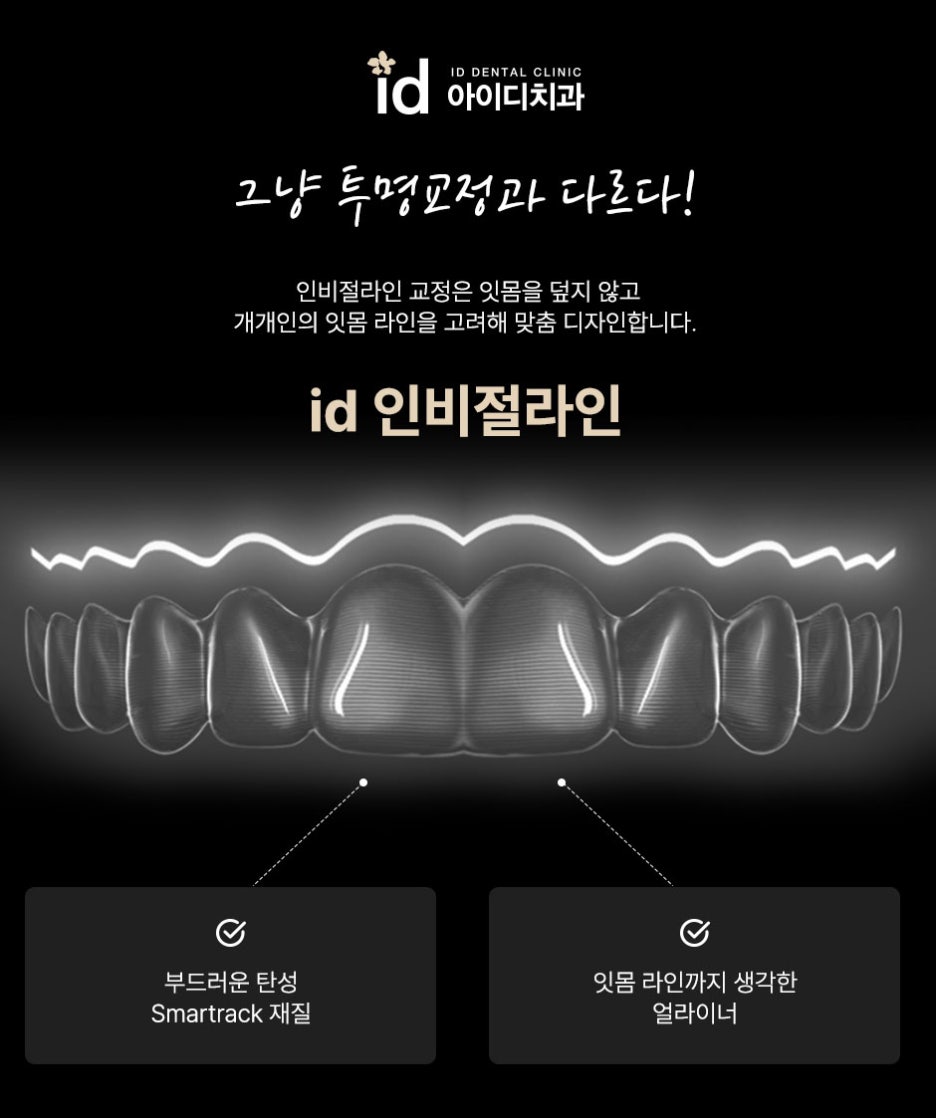
Orthodontic treatment with Invisalign First to reduce poking and discomfort from wires
Ultimately, the most important thing was choosing “the orthodontic method most suitable for our child.”
More and more people are considering Invisalign First as one option for orthodontic treatment during childhood growth, so I will explain how it differs from conventional orthodontic methods.
When people think of “orthodontics,” they generally think of conventional wire braces, or fixed appliances. Because of their design, brackets are attached to the teeth and wires are connected to them, which can irritate the inside of the mouth. Many people experience discomfort during treatment, such as being poked by the wires.
In addition, some areas can be difficult to clean because of the appliance's structure, making more thorough oral hygiene than usual important.
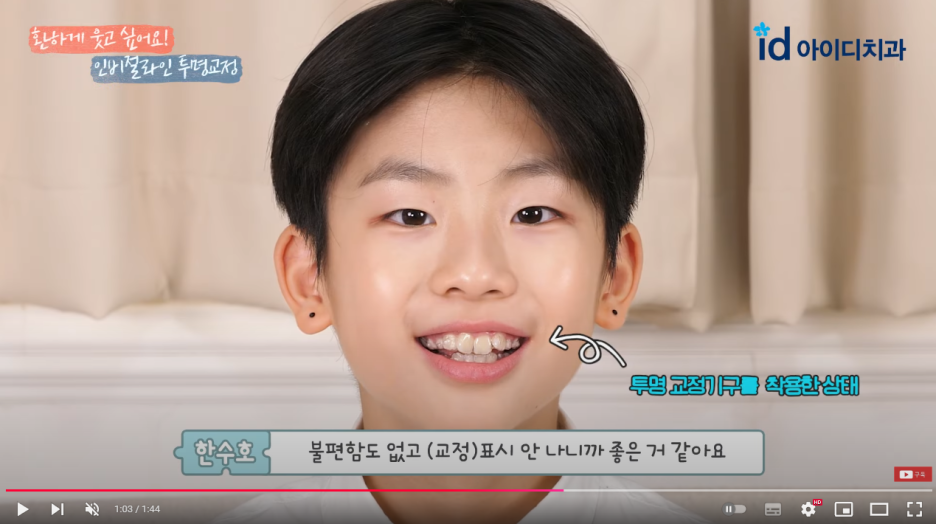
Invisalign First, one orthodontic option for growing children, uses appliances shaped like the alignment of the teeth—similar to a mouthguard—without wires or other wire-based components. As a result, it has the advantage of causing less discomfort, such as poking or injury inside the mouth.
The appliances are also transparent, so they are less noticeable in appearance. This can allow growing children who are sensitive about their appearance to receive treatment without losing confidence.
Children can remove and reinsert the appliances themselves, so they can take them out temporarily when eating or brushing their teeth. Parents often worry about their growing children's health because fixed appliances restrict the foods they can eat. Another major advantage of Invisalign First is that it does not impose food restrictions.
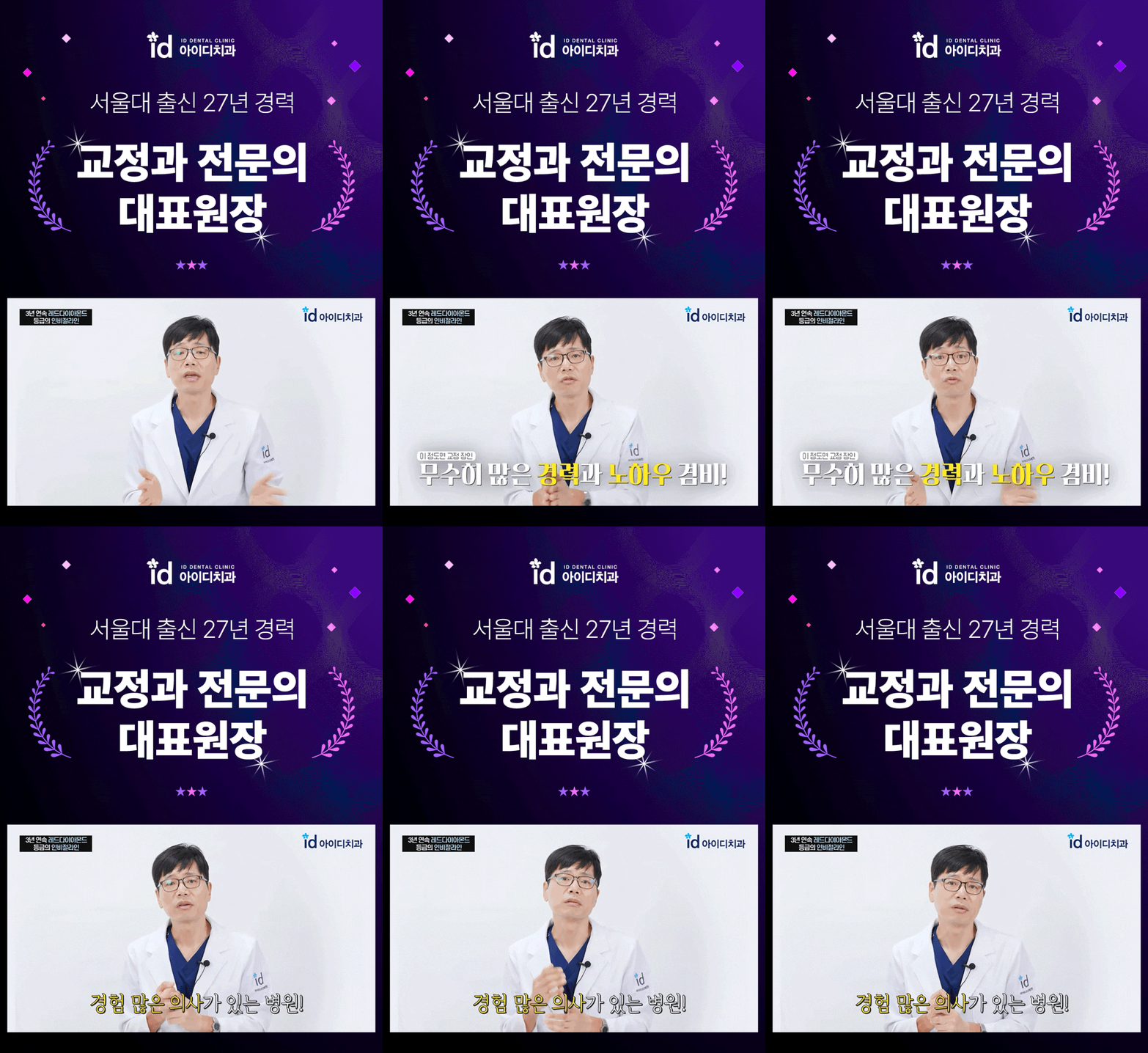
Treatment by orthodontic specialists with extensive clinical experience
On the other hand, many people wonder whether Invisalign First can provide sufficient orthodontic results because the appliances are transparent and removable.
They also say that, because many clinics provide Invisalign treatment, it can be difficult to decide which one to choose in order to achieve an appropriate treatment outcome.
In this situation, the important thing is to choose a dental clinic with an orthodontic specialist who has extensive clinical experience in orthodontics, including Invisalign.
Invisalign is an orthodontic method in which diagnosis and treatment planning tailored to the patient's condition are extremely important. This is because multiple appliances must be made in advance by predicting the step-by-step process based on the data obtained from the initial diagnosis.
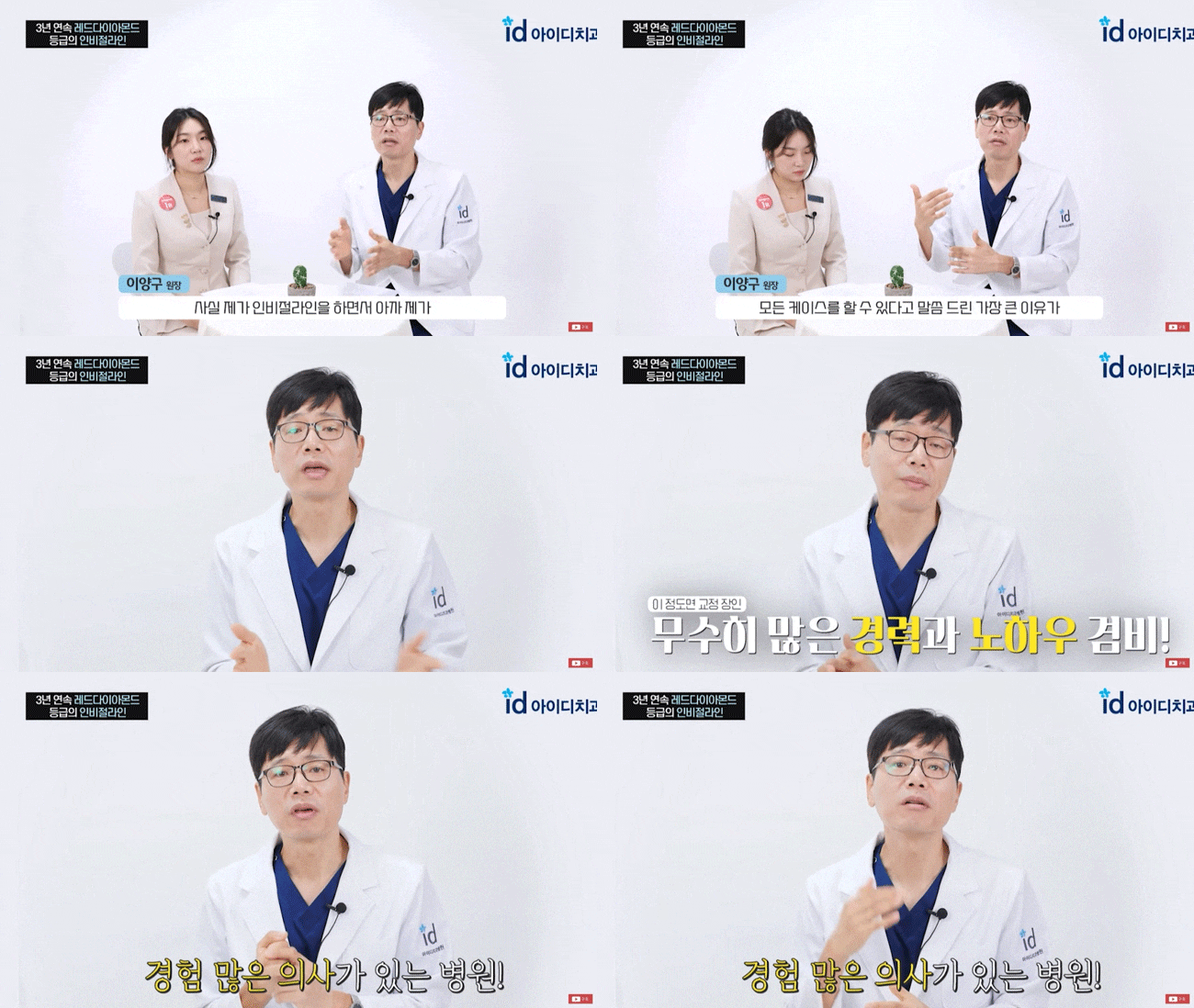
The medical team carefully reviewed the data, communicated with the headquarters, and worked through each step to create customized appliances for each individual child.
Results can vary depending on the provider's level of experience, treatment philosophy and standards, and approach to diagnosis and planning.
For this reason, I recommend finding a dental clinic with an orthodontic specialist who has extensive experience and expertise above all else.
It takes a wealth of experience to create a treatment plan that also considers a child's growth and guides treatment in the right direction, and even challenging cases may be treated with Invisalign.
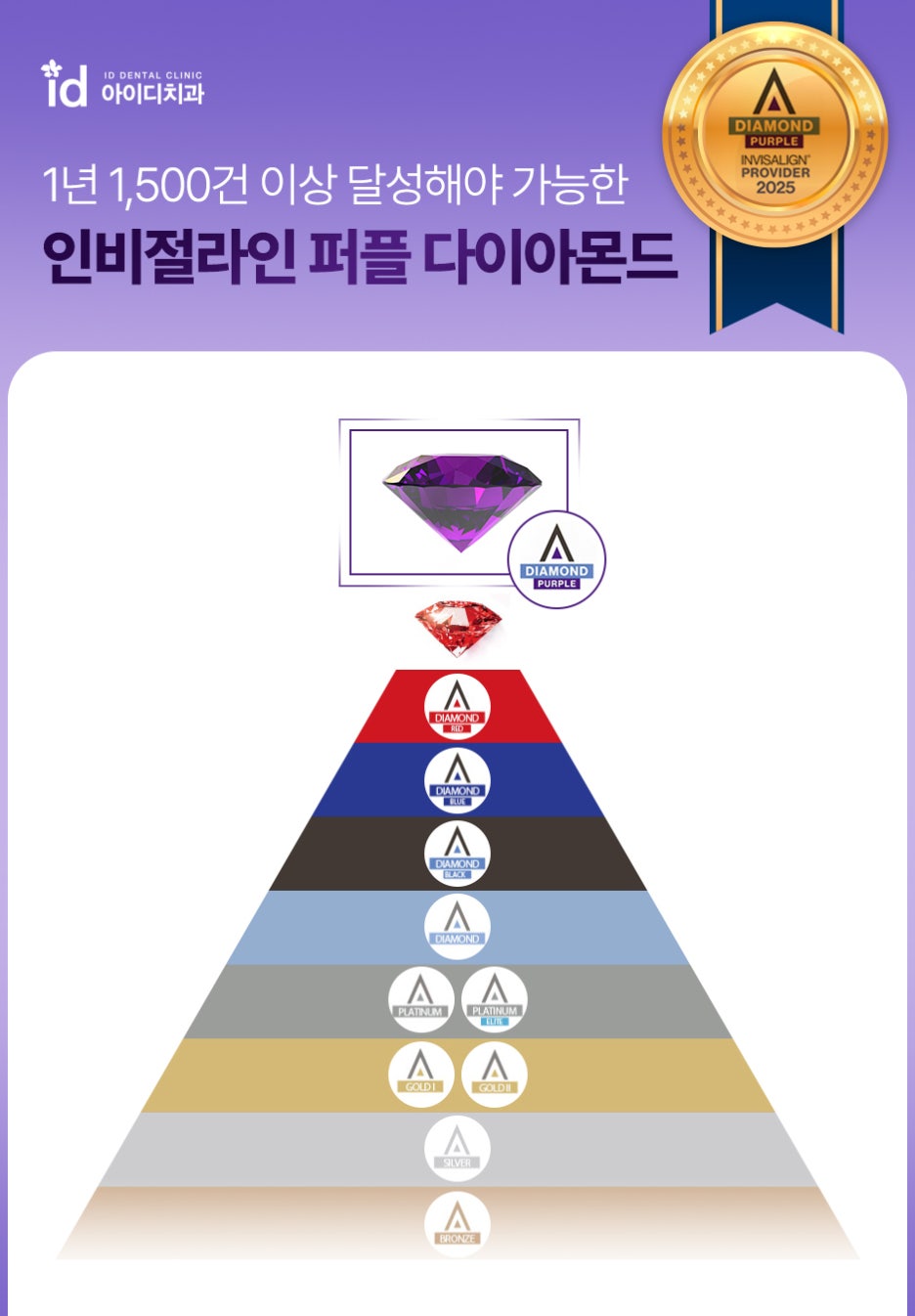
Why it is helpful to know the Invisalign provider tier
“But it is difficult to know how skilled such a provider is without undergoing treatment directly...”
Many people said this. Fortunately, Invisalign First has a system that allows you to estimate how many cases a provider has handled before receiving treatment.
This was the “Invisalign tier.” It refers to the tier assigned each year by Align Technology, the U.S. headquarters and manufacturer of Invisalign, to dental clinics that provide Invisalign treatment.
The tiers are classified according to the number of cases treated during the year.
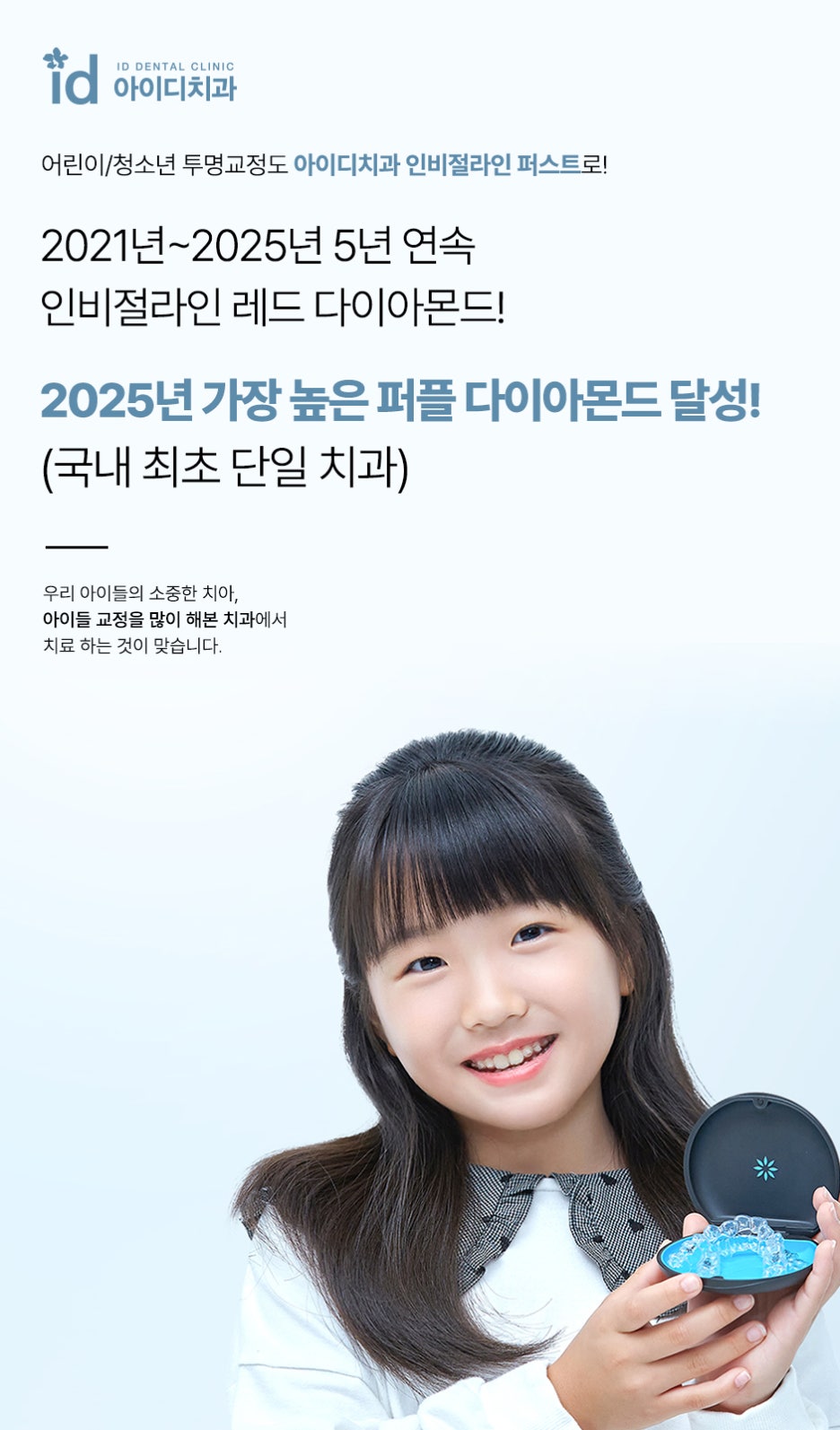
ID Dental Sinsa had the highest tier, Diamond Purple.
This tier requires treating at least 1,500 cases per year. When it was first introduced at the end of 2025, ID Dental Sinsa also became the first clinic in South Korea to receive it.
| 2021 | First in South Korea to receive the Diamond Red tier, which was the highest tier at the time |
|---|
| 2022 | Maintained the Diamond Red tier |
| 2023 | Maintained the Diamond Red tier |
| 2023 | Maintained the Diamond Red tier |
| 2024 | Maintained the Diamond Red tier |
| 2025 | Maintained the Diamond Red tier |
| End of 2025 | First in South Korea to receive Diamond Purple, a new tier higher than Red |
Some people pointed out that having a large number of cases and a high tier does not necessarily mean that every treatment is performed well.
However, Invisalign First differs from conventional orthodontics, so it is very important how long and how extensively a provider has treated diverse cases and built up expertise and know-how.
Furthermore, rather than simply accumulating cases to receive a tier, ID Dental Sinsa, as the only flagship clinic in South Korea, strives to contribute to the development of the field by sharing its know-how and technical expertise through regular conferences and meetings.
Based on its orthodontic know-how accumulated over many years and experience with numerous Invisalign cases, the clinic has been working to help children maintain a healthy oral environment.
For this reason, we can confidently say that there are no cases that cannot be treated with Invisalign.
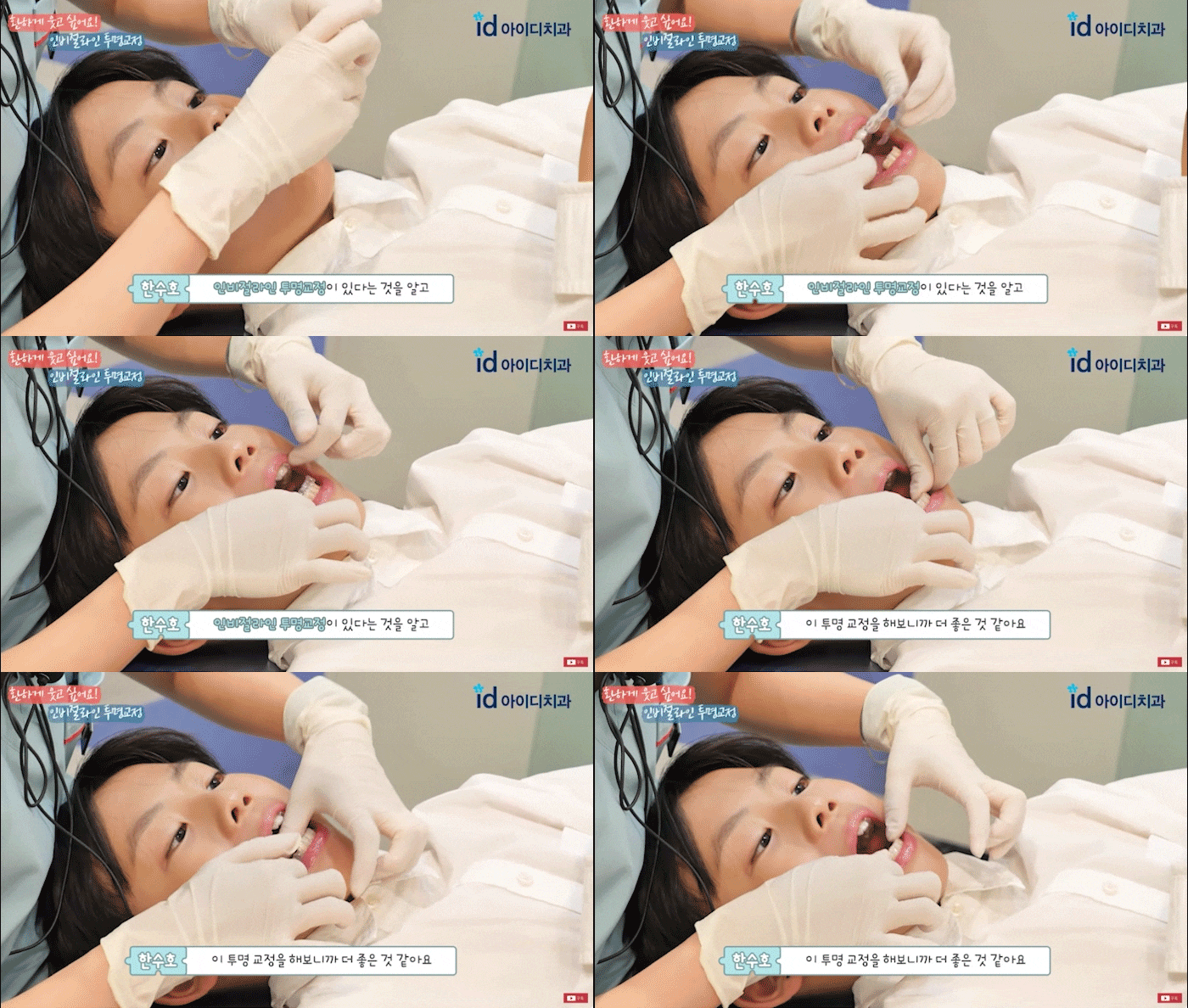
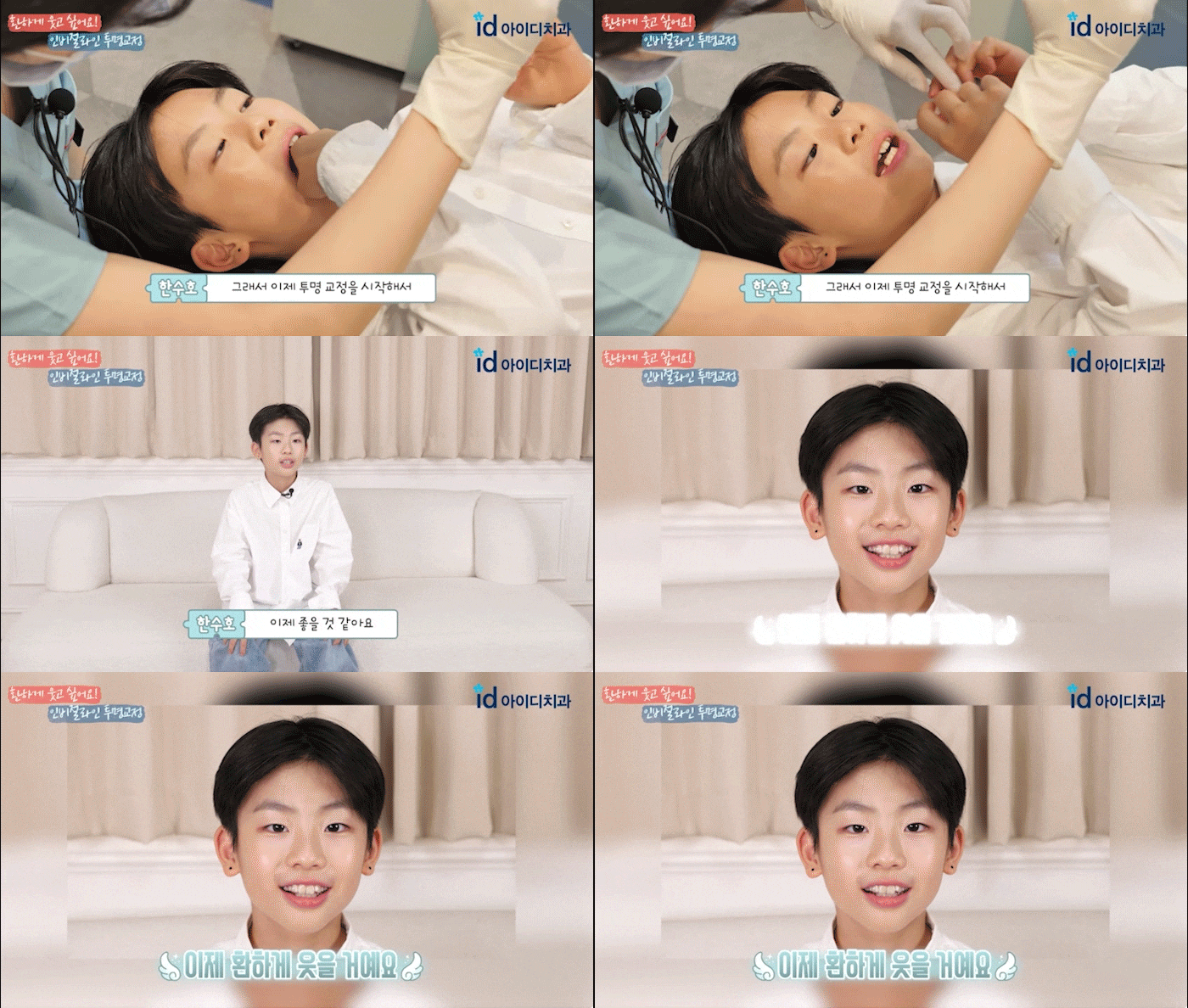
Orthodontic treatment during growth is not simply a process of correcting the alignment of the teeth. Because it must also take into account the child's growth rate and changes in oral structure, a more careful approach is important.
In particular, orthodontic treatment that considers the characteristics of growth, such as Invisalign First, requires a broad assessment of not only the current condition of the teeth but also the direction of future growth. It is helpful to understand that the provider's experience and diagnostic process may therefore play an even more important role.
In addition, orthodontic treatment during growth may be a child's first experience with dental treatment. Parents and children alike may be more satisfied if they look for a clinic that provides a comfortable treatment environment and an ongoing care system.





Previous image
Next image










Previous image
Next image










Previous image
Next image