Orthodontic treatment is not performed solely for cosmetic reasons. It also plays an important role in improving and maintaining oral health.
Irregularly aligned teeth can cause discomfort when eating and place stress on the teeth and gums. An improper bite can also lead to digestive problems because it prevents food from being properly cut or chewed.
Dental health is closely related to overall health. If orthodontic treatment is performed to achieve properly aligned teeth and a correct bite, it can improve quality of life and help you regain the pleasure of enjoying delicious food with a healthy mouth.
- Basic Principles of Orthodontic Treatment
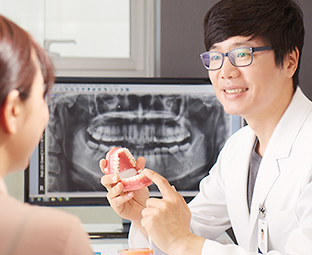
Orthodontic treatment refers to moving the teeth with fixed or removable appliances to straighten crooked or spaced teeth and correct malocclusions such as protruding teeth or a protruding lower jaw.
The most common method involves attaching brackets to the teeth, connecting them with wires, and applying a constant force to move the teeth in the desired direction.
Depending on an individual's oral structure, teeth may be extracted and the teeth moved into the resulting space. In some cases, treatment can proceed without extracting natural teeth by using the space created by wisdom tooth extraction or through interproximal reduction.
When malocclusion is present, treatment may be more complex.
Therefore, orthodontic treatment should begin with an accurate understanding and thorough diagnosis of the patient's current oral condition. X-rays alone have limitations, so various types of information should be obtained through CT scans, oral photographs, and other examinations, and the treatment approach should be established based on that data.
- Types of Orthodontic Appliances
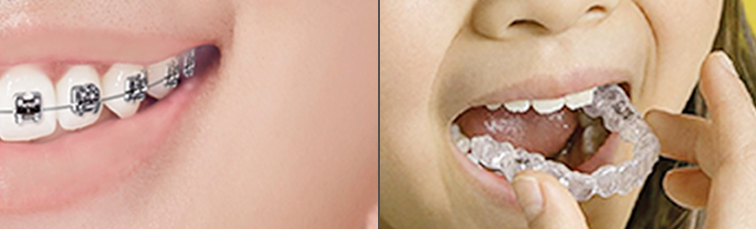
Orthodontic appliances can be broadly divided into fixed and removable appliances.
Fixed Appliances
-
Brackets are attached to the teeth and connected with wires to move the teeth.
-
The appliances must remain attached throughout the orthodontic treatment period, which may cause discomfort in daily life.
-
In the past, both brackets and wires were made of metal and were highly visible, making them less aesthetically pleasing. However, the range of choices has expanded to include various types, such as ceramic appliances similar in color to natural teeth.
-
Clippy-C appliances, which use sliding-door-style brackets, have flexible, smooth wires that help reduce discomfort.
Removable Appliances
-
These appliances can be taken on and off the teeth; clear aligners are a representative example.
-
Because they can be removed freely, they do not cause discomfort when eating or brushing, and there are no restrictions on food.
-
Oral hygiene is easier to manage.
-
If the appliance is removed and not worn for the required amount of time, the orthodontic effect may be reduced.
- Benefits and Features of Clear Aligners
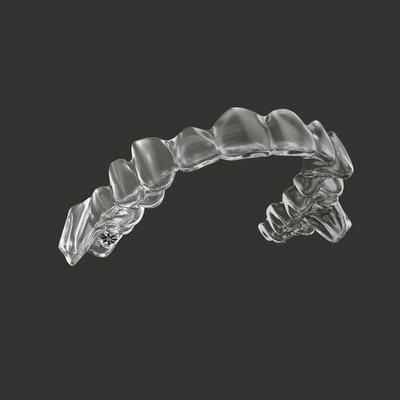
Clear aligners are orthodontic appliances that are highly aesthetic and cause less disruption to daily life, so more people are seeking them out.
They are suitable for busy office workers, students, and people working in the service industry.
This method straightens the teeth by placing unobtrusive, transparent appliances over the upper and lower teeth. Since they are made to be thin and to take the gum line into account, they are comfortable to wear.
Above all, another benefit is that there are no food restrictions.
With fixed orthodontic appliances, people avoid foods that may place stress on the appliances or cause discoloration. Food can also easily become trapped between the wires after eating, requiring more thorough brushing than usual with an orthodontic toothbrush.
Clear aligners, on the other hand, can be removed when eating and brushing. There is no need to avoid particular foods, and you can brush as usual.
However, they must be worn for long periods and also while sleeping to be effective, which some people may find uncomfortable.
The fact that patients can remove and reinsert the appliances themselves can be both an advantage and a disadvantage.
They may remove the appliances because they are uncomfortable or because they forget to wear them. This can lead to a result different from the one originally planned and may also extend the treatment period.
With clear aligner treatment, patients need to follow the treatment process more actively and carefully follow the dentist's instructions.
Because the results of this type of clear aligner treatment can vary depending on who establishes and carries out the treatment plan, even when the same appliances are used, it is advisable to proceed after consulting a specialist with extensive experience in clear aligner treatment.
- Orthodontic Treatment Duration and Care
The duration of orthodontic treatment varies depending on each person's oral condition and the orthodontic method used.
However, it generally takes approximately 1 to 2 years. More complex cases may take longer.
On the other hand, if you only want to close a small gap between the front teeth or correct slightly crooked or misaligned front teeth, the treatment may be classified as partial orthodontic treatment and may be completed in approximately 6 months.
During orthodontic treatment, you need to visit the dentist regularly for dental care. Visits are generally scheduled once a month.
The dentist examines, diagnoses, and manages the condition from multiple perspectives, including whether the teeth are moving as planned and whether there are any problems with the orthodontic appliances. Discussing whether the patient is maintaining proper care and ensuring that appropriate oral hygiene is practiced can help lead to a successful outcome.
- Retention Care After Orthodontic Treatment
Care after treatment is just as important as the treatment process itself.
Teeth naturally tend to move back toward their original positions, so retainers must be worn.
Retainers are also divided into fixed and removable types. In some cases, both types are used. Although the duration varies depending on the appliance and the individual's condition, long-term retention care for 2 to 5 years or longer is generally recommended.
A fixed retainer consists of a thin wire attached to the back of the teeth, where the tongue touches them. Once the initial adjustment period has passed, it can generally be worn without significant foreign-body sensation or discomfort.
Some people find it difficult to wear a retainer even after treatment because the appliances were uncomfortable during the lengthy orthodontic treatment period. However, retainers play a very important role in maintaining and stabilizing the results after orthodontic treatment, so it is advisable to follow the dentist's instructions carefully.
Wearing a retainer does not mean that oral hygiene care can be neglected. Even after treatment has ended, visit the dentist regularly to check that there are no problems.
Orthodontic treatment is not simply a means of changing one's appearance.
It is an important treatment for improving overall oral health and function.
Properly aligned teeth and a correct bite support the health of the jaw joints, improve chewing function, and make oral hygiene care much easier.
The healthy smile gained through orthodontic treatment can increase self-confidence.
All of these changes can improve quality of life.
However, it is equally important to consider where you receive treatment, which orthodontic appliances are used, and what treatment plan is followed.
Choosing a clinic that prioritizes the health of each patient and follows a treatment philosophy based on an appropriate treatment plan and direction can also be a good approach.
Phone: 02-548-2114
(1 minute on foot from Sinsa Station)