
Hello. I’m Director Jo Hyun-woo of Apgujeong Intense Plastic Surgery.
Those of you reading this article are probably looking into various things such as hospitals, costs, side effects, and other information while considering facial contouring surgery.
There are many misunderstandings people have about facial contouring surgery, and there are also points that must be understood before surgery, which is why I wrote this post.
If you take just 10 minutes before surgery to read this article to the end, I think you will have one more condition to request during your consultation, and you will be able to achieve a more satisfying surgical result.
I completed the plastic surgery specialist training at Severance Hospital and, over many years as the lead doctor in the facial contouring department at a large Apgujeong hospital, I have personally performed about 10,000 facial contouring surgeries to date.
Based on my 15 years of experience, I am currently handling facial contouring as the sole doctor at Apgujeong Intense Plastic Surgery. Today, based on my experience so far, I will talk about proper and successful facial contouring surgery.
Why does the face look artificial after facial contouring surgery?
Contouring Plastic Surgery Frontal Effect
Facial contouring surgery refers to cheekbone reduction, square jaw reduction, and chin reduction. When people think of facial contouring surgery, they often use the term “bone shaving” and think of it as a procedure that makes the face smaller.
But all plastic surgery ultimately aims to create a “beautiful face.” In that sense, contouring surgery should be approached with the goal of “balancing the face” rather than simply making it smaller. If surgery is performed with the sole goal of making the face as small as possible, it is easy to end up disappointed.
This is related not only to aesthetics but also to post-surgery side effect issues, which I will explain ^^
Even with cheekbone reduction alone, the ultimate goal of facial contouring surgery is to balance an unstable face shape by considering the ratio between the width of the forehead and the width of the lower jaw.
I refer to the sense of balance created from the front through contouring surgery as the “contouring plastic surgery frontal effect.”
When looking at a person’s face from the front, if the line from the cheekbones to the lower jaw falls in a line that is close to straight rather than diagonally, the middle portion of the face (from the eyebrows to the tip of the nose) appears relatively longer. In human faces, the longer the middle portion is, the older the face looks; the shorter it is, the closer it is to the standard for a youthful appearance.
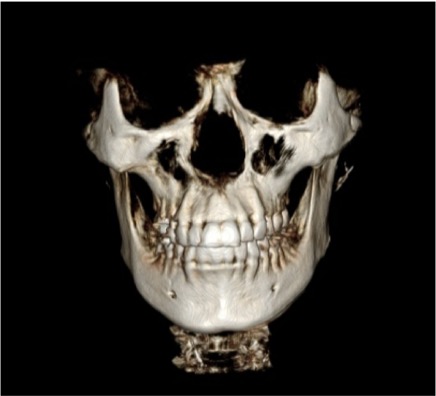
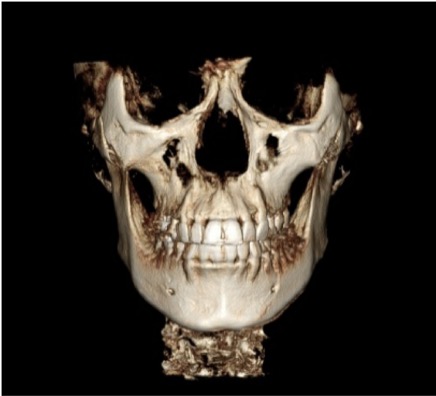
Intense Plastic Surgery, Contouring Plastic Surgery Frontal Effect, Before/After Surgery
These are CT images. If you look at the preoperative state on the left, the cheekbones protrude in an unstable way, but in the image on the right, you can see that the overall balance of the facial bones has been corrected. You can also confirm on the CT that the supporting cheekbones have been left in place rather than being made into a straight line.
Sagging cheeks caused by a disrupted balance
Facial contouring surgery, Director Jo Hyun-woo of Intense Plastic Surgery
In contouring surgery, balance and proportion are closely related not only to aesthetics but also to post-surgery side effects. When people think of side effects from facial contouring surgery, the first thing that likely comes to mind is the issue of sagging cheeks.
Sagging cheeks caused by facial contouring surgery refer to the phenomenon in which the soft tissue left behind after bone removal descends under gravity into the empty space where the bone used to be. However, under the condition that the surgery was performed properly, such sagging is almost impossible to detect with the naked eye.
If the bone is excessively dissected more than necessary, the retaining ligaments that support the skin of our face may be cut or the periosteum may be torn, causing the skin to gradually sag and leading to sagging cheeks.
If too much bone is removed without preserving the cheekbones that provide support, over time the soft tissue will descend under gravity, and eventually there is a high possibility that the face will flow downward as shown in the image on the right.
Therefore, surgery that takes proportions into account is related not only to the frontal effect of contouring surgery but also to post-surgery side effects, so special care must be taken during surgery to achieve the best results.
Regarding side effects, I have a separate column that I have summarized, so if needed, I recommend reading the column below.
Facial contouring surgery is more appropriately described as refining the face rather than reducing it, and a precise diagnosis that considers the width of the forehead, the width of the cheekbones, the width of the lower jaw, and the shape of the fat and muscles before surgery is absolutely necessary.
Therefore, methods such as OO osteotomy and XX osteotomy are, in fact, not that significant. What is most important is an accurate diagnosis that identifies the patient’s overall contours and soft tissue condition, and also predicts the state after surgery.
So if you are currently considering facial contouring surgery, before telling the specialist during consultation things like, “I’m worried about my cheekbones,” “Please cut my square jaw,” or “Please make my face smaller,” I would first recommend asking for a surgical plan that can make your face harmonious.
Otherwise, many hospitals are likely to recommend unnecessary three-procedure contouring surgery or perform surgery focused only on reducing size, which can lead to a mass-produced facial result. Before surgery, I recommend consulting at least two or three hospitals.
Thank you for reading this long post.