Hello. I’m Dr. Jo Hyun-woo, Director of Ipcheok Plastic Surgery.
I previously wrote a column about the six side effects of zygoma surgery,
and I also talked about cheek sagging.
The conclusion was that zygoma surgery does not necessarily improve sunken cheeks, and that sunken cheeks do not inevitably occur because of zygoma surgery.
Recently, many people have been asking whether sunken cheeks appear, worsen, or disappear after zygoma surgery, so I’d like to talk about sunken cheeks again.
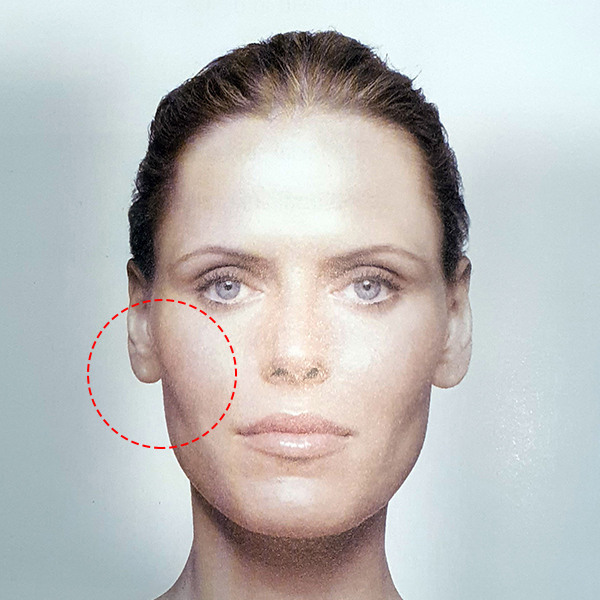
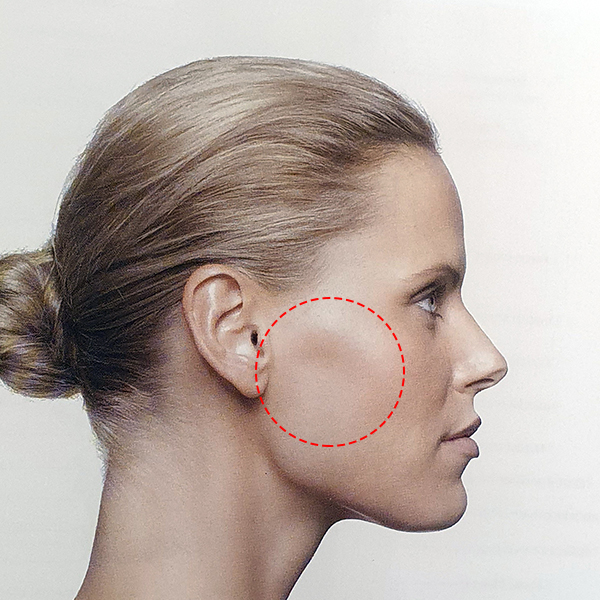
The circled area in the photo is what we generally refer to as sunken cheeks.
So why do sunken cheeks occur?
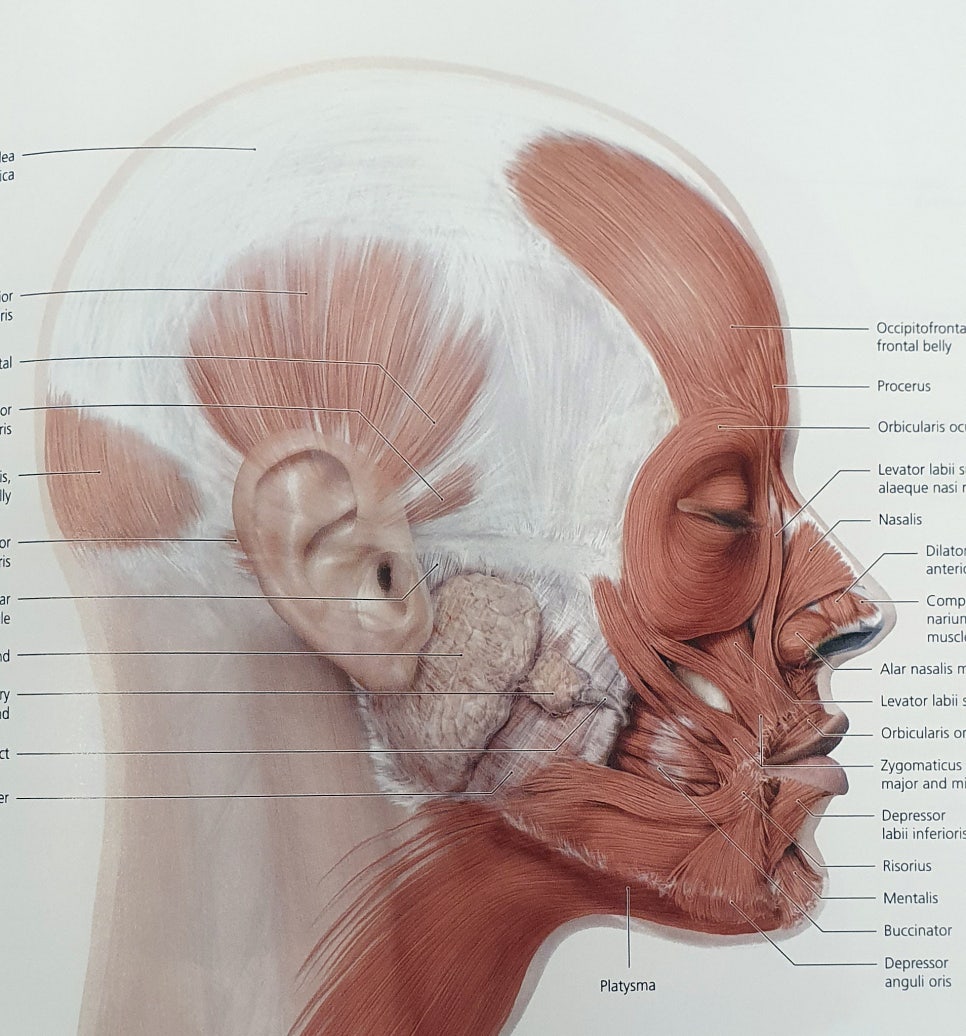
As you can see from the anatomical image, sunken cheeks occur not in the area with the facial expression muscles, but in the area behind those muscles where the salivary glands are located.
Our face has various ligaments that connect the skin and the tissues underneath, sometimes referred to as bio-bond or adhesions.
You can think of this as a structure that is firmly adhered together.
Above the salivary gland area, toward the skin surface, there is a muscle layer called the SMAS that wraps around the entire face.
Sunken cheeks are caused because this SMAS layer is very firmly attached to the dermis of the skin, combined with a lack of volume such as fat in that area.
If you look around, you’ll probably notice that very thin people often appear to have more severe sunken cheeks because they lack fat.
But there are also some people who show sunken cheeks even when they have plenty of facial fat.
This is simply an effect of each patient’s unique facial structure.
So, what is the relationship between sunken cheeks and zygoma surgery?
This is something I have thought about a lot while performing zygoma surgery for over 10 years:
zygomatic surgery does not necessarily cause sunken cheeks, nor does it necessarily improve them.
Let me show you a few cases.
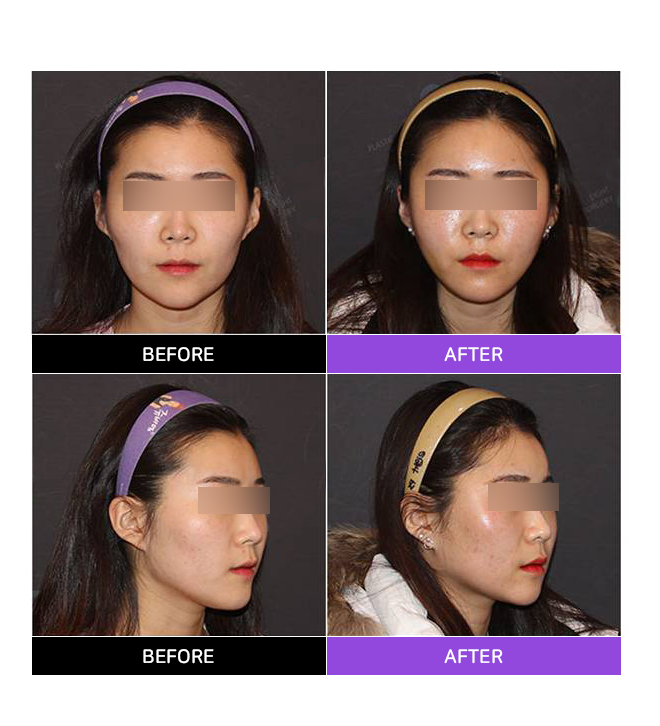
When I perform surgery, there are very thin patients with very little facial fat who, as the cheekbone is brought inward, lose the sharp contour and see their sunken cheeks improve.
For these patients, there is no need to worry about sunken cheeks before zygoma surgery.
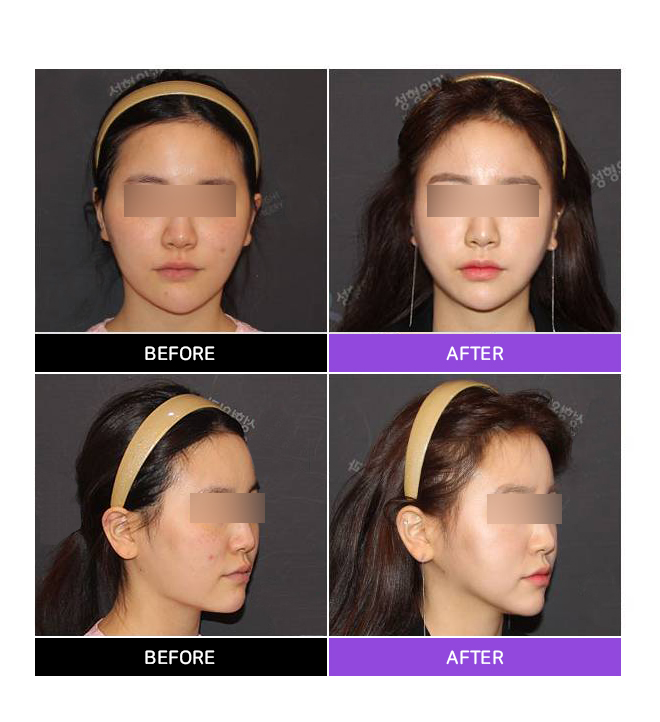
In a case like this patient, because the surgery brings the cheekbone inward together with the attached tissue,
the hollowed area may also move slightly inward, making the result look similar.
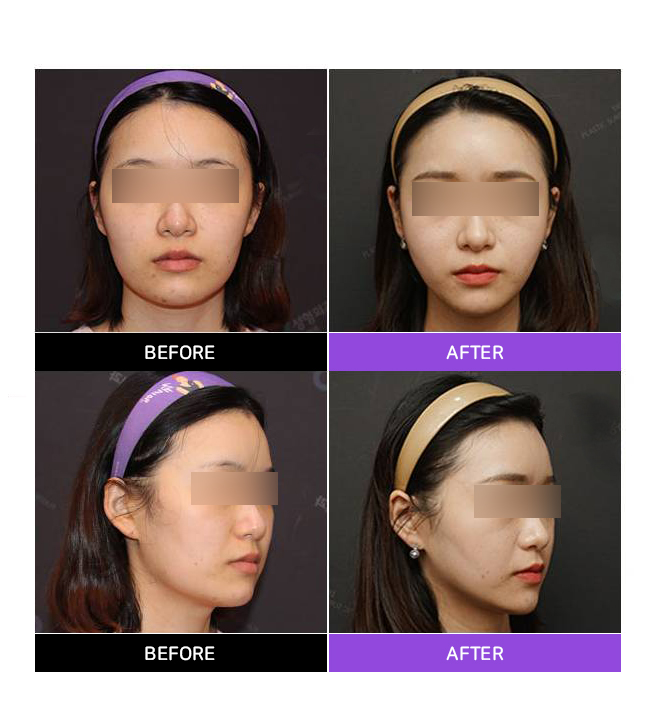
Also, about 20 to 30% of patients feel that their sunken cheeks have become worse.
So it is best to understand that it differs from case to case and look for ways to address it,
and I think that is the shortcut to understanding sunken cheeks.
So how should sunken cheeks be treated?
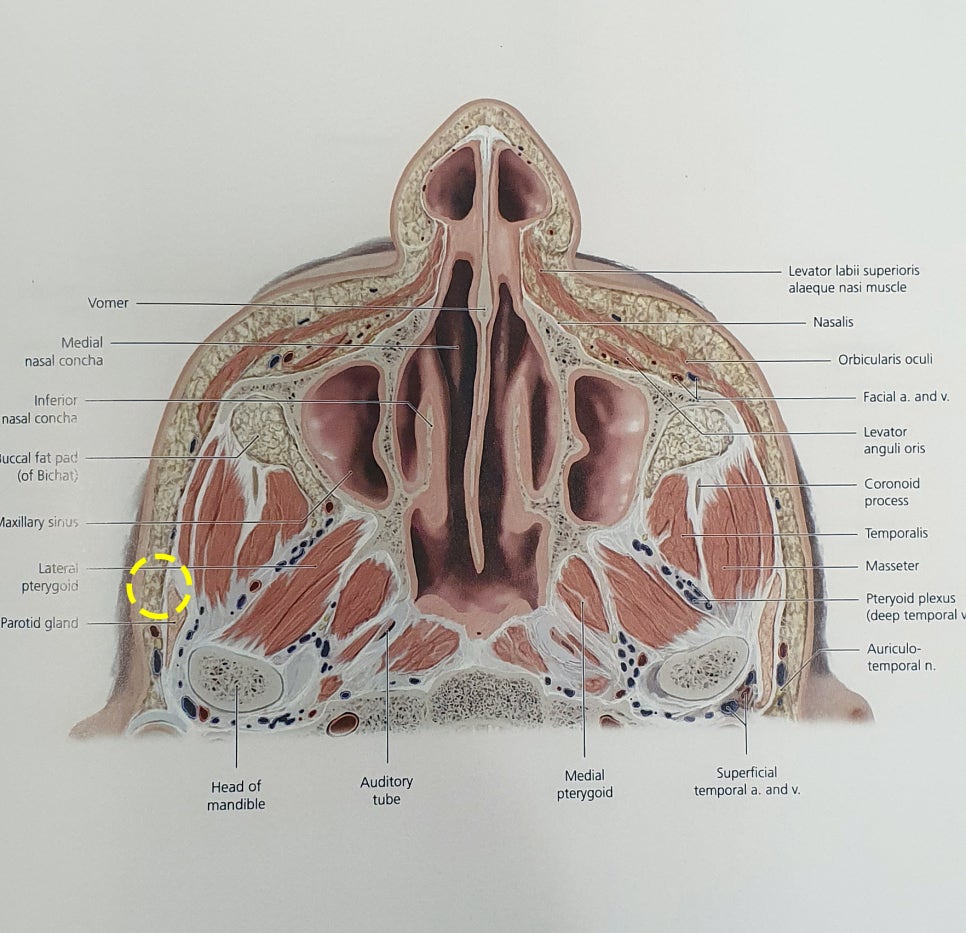
The circled area in this photo is adhered, and as mentioned above, I think the best method is to add volume into the space between the SMAS layer and the dermis.
A face-lift that widely releases that area through extensive dissection could be a good option, but since it can be a major surgery,
I think a simpler solution is fat grafting or filler.
There is one very important point here!!
If you simply add volume without any concept or knowledge, sunken cheeks can never be properly resolved.
Also, injecting too much volume can lead to poor results later due to sagging caused by gravity.
To address sunken cheeks, when I perform fat grafting, I sufficiently release the adhesions in the affected area,
and I use only the minimum necessary amount of fat.
Through a small needle puncture, there is a surgical method called subcision.
A sharp instrument can be used, or a softer instrument can also be used.
Of course, this is not something that can be separated as meticulously as in a face-lift,
but if subcision is performed carefully, an area of sunken cheeks about two or three finger widths wide can be sufficiently released.
After adequate release, microfat grafting is used to lay down fat between the SMAS layer and the dermis so that adhesions do not form again, which can produce very good results.
Let me show you more real surgical cases.
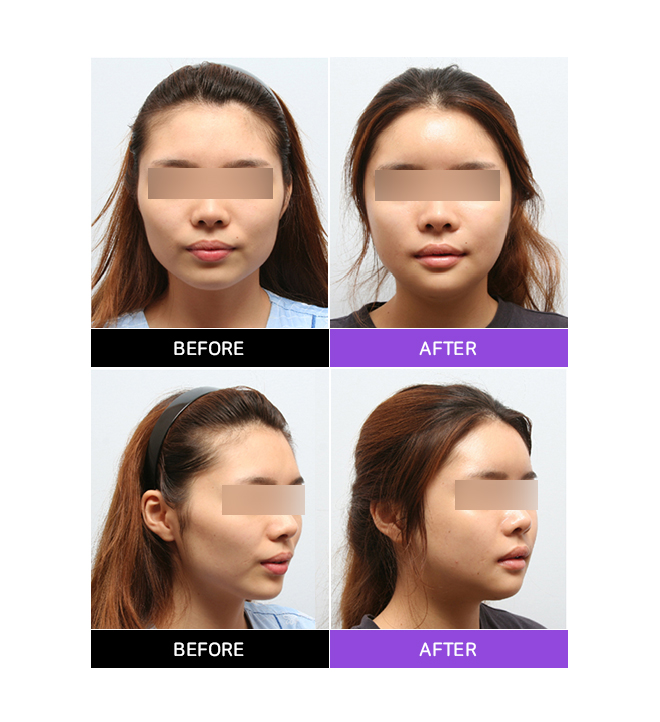
For patients like this one who had severe sunken cheeks before surgery, fat grafting is performed at the same time during surgery.
You can see that the uneven cheekbones and pronounced sunken cheeks before surgery improve dramatically after surgery.
I think this is a procedure that requires a great deal of care and attention to detail.
When I first tried injecting a large amount of fat between the SMAS layer and the dermis simply to increase volume,
it only made the face look puffier, while the sunken cheeks remained unchanged.
Of course, in thin patients, volume alone can be effective, but for most patients, it is important to create space for the fat by carefully performing subcision.
In my opinion, sunken cheeks are an area of concern for many doctors who perform contouring surgery.
There can be many different solutions and a variety of outcomes, but I believe this is still the best method available at present.
You should definitely be careful not to simply inject a lot of filler or a lot of fat, because sagging due to gravity can certainly occur.
If you are thinking about a simple alternative other than a face-lift, this method could be an option.
In conclusion, it would be hard to say that zygoma surgery and sunken cheeks have no relationship at all,
but zygoma surgery also cannot be said to be the cause of sunken cheeks, so it would be better to look for a solution to sunken cheeks on its own.
This has been Dr. Jo Hyun-woo.
Winter is now just around the corner, so please take care of your health, and I’ll see you again.