Hello. I’m Dr. Jo Hyun-woo from Inception Plastic Surgery.
Today, I’d like to talk about swelling and recovery time after facial contouring surgery, which I think are the things people considering facial contouring surgery are most curious about.
I’ll use unedited selfie photos of a patient who had facial contouring surgery at our clinic and is now six months post-op to look at how swelling changes over time.
The first photo is of a patient who underwent 230-degree zygoma reduction, square jaw surgery, and corticotomy.
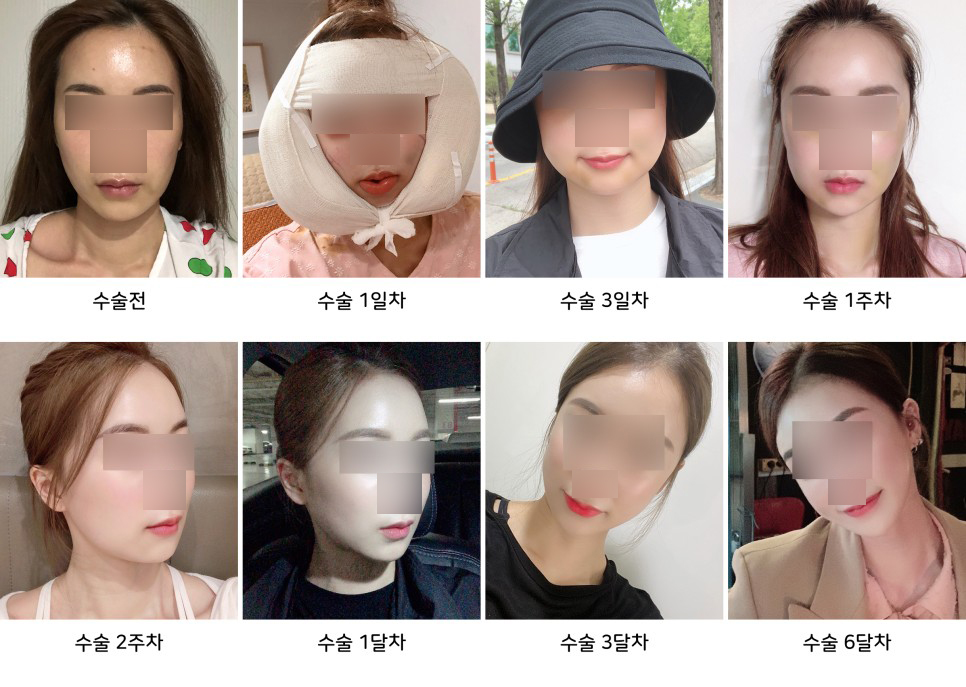
After facial contouring surgery, swelling may seem like it would be at its worst immediately after surgery, but in general it peaks at 72 hours after surgery, becoming most pronounced on days 3 to 4 rather than right after the operation, and the major swelling subsides between days 7 and 14.
At this point, once 1 to 2 weeks have passed, some people worry that the surgery did not seem to have any effect or that their face looks uneven. This is because the major swelling has gone down, so it seems like the swelling is almost completely gone, but the face may still appear contoured unevenly.
However, recovery is not complete even one month after surgery, and from 3 to 6 months, the remaining swelling gradually subsides while the wounds heal.
Also, it is only after about 6 months that the surgical results, including the effect of the surgery and whether side effects such as cheek sagging have occurred, can be properly judged.
Let’s look at the next patient’s photo.
This photo is of a patient who underwent 3D zygoma reduction, square jaw surgery, and corticotomy.
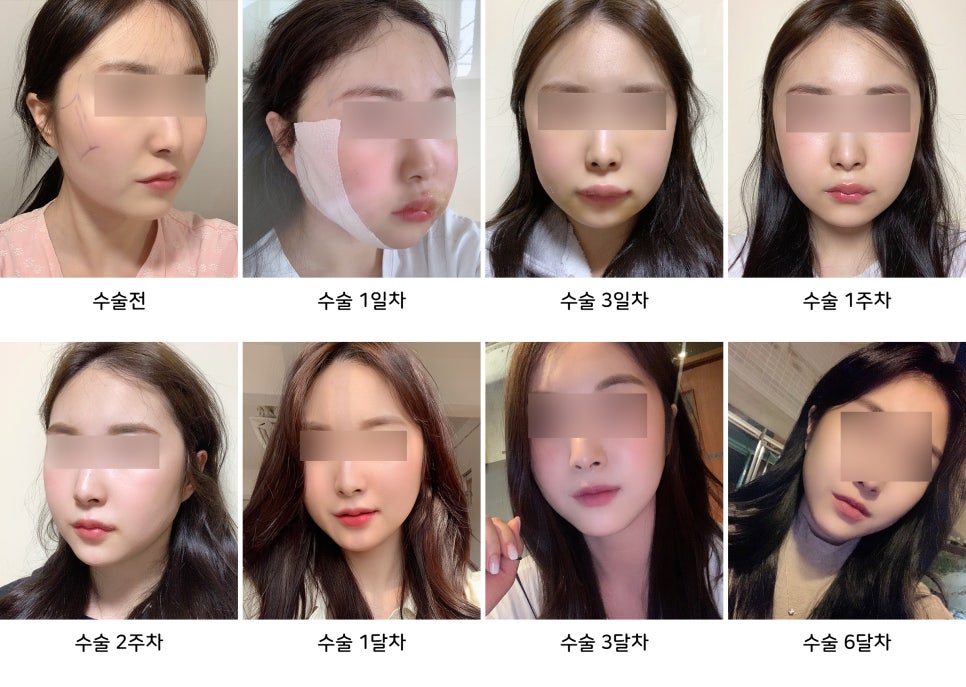
Some people worry whether swelling after facial contouring surgery will interfere with daily life.
The process and the time required for recovery vary from person to person, and it usually takes 1 to 2 weeks for major swelling or pain to subside.
Depending on how the surgery was performed and how postoperative care was carried out, this period can be shortened and swelling can be reduced.
At our clinic, we use Smart Lux care to help speed up skin regeneration, which can help reduce swelling and pain.
This is the last patient’s photo.
This patient underwent 3D zygoma reduction, square jaw surgery, corticotomy, and chin surgery, for a total of three facial contouring procedures.
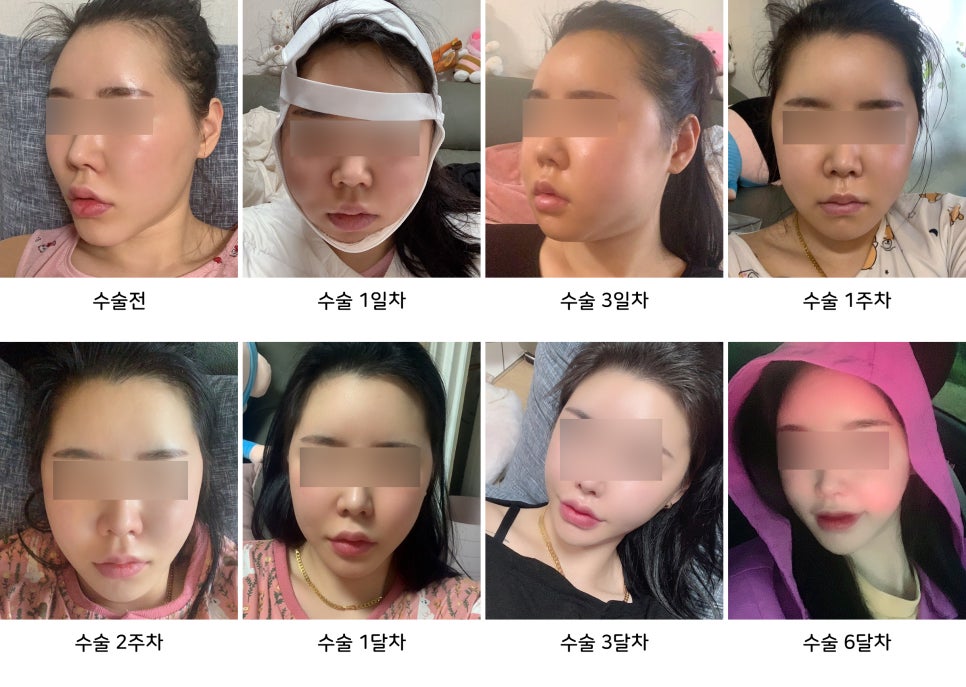
In fact, swelling after facial contouring surgery is determined by each patient’s individual characteristics.
I have been working with facial contouring for more than 15 years, but even when the same surgical method is used, some patients swell a lot while others barely swell at all.
However, I believe the most important factor is the surgical time.
Because osteotomy, skin incision, and dissection are performed, the amount of bleeding that occurs during surgery is proportional to the surgical time.
To reduce swelling, it is good to use cold compresses, take light walks, and eat foods that help reduce swelling, such as pumpkin juice.
It is also a good idea to receive postoperative follow-up checks.
At our clinic, we monitor patients thoroughly for more than one year after surgery and also check for cheek sagging.
So far, we have looked at swelling and recovery time after facial contouring surgery.
Lastly, I will attach a video about cheek sagging and hollowing after facial contouring surgery, which are the concerns most commonly raised after surgery, and I hope it will be helpful.
Thank you.