Hello. I’m Dr. Jo Hyun-woo, Director of 입체성형외과.
Recently, the proportion of male patients visiting for facial contouring consultations has increased significantly.
So today, together with an actual patient case, let’s take a look at male square jaw and male facial contouring surgery.
Before showing the case, I previously wrote an article about the surgical direction for male cheekbone reduction and male facial contouring,
so please refer to the column below.
First, in square jaw surgery, the frontal effect refers to the face appearing slimmer because the facial width is reduced not only from the side after surgery, but also when viewed from the front.
Unlike women, men generally have a larger bone structure, and their facial contours are also thicker and stronger.
If these features are excessively pronounced, the face can look angular, appear older, and give a strong impression.
For men, it is important to establish a surgical plan suited to men after a precise analysis of bone thickness and size, as well as the soft tissue.
First, let’s look at the photos.
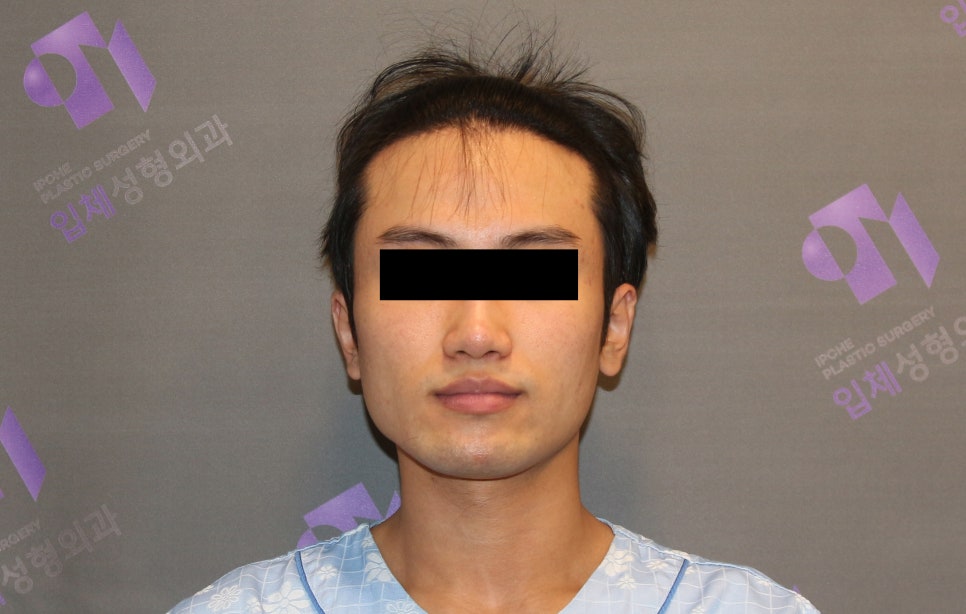
The patient above has a bumpy facial shape with both the cheekbones and square jaw well developed, creating a strong and rough impression.
Because this patient’s face is generally long, if surgery is performed without considering the overall proportions, the face may look even longer after surgery, so special caution is necessary.
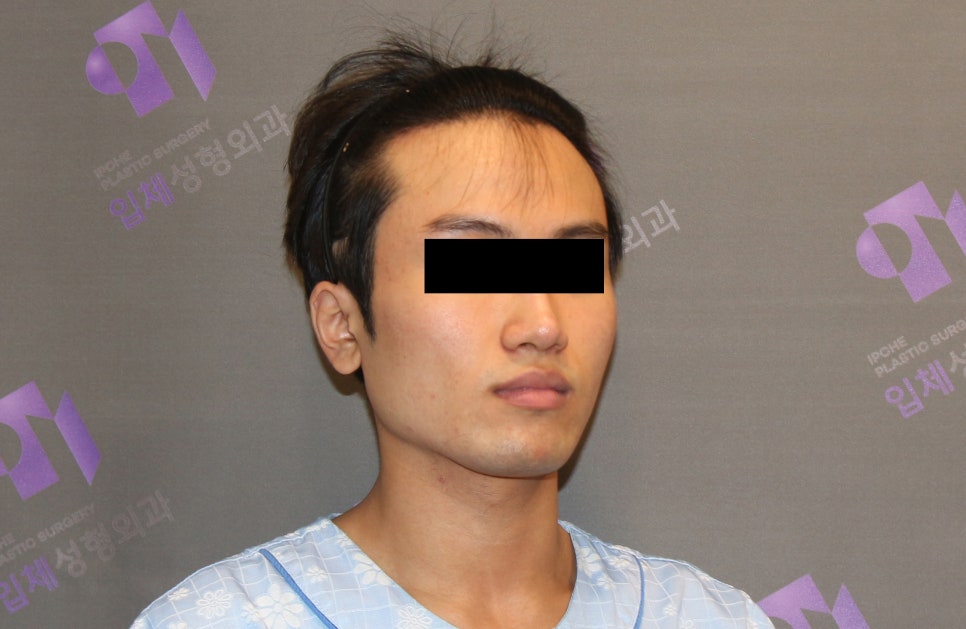
If the bone is well developed while the facial line is well balanced, a male square jaw can be seen as an advantage.
However, in the photo, both the cheekbones and square jaw are unevenly developed, giving a rough impression.
To improve the likelihood of highly satisfying surgical results, it is important not only to remove the developed bone, but also to consider the amount of bone that remains after surgery.
In the case of patients who visit for revision male facial contouring surgery, there are often cases where the cheekbone area is flat and the jawline has become softer than necessary.
When this happens, the face may end up looking feminine or feeling awkward after surgery.
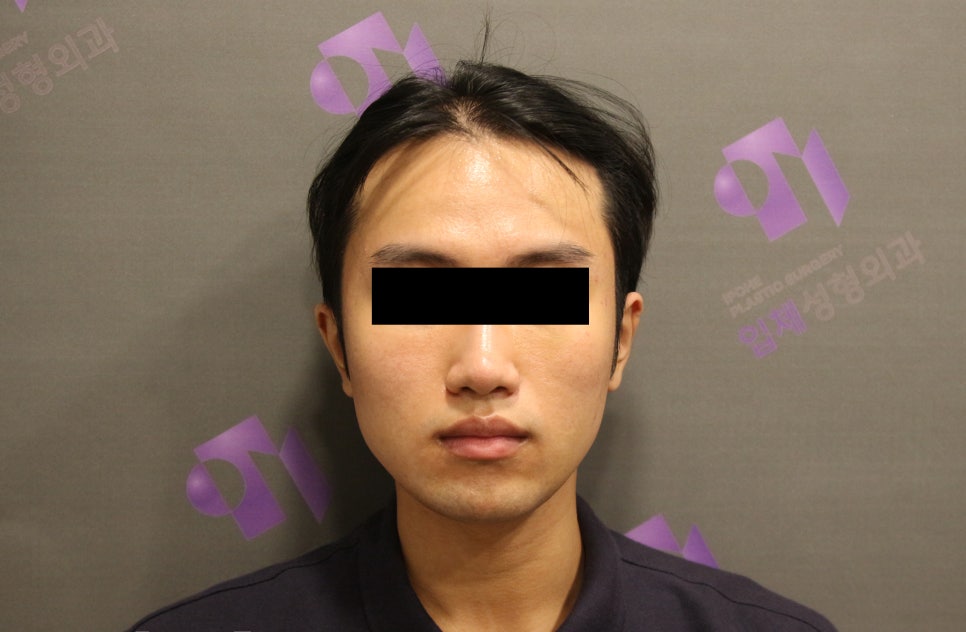
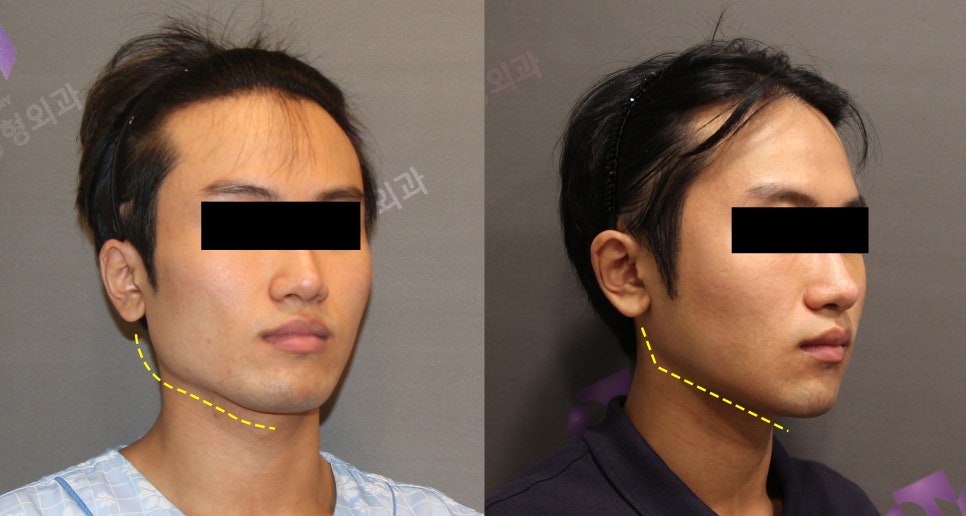
This is the appearance after 230-degree cheekbone surgery and square jaw surgery.
The protruding cheekbones have moved inward, and the rough jawline has also been neatly refined.
If we simply trim the rough areas and restore balance like this, developed bone can actually create a masculine impression and lead to good results.
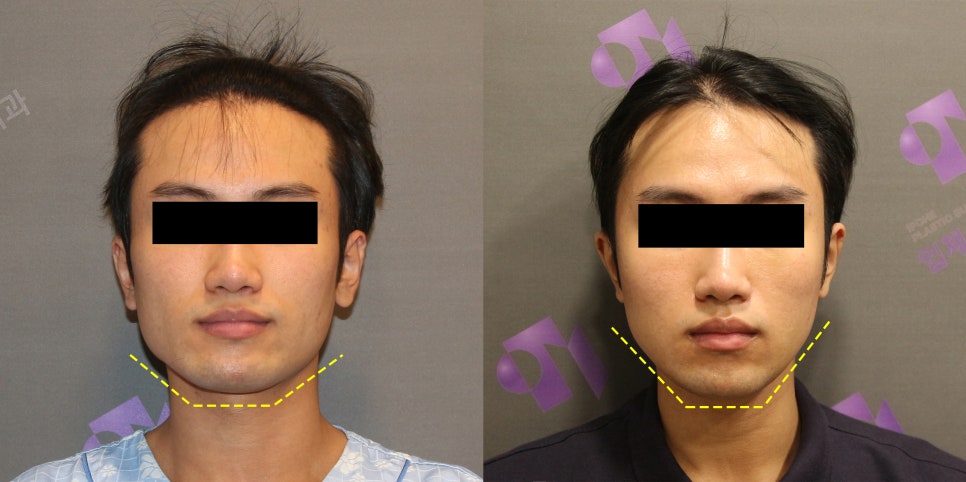
When placed side by side, the irregular curves of the face have been smoothed out and the overall facial line has become straighter,
changing the impression from strong and rough before surgery to sharp and soft afterward.
The lower jaw has also been repositioned upward, making the previously long midface appear shorter than before,
and when viewed from the front, the facial width has been reduced, creating a slimmer overall frontal effect.
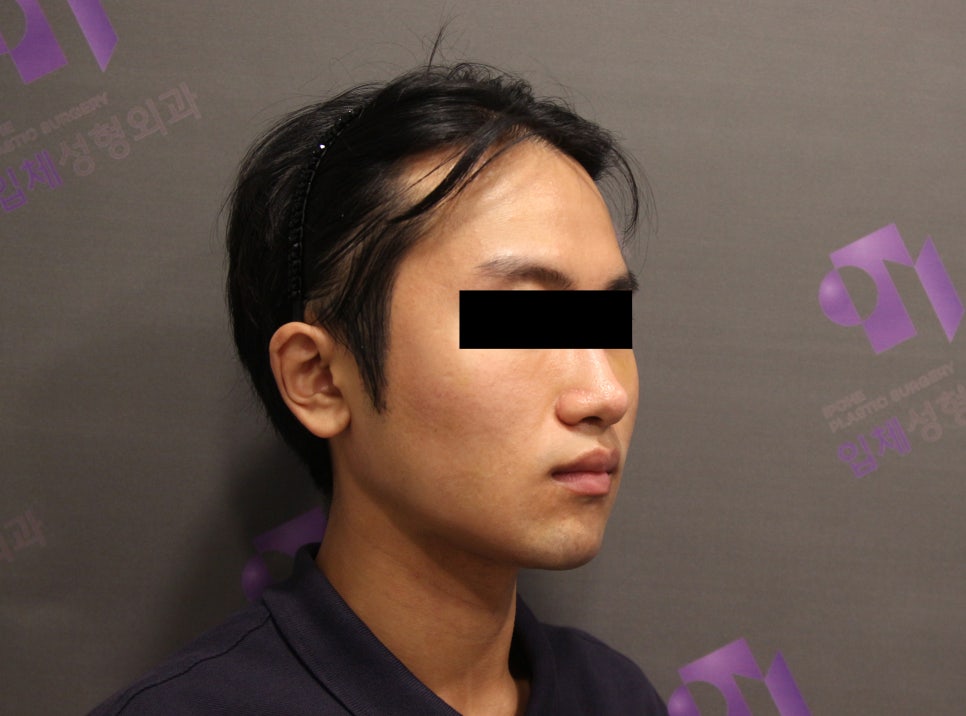
From the side, both the cheekbones and square jaw still retain some angles, but because the overall facial line has been refined,
the cheekbones and square jaw that seemed unattractive before surgery can instead give a masculine impression after surgery.
Male facial contouring surgery should not focus on making the face simply smaller and softer by refining an uneven facial line.
Rather, it should be performed in a way that considers the overall proportions, preserves the angles of the face, and creates a masculine facial line for good results.
The frontal effect of facial contouring refers to the balance of proportions that is most ideal when a person’s face is viewed from the front.
For example, in cheekbone reduction surgery, the cheekbones are not simply pushed in unconditionally; the proportion with the lower jaw must also be considered.
The same applies to square jaw reduction surgery, where the width of the cheekbones must also be taken into account.
In addition, the more bleeding that occurs during surgery and the longer the operation time, the greater the swelling and the longer the recovery period.
Therefore, it is best to find a facial bone specialist with abundant clinical experience, and proper diagnosis from medical staff who do not perform excessive surgery is necessary.
Thank you.