Hello, this is Director Jo Hyun-woo of Ipcheok Plastic Surgery Clinic.
Today, I’d like to talk about one of the dilemmas that always comes up during surgery: when choosing between safe surgery and surgery that gives stronger results, which should we choose?
Almost all patients who visit the clinic for contouring surgery want to reduce their face as much as possible.
Of course, I also look at the CT scan and try my best to reduce and remove as much as possible within a safe range to create the facial shape the patient wants.^^
However, after more than 15 years working in plastic surgery, I have seen far too many side effects caused by excessive osteotomy and pushing tissue inward.
Recently, some patients say things like, “Cut as much as possible, even if it’s just short of life-threatening(?)”
In response, I say, “I’ll do my best within the safest possible range.”
Let me explain with a few examples.
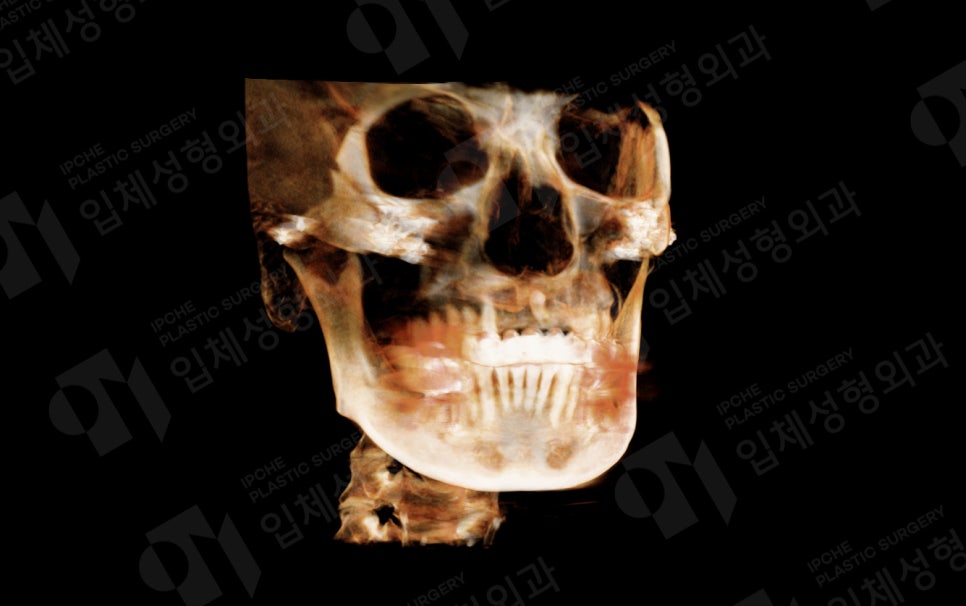
This patient visited because the 45-degree cheekbone area looked protruded after cheekbone surgery.
I was very surprised when I saw this CT scan. I wondered if it was really possible to cut the 45-degree cheekbone this much.
In this patient’s CT, the part where the 45-degree cheekbone was cut is the area where the facial ‘Zygomaticotemporal nerve’ comes out.
The fixation pin is also placed very close to the orbit.
Of course, the closer you cut to the eye socket bone, the more the width of the cheekbone is reduced.
But if you cut that close to the eye socket and cause partial sensory loss, is that really a good surgery?
Of course, opinions may differ from patient to patient and surgeon to surgeon, but I do not agree with this kind of surgery.
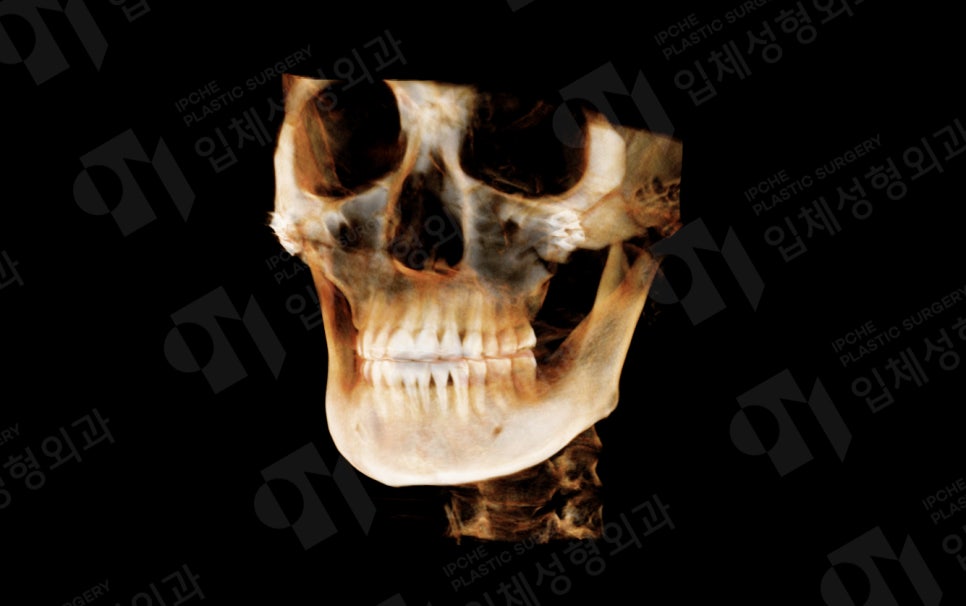
As in this patient, I believe a safe surgery without sensory loss is possible only when the area where the nerve emerges is perfectly preserved.
The same goes for square jaw surgery.
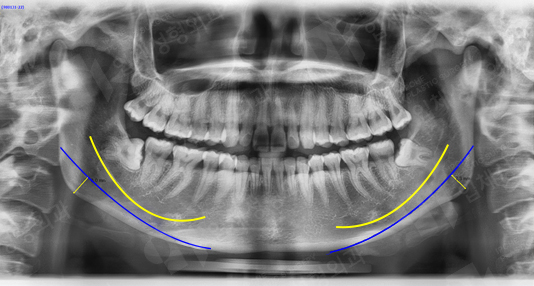
As you can see in this photo, when you take a panoramic X-ray, there is a safety margin for cutting the square jaw bone.
I think that margin is about 3 mm. But when I take X-rays of patients who come to me after surgery at other clinics, there are many cases where the bone has been cut by less than 1 mm.
Naturally, cutting more can make the effect look better, right?
But if the cut is too close to the nerve, the nerve may be exposed, and when touching the underside of the jawbone, the patient may feel tingling or pain, which is an abnormal sensation.
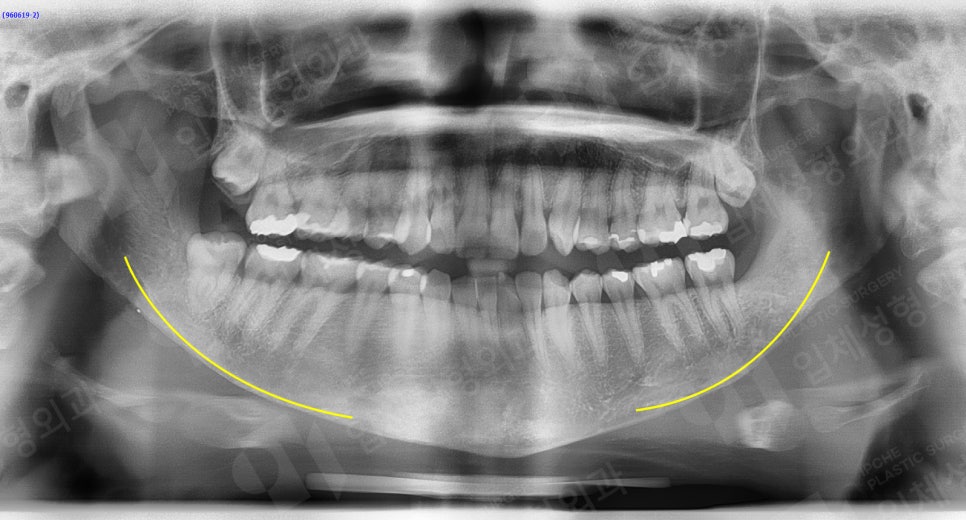
If you look at this image, you can see how close the margin is between the nerve line and the cut bone.
It’s not that I avoid cutting because I can’t cut closer.
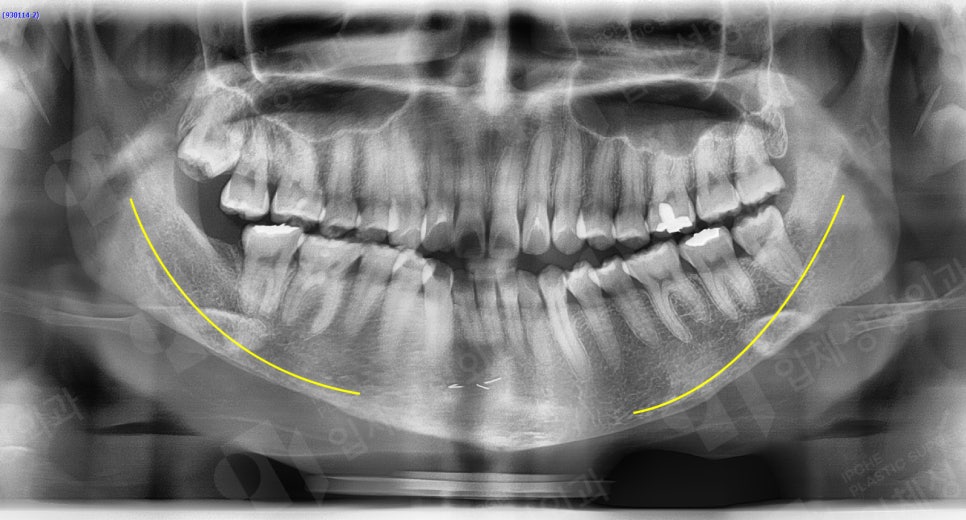
If, like this patient, you cut while leaving a safety margin of at least about 3 mm, the chances of long-term side effects can be greatly reduced.
When I first started performing surgery, I also cut and pushed in a great deal, but I realized that cutting and moving things this much does not make an enormous difference in facial appearance. Since then, I have pursued safer surgery. Of course, some patients may still say they want to cut as much as possible, but for those patients, I usually say I’m sorry.
It is not easy for dangerous situations to arise in eye or nose surgery.
However, in contouring surgery, if the initial surgery is done too aggressively, it is essentially impossible to reverse, so even if the result is a little less dramatic, I believe that performing surgery within a safe range is the path to achieving a naturally prettier result.
Thank you.