Hello. I’m Dr. Jo Hyun-woo, Director of 입체성형외과.
Today, I’d like to talk about a different field from facial contouring surgery: the “endoscopic forehead lift.”
Many people mistakenly think that a forehead lift is a procedure mostly done in middle age or later, when forehead wrinkles appear due to aging.
Of course, if you are middle-aged, it can be appropriate as a surgical method to improve a tired-looking impression caused by sagging forehead skin that deepens wrinkles, or when the eyebrows and eyelids also sag together, resulting in droopy eyes and an altered appearance.
However, there are also cases where it should be applied even in the 20s.
Examples include cases where the eyes still look cramped even after double eyelid surgery, or where the expression appears strong and severe.
Other cases include a narrow distance between the eyebrows and eyes, a need for the effect of ptosis correction, a bulging eyelid area, or severe asymmetry of the eyebrows.
In these cases, the procedure is performed through an endoscope with a small incision of about 1 cm inside the hairline, dissecting the skin up to above the eyebrows and pulling it upward. Because it is a lifting surgery, many people think it takes a long time, but the procedure is performed under sedation anesthesia and takes about 1 hour.
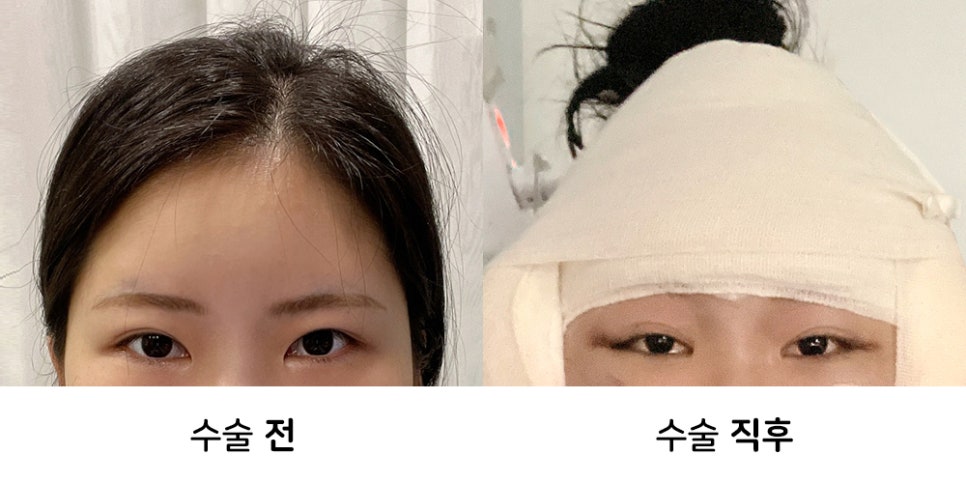
The recovery period after an endoscopic forehead lift can vary depending on the individual’s constitution.
Because it is forehead surgery, swelling may move downward, causing swelling and bruising around the eyes. For about 3 to 4 days after surgery, you may also feel headaches and heat in the forehead area. At this time, frequent cold compresses can help with recovery.
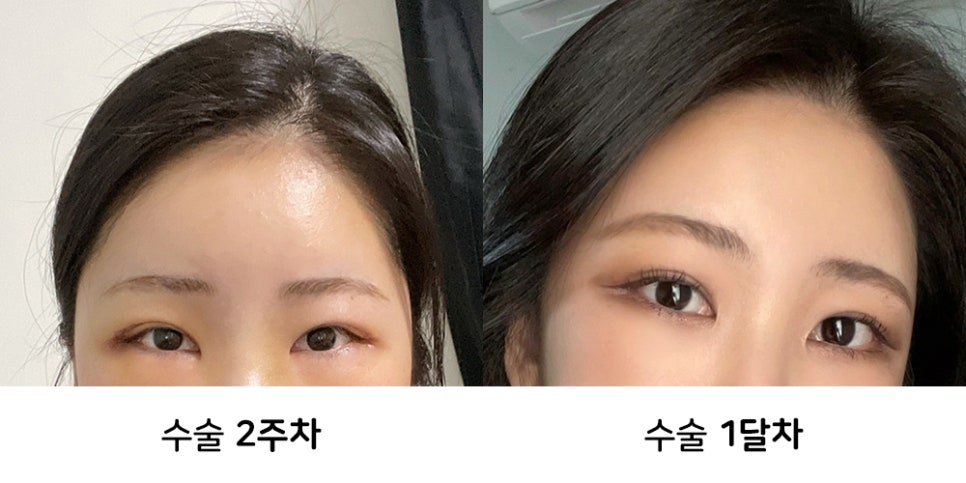
Although swelling after surgery may seem like it would be greatest immediately after the procedure, it usually peaks 72 hours after surgery, reaching its largest point on days 3 to 4, and major swelling subsides around 7 to 14 days after surgery. Shampooing is possible from day 3 after surgery as long as the surgical site is avoided, and hair dyeing or perming is possible after one month.
Even up to one month after surgery, recovery is not yet complete, and you can think of the period up to 3 to 6 months as the time when residual swelling gradually subsides and the wound heals.
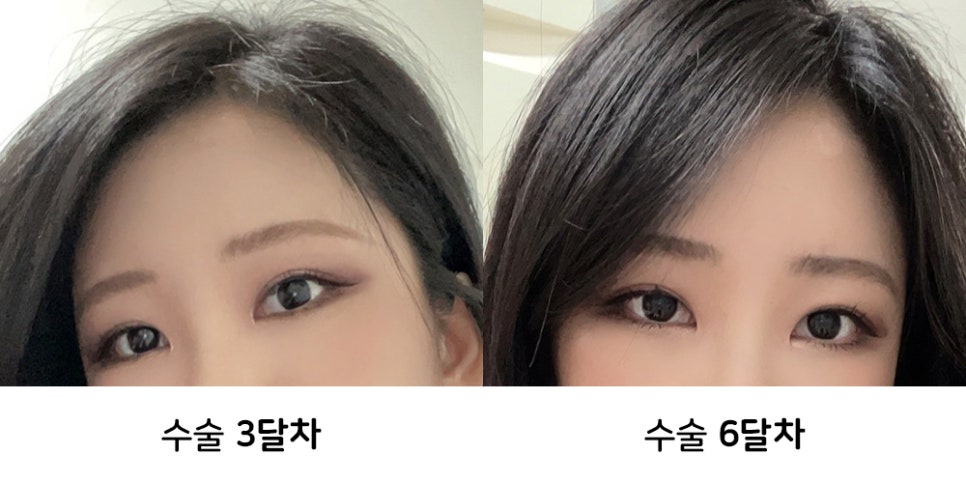
Also, for the surgical site of the endoscopic forehead lift, stitches are removed in the first week. At that point, the scar gradually becomes less noticeable after the stitches are removed.
There may be temporary hair loss in the surgical area, but since hair gradually begins to grow again after 3 months, there is no need to worry too much.
You should avoid rubbing the surgical area.
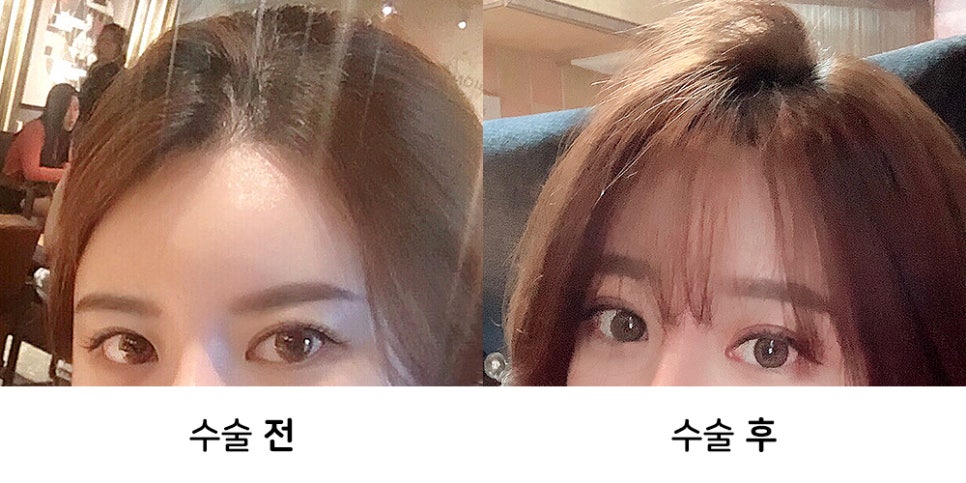
The Endotine used in endoscopic forehead lift surgery is a biocompatible medical material that is fully broken down and absorbed by the body within one year after surgery.
As a medical material that lifts sagging skin tissue, its five pyramid-shaped protrusions strongly pull up sagging eyebrows and forehead skin, allowing for firmer fixation than traditional surgical methods.
If the procedure is performed by medical staff who are not very experienced with Endotine, excessive lifting may instead cause pain, a foreign-body sensation, or an artificial appearance.
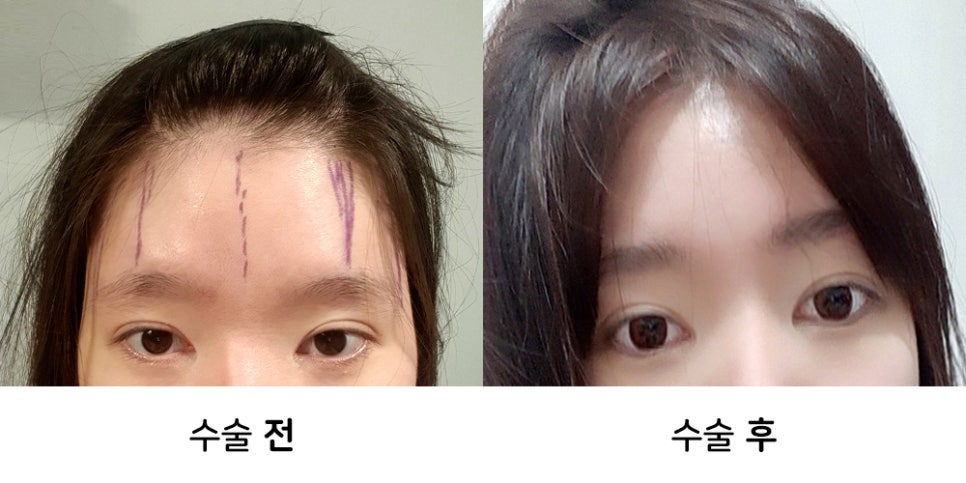
Because an endoscopic forehead lift is performed through a small incision, if surgical experience is insufficient, damage to the soft tissue is unavoidable.
If that happens, bleeding increases and the operation time ends up getting longer as well.
Therefore, since the expertise of the specialist is important for this surgery, you should choose a medical team with extensive clinical experience to minimize side effects and achieve satisfying results.
The recovery period and side effects of all plastic surgeries can vary depending on how well the individual takes care of themselves.
It is good to take light walks and consume foods that help reduce swelling, such as pumpkin juice. Alcohol and smoking slow recovery, so they should be resumed only after one month.
So far, we have looked at swelling and recovery after an endoscopic forehead lift.
Thank you.