Hello. I’m Dr. Jo Hyun-woo, Director of 입체성형외과.
You may have seen reports of deaths caused by anesthesia accidents during jaw surgery and contouring surgery.
More recently, many people have become fearful of anesthesia after reading articles about someone becoming vegetative due to an anesthesia accident while undergoing a hair transplant.
Especially for those considering facial contouring surgery, anesthesia is something that must be clearly understood.
This is the same from the hospital’s perspective as well.
So today, based on questions we are often asked, I’d like to talk about “anesthesia.”
I’m scared I might wake up in the middle of surgery!
Perhaps because of movies about awareness during surgery, surprisingly many people are worried about waking up during an operation.
In the past, there were not many specialists in anesthesiology and pain medicine, and anesthesia equipment was not properly in place, so cases of intraoperative awareness did occur.
But now, with the development of anesthetic agents and anesthesia equipment, there is no need to worry about that.
At present, we can say that the chance of a patient being insufficiently anesthetized, feeling pain during surgery, or waking up is close to 0%.
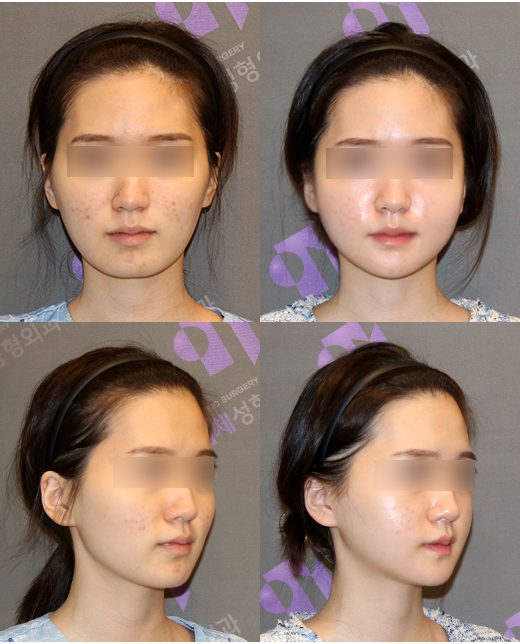 230-degree contouring cheekbone reduction, square jaw surgery, chin surgery (left) Before surgery (right) After surgery
Is general anesthesia absolutely necessary?
First, general anesthesia refers to a state in which a person does not wake up no matter how much stimulation is applied and does not breathe.
Because of that, it is used not for simple procedures but for relatively major surgeries such as those involving bleeding and bone removal, and in the case of facial contouring surgery, most procedures are performed under general anesthesia.
So why is general anesthesia necessary?
There are various cases in which general anesthesia is needed, but the biggest reasons are:
- When the patient must not move even slightly during surgery
- When the surgery is highly advanced and requires precision
What would happen if the patient woke up even briefly while the skin is being incised and the bone is being shaved?
Also, if the patient moves even a little, surgery that requires a high level of precision can lead to irreversible results.
Therefore, general anesthesia is used for surgeries in which the patient must absolutely not move, or for procedures that take a long time and are highly difficult.
Many people are afraid of this, but because it is essential for patient safety and surgical results, general anesthesia is used to reduce surgical discomfort and pain.
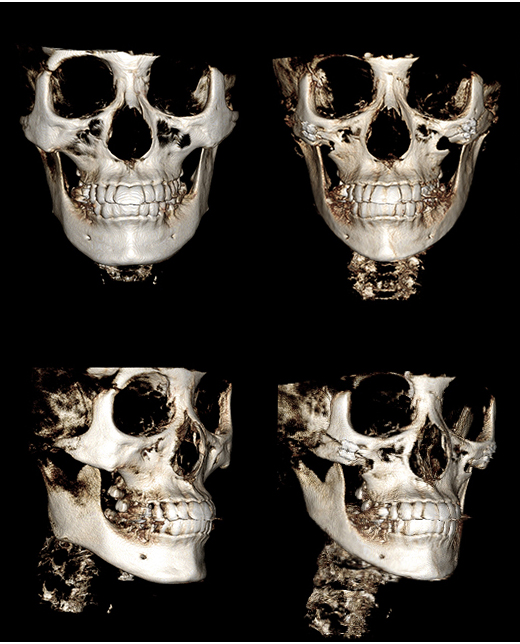 3D cheekbone reduction, square jaw reduction (left) Before surgery (right) After surgery
Still, I can’t go through general anesthesia!
As an exception, there are facial contouring surgeries that are performed under sedation anesthesia rather than general anesthesia.
The quick cheekbone reduction surgery you may have heard of is a representative example, and among the facial contouring surgeries at 입체성형외과, the 230-degree contouring cheekbone reduction is performed under sedation anesthesia.
The 230-degree contouring cheekbone reduction simplifies the existing complex cheekbone surgery process and shortens the surgery time accordingly, so it is performed under sedation anesthesia rather than general anesthesia, allowing us to closely monitor the patient’s breathing during the procedure.
Therefore, for those who feel a great burden about general anesthesia or surgery, we recommend the 230-degree contouring cheekbone reduction.
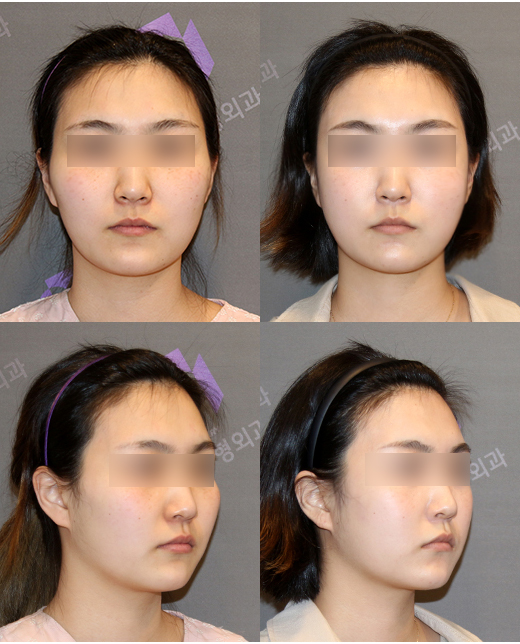 230-degree contouring cheekbone reduction (left) Before surgery (right) After surgery
For patients who visit us for a consultation, we explain everything in advance until their concerns are eased, and since we have anesthesia equipment and an intraoperative monitoring system, as well as a specialist in anesthesiology and pain medicine present, you can rest assured.
In addition, through detailed medical history checks and preoperative tests before surgery, we prevent accidents from every angle.
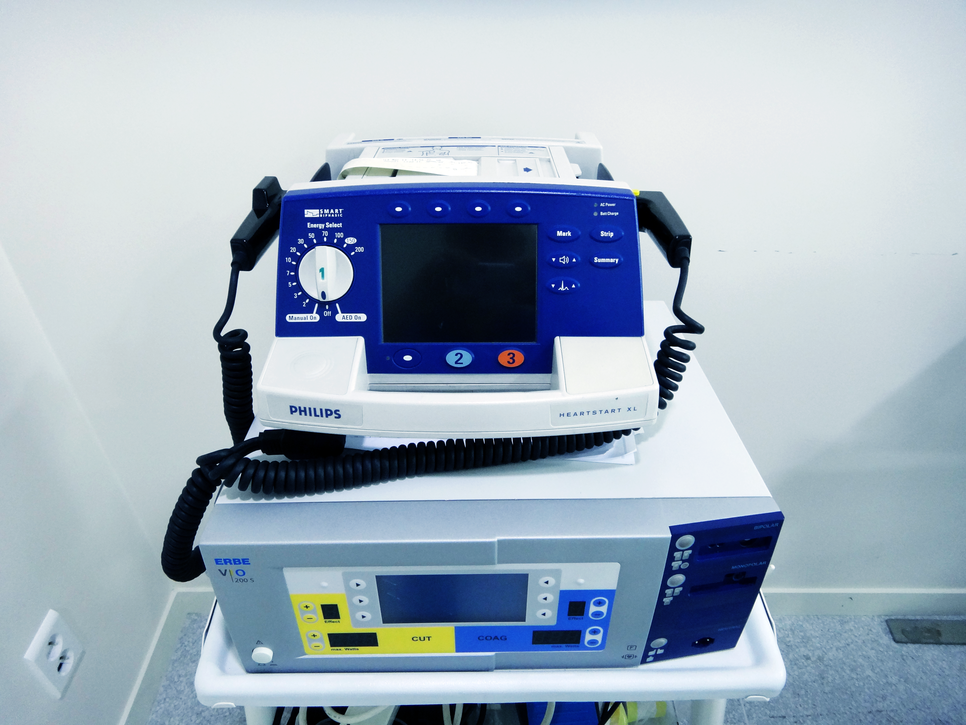 입체성형외과
General anesthesia is an important matter not only from the patient’s perspective but also from the hospital’s perspective, so we always exercise special caution.
Because surgery is carried out under a thorough plan together with an experienced specialist in anesthesiology and pain medicine, I can say that you do not need to feel burdened and can rest assured.
Thank you.