Hello, this is Director Jo Hyun-woo of Lip Plastic Surgery.
Recently, there has been a major issue involving a death caused by an anesthesia accident during contouring surgery at a plastic surgery clinic in Gangnam.
Today, for those interested in plastic surgery, let’s take a look at the hot topics of “malignant hyperthermia” and “dantrolene.”

What is malignant hyperthermia?
“Malignant hyperthermia” is not actually a term people encounter very often.
It is known as a syndrome with a high mortality rate in which, during general anesthesia, body temperature suddenly rises rapidly by 1 degree every 5 minutes to as high as 42 degrees, along with rapid breathing and pulse and muscle stiffness.
Malignant hyperthermia is a rare disease occurring in about 1 out of 60,000 people. It is caused by genetic factors or muscular atrophy, so it cannot usually be detected in everyday life.
When malignant hyperthermia occurs, body temperature rises rapidly and cells can no longer function normally, so immediate emergency treatment is important.
Anesthesia must be stopped immediately, cooling within the body cavity must begin, and the treatment drug “dantrolene” must be administered intravenously to reduce heat generation from the muscles.
What is dantrolene?
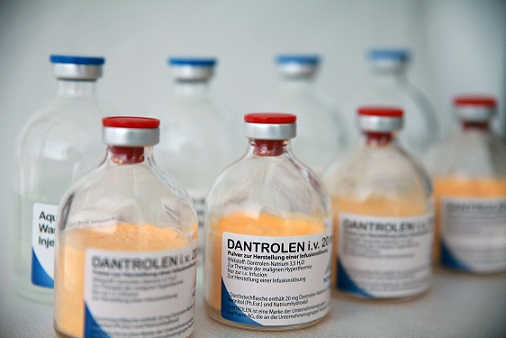
“Dantrolene,” the only treatment for malignant hyperthermia, is a peripheral muscle relaxant that blocks calcium release and reduces calcium binding to troponin, producing a muscle-relaxing effect.
This dantrolene is a rare drug with a very short expiration period and a high price, so only university hospitals keep it in stock.
To help patients who may feel uneasy due to various issues feel reassured, our Lip Plastic Surgery also keeps “dantrolene” on hand in preparation for the very rare case of malignant hyperthermia during surgery.
We provide explanations in advance until the worries of those who visit for consultations are eased,
and because surgery is carried out under a thorough plan with anesthesia equipment, an intraoperative monitoring system, and an experienced anesthesiologist, you can feel at ease.
We also work to prevent accidents in every possible way through detailed preoperative medical history checks and preoperative tests.
General anesthesia is an important matter not only from the patient’s perspective but also from the hospital’s perspective, so we always pay special attention.
Thank you.