Hello. I am Dr. Jo Hyun-woo of Tetra Plastic Surgery.
Today, I’d like to talk about the side effects of chin surgery, which patients have been mentioning more often these days.
It is the rather scary-sounding “witch chin.”
People usually use this term to describe a chin tip that appears to drop downward when smiling.
A chin tip that drops downward can also be seen in many people who have not had surgery.
This is often how people with a lot of muscle and soft tissue around the chin feel about it.
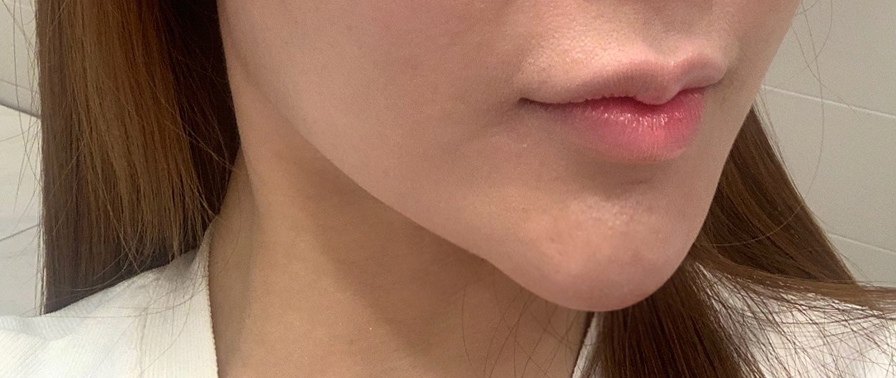
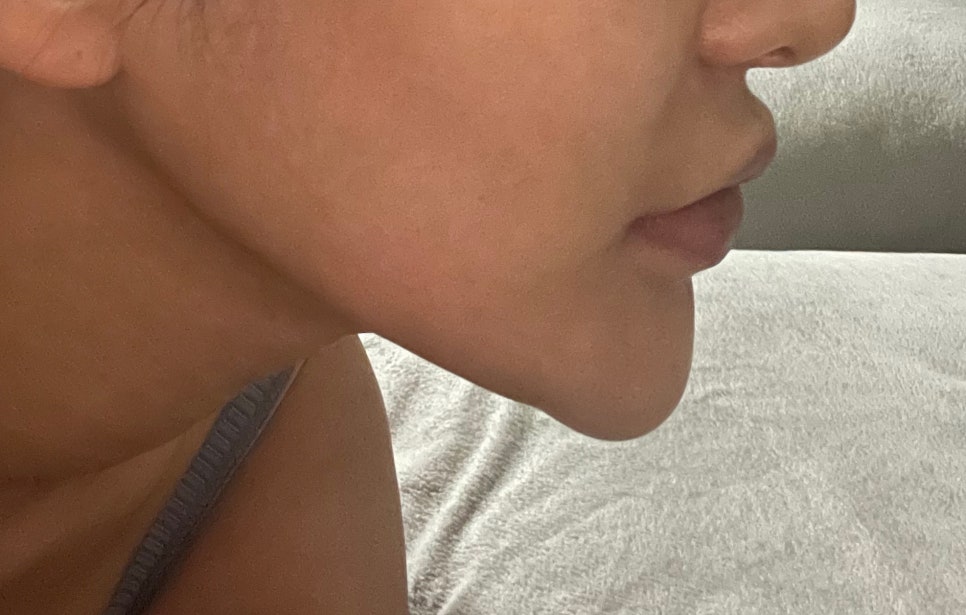

The biggest cause when this occurs after surgery can be said to be “excessive bone removal.”
If, before surgery, a person has a lot of muscle and soft tissue around the chin and undergoes a T-osteotomy to reduce the volume of the chin or move it backward, or if the volume is reduced excessively through a V-osteotomy or contouring surgery, this can happen even if the muscle and periosteum are restored well to the bone.
I have explained several times that the cause of hollowing in the cheek and sagging of soft tissue is a reduction in volume.
No matter how much you want to cut, if there is a lot of facial fat or muscle, excessive removal is something you should definitely reconsider.
Even if the bone has become much smaller, it often does not show up visually if there is a lot of soft tissue.
It seems most important to make a careful judgment before surgery, think about how much volume reduction is needed, and decide accordingly.
So, going back to the beginning, if this kind of “witch chin” happens because of surgery, how should it be resolved?
These days, various procedures such as muscle binding and muscle reduction are being performed.
In fact, unless the skin is excised, there are quite a few cases where the results are less than ideal.
Therefore, I think the best way to address it is to restore the original bone structure.
When considering ways to increase volume,
- Improvement through chin advancement surgery
- Improvement through bone grafting
- Improvement through implant insertion
You can think of these as the three methods.
Because the three methods above all move the chin bone forward, you may worry that the face will look longer or that the chin will appear more prominent.
However, when the soft tissue has sagged downward, the feeling of forward projection is not very pronounced, so there is no need to worry too much.
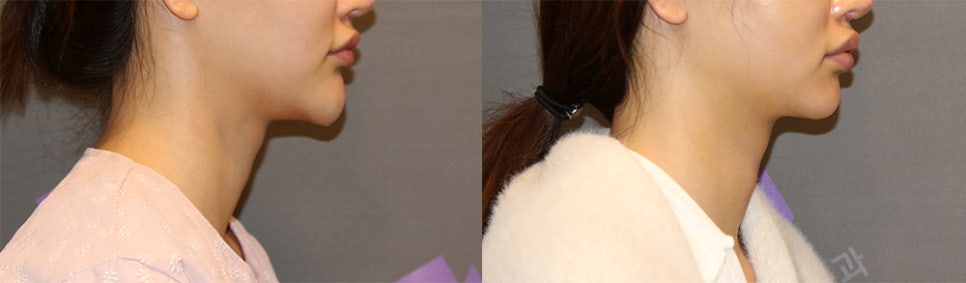
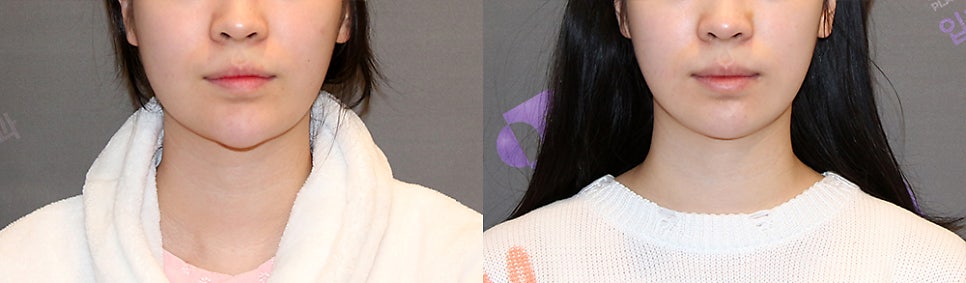

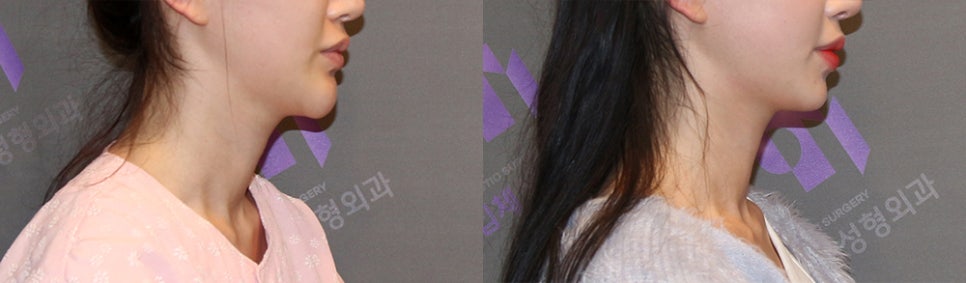
In fact, there are not many people who want correction for a witch chin, but theoretically, I think the principle for a lack of volume is to solve it by adding volume.
As I always say, when having a preoperative consultation, it is very important to determine whether that kind of result could happen to you.
You may already have a witch chin, or if you have a lot of soft tissue or muscle, even if you want to reduce the length as much as possible, it is better to avoid procedures that excessively reduce volume. Please make sure you know this in advance and receive a consultation, so that you can achieve good results.
Thank you.