Hello. I am Dr. Jo Hyun-woo of Ipjeok Plastic Surgery.
Cases of facial contouring are usually explained mainly for women, and because there is less information or fewer reviews for men,
if you are currently considering male zygoma reduction surgery or male facial contouring, it may be difficult to find the information you want.
One of the most common questions I hear during consultations is, "I’m a man, but what if I end up with a feminine face after facial contouring surgery?"
Unlike women, men generally prefer some degree of angularity rather than a small, slender oval face.
In the case of male facial contouring, including male zygoma reduction surgery, if the procedure is performed in the same direction as it is for women, the face can actually become more feminine, as you may worry. Therefore, in male facial contouring surgery, it is important to take this into account and preserve some degree of angularity in the facial contour.
Overly developed bones and protruding bones give a dull and rough impression, but if only the uneven areas are refined to restore balance, developed bones can instead create a more masculine impression and lead to good results.
I will explain using photos of an actual patient.
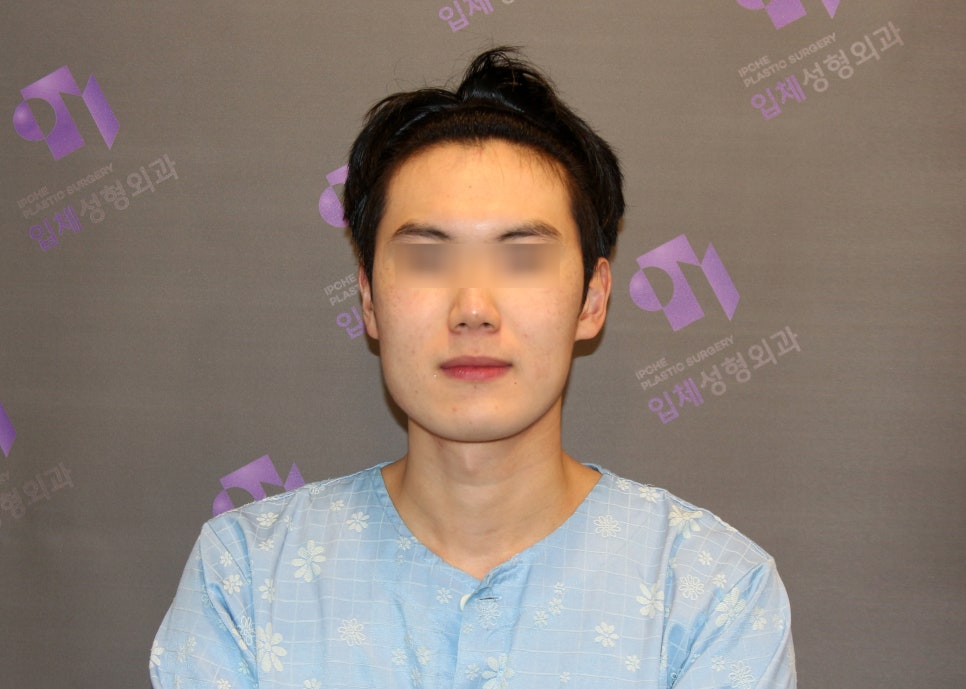
Before surgery
This is a preoperative photo of a patient who underwent three facial contouring procedures (zygoma reduction surgery, square jaw surgery, and chin surgery).
As you can see, the patient has prominent cheekbones and a markedly developed square jaw, creating a rough facial shape and giving a strong, coarse impression.
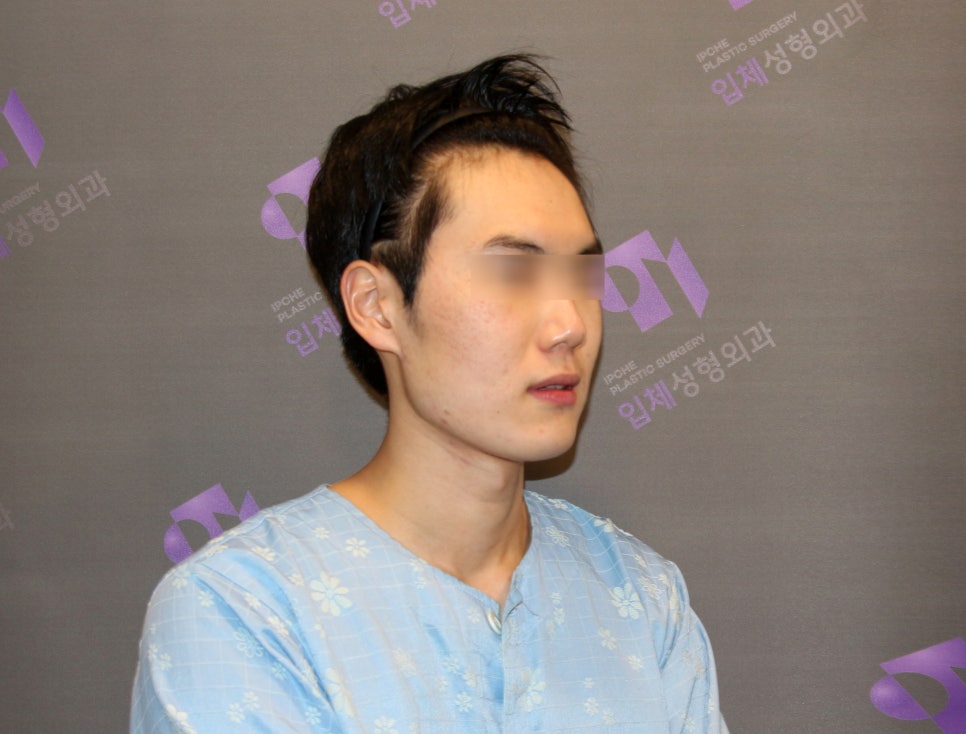
Before surgery
If the face line is well-defined and the contours are developed, a man’s square jaw can be seen as an advantage. However, in the preoperative photo, the cheekbones, square jaw, and chin are all broadly and unevenly developed, giving a rough impression.
In the case of patients who visit for revision male facial contouring surgery, there are times when the cheekbone area is flat and the jawline has become softer than necessary.
When that happens, the result may feel feminine or awkward after surgery.
Removing excessively developed bone is important, but I would say that considering the amount of bone left after surgery is also an important point for improving the surgical result.

After surgery
This photo was taken about 2 months after surgery. The protruding cheekbones have been brought inward, and the uneven lower jaw has also been neatly refined.
Even after surgery, you can see that the face retains some angularity, giving a masculine rather than feminine impression.
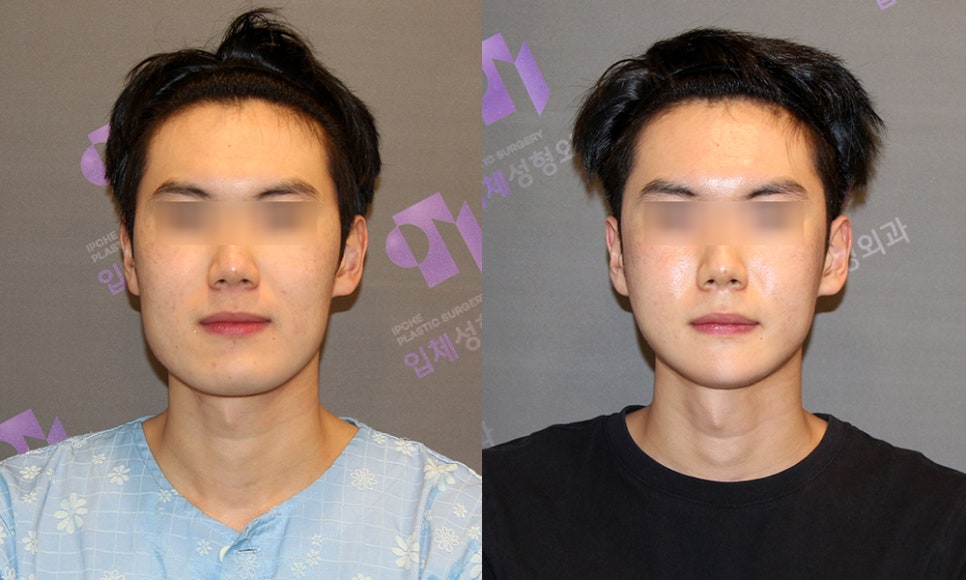
Before and after surgery
When placed side by side, the most prominent part of the cheekbone has moved from the outer side of the face toward the center, and the unevenly developed lower jaw has also been reduced to match the width of the cheekbones and create balance. The asymmetry problem was also corrected.
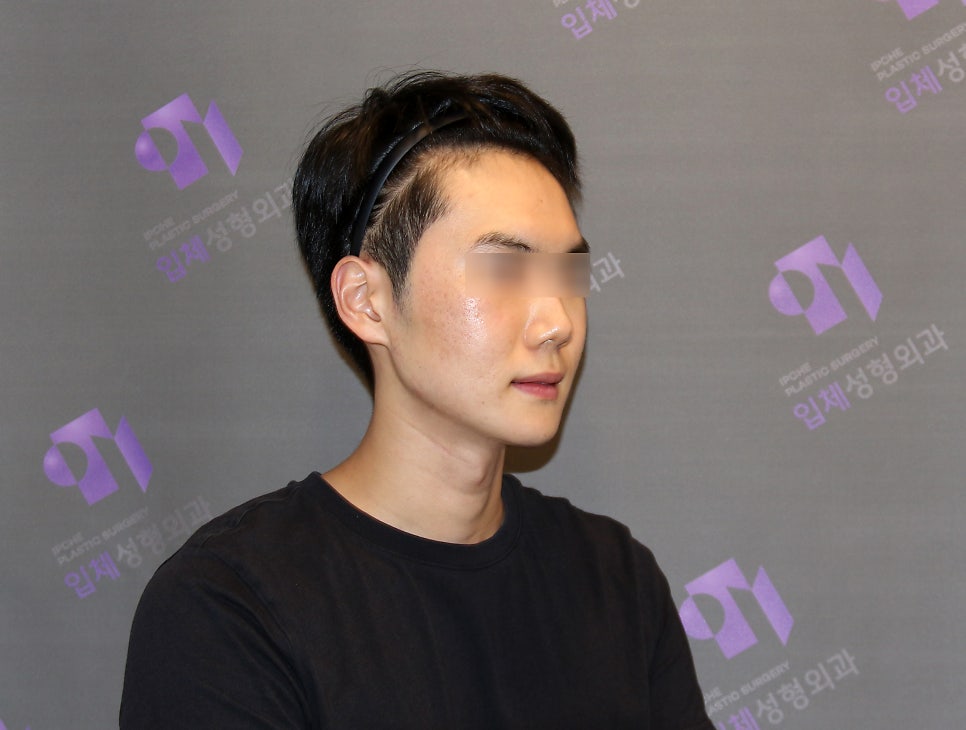
After surgery
From the side, the cheekbones, square jaw, and chin all still retain some angularity, but because the overall facial line has been refined, the cheekbones and square jaw that once looked unpleasant before surgery can now give a masculine impression after surgery.
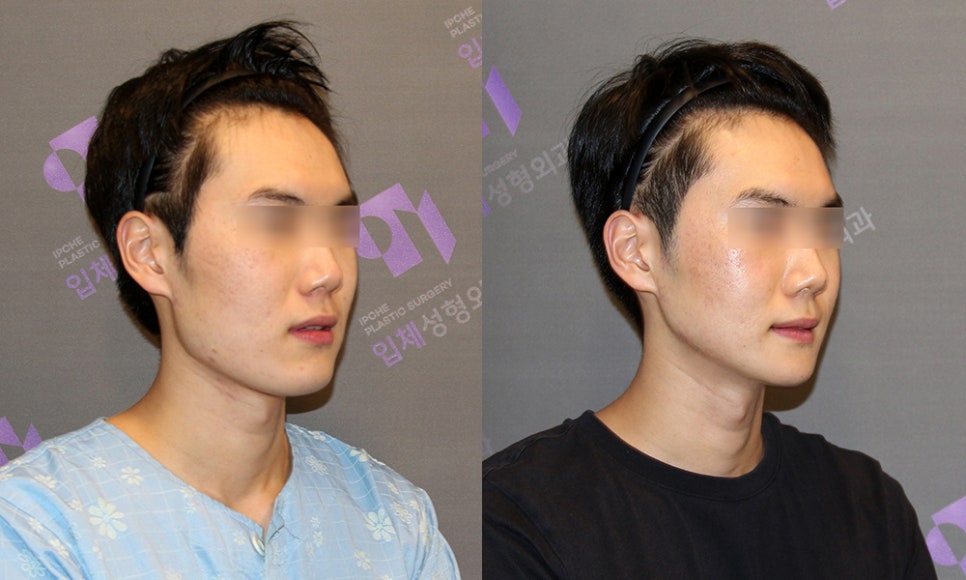
Before and after surgery
The irregular facial line seen before surgery has been neatly corrected after surgery.
In male facial contouring surgery, better results can be achieved when the uneven facial line is refined, but the focus is not on making the face small and soft; rather, the surgery should preserve the necessary angles of the face and take the overall proportions into account.
Also, the patient shown above had significantly developed cheekbones, square jaw, and chin, so three facial contouring procedures were performed. However, the surgery needed will differ depending on the patient, so before surgery I recommend consulting at least two or three hospitals to accurately determine which procedures are necessary for you.
Thank you.