Hello, I’m Dr. Jo Hyun-woo of Intro Plastic Surgery.
Many people come in for consultations about square jaw surgery and say they want a small, slender jawline.
But there is one misunderstanding:
Square jaw surgery does not automatically create a V-line.
First, square jaw surgery is an operation that makes the jawline look slimmer by cutting along a long curve from the area below the ear to just before the chin bone.
Of course, reducing a prominent angle below the ear can make the face look smaller from the side, but the most important thing is the front-view effect.
Thinking that square jaw surgery alone will improve the front view is a very big misconception.
Let me show you the following example.
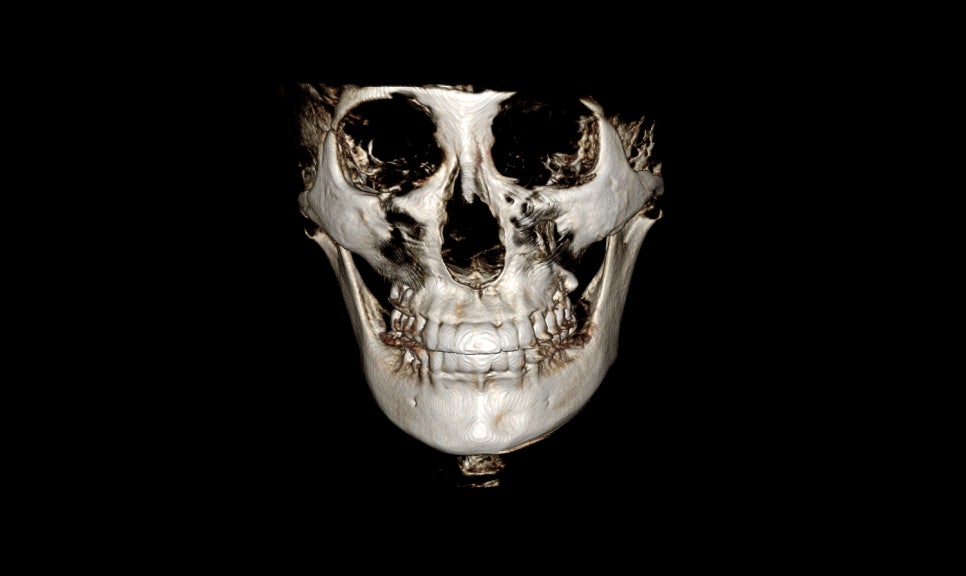
This is the patient’s CT image. This patient came in hoping to look slimmer from the front.
From the front, you may think, “Does the square jaw bone even look square?”
On the other hand, if you look at the side view,
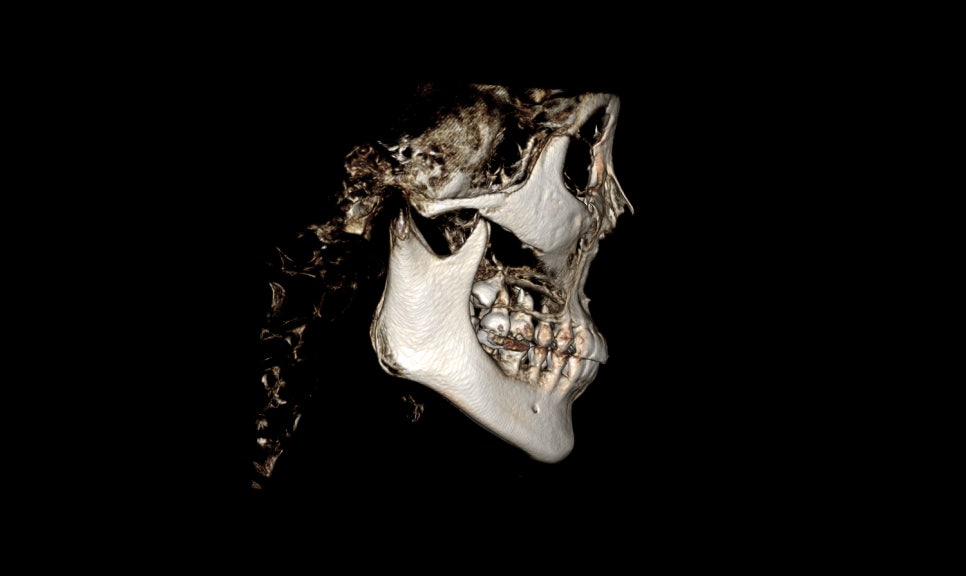
this is what it looks like. The angle below the ear is dropped and appears to be almost 90 degrees.
The ideal angle is around 120 to 130 degrees.
Based on that, if we simulate it,
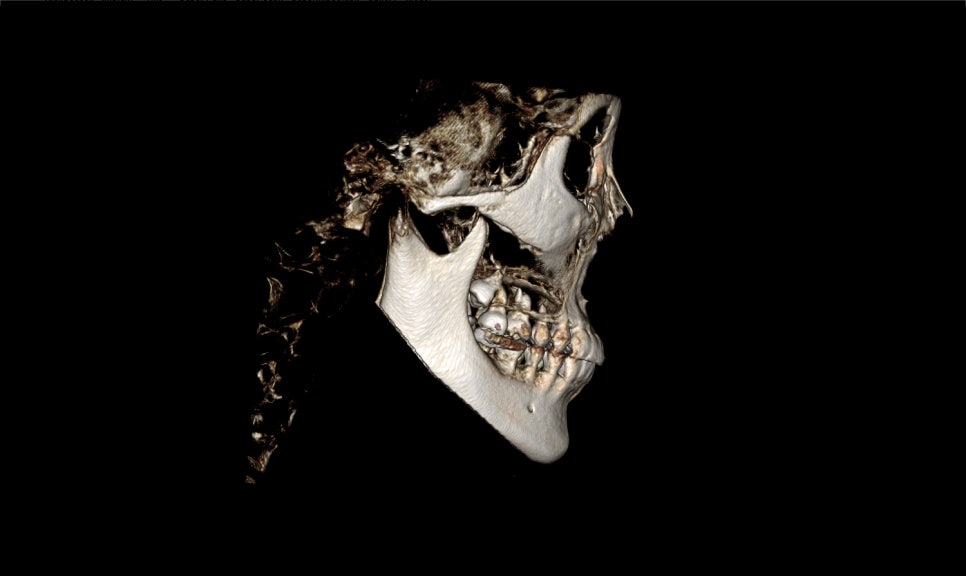
it looks like this. It is clearly a slimmer, softer line.
But did the front view of this patient also become less square?
If you look at the front of the simulation image,
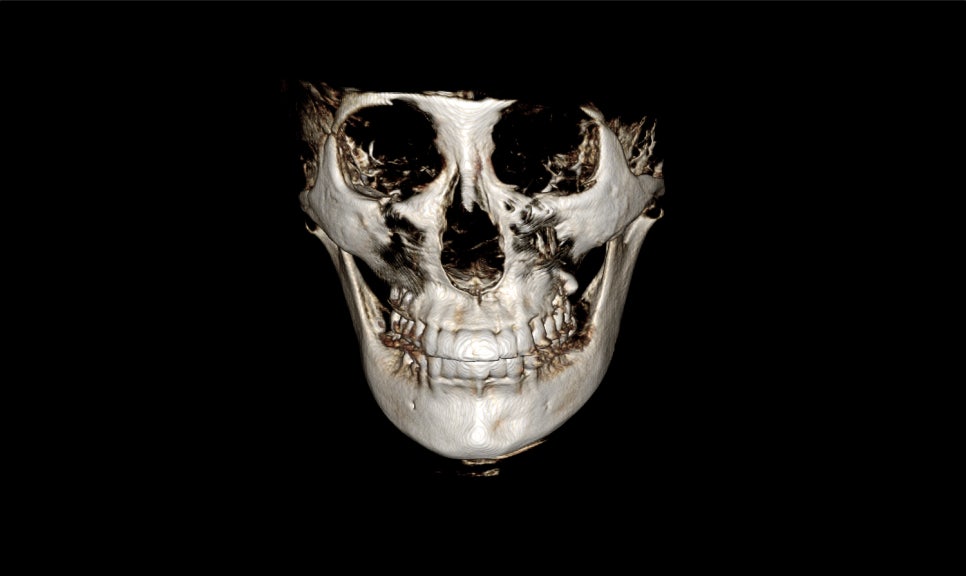
you may think, “Isn’t this the pre-surgery photo shown earlier?” No, it is not.
This is the appearance after the square jaw bone was cut, but it really looks very similar to the pre-surgery photo.
That is why square jaw surgery does not necessarily create a V-line from the front.
The square jaw bone differs from person to person. Some people, like the patient just shown, have bone in the square jaw area that curves inward, while others have bone that flares outward.
If the bone curves inward, as in the example patient, then no matter how much of the square jaw bone is removed, the front-view effect remains the same.
So you should change the idea that removing a lot of bone will definitely create a V-line.
Now let me show you an example of a square jaw bone that flares outward and has a good front-view effect.
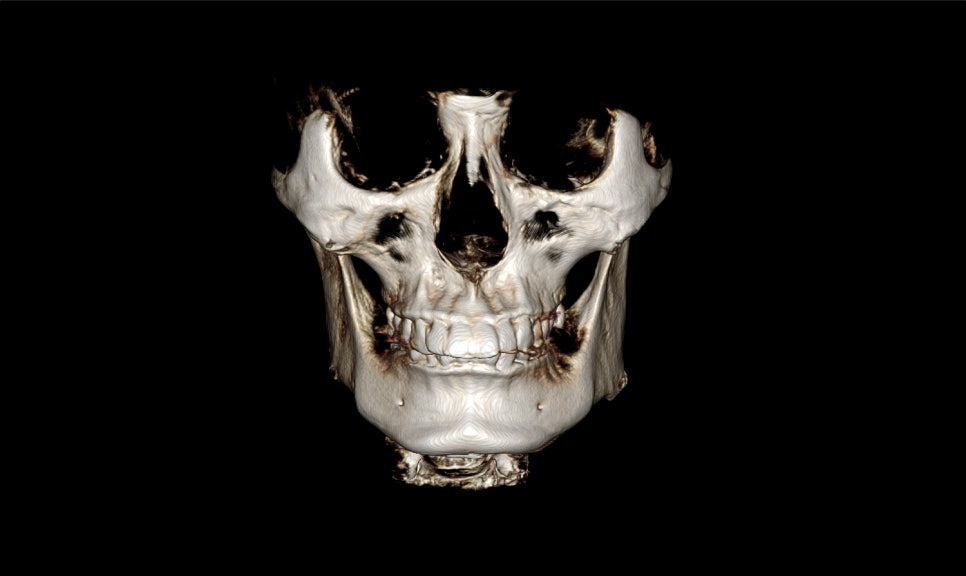
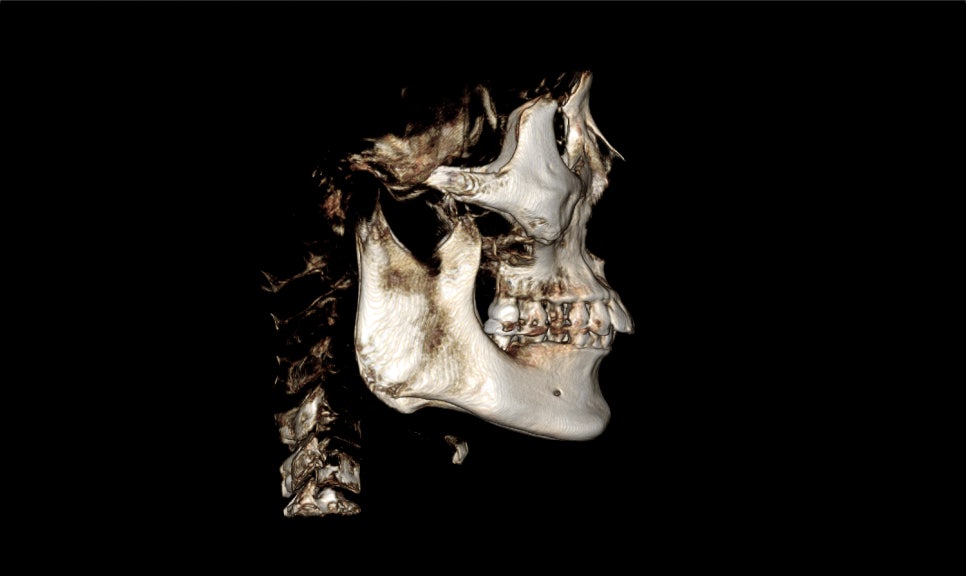
These are the pre-surgery photos. Let’s do a simulation.
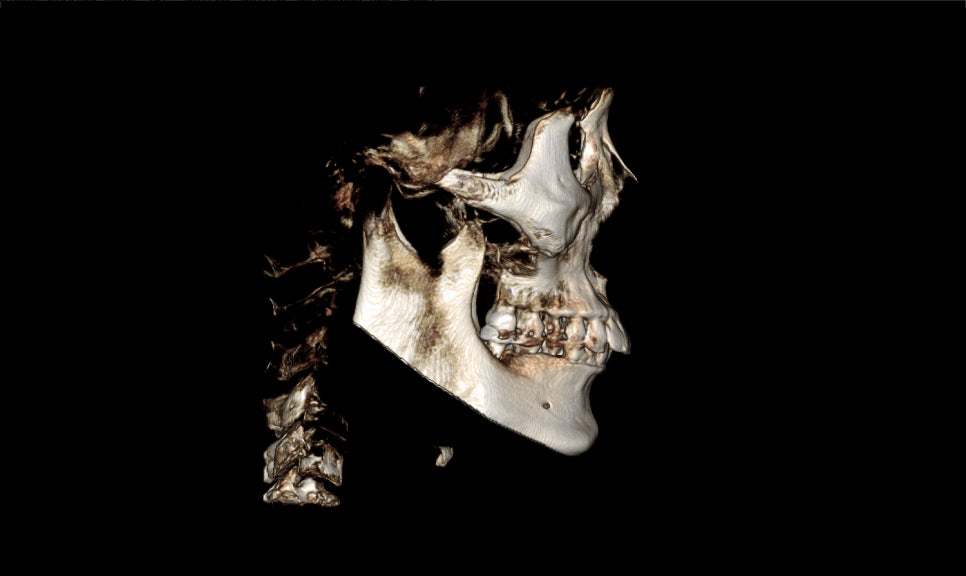
As before, the side angle has been reduced nicely.
Then let’s look at the front view.
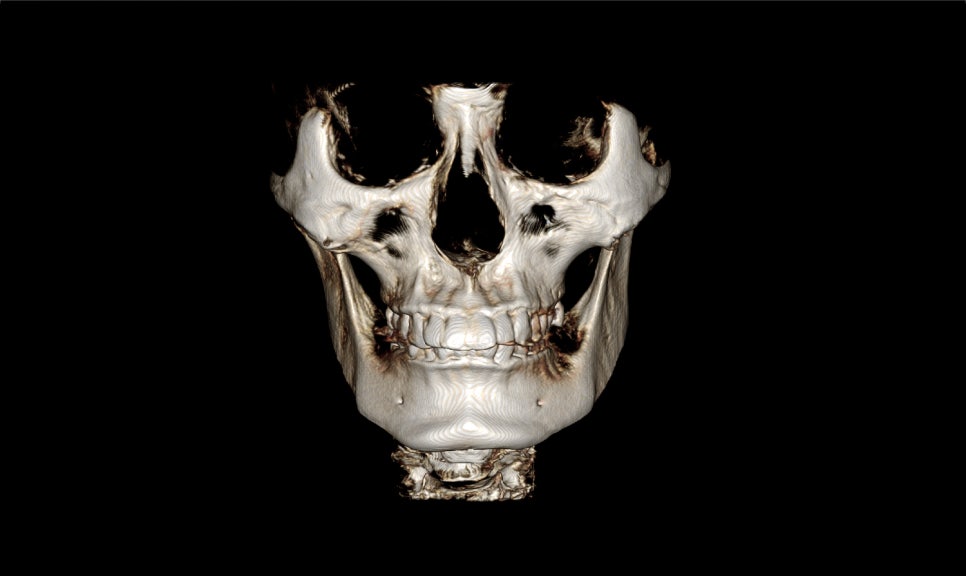
Unlike the first patient, you can see that it has also become smaller from the front.
Therefore, when performing square jaw surgery, it is very important to understand the shape of your own bone and proceed with surgery accordingly.
Then if the square jaw bone is curved inward, does that mean you cannot get a front-view effect? Absolutely not.
The surgery that must be done for the front-view effect is cortical ostectomy.
Here, I will explain what cortical ostectomy is and what kind of effect it has.
Cortical ostectomy reduces the volume of the side of the jaw. By removing only the outer layer of a three-layer bone structure, it can improve not only the side view but also the front-view effect.
When our square jaw bone is cut, the outer cortical bone and inner cortical bone become exposed.
Let me explain with a photo.
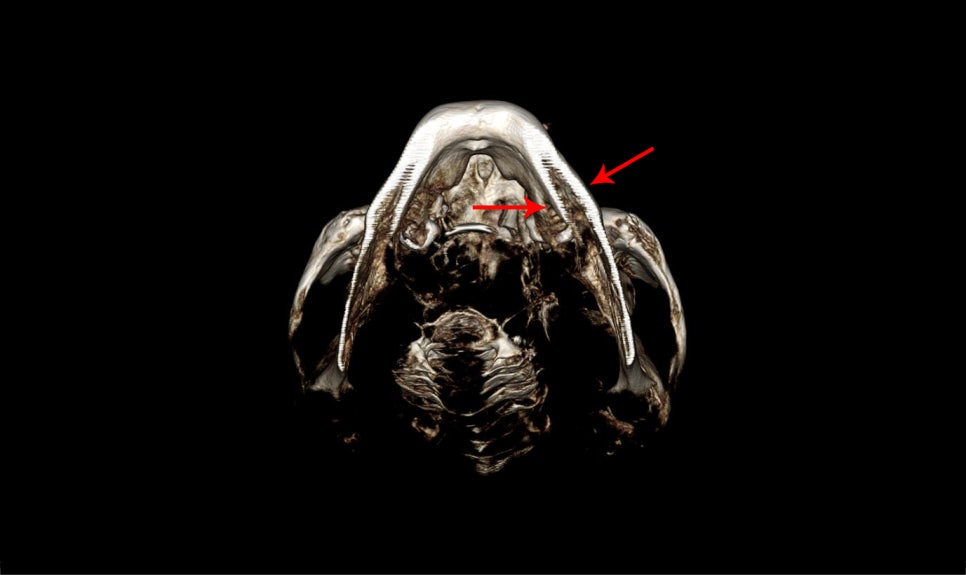
Do you see the two layers of bone? The outer part of the square jaw bone is the outer cortical bone.
Although it varies by patient, it usually has a thickness of 3 to 5 mm or more.
Removing this area by cutting it out is called “lateral cortical ostectomy,” and shaving it without cutting it out is called “lateral cortical shaving.”
The effect of this surgery is truly significant, so when performing square jaw surgery on people whose bone curves inward or whose angle below the ear is not large, the operation is often done mainly with cortical ostectomy and little angle reduction. That is why I think this cortical ostectomy is the highlight of square jaw surgery.
Many people overlook this.
Lateral cortical ostectomy is a very important part of square jaw surgery.
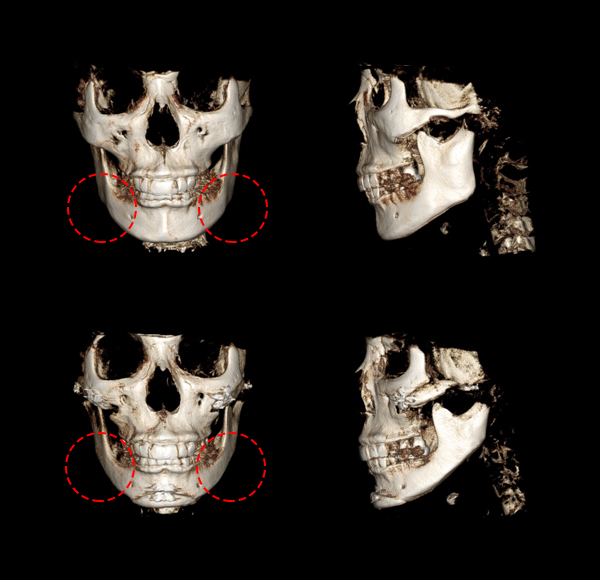
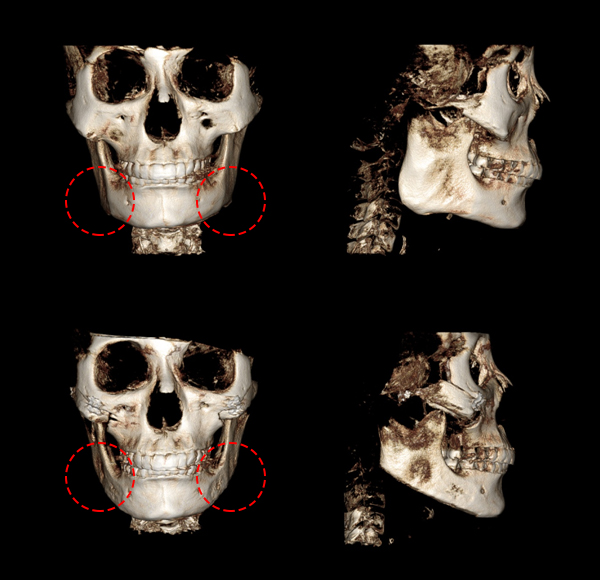
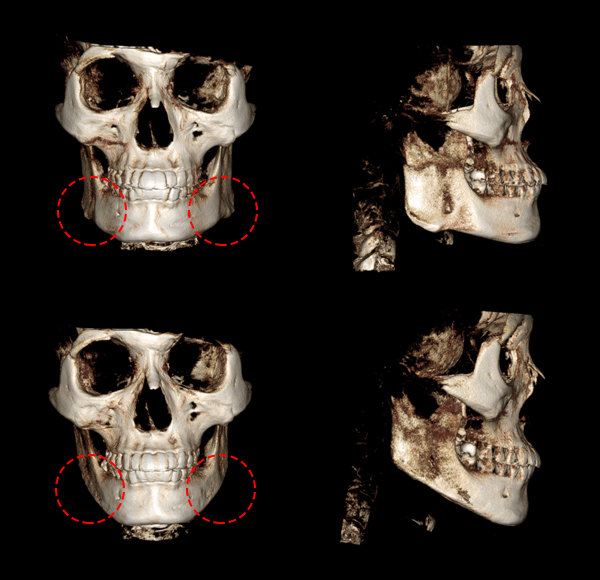
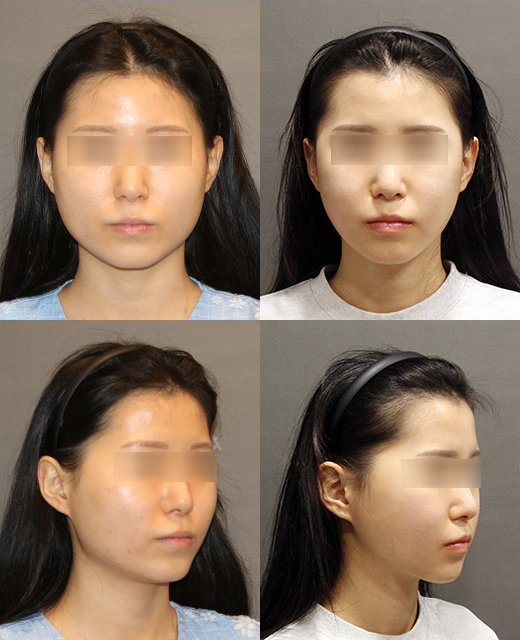
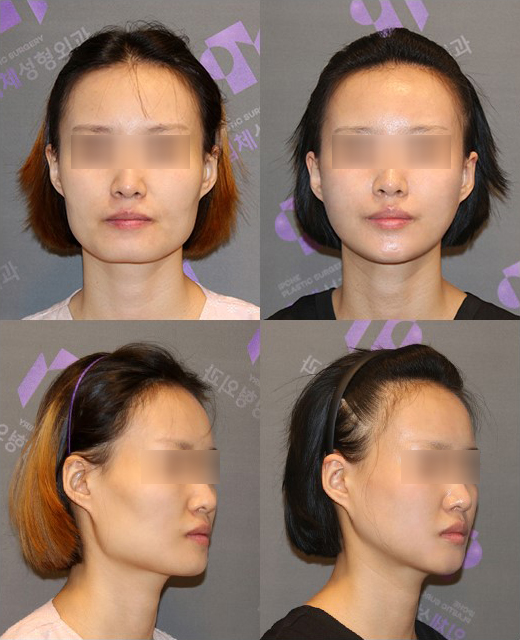
If you look at the square jaw bones of patients who actually underwent contouring surgery, can you see that they have become V-line shaped just by looking at them?
Of course, some patients had a reduction because the angle below the ear was prominent, but if you look at the changes in the area marked in red, you can see that the protruding outer cortical bone has been reduced, making it look like a V-line.
This is how important lateral cortical ostectomy (lateral cortical shaving) is.
If you are curious here, you may be wondering about the difference between lateral cortical ostectomy and lateral cortical shaving.
Please refer to the column below.
In conclusion, when performing safe surgery, satisfactory results can be achieved with lateral cortical shaving alone.
Because the thickness of the cortex differs from person to person, the amount of cortex removed also varies by individual.
Excessive cortical ostectomy can cause nerve damage, which is a complication of square jaw surgery, so it is best to have the procedure performed by an experienced specialist.
It is important to analyze your own CT images and choose the surgery that suits you best in order to get good results.
Thank you.