Hello, this is Director Jo Hyun-woo of 3D Plastic Surgery.
Today, let’s look at when revision surgery can be performed after facial contouring surgery.
In fact, compared with surgeries such as double eyelid surgery or nose surgery, facial contouring surgery is not one that commonly requires revision.
It is not the kind of surgery where a difference of 1 to 2 mm can appear, like a double eyelid line, and if the surgery was not significantly flawed, revision is rarely needed.
However, since facial contouring surgery involves cutting bone, it is also a surgery where the first operation must be done well.
Of course, there are reconstructive surgeries for a jaw angle that was removed too much, and there are also surgeries to reconstruct the cheekbone. Still, it is important to perform the first surgery accurately, and to do that, you must determine through 충분한 consultation before surgery how much bone to remove and how much to reduce the width of the cheekbones.
So, let’s take a look at the timing for revision surgery by area.
First, let’s look at cheekbone reduction surgery.
One of the biggest causes of revision surgery in cheekbone reduction is nonunion of the cheekbone.
Nonunion can happen for several reasons. First, the fixation pin that was placed may break.
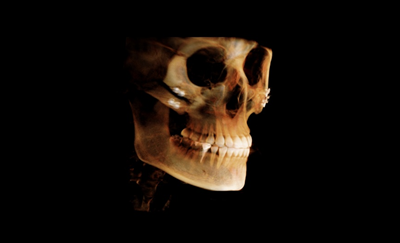
Nonunion occurred
As you can see on the CT, this is a case where the fixation pin that was placed has broken.
When a fixation pin breaks, it needs to be fixed again immediately.
Of course, if the pin breaks after the bone has hardened to some extent, the bone will not move and there is no need to replace the pin. But this usually happens before the bone has fully solidified.
There may be various causes, including strong muscle force, but in such cases, it is important to distribute the stress on the pin by fixing both the front and back.
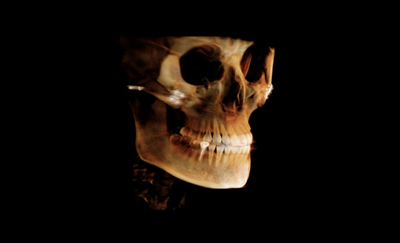
After revision surgery
If revision surgery is performed and the bone is fixed again like this, the bone can harden well without problems.
Another cause is when the fixation pin comes out of the bone.
Usually, when there is inflammation such as sinusitis, the bone can dissolve. In such cases, revision surgery is difficult.
If we go back in to refix it, the area around the bone may have already dissolved and broken apart.
In those cases, the bone should be preserved and fixed as much as possible.
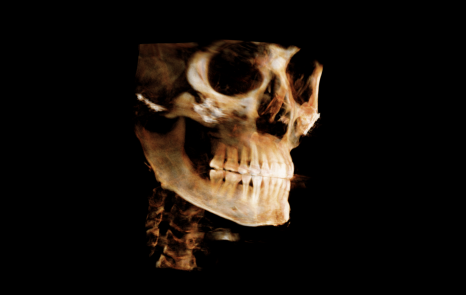
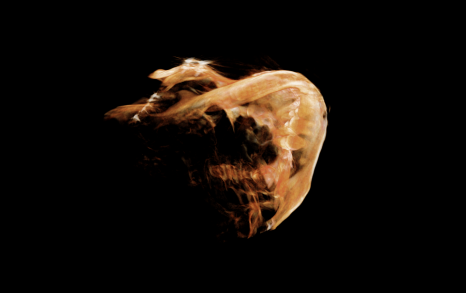
Chronic sinusitis patient
In this case, the patient came to our hospital with chronic sinusitis, and after taking a CT scan, the bone appeared to be separated, and you can see that the fixation pin was not properly attached and was hanging in the air.
In such cases, the surgery is repeated to thoroughly irrigate the sinuses, remove all of the dissolved bone, and fix everything with new pins.
Depending on the case, it may be fixed well, but if a large amount of bone has dissolved, cheekbone reconstruction may be necessary as a second surgery.
Therefore, if there is inflammation such as sinusitis, it is best to have it treated immediately.
Next, another common revision surgery is when the cheekbones have relapsed.
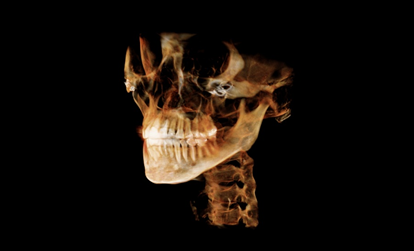
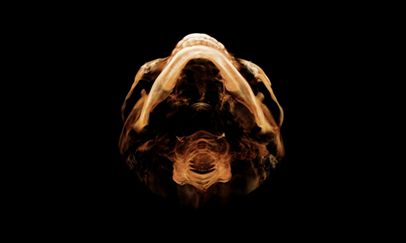
Relapse after cheekbone surgery
This patient had cheekbone surgery 10 years ago. The back part of the side cheekbone has not reduced at all and remains in its original position.
In such cases, the timing of revision surgery is not particularly important.
That is because after the bone has healed, the bone must be cut again and the surgery performed once more.
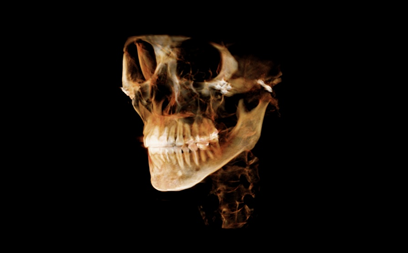
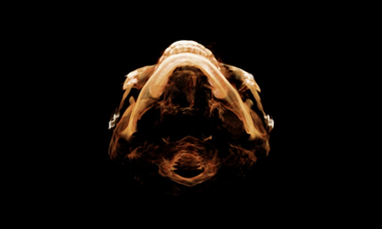
After revision surgery
If revision surgery is performed to cut the bone again and fix it accurately with fixation pins, you can see that the side cheekbone is reduced better than after the first surgery.
Other cheekbone revision surgeries are not especially urgent, and in most cases where the complaint is that the cheekbones were not reduced enough, you can have surgery at the time you want.
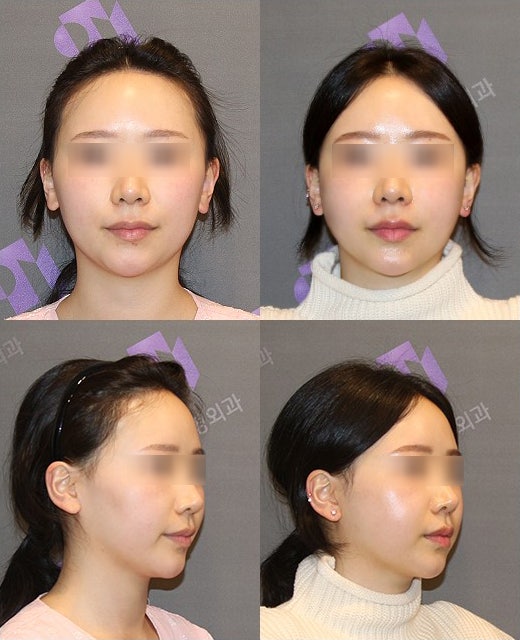
Before-and-after photos of cheekbone revision surgery
Next, let me talk about square jaw surgery.
Unlike cheekbone surgery, square jaw surgery does not often require immediate revision.
If you accurately understand how much bone can be removed when discussing the first surgery, revision can be prevented.
In particular, cases where the square jaw bone is cut asymmetrically and one side looks larger are a fairly common reason for revision.
If only one side is too large, the opposite side can be reduced more to correct the asymmetry.
In fact, this is not a surgery that can always be performed because the location of the nerve line is often different on the left and right, but if the CT is carefully analyzed, good results can be achieved.
Another common surgery is revision due to a secondary angle (step deformity).
The surgery is simple: only the area where the secondary angle has formed is cut away, and this surgery can also be performed at the time you want, regardless of timing.
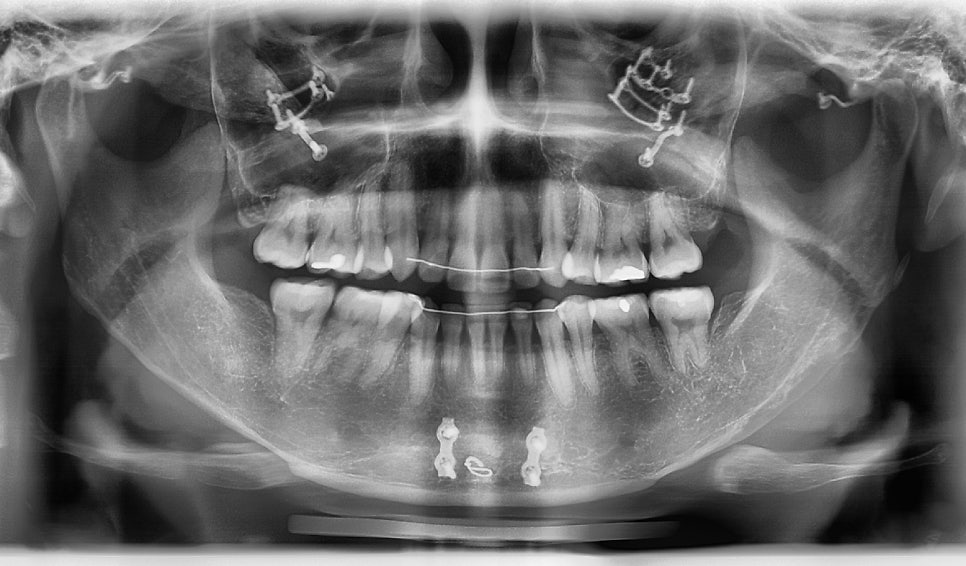
Secondary angle formation
In the photo, you can see a patient with a secondary angle like this, and they wanted to eliminate the secondary angle and narrow the chin further through T-shaped osteotomy.
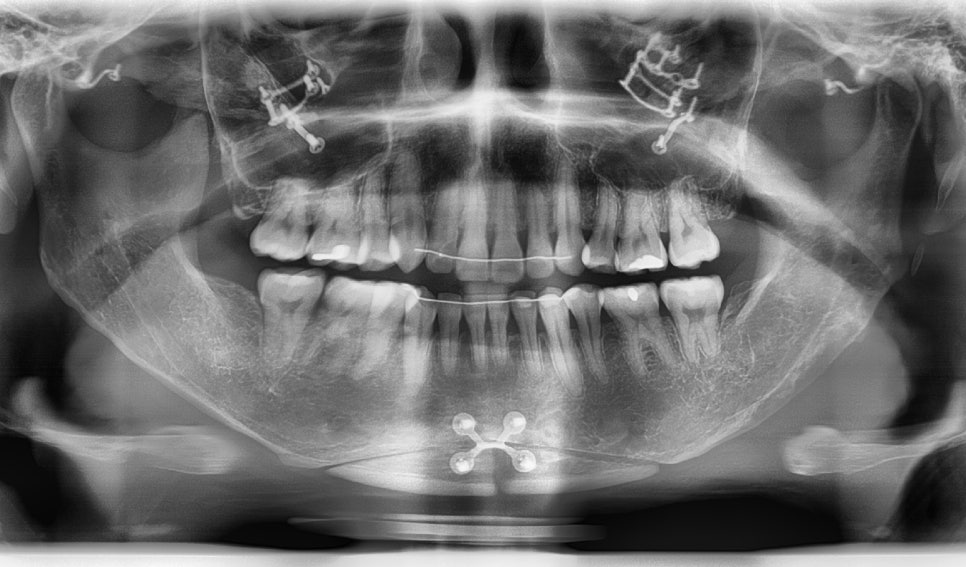
After revision surgery
After revision surgery, you can see that the secondary angle that was visible before surgery has been corrected, and the chin has become slimmer.
Another square jaw revision surgery is for people who feel that their face did not become slimmer from the front.
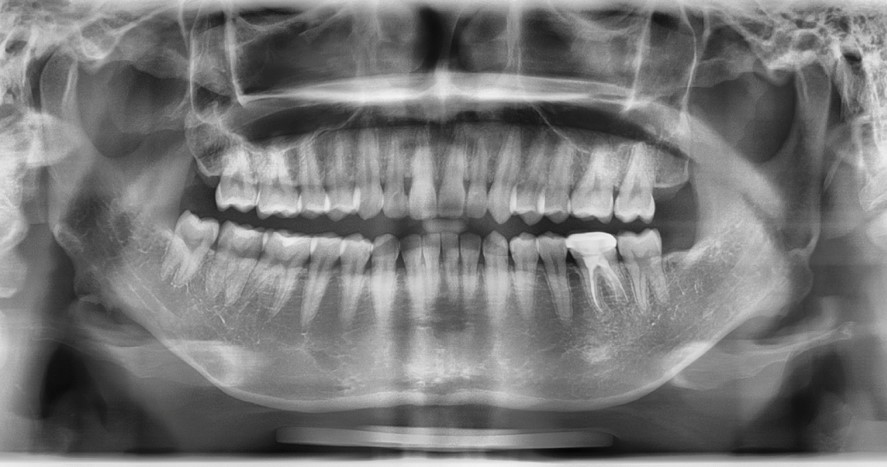
Secondary angle formation
This patient had previously undergone a behind-the-ear square jaw surgery, so the angle below the ear had been removed, but they visited because the front area had not become slimmer at all.
This surgery can show dramatic improvement if long-curve square jaw surgery is performed together with cortical bone shaving to reduce the width of the front jaw.
If you look at the post-op photo, you can see a slimmer appearance.
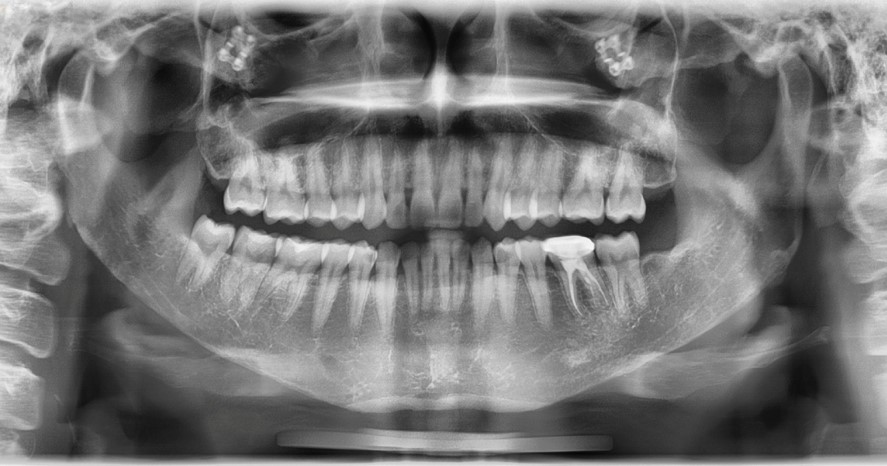
After revision surgery
In addition, if cortical bone shaving was not performed during square jaw surgery, or if masseter muscle reduction was not performed, some patients may feel that the result is a little lacking.
In such cases, unless it is severe, I do not recommend revision surgery.
Therefore, it seems best to have a thorough consultation before surgery and proceed with the operation.
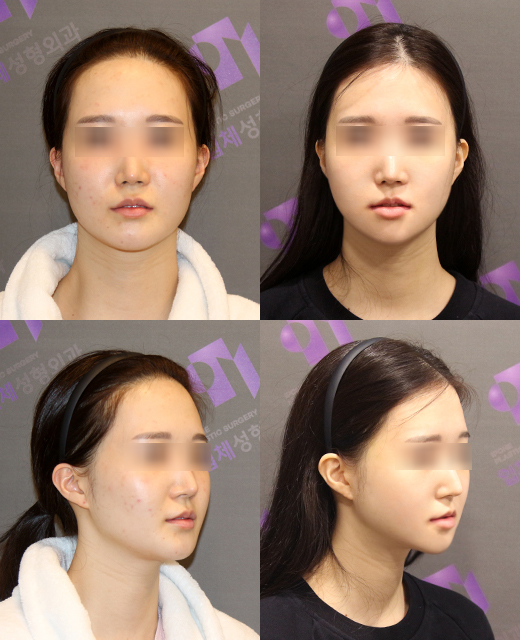
Before-and-after photos of square jaw surgery and chin revision surgery
Lastly, let me talk about revision surgery for chin surgery.
Procedures such as T-shaped osteotomy involve cutting the bone and fixing it with pins, so, like cheekbone surgery, there can be side effects related to the fixation pins.
If there is inflammation in the chin, the fixation pin may come out and the bone may dissolve, so if these symptoms occur, revision surgery should definitely be performed quickly.
For simple cases where the front chin did not come out enough or came out too much, revision surgery should be performed 6 to 12 months later, after the bone has completely hardened, so that the surgery can be done accurately without losing bone.
So far, we have looked at the timing of revision facial contouring surgery.
As mentioned earlier, facial contouring surgery is not a procedure that requires many revisions if you receive sufficient consultation before surgery and have it performed by an experienced specialist.
Except for a few urgent cases, the timing for revision surgery can be considered calmly when planning the procedure, so there is no need to rush; you can decide after receiving a consultation.
Thank you.