Hello, this is Director Jo Hyun-woo of Bipyeol Plastic Surgery.
Among people planning facial contouring surgery, many are worried about nerve damage.
Today, I will explain whether contouring surgery is not possible if the nerve line is low, and what other options are available.
In jaw reduction surgery, in order to perform the procedure more safely, it is important to correctly identify the position of the nerve line and accurately determine the extent of bone resection.
This is because the position of the nerve line differs from person to person. If the nerve line is too low, the osteotomy area may be limited, so preoperative diagnosis and a customized surgical plan for each individual are necessary.
Can the effect of jaw reduction surgery be limited depending on the position of the nerve line?
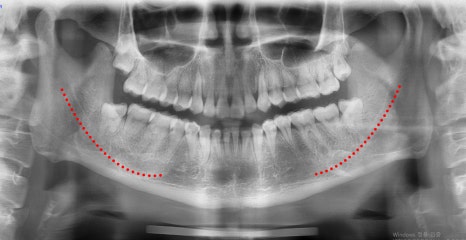
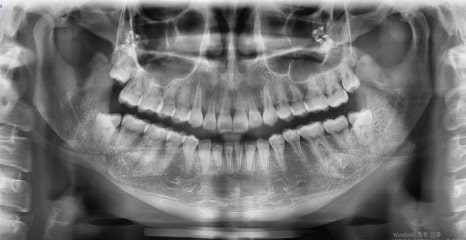
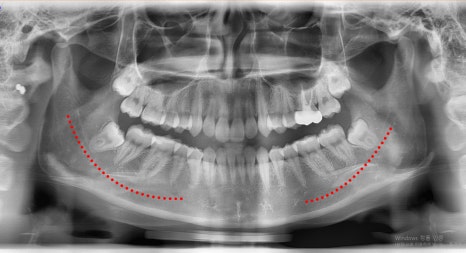
If you look at the X-ray photo above, the red dotted line is the actual path of the inferior alveolar nerve.
Bone can be resected below the nerve line, and in my case, if the cut is made too close to the nerve line, the nerve may become exposed and cause discomfort, so I try to leave about 3 to 4 mm to avoid exposing the nerve.
If excessive resection is performed too close to the nerve line, it may result in a square jaw appearance or excessive sagging of the skin.
In jaw reduction surgery, excessive resection = nerve damage = skin sagging can have a certain degree of correlation and influence.
Then, if the nerve line is too low and a large amount of bone cannot be resected,
what additional procedures should be done to achieve a frontal slimming effect?
If the nerve line is too close to or too low relative to the resection line to be operated on, combining the procedure with cortical osteotomy, masseter reduction, or buccal fat removal can still create a certain level of effect even for those with a low nerve line.
Let me show you a real patient case.
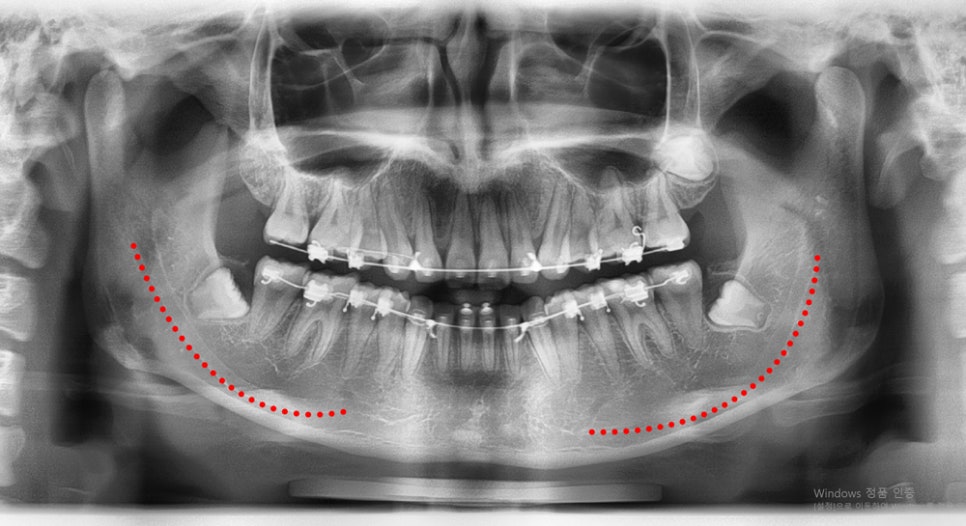
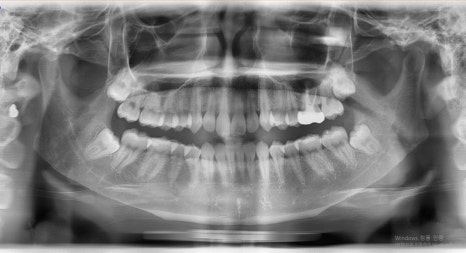
This is the patient's preoperative X-ray.
First, it is important to identify the position of the nerve line.
As you can see in the image above, the square jaw and chin are very developed, but the nerve line is not positioned very high.
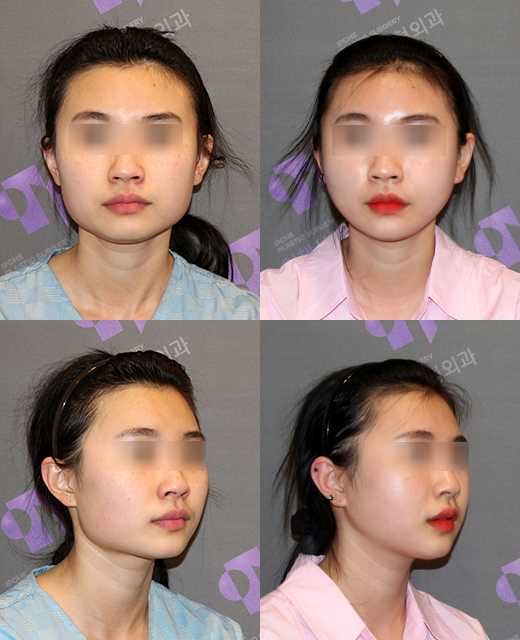
In this patient's case, a long-curve jaw reduction was performed together with masseter reduction, which removes part of the muscle, and cortical osteotomy.
If I show you what the patient actually looked like,
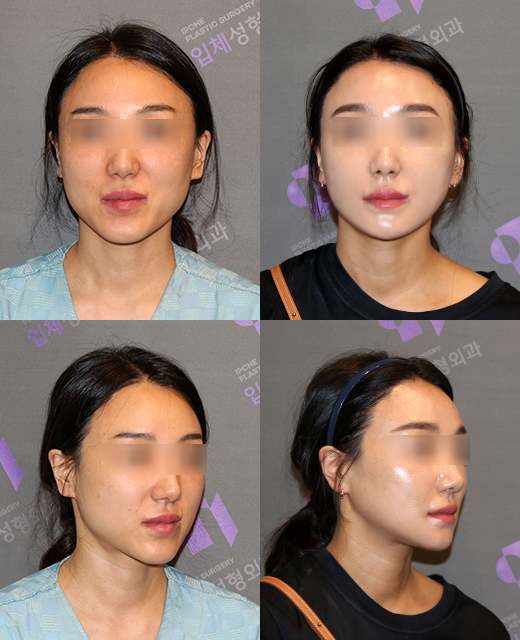
What do you think?
Facial contouring surgery is a very delicate procedure that requires attention to many details from multiple angles.
Only when the surgical plan and the procedure itself are carried out carefully and precisely can you expect safe results without complications and a high level of satisfaction.
The next patient underwent contouring surgery together with masseter reduction to improve the frontal effect.
If the muscles covering the facial bones are severely developed, or if there is a lot of facial fat and the face looks puffy and large, planning surgery in combination with methods that reduce fat and muscle in the facial area can lead to a more satisfying frontal effect and surgical outcome.
At this time, it is important to accurately understand the bones and soft tissues that determine the facial contour.
Anyone wants to see a frontal effect after contouring surgery.
Jaw reduction surgery can also achieve a frontal slimming effect sufficiently if it is accompanied by delicate cortical osteotomy through an intraoral incision and masseter reduction.
Of course, it is hard to say that cortical osteotomy is necessary for everyone, but in my experience, in many cases, addressing this part leads to a greater slimming effect.
It is most important to receive the most appropriate surgery for yourself through a close consultation with the surgeon in charge.
Thank you.