Hello, this is Dr. Jo Hyun-woo of Inpyeop Plastic Surgery.
Today, I’ll talk about the difference in effectiveness between 230-degree three-dimensional zygoma reduction surgery and 3D zygoma reduction surgery.
Zygoma reduction surgery has a history of more than 30 years.
The zygomatic bone develops differently from person to person, and the surgical method also varies depending on the type.
Compared with a surgical method that cuts the bone through an incision inside the mouth and pushes it inward, the effect may be smaller.
Because the difference in amount is not very large, if you are currently considering zygoma reduction surgery, you should understand what type of zygoma you have so that you do not undergo unnecessary surgery.
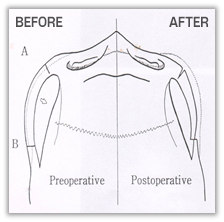
This is a schematic diagram of the zygomatic bone viewed from below.
As shown in the figure above, before and after surgery is the surgical method for lateral zygoma reduction.
The actual amount of bone reduction is
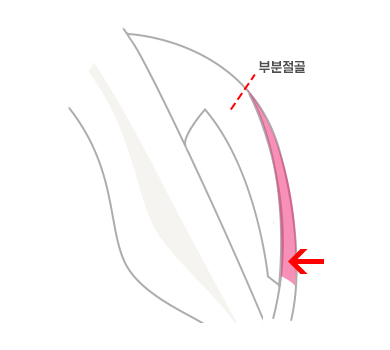
(a) Lateral zygoma reduction surgery
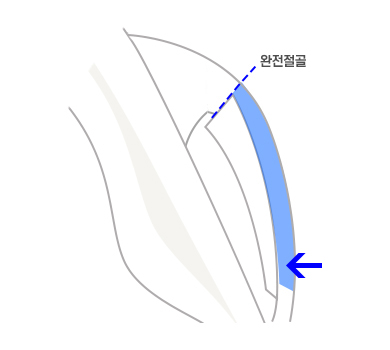
(b) 3D zygoma reduction surgery
Figure (a) is a diagrammatic representation of lateral zygoma reduction surgery. It is reduced by the amount of the red volume marked.
Figure (b) shows the volume of the zygomatic bone reduced after standard 3D zygoma reduction surgery.
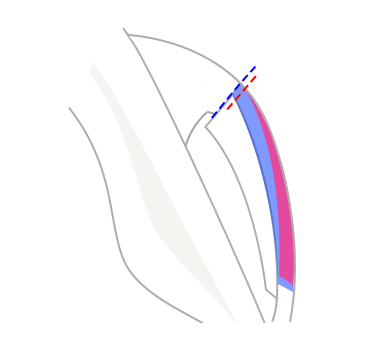
(a) and (b)
Through the figure above, you can see the difference in the volume reduced in each case.
The lateral zygoma area, which is the area where the zygomatic bone protrudes the most, shows the same amount of reduction, and as you move upward toward the 45-degree area, differences begin to appear.
The 230-degree three-dimensional zygoma reduction surgery performed at our clinic cannot reach the same extent as (b), but it can produce results that come as close as possible.
Roughly speaking, the difference in the amount of reduction for the 45-degree zygoma is about 20%.
While 20% is not a small amount, considering that the surgery time is short, it can be performed under sedation anesthesia, and recovery is fast, it would not be fair to say that the difference in the surgical result is remarkably large.
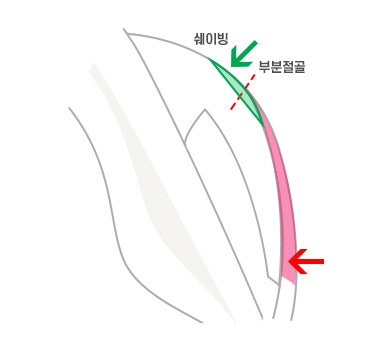
(c) 230-degree three-dimensional zygoma reduction surgery
Figure (c) is a diagrammatic representation of 230-degree three-dimensional zygoma reduction surgery.
For those with a more developed 45-degree zygoma, an additional shaving process is performed.
By shaving the 45-degree zygoma smoothly, we make the angle of the bend much softer.
You can understand this as a process of precisely refining the bone by shaving it down.
Next are photos of a patient who actually underwent zygoma reduction surgery at our clinic.
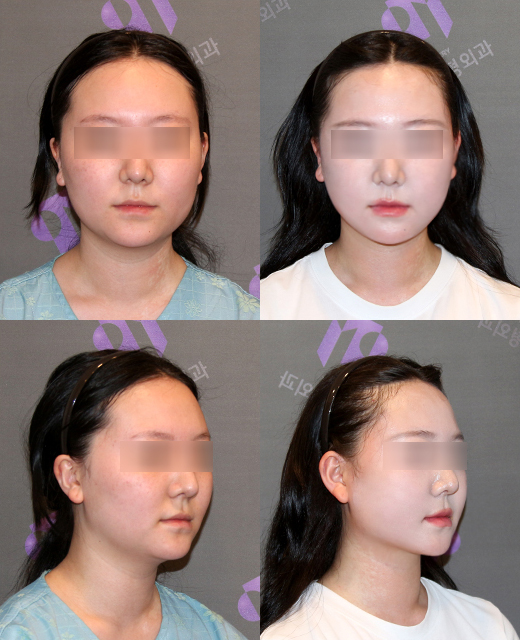
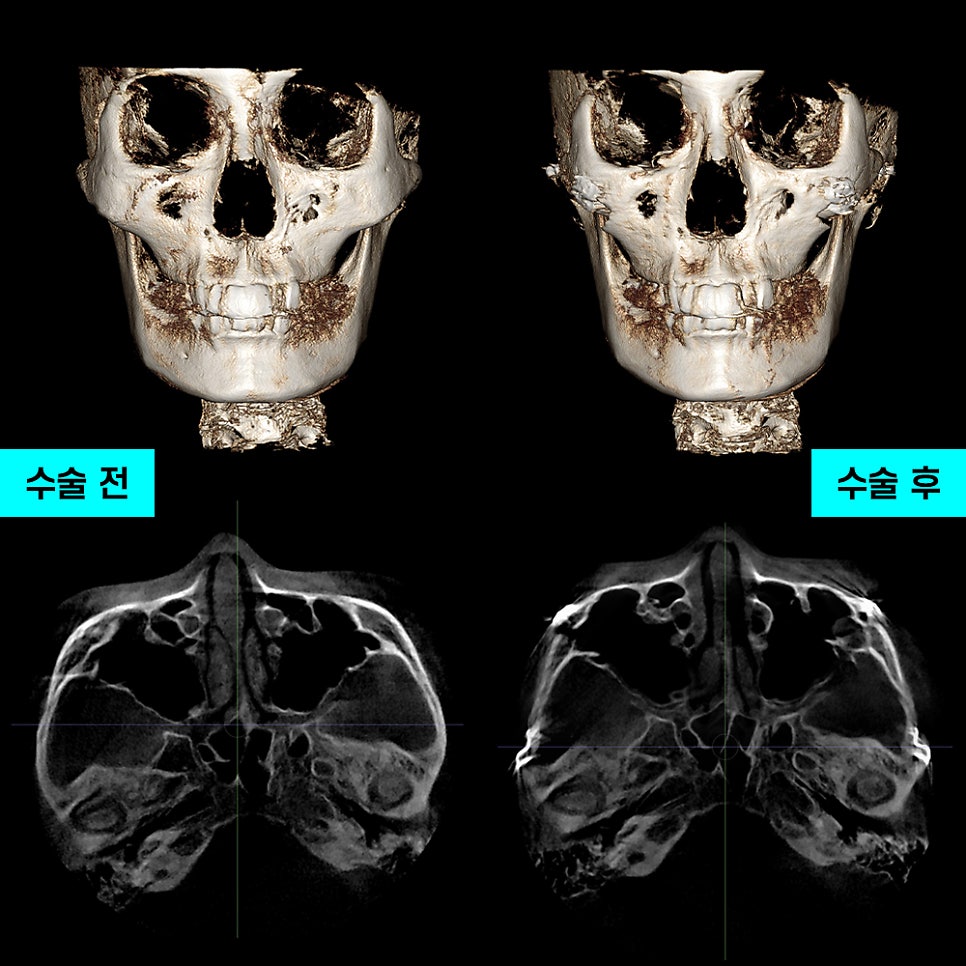
This patient had both a well-developed 45-degree zygoma and lateral zygoma, so to achieve the maximum reduction effect, we performed 3D zygoma reduction surgery together with jawline and double chin liposuction.
If you look at the before-and-after photos, you can see that the overall broad-looking face has become much slimmer.
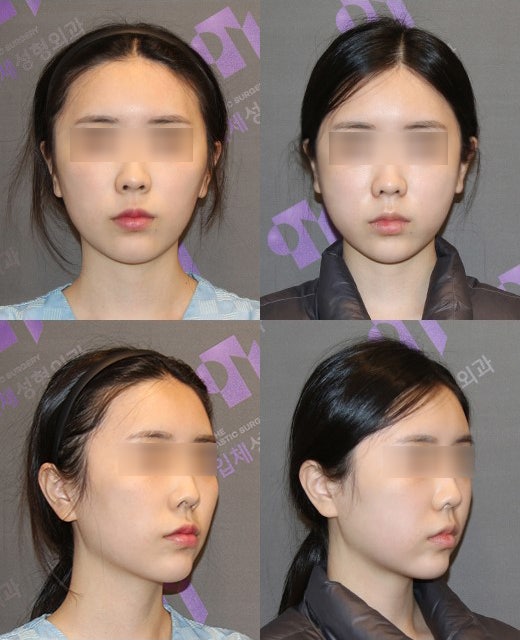
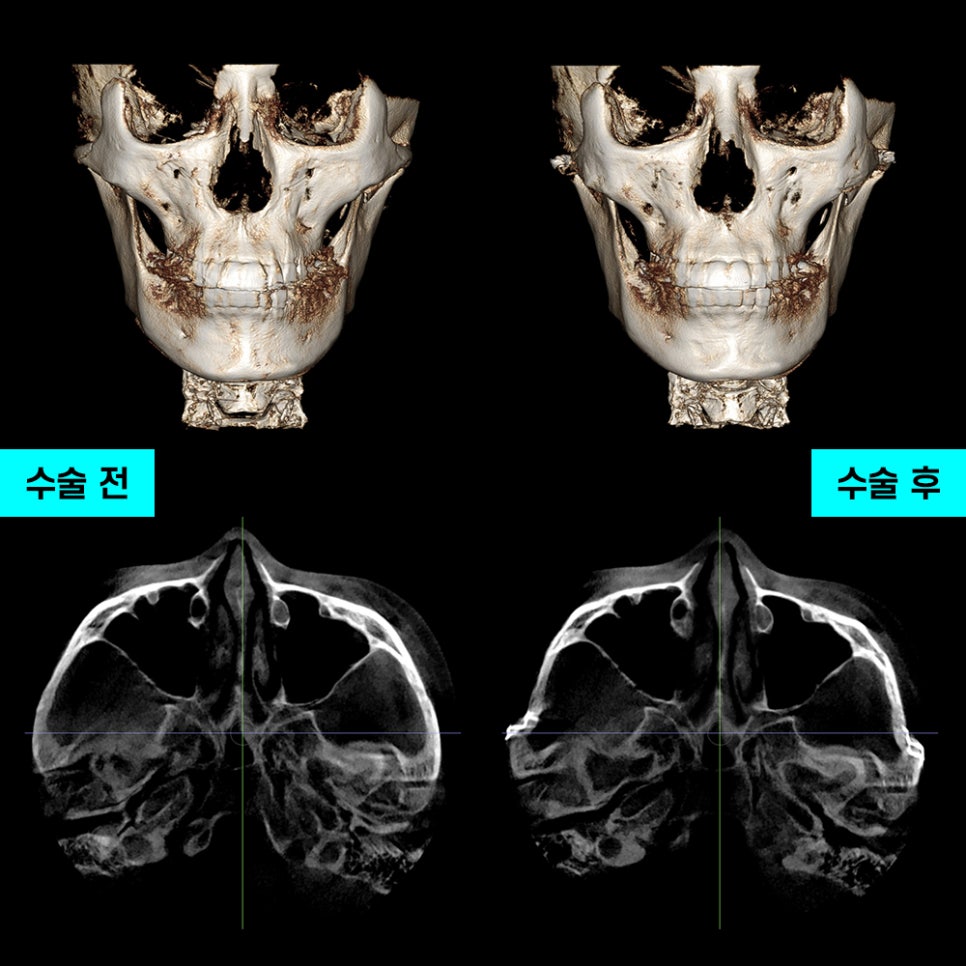
These photos are of a patient who underwent 230-degree three-dimensional zygoma reduction surgery.
When shaving is additionally performed, as you can see in the photos, the volume of both the 45-degree zygoma and the lateral zygoma is reduced overall.
The bend has also become smoother and softer.
It is difficult to say that either 230-degree three-dimensional zygoma reduction surgery or 3D zygoma reduction surgery is better.
This is because the degree of reduction effect differs depending on each person’s zygoma development.
The most important thing is to safely perform the surgical method that is right for you.
For a more satisfying and safer surgical result, accurate diagnosis and sufficient consultation are essential.
At our clinic, 3D CT scans are used to carefully analyze the patient’s bone condition, and a precise diagnosis is made regarding which surgery is needed.
For a high level of satisfaction with the surgical result, it would be best to accurately understand your own bone condition and choose the surgical method that is right for you.
So far, we have looked at the differences between 230-degree three-dimensional zygoma reduction surgery and 3D zygoma reduction surgery through illustrations.
Thank you.