Hello, I am Director Cho Hyun-woo of 3D Plastic Surgery.
Today, I would like to talk about endoscopic forehead lift surgery, which is a different field from facial contouring surgery.
It is often misunderstood that forehead lifts are a procedure mostly done in middle age or later, when forehead wrinkles appear due to aging.
Of course, if you are middle-aged, this surgery is suitable for improving a tired-looking appearance caused by sagging forehead skin and deeper wrinkles, as well as sagging eyebrows and eyelids that create a drooping eye shape and affect your overall image.
However, there are also people in their 20s and 30s for whom this procedure may be appropriate.
Examples include cases where the eyes still look heavy even after double eyelid surgery, or where the face has a strong, sharp impression.
Other cases include a narrow distance between the eyebrows and the eyes, the need for the effects of ptosis correction, a bulky eyelid that makes the eyes look thick, or severe eyebrow asymmetry.
In these cases, using an endoscope, the skin is dissected and lifted up to above the eyebrows through a small incision of about 1 cm inside the hairline. Compared with a standard endoscope, it provides 5 to 6 times clearer image quality, allowing even nerves and blood vessels to be observed in fine detail. This helps minimize damage to nerves and soft tissue, and reduces swelling, bruising, and bleeding after surgery, which can support faster recovery.
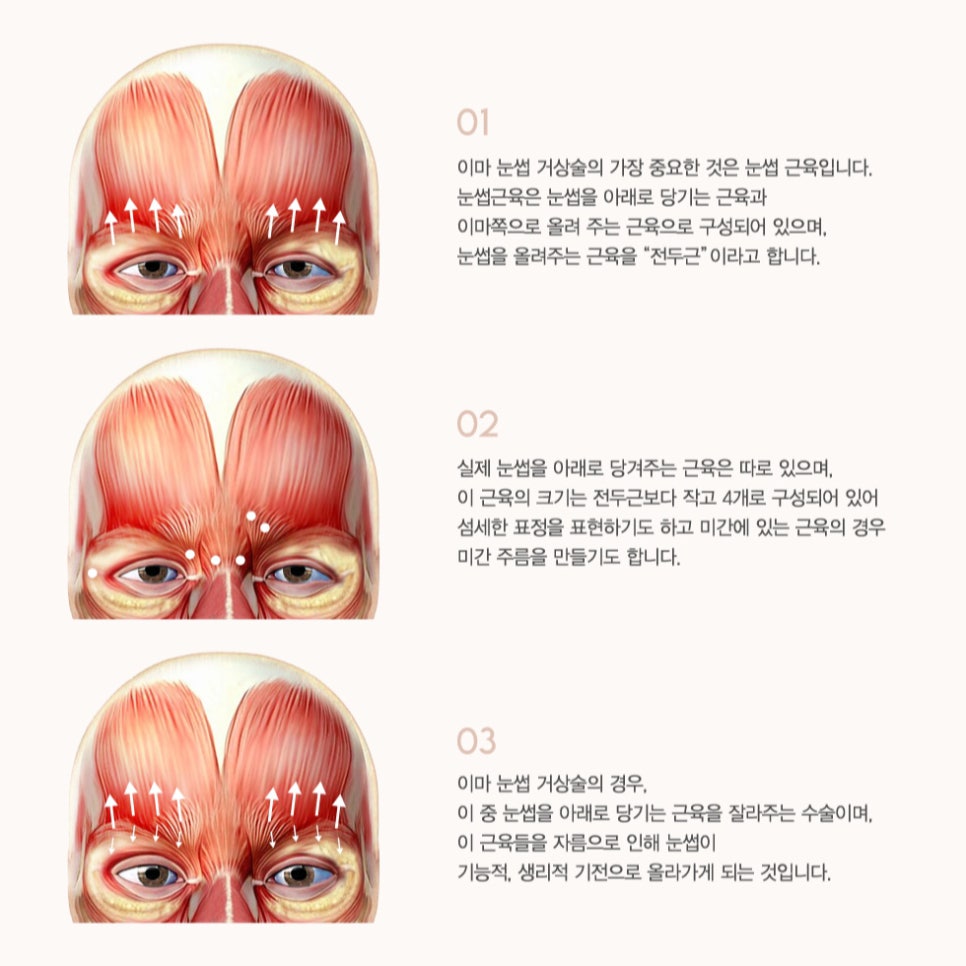
The most important part of a forehead and brow lift is the brow muscles.
The brow muscles are made up of muscles that pull the eyebrows downward and muscles that pull them toward the forehead. Depending on the degree of these muscles, they can also create facial impressions and forehead and glabellar wrinkles.
Many people think that because this is a lifting procedure, it takes a long time, but the surgery is performed under sedation anesthesia and takes about one hour.
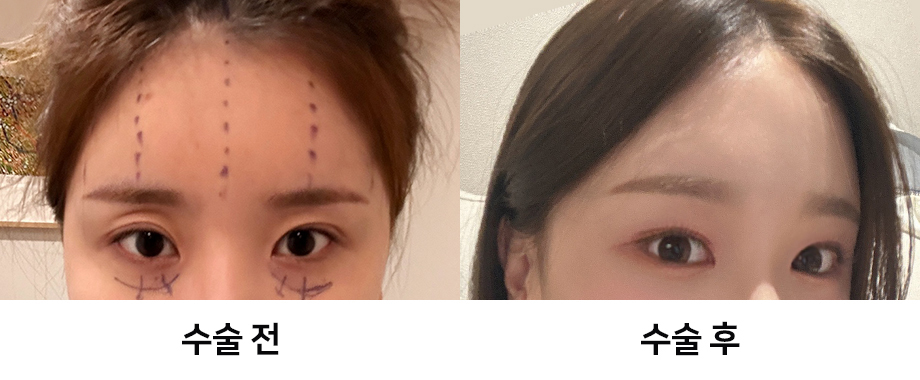
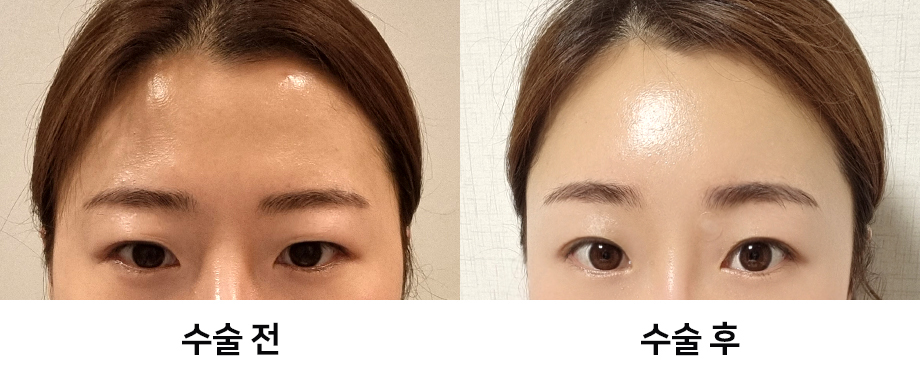
I will explain by showing photos of actual surgical patients.
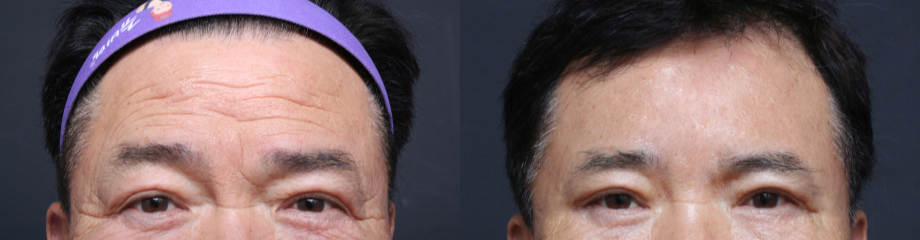
This is the first patient, a man in his 60s.
This patient underwent an endoscopic forehead lift due to forehead wrinkles and crow’s feet caused by sagging forehead skin.
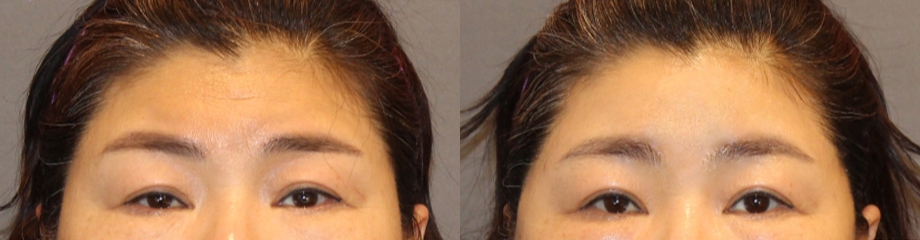
The second patient is a woman in her 50s.
Because of sagging eyebrows and eyelids that made her look sleepy, her tired-looking eyes were corrected through an endoscopic forehead lift by readjusting the position and angle of the eyebrows.
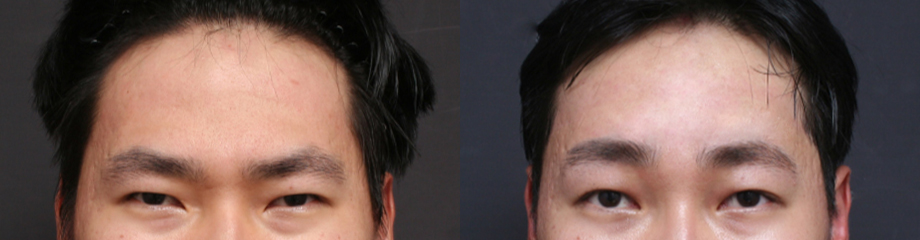
The third is a photo of a man in his 30s.
Regardless of age, both forehead wrinkles and a harsh-looking impression can be improved through a forehead lift.
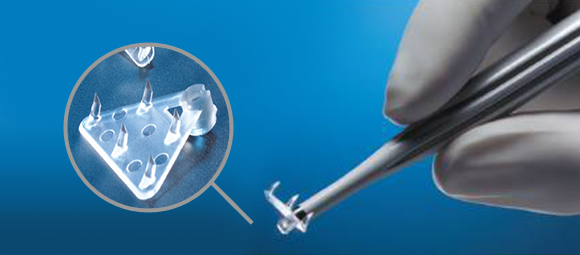
Endotine, used in forehead lift surgery, is a product made from a biocompatible medical material and is all broken down and absorbed into the body within 9 months after surgery.
As a medical material used to lift sagging skin tissue, the five pyramid-shaped projections strongly pull up sagging eyebrows and forehead skin, allowing firmer fixation than conventional surgical methods.
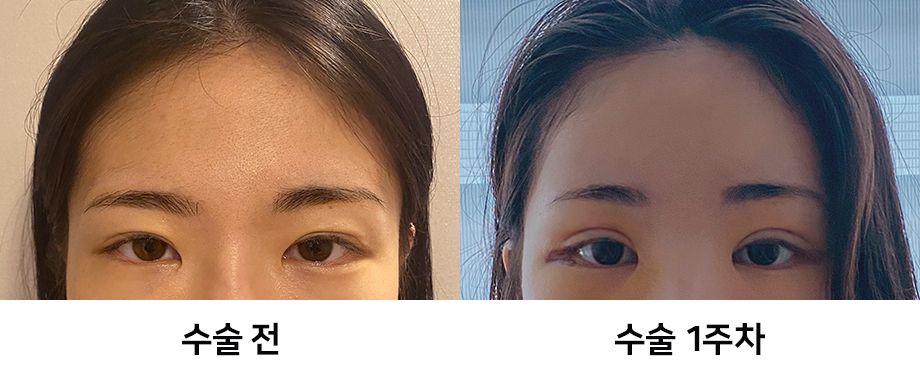
The recovery period after an endoscopic forehead lift may vary depending on the individual’s constitution.
Because this is forehead surgery, swelling may move downward, causing swelling and bruising around the eyes.
For about 3 to 4 days after surgery, you may also feel headaches and warmth in the forehead area due to swelling. At this time, frequent cold compresses can help with recovery.
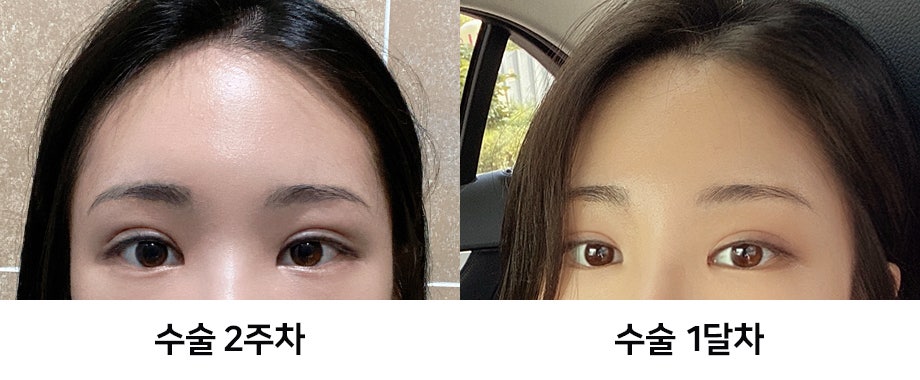
Swelling after surgery is generally thought to be worst immediately after the operation, but it actually peaks at 72 hours after surgery, becoming most pronounced on days 3 to 4, and then major swelling subsides on days 7 to 14.
Shampooing is possible from day 3 after surgery, except for the surgical area, and hair dyeing or perming is possible after one month.
However, even one month after surgery, recovery is not yet complete. Small amounts of swelling gradually subside over 3 to 6 months, and you can think of this as the process of wound healing.
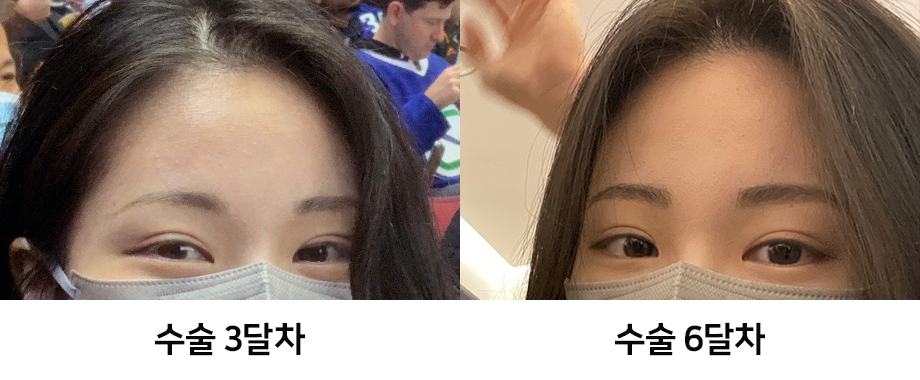
In addition, stitches at the surgical site of an endoscopic forehead lift are removed in the first week.
At this point, the scar will gradually fade from the wound area after the stitches are removed.
Temporary hair loss may occur at the surgical site, but hair will also gradually begin to grow again from around 3 months, so there is no need to worry too much.
You should avoid rubbing the surgical area.
Because endoscopic forehead lift surgery is performed through a small incision, if the surgeon lacks experience, damage to soft tissue can become more severe.
If that happens, bleeding increases and the surgery time also becomes longer.
Therefore, since this is a procedure where the specialist’s skill is important, you should choose a medical team with extensive clinical experience to minimize side effects and achieve satisfying results.
For all plastic surgeries, the recovery period and side effects can vary depending on individual care.
It is good to take light walks and consume foods that help reduce swelling, such as pumpkin juice. Drinking alcohol and smoking slow recovery, so they should be resumed only after one month.
So far, we have looked at swelling and recovery time after endoscopic forehead lift surgery.
Thank you.