Hello, I’m Dr. Jo Hyun-woo of 입체성형외과.
Not only contour surgery, but all surgeries involve a recovery process after the operation.
Today, I will explain the symptoms and recovery process that can occur after cheekbone surgery—symptoms that are not really what you would call side effects, but that many patients worry might be side effects.
My mouth feels uncomfortable after contour surgery
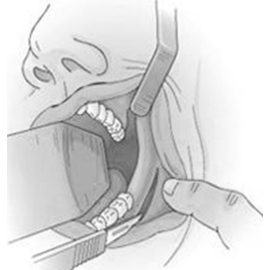
3D cheekbone surgery is performed through an incision inside the mouth.
In general, when the oral mucosa is incised, sensation around the teeth can become dull.
This is also the same for square jaw surgery and chin surgery.
In fact, if an incision is not made, no surgery can be performed, so when you undergo oral surgery, this is an unavoidable symptom.
Many patients worry after surgery that altered sensation in the teeth or gums might be a side effect.
However, it all returns as the incision site heals.
For some people, the nerves recover within one month, while for others with a slower recovery, it can take more than six months.
Of course, it may not always return 100%, but it recovers to about 99% and to the point where daily life is not uncomfortable at all, so there is no need to worry.
Some people also complain that facial expressions feel awkward.
Because the tissue is dissected and surgery is performed, facial swelling can naturally make it feel unnatural to make expressions or speak.
In some patients, the smile on the left and right side may even look different.
This can also happen because the swelling on each side is different, making both sides look different.
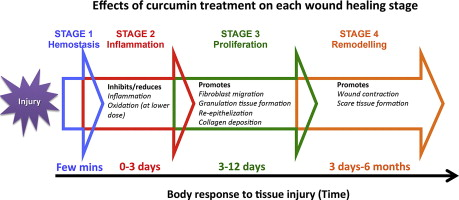
This is something I always tell my patients, and it is also stated in plastic surgery textbooks.
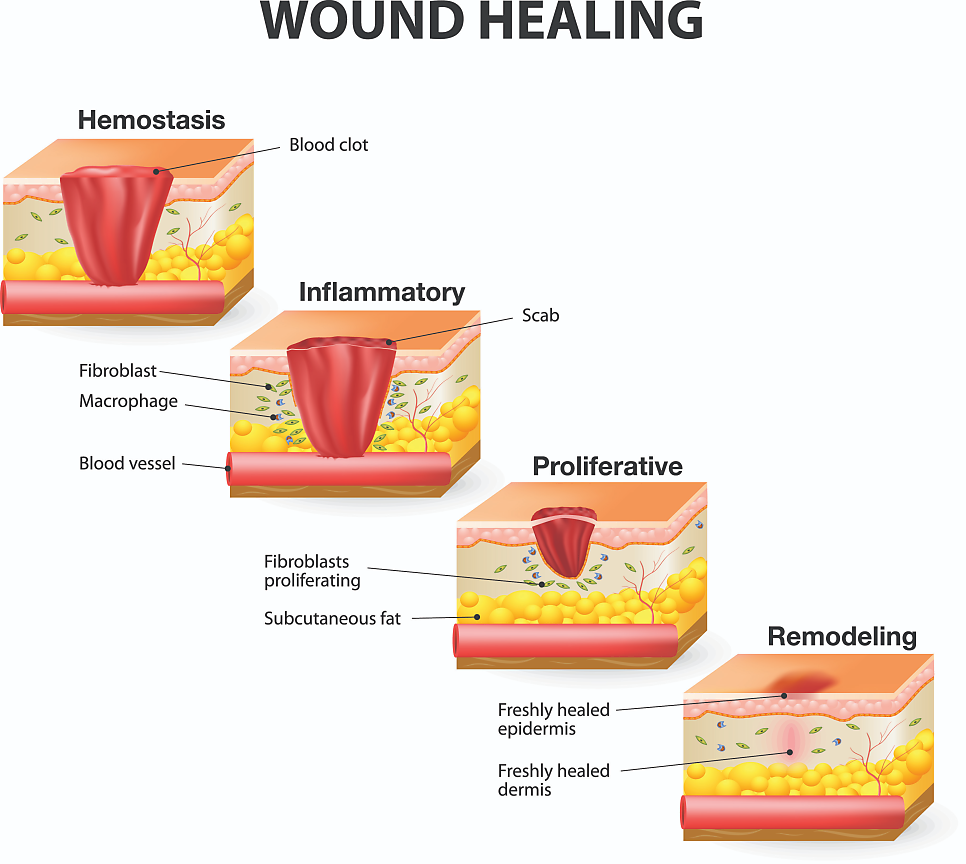
All wounds go through a healing process.
From 1 to 3 months, the wound may not look good, and then between 3 and 6 months, it goes through a process in which the wound heals.
This can be said to apply equally to swelling as well.
Depending on the patient, the swelling may go down quickly, but if you observe it for about six months, all movement will likely improve.
My incision scar near the sideburns is too red
Patients who had posterior fixation during cheekbone surgery often mention this when they come in for their 6-week follow-up.
In fact, if a wound is not from an injury but from a surgical incision, the scar will be barely visible as long as it heals well.
Especially when looking at it during pin removal surgery after six months, there are even patients whose sideburn scar is difficult to find during surgery.
However, patients may worry that the wound is too red and noticeable between 1 and 3 months.
I explain this thoroughly before surgery, but if you observe the course until 3 to 6 months, you can see the scar improve.
It looks like the hollowing of my cheeks has become worse
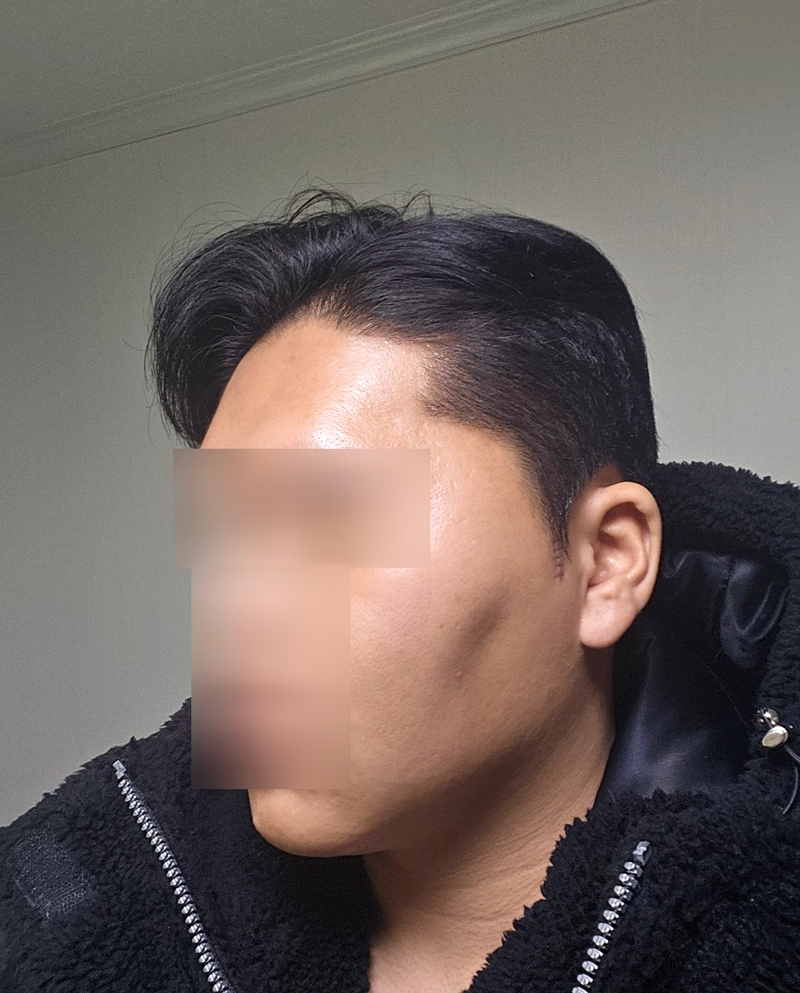
This is something many people say when they check their progress 1 to 2 weeks after 3D cheekbone surgery.
In fact, cheek hollowing is something everyone has.
Depending on the patient, the hollowing may be severe or mild.
When the face swells after cheekbone surgery, this hollowed area is actually held in place by ligaments, so it does not swell, while the surrounding area swells, making the cheek hollowing look more pronounced.
Because this can temporarily look more sunken due to swelling, there is no need to worry too much.
When I consult with patients, I usually tell in advance those who may appear to have more noticeable cheek hollowing after cheekbone surgery.
For these patients, it may be a good idea to consider cheek hollowing correction surgery at the same time.
My eyebrows won’t move after the 230-degree 3D cheekbone reduction surgery
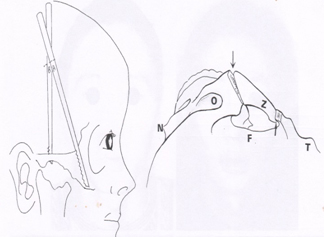
This is something I always mention in advance when explaining 230-degree 3D cheekbone reduction surgery.
When performing cheekbone surgery through a scalp incision, the area through which the nerves that control blinking and raising the forehead pass will initially swell.
When the surrounding area swells and pressure builds up, the nerves can temporarily stop functioning, so it is not uncommon for the forehead not to lift after surgery.
When both sides do not lift, many people do not notice it, but if only one side swells a lot, many patients feel that one side is strange and become very anxious.
After doing this surgery for more than 15 years and observing the recovery process, I can say that everything returns 100%.
Usually, movement starts to return within 1 to 2 months, and once it begins to return, it quickly moves like it did before.
In some cases, it can take up to 3 months. These patients come back for their 6-month follow-up already recovered to their original state.
If I ask them when they recovered, they often cannot remember clearly. As they go about their daily lives and forget about it, they recover 100%, so there is absolutely no need to worry.
My hair around the scalp incision isn’t growing
When performing 230-degree 3D cheekbone reduction surgery, an incision of about 1 cm is made in the scalp.
The incision is made as much as possible in an area without hair to avoid injuring the hair roots.
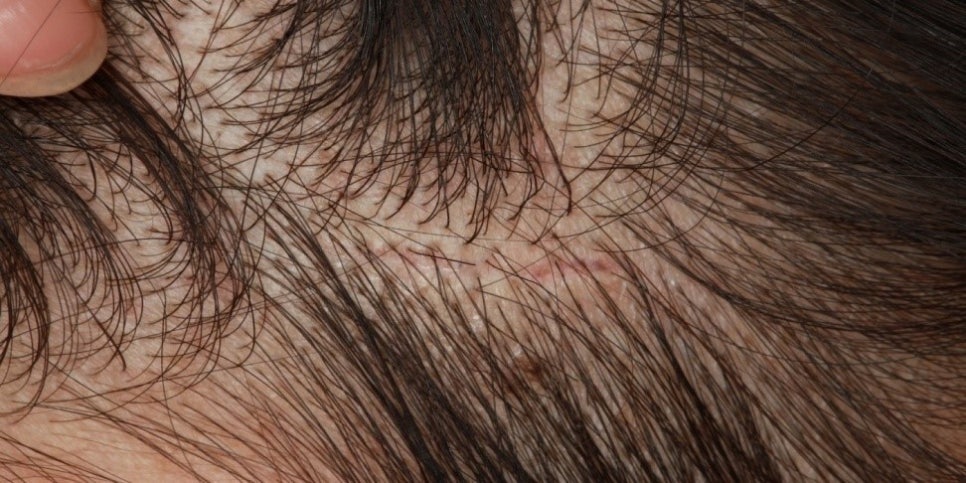
In the case of a well-healed wound, after about 3 weeks, it really becomes barely noticeable.
Just as we can develop hair loss when we are under stress, the hair around the incision site may also experience stress and develop temporary hair loss.
However, because the hair roots are still alive, the hair that was temporarily lost will grow back.
It does not grow back immediately, but since the hair starts growing again after about 2 months, patients worry that they have developed hair loss.
As I explained in my column, hair goes through a three-stage process, and you can think of this as that process starting again.
In some cases, the wound may not heal well, or folliculitis may develop at the wound site, and the hair may not grow back in an area about the size of a fingernail.
In such cases, the problem can be addressed by partially reopening and re-suturing the area, or with a small hair transplant, so there is no need to worry too much.
Today, I talked about various symptoms that may appear after cheekbone surgery and that people may mistake for side effects.
All surgeries can have side effects.
However, what I explained today are symptoms that can appear during the recovery process after surgery.
Of course, you may feel worried and anxious, but the symptoms above are things that can recover, so if you try to stay a little more relaxed, I think you can achieve good results.
Thank you.