Hello, I’m Director Joo Hyun-woo of 입체성형외과.
Today, I’d like to give you accurate information about square jaw correction.
I’ll explain what should be considered in order to avoid side effects from square jaw surgery, and how the surgical direction should be determined so that an awkward-looking face does not result.
For all patients considering plastic surgery, including square jaw surgery, the biggest hope is probably a dramatic effect.
In particular, contouring surgery involves cutting bone, so patients want and expect even greater change.
At this point, a major change in square jaw surgery means a large amount of bone cutting.
The more bone that is removed, the narrower the facial width becomes. That is physically natural.
That is why, to create a dramatic effect with square jaw surgery, a large amount of osteotomy is needed.
In fact, as long as the nerve line is not affected, increasing the amount of bone removed is not difficult.
Then is removing as much as possible always better?
There are things to be careful about when increasing the amount of bone removed.
When the square jaw is reduced to the maximum, the face becomes narrower and smaller.
In this case, satisfaction right after surgery may be high because of the dramatic change.
A smoother, sharper facial line can be created, but overall, the face shape is more likely to look awkward.
I think most patients would not want such a result.
Of course, during consultations, there are patients who want a flat, awkward-looking face and a dramatic change regardless of sagging after surgery.
In such cases, if the patient truly wants it, it is not easy for a doctor to change their mind.
However, the important thing is that once bone has been over-resected, restoration is almost impossible.
Then is it better to reduce the amount of resection?
Reducing the amount of resection, in other words decreasing the absolute amount of bone removed, means that the degree of change after surgery will also be smaller.
If the patient wants only to refine a bumpy face shape, this is not a problem. But if they want a very sharp facial line or a major change in facial size, the result may fall short of their expectations.
However, the result will be more natural, and the less bone that is removed, the lower the likelihood of problems with the remaining soft tissue, that is, skin sagging.
Put another way, the greater the amount of resection in square jaw surgery, the more likely an awkward facial line will appear, and at the same time, the more likely sagging will become an issue.
In the end, within the range that does not affect the nerve line, the amount of bone removed, meaning the degree of change, can be determined by what direction of improvement the patient wants.
What I do want to say, however, is that the size of the change and the degree of beauty are not proportional, and in order to take a safe direction that avoids side effects from square jaw surgery, the degree of change may fall short of the patient’s expectations.
So, is there an appropriate standard?
Every patient’s facial bones are different, so it cannot be definitively said whether removing more or less bone is better.
There is no single correct answer, but in my personal opinion, it is better to leave enough bone to support the remaining soft tissue even as time passes after surgery, while still removing enough to produce a natural result. A natural result in this case does not mean the surgical outcome is inferior in any way.
I will explain with an actual patient’s photos.
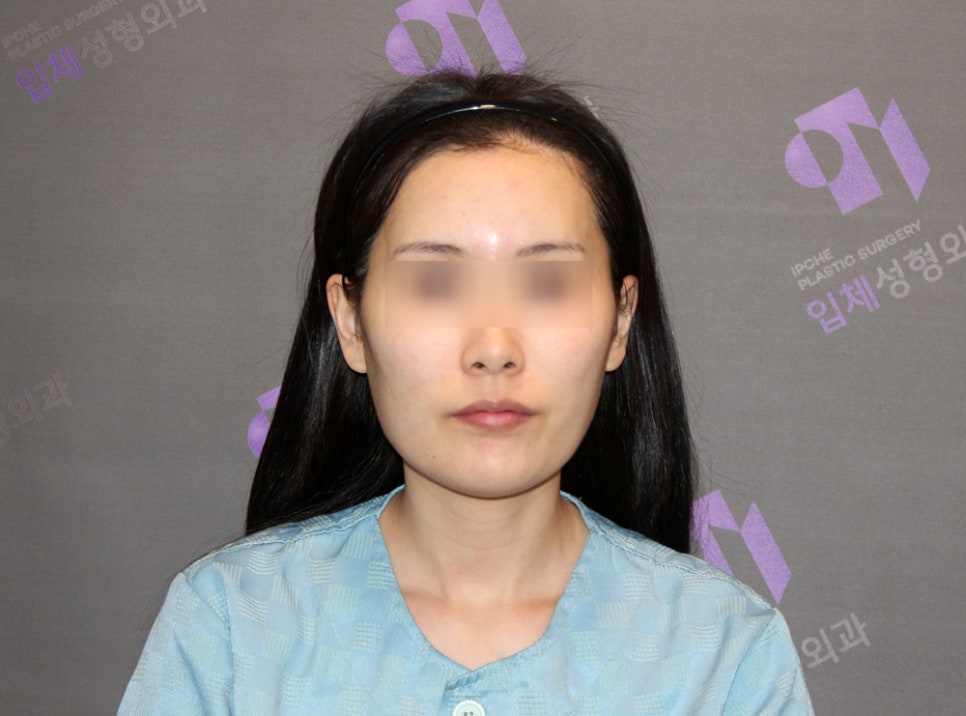
The photo you see is of a patient who underwent zygoma and square jaw surgery.
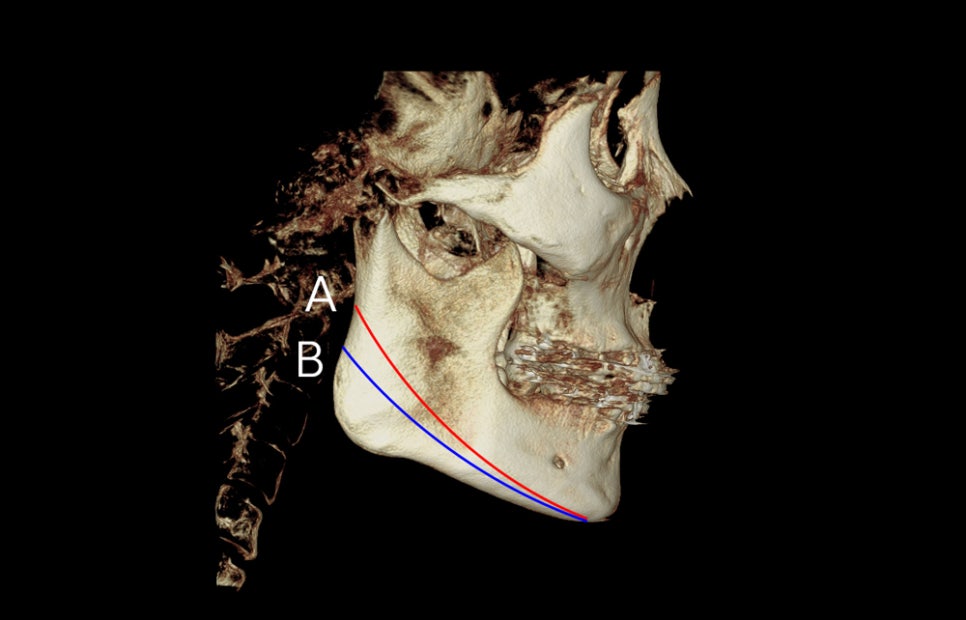
If you look at the preoperative CT scan, the patient has a large mandibular angle.
When the mandibular angle is large and the square jaw is prominent, both approaches can be considered: maximizing the bone cut or leaving a little more bone.
If the osteotomy line is set high as in A in order to maximize the amount removed, the facial width becomes narrower, so the postoperative change becomes greater.
However, the mandibular angle may become faint, increasing the likelihood of the so-called gaetak appearance.
If the osteotomy line is set slightly lower than the maximum, as in B, a portion that can still appear as the mandibular angle remains, allowing a transition from a large preoperative mandibular angle to a softer one. At this point, because the amount of bone removed is reduced, the likelihood of square jaw surgery side effects such as problems with remaining soft tissue also naturally decreases.
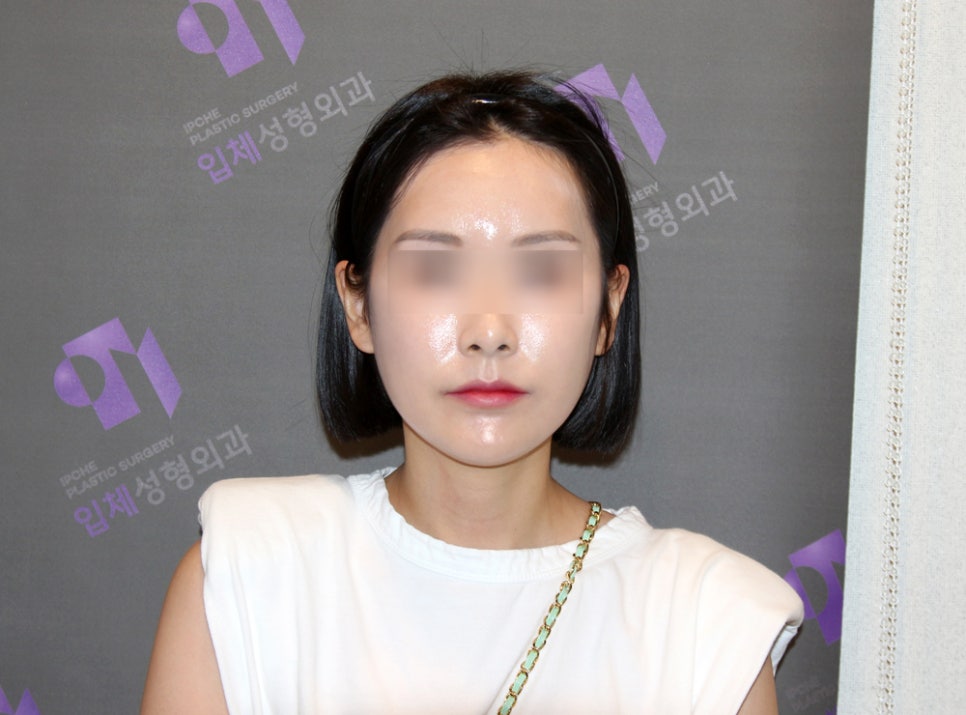
This photo was taken when the patient visited for a 3-month postoperative follow-up.
Even though the surgery was performed with a moderate amount of bone left rather than cutting to the maximum, you can see that there was still a clear improvement compared to before surgery.
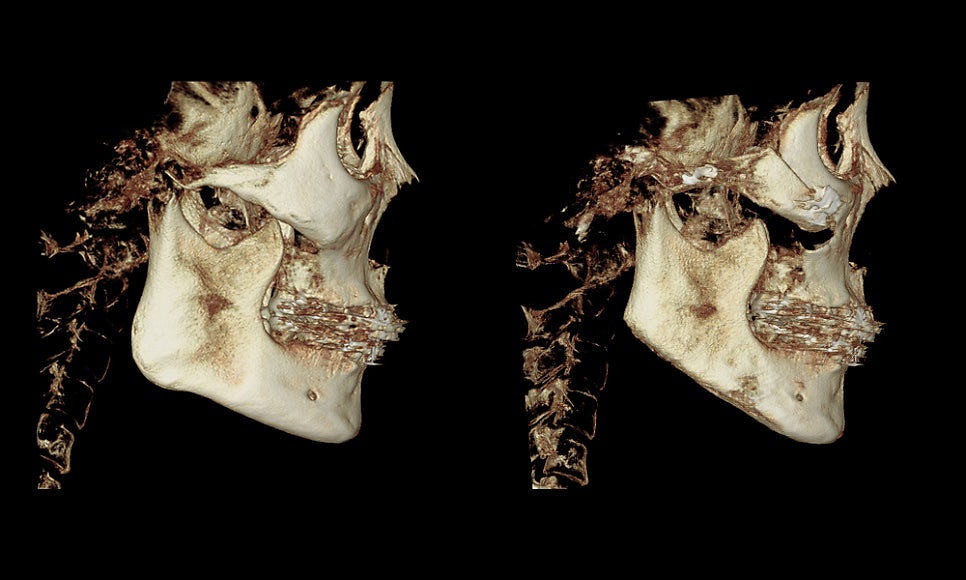
If you compare the CT scans, you can see that the mandibular angle remains after surgery because the osteotomy line was set slightly lower than the maximum.
To show you the actual appearance,
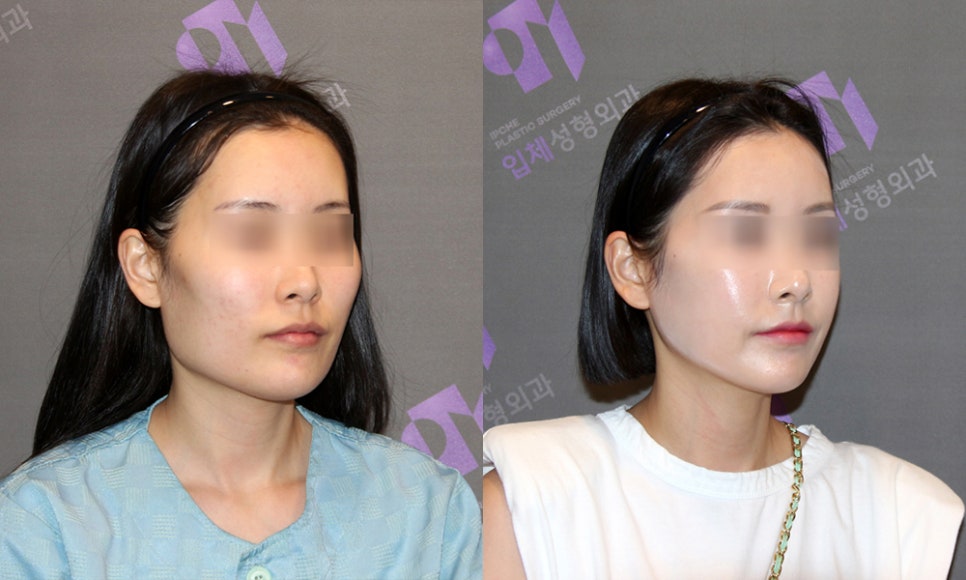
This is a side view photo after surgery. You can see that the mandibular angle below the ear remains softly, resulting in a natural line without looking awkward.
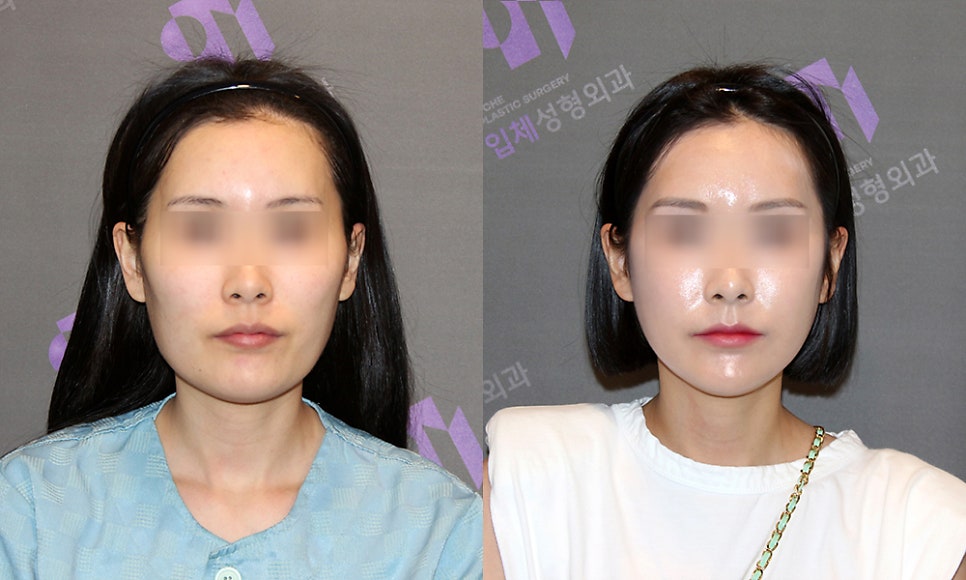
If you place them side by side, you can see that the lower facial line has become smoother and the facial width has been reduced through square jaw surgery, resulting in a more balanced and attractive face.
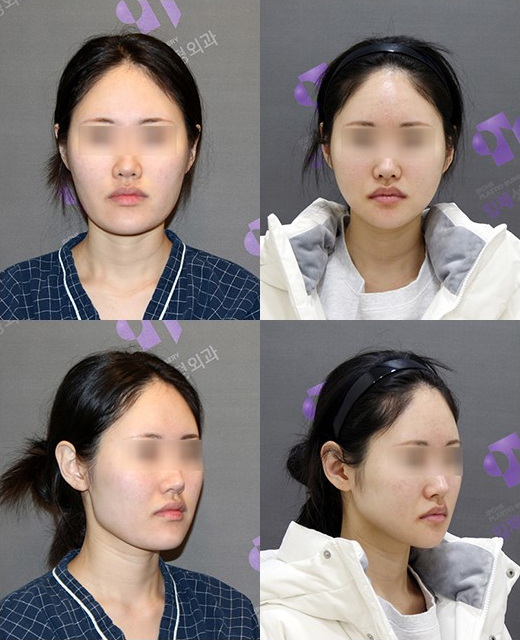
Patient who underwent square jaw surgery, cortical ostectomy, and chin surgery
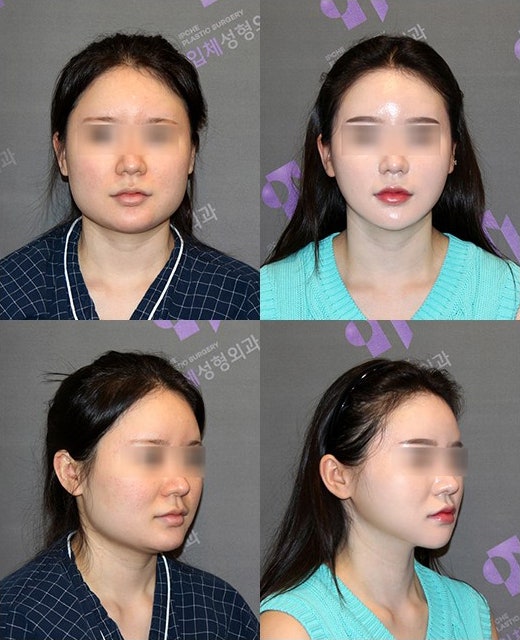
Patient who underwent square jaw surgery, cortical ostectomy, masseter muscle reduction, and chin surgery
Because everyone has different standards for what they see, some people may want a greater effect than what is shown here.
However, I believe it is necessary to correct the patient’s expectations before surgery so that they can make the right decision.
Plastic surgery is still surgery performed by people, so there are clear technical limitations.
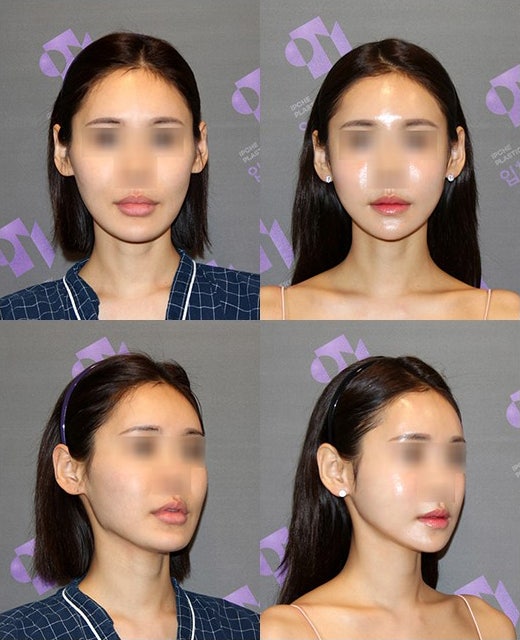
Patient who underwent 230-degree three-dimensional zygoma reduction, square jaw surgery, and chin surgery
Therefore, during consultation, a specialist must clearly and accurately explain what can and cannot be done for the patient.
The same applies to the patient. Ultimately, the decision to undergo surgery or not is made by the patient.
If you undergo facial contouring surgery with the assumption that your face will absolutely become smaller, satisfaction may be lower than expected, and if you become too greedy, you may greatly regret it.
If you are currently considering square jaw surgery, please set aside the vague thought that you will simply look prettier, and through a thorough consultation with the surgeon, look at whether this surgery can truly solve your complex with an objective perspective.
Also, after thinking once more about whether, compared with the opportunity costs such as cost and recovery time, you will truly feel greater satisfaction from this surgery, I hope you make the right decision. Thank you.