Hello.
I am Dr. Heo Jae-won, a board-certified plastic surgeon who studies surgeries that help make people look younger.
Today, I’d like to share a special story.
Recently, more and more patients have been expressing concerns like these in the consultation room.
"I had zygoma surgery a few years ago, but the area under my cheekbones has become too hollow, and I’m worried."
"After having jaw reduction surgery, my jawline became uneven and bumpy. What should I do?" some people say.
These are cases of patients who, after contour surgery, experience unexpected changes over time.
Why does this happen?
To some extent, these are predictable changes, and in fact, they are due to the nature of contour surgery.
Because zygoma surgery pushes the cheekbones inward, the retaining ligaments also move inward, which can create hollowing under the cheekbones.
After reducing the square jaw, the remaining soft tissue may be distributed unevenly, or over time it may sag, making the jawline look uneven and bumpy.
These changes tend to become more noticeable as time passes.
That does not mean you need to regret having contour surgery.
There is a solution: soft contouring surgery
One approach I have been focusing on recently is called "soft contouring surgery."
As a softer approach, unlike conventional "hard" bone surgery, it has characteristics reflected in its name.
The key is to reshape the contour using only soft tissue, without touching the bone.
The specific method involves lifting the sagging soft tissue back into place together with a facelift, while at the same time smoothing out uneven areas.
To show one case,
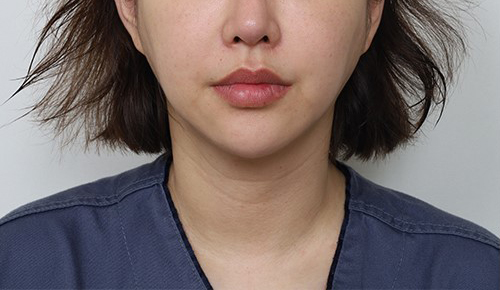
In the case of a patient who visited because they wanted to improve cheek hollowness and the lumpy volume above the jawline after zygoma and square jaw surgery,
they said they had also tried fat grafting several times to improve the obvious hollowing and the contour in front of the ears, but it was not effective.
Such cases can be addressed with soft contouring surgery performed together with a lifting procedure.
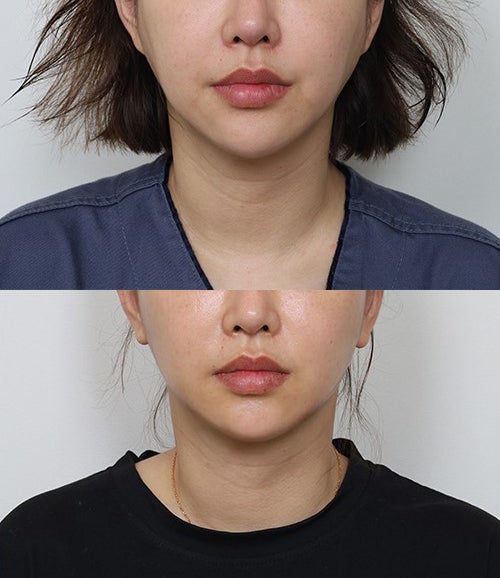
One month after surgery, you can see that the hollowing under the cheekbones has been improved and the line looks slimmer. And this was done without touching the bone.
The advantage of this method is that it does not simply refine the contour.
That is because it can achieve both sagging correction and contour refinement at the same time.
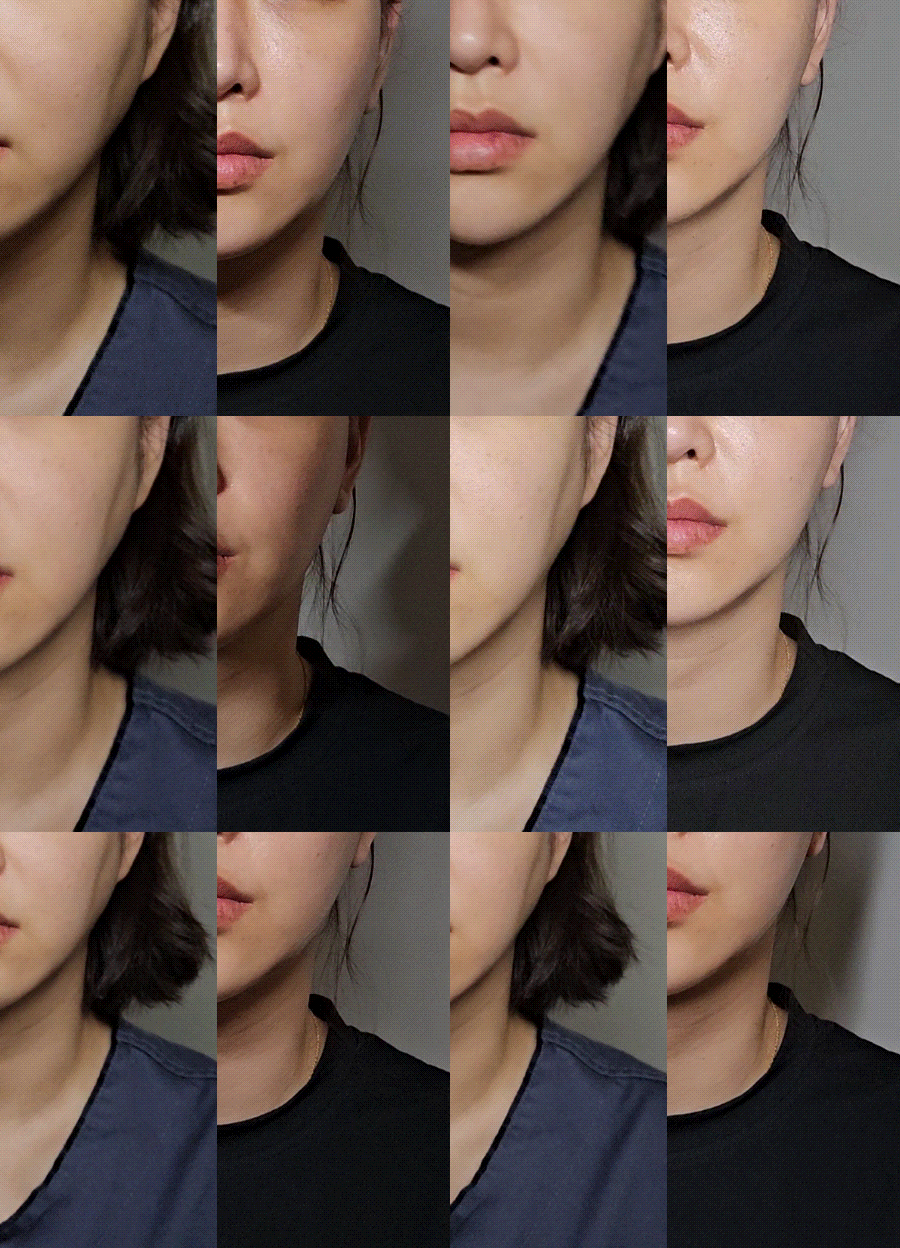
For someone who was worried about cheek hollowing after zygoma surgery, lifting the sagging cheeks upward can help restore a natural sense of volume,
and for someone who was worried about a bumpy jawline after square jaw surgery, smoothing out the loosened skin and soft tissue can help create a smoother jawline.
It can also address sagging that comes with aging.
It is not applied in every case.
Soft contouring surgery is not a universal solution that can fix all aftereffects of contour surgery.
Because it is performed together with lifting, it tends to be most satisfying for people who are concerned about facial sagging.
What I always tell people who are worried after contour surgery is that an accurate diagnosis comes first above all else.
That is because we need to carefully examine what is causing the problem you are experiencing now and which solution is most appropriate.
For some people, soft contouring surgery may be a good option, while for others, a different method may be more suitable.
If you are worried about unexpected changes after contour surgery,
rather than struggling with it alone, it is important to find the most appropriate method through 충분한 상담 with a specialist.
If you have any questions, please feel free to leave them in the comments!
Thank you.