Hello, I’m Dr. Jo Hyun-woo of IP-Tae Plastic Surgery.
Today, I’d like to explain in detail, based on what I actually see in clinical practice, one of the questions patients ask most often during consultations: “Doctor, which surgery or procedure is best if I want my face to look smaller?”
In fact, a face looking smaller is not the result of solving just one area.
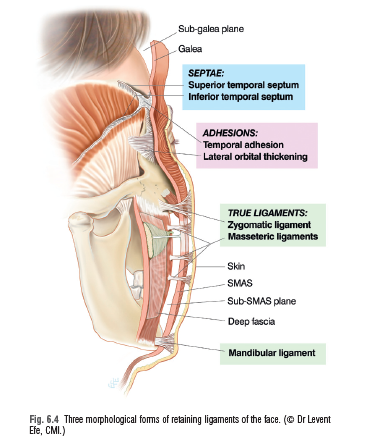
Just as changing a single light when taking a photo can alter the impression, the size and contours of the face are determined by the subtle interaction of three structures: bone, muscle, and fat.
Many people vaguely think, “My cheekbones are big, so I just need to reduce the cheekbones,” or “If I get jaw Botox, my face will look slimmer,” but when we actually diagnose the face in the clinic, the most effective approach can be completely different.
In today’s post, I’ll organize the procedures and surgeries for a smaller-looking face that I have consulted on most often with patients and that have shown high satisfaction.
Facial contour surgery,
the most powerful and definitive change
First, the standard and most decisive method for reducing facial size is contour surgery.
The most fundamental factors that determine facial size are the width and angles of the bones.
No matter how much cheek fat there is, or how diligently you get Botox, if the bone structure is wide or prominent, the face will fundamentally look broad.
Contour surgery can improve the following structures at the same time.
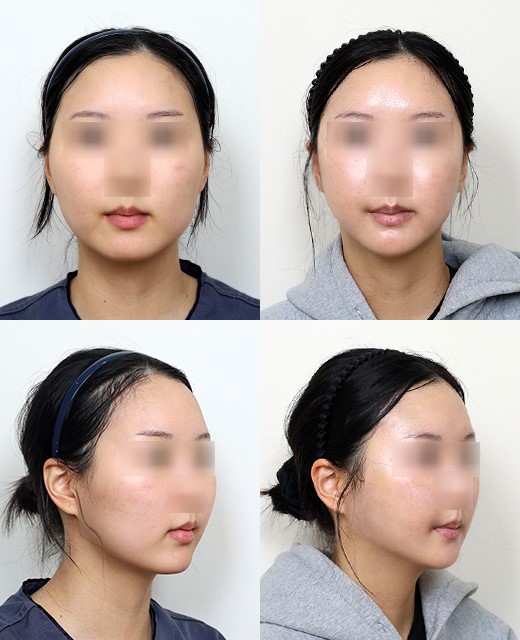
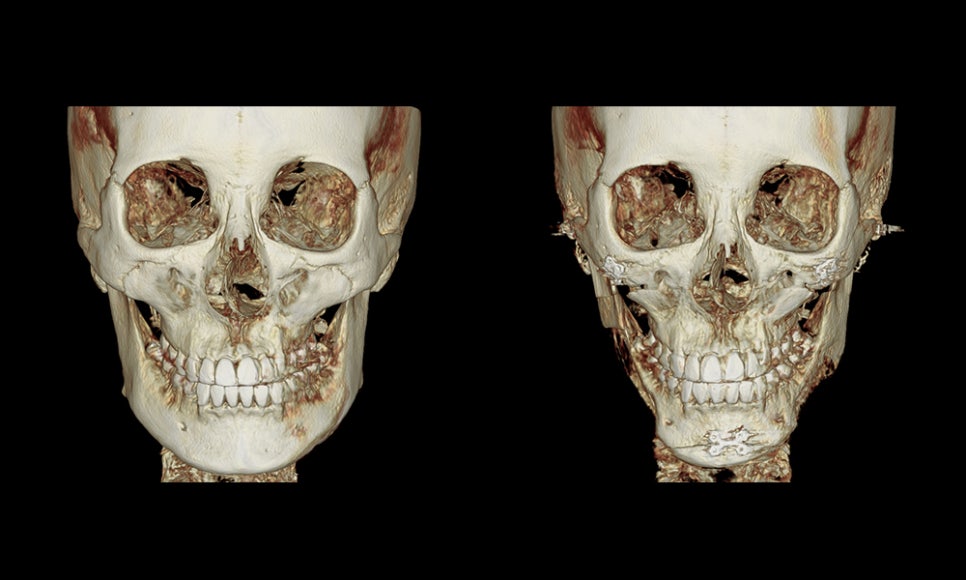
It can reduce the frontal width to create a smaller, slimmer face, reduce the 45-degree side volume to make the face look slimmer, and soften the jawline to improve the face’s length and proportions as well. In particular, with recent advances in CT-based 3D analysis and osteotomy design technology, many cases no longer aim for an excessively shaved-down face like before, but instead create a harmonious face with preserved dimensionality.
Another concern many people have is swelling and recovery time after surgery. The most common course is as follows.
By day 7 after surgery, the major swelling starts to go down, and by the second week it has subsided significantly, to the point where you may think, “I just got my wisdom teeth removed~” or “I ate ramen and went to bed yesterday~.”
In general, by one month, about 80% of the swelling has gone down, so it may look as if everything has settled, but the remaining minor swelling and scar tissue gradually fade over 3 to 6 months, and the face becomes a little slimmer little by little.
Through consistent care and follow-up observation, the most natural and beautiful face is completed between 6 months and 1 year.
Of course, this does not mean swelling lasts for a year; it means that amount of time is needed for the delicate contour line and skin adherence to fully settle.
Liposuction,
a way to clearly reduce a fat-type face
The second method that plays a major role in creating a smaller face is the combination of liposuction, non-surgical fat reduction, and skin elasticity procedures.
It is especially effective for people whose faces look large because of fat around the cheekbones, cheeks, or under the chin.
When talking with patients, many who come in saying, “My cheekbones are big,” actually have the illusion of prominent cheekbones because there is a lot of fat in that area.
In cases where the face looks wide because of full cheeks, or where fat under the chin creates the look of a double chin, the bones are actually small but the fat makes the face look larger, so organizing the fat is much more natural and effective than contour surgery.
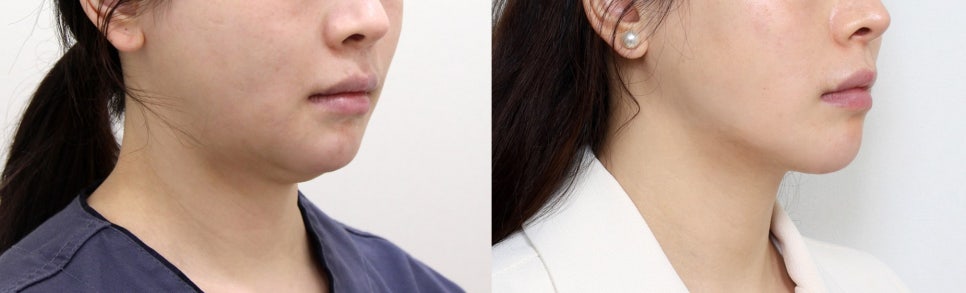
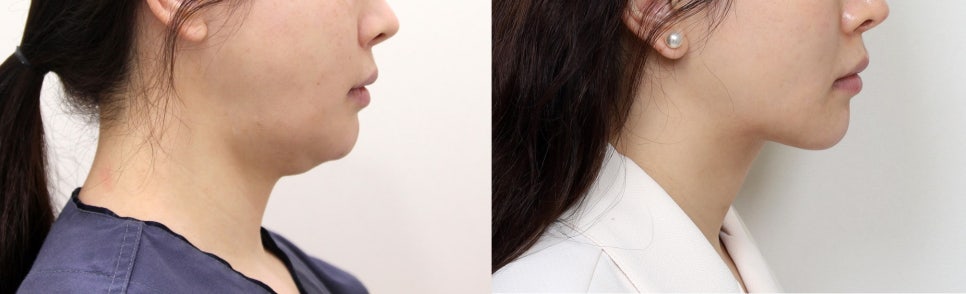
Liposuction can precisely remove unnecessary fat in areas such as the cheeks, cheekbones, and jawline through only a small incision, creating the effect of a lighter, more refined face after the procedure. In addition, if you combine it with Injeuljjak Juseu (fat-dissolving injections), you can complement fine residual fat and left-right asymmetry to complete a more natural contour line.
If skin elasticity is poor, sagging may occur after liposuction, so combining it with lifting lasers such as Ulthera or Thermage FLX can help prevent reduced elasticity and allow the skin to adhere more closely to the line.
Compared with surgery, it is less burdensome and recovery is relatively quick, so it is also popular among office workers and students.
Square jaw Botox,
the easiest solution for a face widened by muscle
Lastly, the simplest and most definite method is masseter Botox.
One of the main reasons the lower face looks wide is muscle.
People who clench their teeth tightly or use their jaw muscles frequently due to stress develop larger masseter muscles, making the jaw look square.
After masseter Botox, the muscle shrinks, naturally narrowing the width of the lower face and creating a slimmer-looking face.
If you add a little skin Botox, it can also ease expression lines and fine muscles, making the jawline fall more softly and naturally, which leads to a fairly high level of satisfaction among actual patients.
The effect of Botox lasts about 3 to 6 months.
Usually, the procedure is repeated periodically when the muscle grows back, but with consistent management, one advantage is that after 1 to 2 years, the muscle size itself can shrink significantly, allowing the face to maintain a smaller appearance for a long time.
Not everyone’s face becomes smaller in the same way.
That is why I explain everything through CT scans and facial analysis: where to reduce so the face looks smallest, what areas do not need to be touched, and in what order the procedures should be done for the most natural result.
Because each person’s structure is different, it is important to accurately identify the reason the face looks large and determine whether the problem lies in the bones, muscles, or fat.
I hope today’s post was helpful.
Thank you.