Hello.
I am plastic surgeon Huh Jae-won, and I perform anti-aging surgery at Inje Plastic Surgery.
These days, when I talk with patients, I often meet people who come in worried about changes after contouring surgery.
They say they had contouring surgery several years ago, but as time passed, new concerns appeared, such as hollow cheeks, sunken cheeks, or an uneven jawline.
Why do these changes happen after contouring surgery?
Cheekbone or square jaw surgery changes the shape of the bone, and as a result, it also affects the support structure of the surrounding soft tissue.
-
In cheekbone surgery, as the cheekbones are moved inward, the retaining ligaments move as well, which can make the area below the cheekbones appear more sunken.
-
After square jaw surgery, the soft tissue can appear relatively more abundant compared with the reduced bone, and the jawline may not look evenly refined.
At first, these changes may feel subtle, but over time they often become more noticeable and start to become a concern.
What is the solution? An approach possible without touching the bone again
Many people ask, "Do I need bone surgery again?" In reality, there are many cases where the problem can be addressed without operating on the bone again.
A method I have recently found especially satisfying is the combination of soft contouring surgery + facelift.
This method:
- leaves the bone as it is
- restores sagging soft tissue to its original position
- smooths out uneven volume
- naturally redefines the contour line
In other words, you can think of it as a "soft" correction focused on the soft tissue.
Introducing a real case
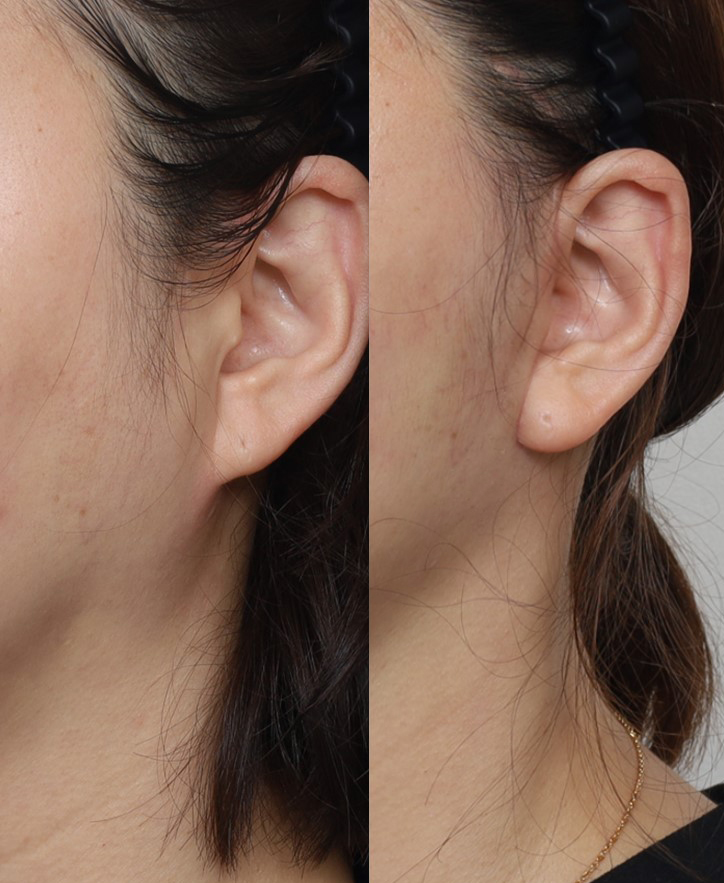
There was a patient who came in because of hollowing and sunken volume below the cheekbones after cheekbone surgery, as well as uneven volume in front of the ears.
They said they had undergone fat grafting several times, but were not satisfied with the results.
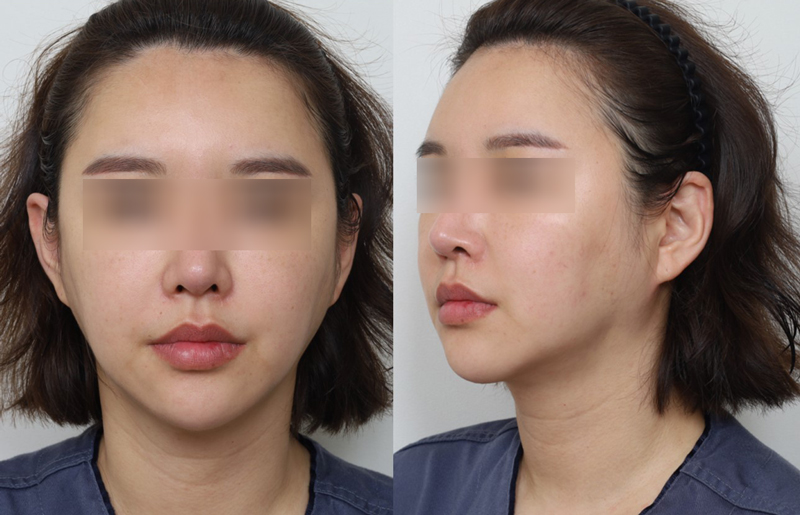
In cases like this, simply adding volume is often not enough.
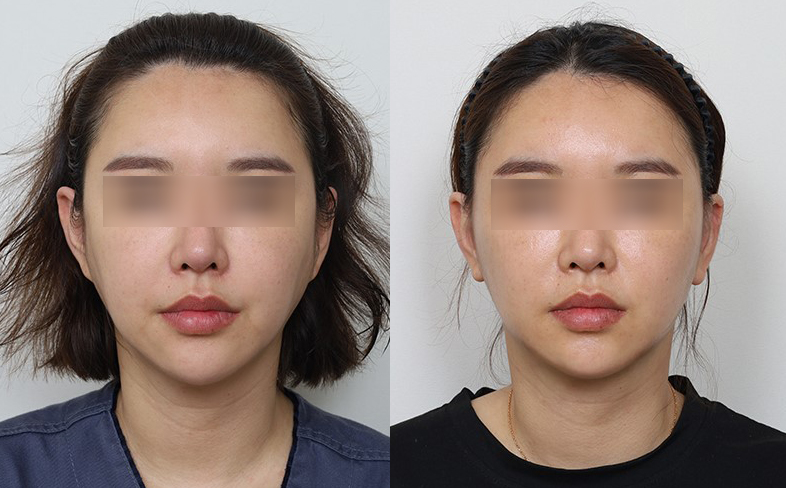
So we performed soft contouring surgery together with a facelift.
At one month after surgery:
- the hollow area under the cheekbones was naturally refined
- the overall facial line became neater and slimmer
- and most importantly, the bone was not touched at all
It is not just "contour refinement"; it also improves sagging at the same time
The biggest appeal of soft contouring surgery is that it can produce two effects at once.
- Improvement of contour imbalance
- Resolution of sagging in the midface and lower face
For people whose cheeks became hollow after cheekbone surgery, lifting the soft tissue can restore both volume and a natural appearance. For people whose jawline became uneven after square jaw surgery, organizing the stretched tissue can bring back a smooth and neat jaw line. Since sagging caused by aging is also addressed at the same time, it truly can be called a one-stone-two-birds approach.
Soft contouring surgery is certainly a powerful option, but it does not apply in the same way to every side effect after contouring surgery.
It is especially beneficial in cases with facial sagging, so the right approach should be chosen differently for each person.
An accurate diagnosis comes first.
The changes that appear after contouring surgery have various causes.
- Is it soft tissue sagging?
- Is it due to ligament movement?
- Is it volume loss?
- Is it overcorrection of the bone?
Because the treatment approach changes completely depending on the cause, the most important step is an accurate diagnosis.
Soft contouring surgery may be the best option for some people, but in other cases a different method may be more suitable.
If you are experiencing discomfort due to unexpected changes after contouring surgery, you do not have to worry alone for a long time.
If we accurately analyze the structure of your face and your current condition, there are plenty of ways to resolve the issue without touching the bone again.
If you have any questions, feel free to leave a comment. Even if it takes time, I will აუცილებლად reply.
Thank you :)