Hello, this is Dr. Jo Hyun-woo of Ipcheok Plastic Surgery.
Today, I’d like to talk about the swelling and cheek sagging that many people are curious about after facial contouring surgery.
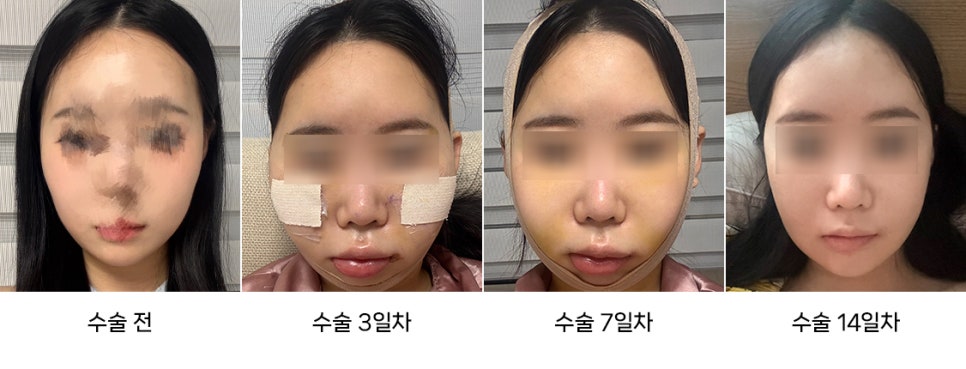
Swelling after facial contouring surgery usually appears most prominently on days 2 to 3 after the operation, and then gradually subsides over time.
In general, the period from 1 to 2 weeks after surgery is when the major swelling has gone down to some extent.
In this post, I will divide the recovery process after facial contouring surgery by time period and explain the changes in swelling in detail, along with actual patient progress photos.
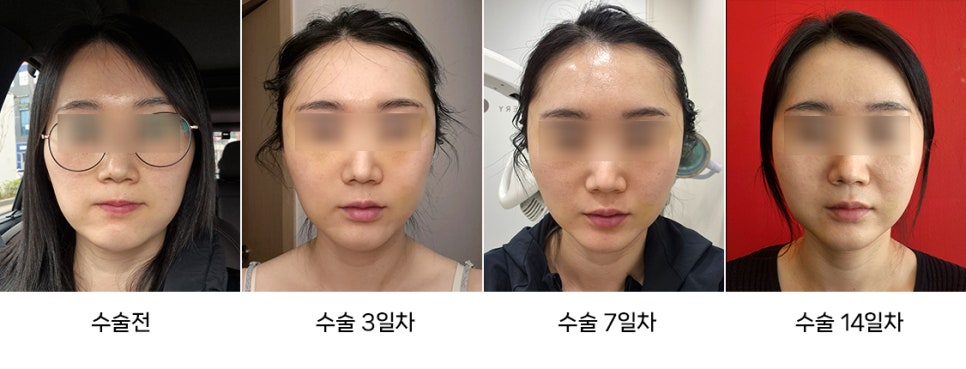
230-Degree Three-Dimensional Zygoma Reduction
This is the first patient’s photo.
About 1 to 2 weeks after 230-degree three-dimensional zygoma reduction, some patients may worry, saying, “I had surgery, but it seems like it didn’t have any effect,” or “My face looks bumpy.” This is because the large swelling that was visible on the outside has subsided to some extent, but residual swelling is still present during the recovery process.
As the major swelling goes down, it may feel as though recovery is complete, but the remaining fine swelling can temporarily make the facial line look uneven.
Therefore, rather than seeing this period as the final result settling in, it is better to understand that recovery is still in progress.
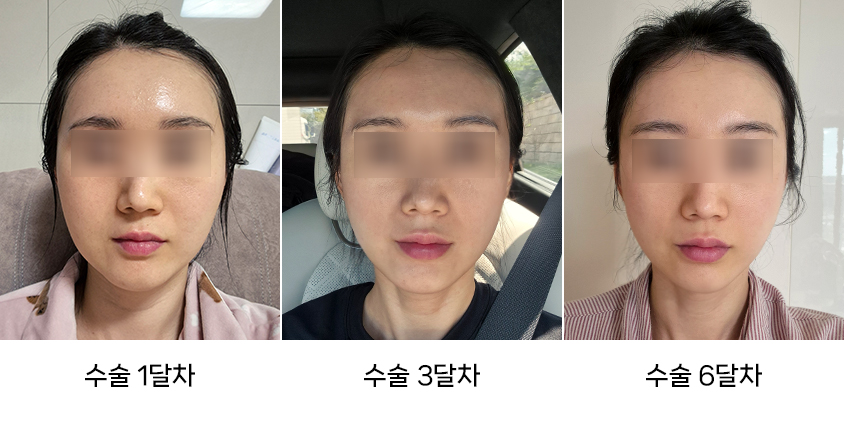
230-Degree Three-Dimensional Zygoma Reduction
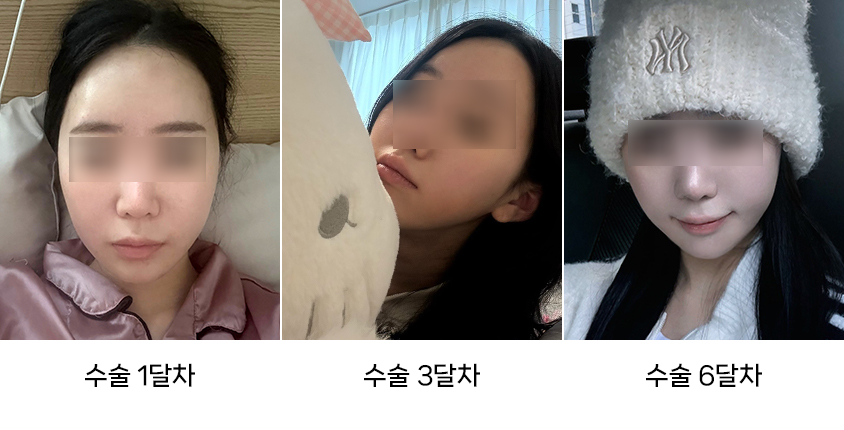
During this period, from 1 month after surgery to about 6 months, the residual swelling that remained gradually subsides, and the facial line that initially looked bumpy can be seen becoming smoother.
However, since the speed at which swelling goes down varies from person to person depending on the patient’s constitution and recovery process, the point at which the difference before and after surgery can be clearly felt may take around 6 months, or even more than a year in some cases.
Let me show you another case.
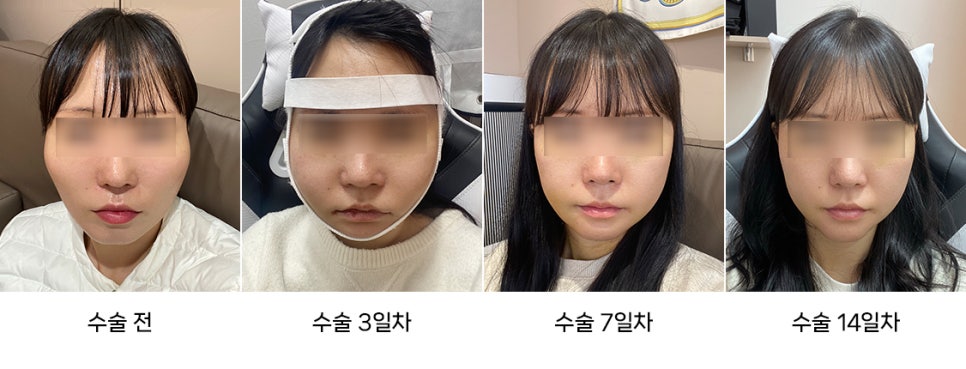
Zygoma Reduction, Square Jaw Surgery, Chin Surgery
This patient underwent three types of contouring surgery.
About 1 to 3 months after surgery, some patients may worry because they feel as though their nasolabial folds have become deeper or that they have developed a double chin, thinking that their face has become saggy.
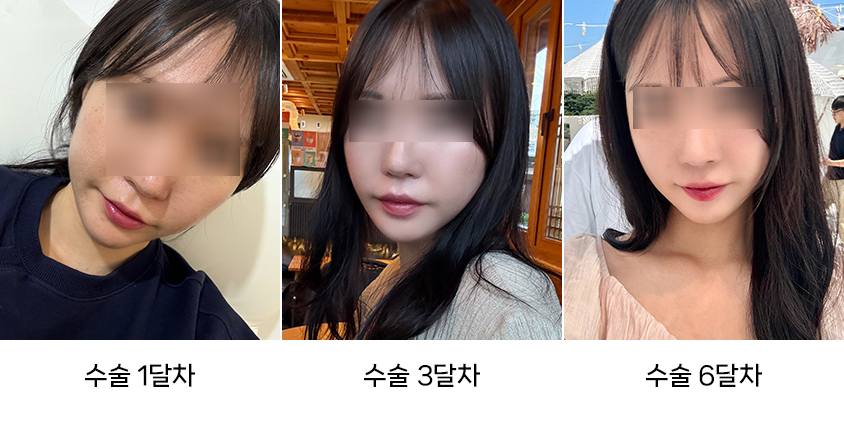
Zygoma Reduction, Square Jaw Surgery, Chin Surgery
After facial contouring surgery, swelling and bruising tend to gradually lessen as time passes, moving from the upper part of the face to the lower part.
Therefore, it is best to understand these changes as one of the natural phenomena that can appear during the recovery process.
Also, since time is needed for the tissue to stabilize and the facial line to settle after surgery, it generally takes at least 6 months to more accurately confirm the surgical effect. At that point, it is common to judge the overall surgical outcome, including changes in the facial line and whether side effects such as sagging are present.
Zygoma Reduction, Square Jaw Surgery
Many people worry about cheek sagging after facial contouring surgery.
In general, cheek sagging refers to the skin drooping downward as the retaining ligaments that support the face weaken when more dissection than necessary is performed during surgery. Of course, if nonunion occurs during surgery or if excessive dissection is performed, skin sagging may be more likely to appear, but if the surgery is carried out with accurate planning and technique, there is no need to worry excessively.
Also, from immediately after surgery until about 1 month later, as swelling moves from the upper part of the face downward, the lower jaw area may temporarily look puffy.
However, this is a change that appears during the natural recovery process as swelling goes down, and it is important to keep in mind that this is not actual skin sagging.
Zygoma Reduction, Square Jaw Surgery
To remove swelling more quickly after surgery, it can help to properly alternate cold compresses and warm compresses, and to promote circulation through light walking. In addition, staying well hydrated and eating foods that may help reduce swelling, such as pumpkin juice, can also be helpful in managing the recovery period.
Along with this, regular follow-up checks to monitor recovery can also help support a stable recovery process.
For those preparing for facial contouring surgery, it is important to plan the operation through sufficient consultation with a specialist who has extensive clinical experience and expertise.
Also, if systematic post-operative care is provided after surgery, you may be able to expect more satisfying results.
Thank you.