Hello, I’m Dr. Jo Hyun-woo from 3D Plastic Surgery.
After facial contouring surgery, the biggest concern for many people is swelling.
Today, I’ll explain in detail how to effectively manage swelling after facial contouring surgery.
Swelling after surgery is a natural part of the recovery process and can happen to anyone.
In particular, facial contouring surgery involves a relatively wide surgical area, so depending on the surgical method, each person’s recovery ability, and postoperative care, the duration of swelling and the final outcome may differ.
Therefore, systematic postoperative care is very important for satisfying results and a faster recovery.

The easiest and most basic care method is compress treatment. Compress treatment is a representative form of postoperative care used after most plastic surgeries.
For about 2 to 3 days immediately after surgery, cold compresses help reduce bleeding at the surgical site and relieve early acute swelling.
After that, it is better to switch to warm compresses.
Warm compresses promote blood circulation, help reduce remaining swelling, and may have a positive effect on reducing bruising and swelling.
Also, when sleeping, it is helpful to keep the face slightly elevated above heart level.
This helps reduce the amount of fluid flowing to the face and is effective in easing swelling.
However, it may be difficult to maintain an uncomfortable posture for a long time, so I recommend applying this within a range that does not cause strain.
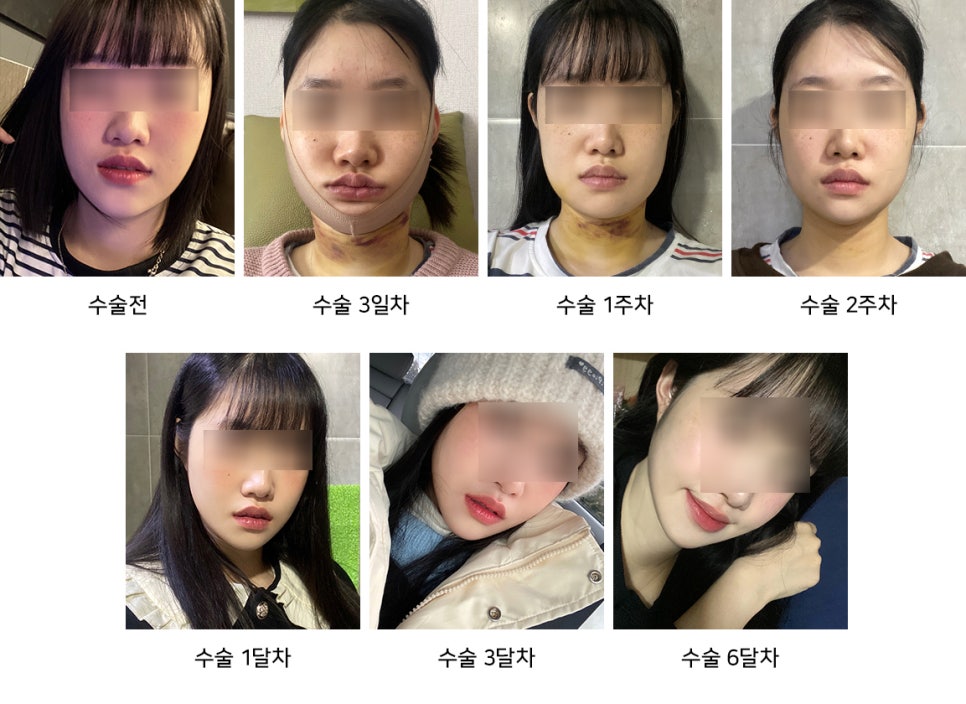
Swelling and Recovery After Revision Square Jaw Surgery and Chin Surgery
The second is dietary management. To reduce swelling after surgery, it is important to maintain proper eating habits.
A representative food that may help ease swelling is pumpkin.
Pumpkin helps with diuresis, promotes the elimination of waste products from the body, and may have a positive effect on shortening the recovery period.
Also, when consulting with patients, I find that many people surprisingly do not drink enough water. Adequate hydration helps blood circulation and supports overall recovery.
In particular, after general anesthesia, water is needed for metabolic processes in the body, and for surgeries through the mouth, it helps prevent dryness inside the mouth, which also aids hygiene management and infection prevention.
During meals, it is better to reduce sodium intake.
Excessive sodium intake can increase water retention in the body and worsen swelling, so after surgery it is advisable to maintain a mild, balanced diet.
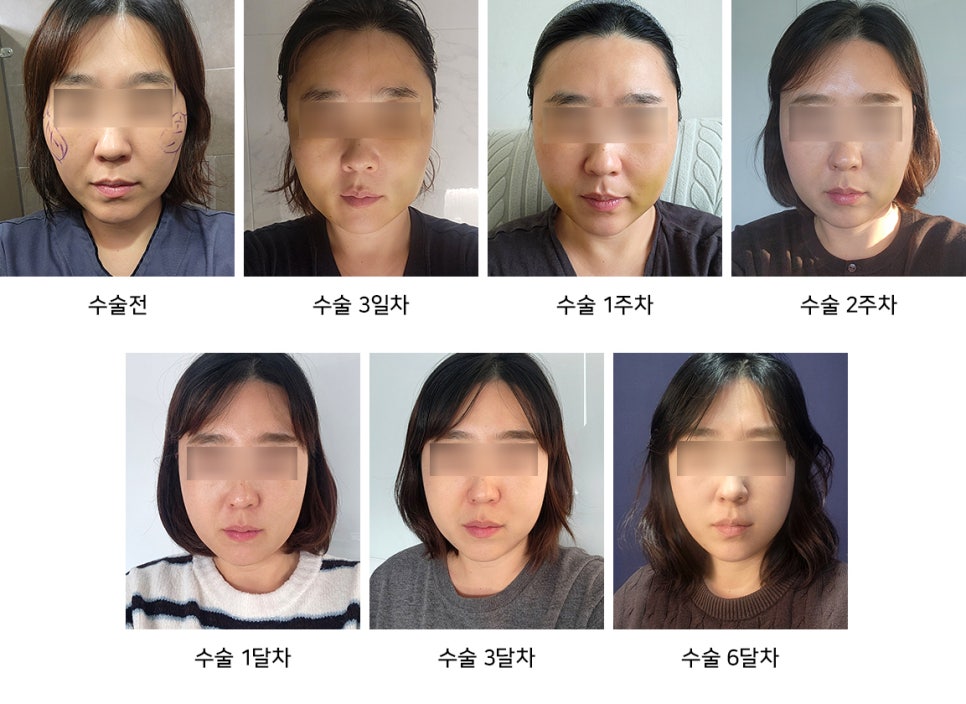
Swelling and Recovery After 230-Degree 3D Cheekbone Reduction
For about 1 to 2 weeks after cheekbone surgery, there are wounds left inside the mouth, so caution is needed with food intake.
During this period, chewing may be limited, so I recommend meals centered on small, soft liquid foods.
Also, for about 6 weeks after surgery, it is best to avoid hard or chewy foods as much as possible.
This is because excessive chewing during recovery can put strain on the surgical area.
After eating, you must take the prescribed medication and keep your mouth clean by gargling.
This plays an important role in preventing inflammation and supporting recovery.
The third method for managing swelling after facial contouring surgery is to avoid alcohol and smoking.
It is advisable to refrain from drinking and smoking for at least 1 month after surgery.
Alcohol and smoking cause blood vessels to constrict, interfere with blood circulation, and may delay recovery.
They can also increase the risk of side effects such as inflammation, so it is best to avoid them for a certain period to ensure stable recovery.
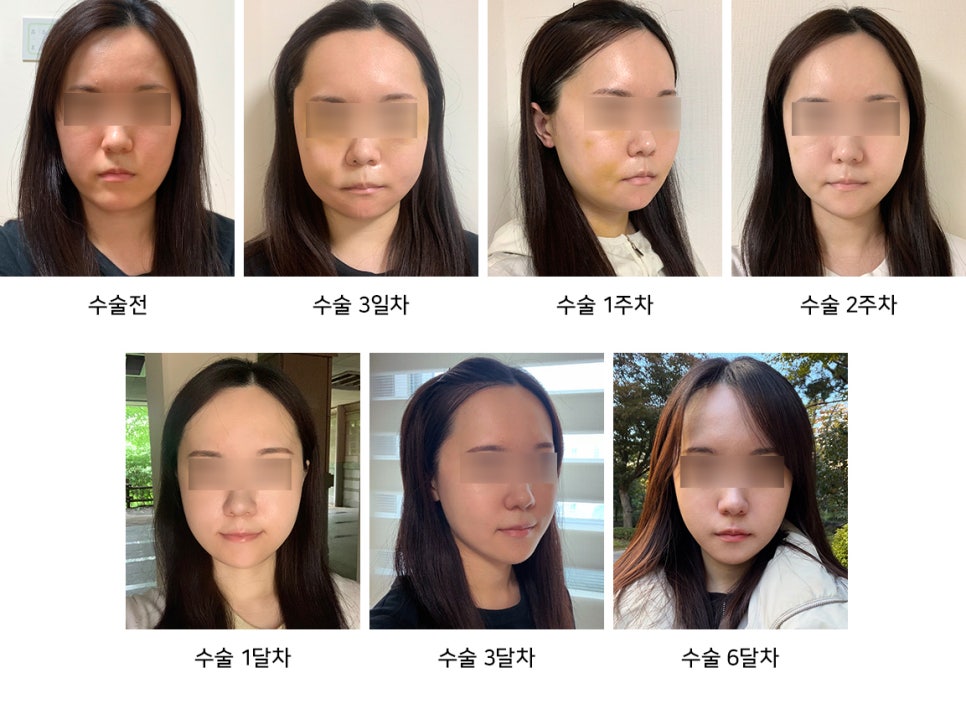
Swelling and Recovery After Cheekbone Reduction, Square Jaw Surgery, and Chin Surgery (Three Types of Contouring)
The fourth is light exercise.
After facial contouring surgery, light activity within a range that does not overstrain the body may help reduce swelling.
Light exercise such as slowly walking or taking a stroll for about 1 hour a day may promote blood circulation and have a positive effect on reducing swelling.
However, excessive exercise or strenuous activity can irritate the surgical area, so it should definitely be avoided.
Because each patient has a different constitution and recovery speed, the recovery process after surgery may also vary from person to person.
In fact, some patients may experience swelling that subsides more slowly than others, and this can be influenced by constitutional factors, recovery ability, salt intake habits, and blood circulation.
However, swelling usually improves naturally over time, so there is no need to worry too much.

In addition, the hospital can help ease swelling through LED laser or radiofrequency treatment.
At our clinic, we provide Smartlux care to help increase skin regeneration speed and relieve postoperative swelling and pain.
As I mentioned in a previous column, one of the important factors in swelling management is surgery time.
Facial contouring surgery includes bone cutting, skin incision, and dissection, so the amount of bleeding during surgery is closely related to the surgery time.
In particular, because these surgeries are performed in the limited space inside the mouth, a lack of surgical experience can increase damage to surrounding tissues, and if unnecessary dissection increases, bleeding may increase as well, making the surgery take longer.
Therefore, to reduce swelling that lasts longer than average and ensure a more stable recovery, it is important that the surgical process is completed accurately and neatly without unnecessary delays.
Today, I explained how to quickly reduce swelling after facial contouring surgery.
This may already be familiar information, but simply following these basic care principles consistently can still be very helpful in reducing swelling and supporting the recovery process.
Thank you.