Hello, this is Director Jo Hyun-woo of 입체성형외과.
When consulting on facial contouring surgery, there is something many people commonly say.
“I wish my face looked a little smaller.”
“I want to make my jawline slimmer.”
“I want a soft V-line look from the front.”
In the past, there was a time when simply making the face smaller was seen as the most important goal of facial contouring surgery.
In fact, until a few years ago, many people preferred surgery in the direction of removing as much bone as possible and creating the smallest face possible.
But recently, the atmosphere has changed a lot.
Nowadays, patients place more importance on a natural, refined facial line rather than simply a small face.
More and more people prefer a face that does not look awkward over time and maintains a soft contour even when smiling or speaking, rather than a face that has simply had a lot of bone removed.
In fact, when consulting with patients about revision facial contouring surgery, it is not uncommon to hear things like, “My jawline has disappeared,” “My face somehow looks older,” “It feels like my facial line has collapsed,” or “The boundary between my neck and face feels blurred.”
There can be many causes for these changes, but one structure that often comes up is the “jaw angle below the ear.”
Today, I will explain in detail why the jaw angle below the ear is important in facial contouring surgery and why recent contouring surgery trends are changing.
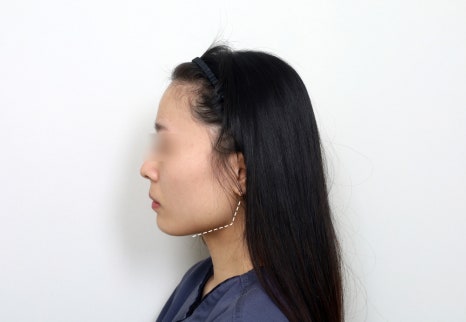
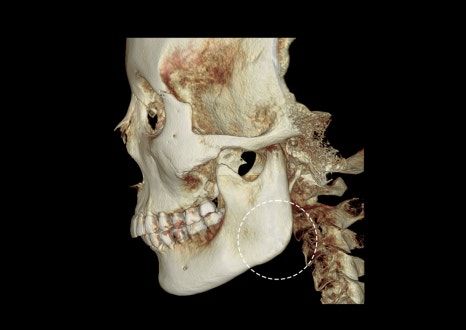
Jaw angle below the ear
The jaw angle below the ear refers, quite literally, to the point where the jawline bends below the ear.
Anatomically, this corresponds to the mandibular angle, and it is a structure commonly associated with what we call the square jaw area.
Many people tend to think of a square jaw as simply a protruding bone.
So they may believe that removing as much as possible automatically makes the face look more beautiful. But in reality, the mandibular angle is a very important structure that supports the lower part of the face.
In particular, it plays a key role in creating facial definition from the side or at a 45-degree angle, and it is also important in forming the boundary between the jawline and the neck line.
It is more accurate to understand the jaw angle below the ear not as a bone that should simply be removed, but as a structure that creates balance and continuity in the facial shape.
Recently, as the trend has shifted toward valuing natural contours and dimensionality over a simple V-line, the importance of the jaw angle below the ear has become even greater.




Celebrities with refined jawlines
If you look at people with beautiful facial shapes, it is not common for the jawline to fall in a perfectly straight line.
There is an appropriate curve and dimensionality, and the connection from below the ear to the jawline remains naturally alive.
The jaw angle below the ear is an important structure that creates that sense of dimensionality.
If the jaw angle below the ear is removed too much, the lower part of the face can become flat, making the face look dull rather than dimensional.
This change often appears more noticeably from the side or at a 45-degree angle than from the front.
Even when looking at the facial shapes of celebrities or influencers these days, many do not simply have a small face; rather, they often have a natural continuity in the jawline.
Compared with the extreme V-lines of the past, the atmosphere is shifting toward a preference for facial shapes that retain appropriate volume and structure.
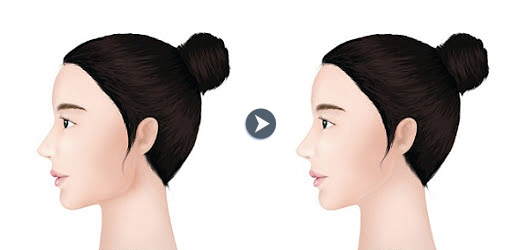
An example of the jawline becoming blurred due to excessive loss of the jaw angle below the ear
One characteristic of a face that looks youthful and firm is a clear boundary between the jawline and the neck line.
When the jaw angle below the ear is properly maintained, the line beneath the jaw remains defined and the face and neck are naturally distinguished.
On the other hand, if the jaw angle below the ear is lost too much, the structural support of the jawline decreases, and the lower face may appear blurred.
In fact, some revision surgery patients are not dealing with a simple bone issue, but rather with a weakening of the very structure supporting the lower face, which can make them look older. In particular, after the age of 30, skin elasticity and the support of soft tissues begin to decline, so if the bony structure is reduced excessively, these changes can become more pronounced.
The face is not a structure made only of bone.
Skin, fat, muscle, and retaining ligaments all exist together, and aging changes continue over time.
Therefore, if the bone is reduced too much, there is a possibility that the structure supporting the soft tissues will also weaken in the long term.
This is precisely why, in recent facial contouring surgery, overall structural balance is considered more important than simply how much bone is removed.
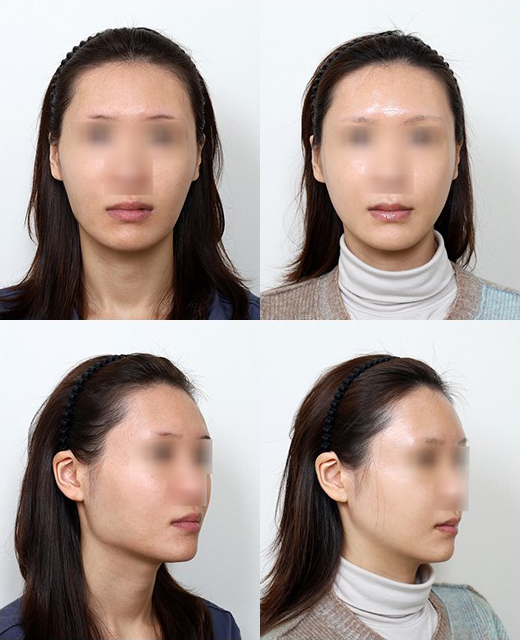
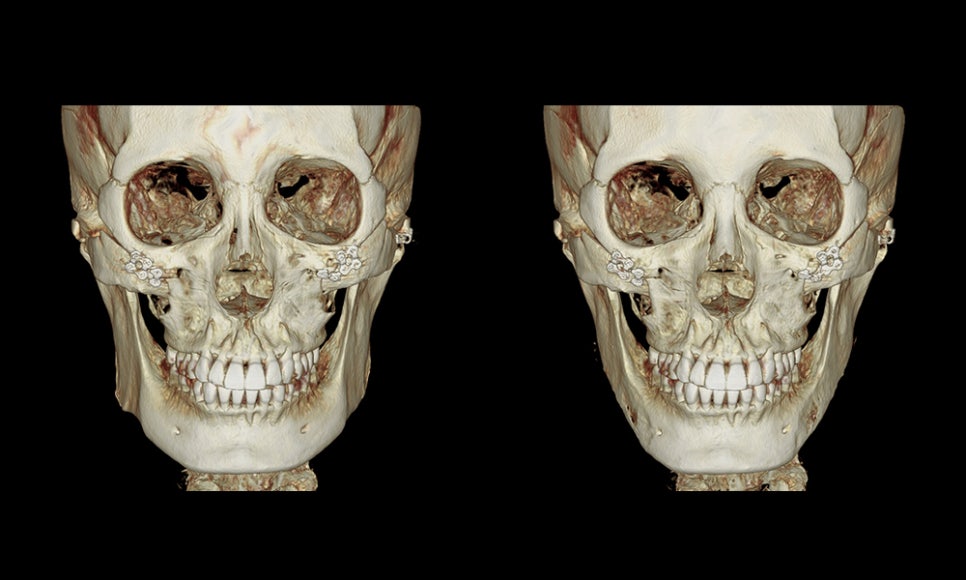
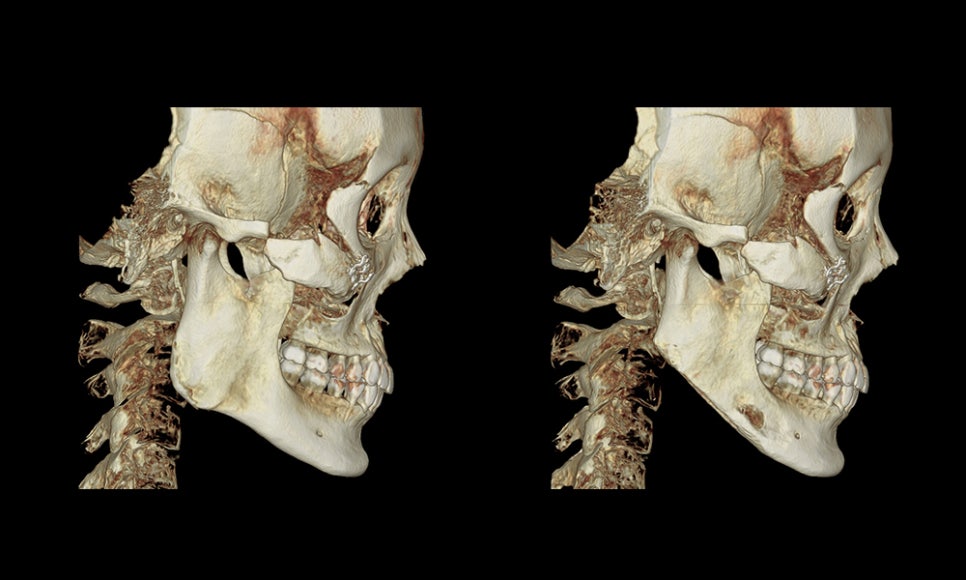
Female square jaw surgery
So, should the jaw angle below the ear disappear completely for a beautiful face? The answer is no.
Of course, if the angle is strong and protruding, smoothing it out can be helpful.
However, completely removing the jaw angle below the ear is somewhat distant from recent beauty trends.
In fact, when you look at people with natural and refined facial shapes, many still retain an appropriate jaw angle below the ear.
What matters is not whether there is an angle or not, but how harmoniously it connects with the entire face.
Therefore, current facial contouring surgery is closer to a procedure that designs the overall balance of the face rather than simply removing bone.
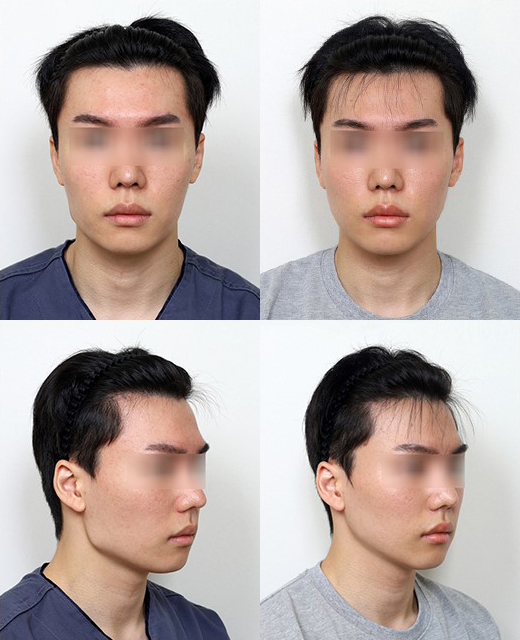
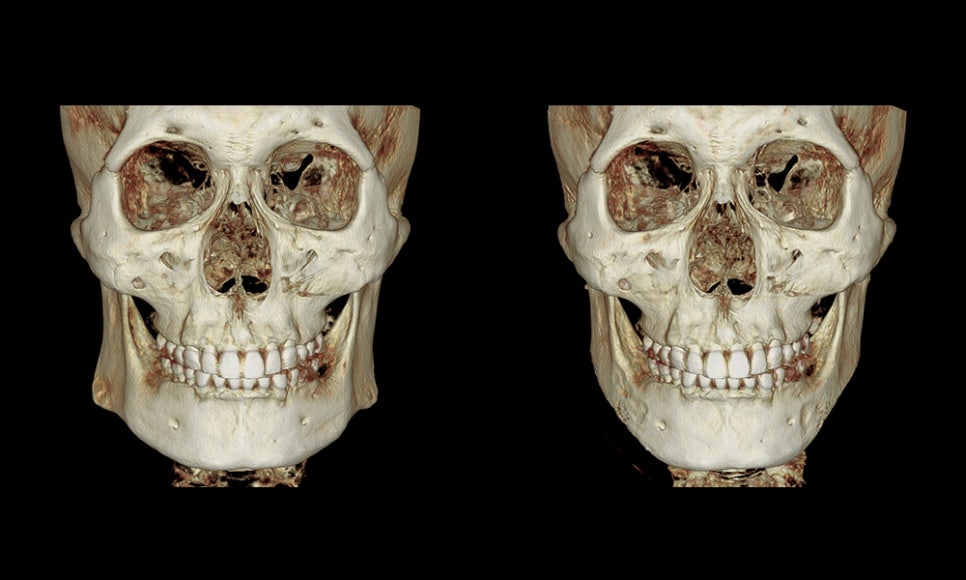
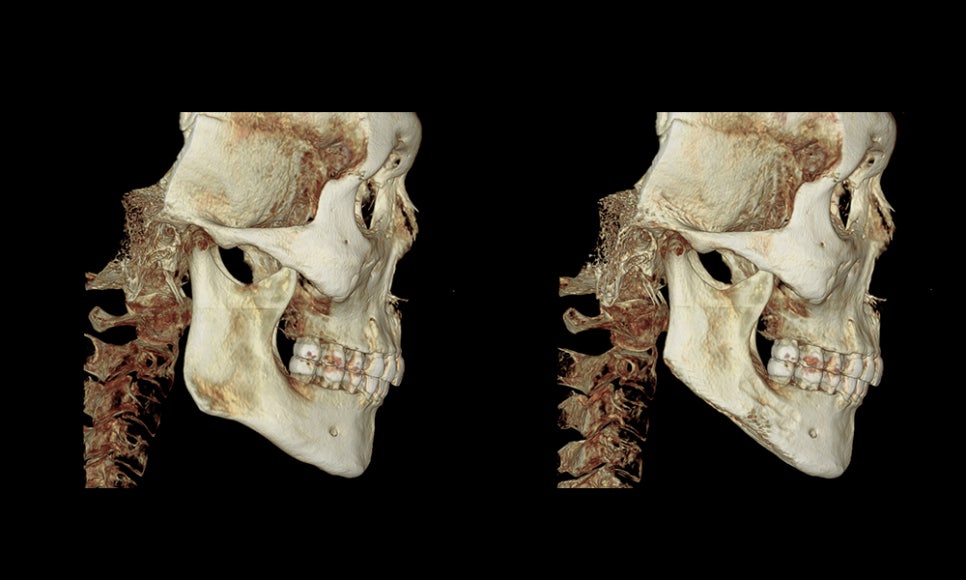
Male square jaw surgery
One interesting point is that the jaw angle below the ear affects the impression differently depending on gender.
In general, men often prefer a jawline that retains some angle.
This is because it creates a sense of stability and a masculine image.
On the other hand, women often prefer a softer, curved jawline.
However, even for women, if the area is excessively reduced to the point that the jaw angle below the ear disappears completely, the lower face may appear weak or even look older.
The direction of recent facial contouring surgery is quite different from the past.
In the past, the focus was on a small face, an extreme V-line, and maximum reduction. Recently, however, the trend has shifted toward emphasizing natural facial lines, designs that take skin sagging into account, and maintaining dimensionality.
In actual consultations, there are now far more people who say things like, “I don’t want it to look obviously surgically done,” “I want it to look naturally refined,” and “I don’t want it to look saggy later,” rather than saying, “Please reduce it as much as possible.”
In this changing environment, the jaw angle below the ear is once again drawing attention not as something to simply remove, but as an important design point for maintaining facial balance.
If you are considering facial contouring surgery, it is important to think not only about how much can be reduced, but also about which facial line will look most natural and harmonious for you. Thank you.